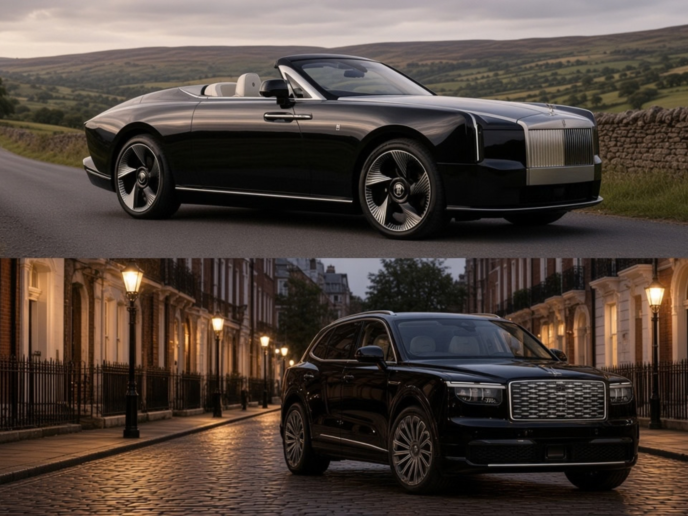
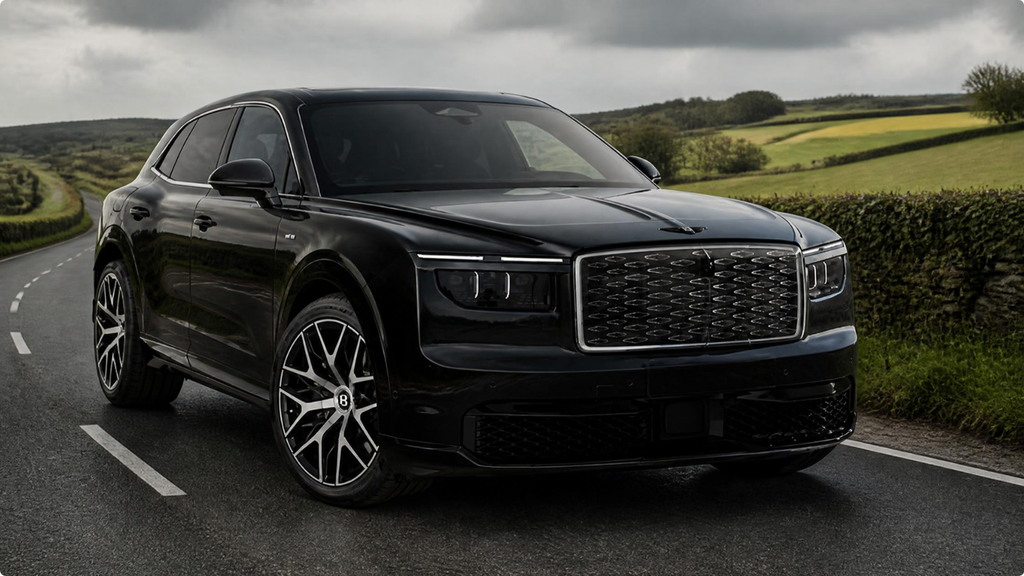
The transition towards electric vehicles and the development of autonomous driving are forcing traditional car manufacturers to rethink what a vehicle is supposed to be. Bentley has already entered this new era with the Bentley Torcal, its first fully electric model.
For some brands, that means moving a long way from decades of established thinking. The characteristics that once defined a successful car — engine sound, mechanical feel, driver involvement and outright performance — may become less important as electrification and automation develop.
But not every luxury manufacturer is starting from the same position.
Bentley and Rolls-Royce have spent much of their history selling something that goes beyond the driving experience. Their cars have traditionally placed enormous emphasis on refinement, comfort, craftsmanship and the experience of travelling rather than simply the act of driving.
That could leave both marques surprisingly well placed for a future in which cars become quieter, increasingly automated and, potentially, much more like mobile living spaces.
Electric Power Could Reinforce What Bentley And Rolls-Royce Already Do
Switching to an electric vehicle introduces a very different type of driving experience.
Without the noise and vibration associated with a conventional internal combustion engine, an electric car can offer an exceptionally quiet and smooth journey. For many mainstream manufacturers, that represents a significant change from the character their cars have historically been designed around.
For Rolls-Royce and Bentley, however, silence and refinement have been fundamental parts of the proposition for decades.
One of the most famous examples is the Rolls-Royce advertising campaign created by David Ogilvy in the 1960s, which famously focused on the remarkable quietness of the car at speed.
The underlying message remains relevant to the electric era: reducing mechanical noise isn’t necessarily something that luxury manufacturers need to overcome. It can actually enhance the experience they have spent generations trying to create.
Electric power therefore does not necessarily represent a dramatic change in direction for these brands.
Instead, it could allow them to take characteristics they already value — smoothness, silence and refinement — even further. Jaguar is taking a similarly ambitious approach with the Type 01, its new electric luxury saloon, which is due to be fully revealed in New York on 6 October.
That is particularly significant for a manufacturer such as Rolls-Royce, where the purpose of the vehicle has traditionally been less about creating an engaging driving experience and more about providing an exceptionally comfortable environment in which to travel.
Bentley And Rolls-Royce Have Never Been Entirely About Collectability
There is another important difference between these brands and some other manufacturers in the luxury sector.
Certain performance marques have developed extremely strong collector cultures around their historic models. Older examples can become highly desirable assets, with rarity, provenance, originality and condition all contributing to their value.
That creates an unusual challenge for a manufacturer producing new cars.
A new model isn’t necessarily competing only with other new cars. It can also be competing with decades of vehicles already sitting in collectors’ garages.
Ferrari provides an obvious example. Someone with a substantial budget for a luxury sports car has a huge range of new and historic Ferraris to consider. A customer interested in owning something special may decide that an older, rare model offers an experience that a brand-new car cannot replicate.
Bentley and Rolls-Royce have traditionally operated somewhat differently.
Their customers have certainly purchased expensive and exclusive vehicles, but the appeal has not necessarily depended on the car becoming a valuable collector’s item in the future.
Depreciation has therefore been a less fundamental contradiction within the proposition. Customers have generally bought these cars to use them — to travel in them, be driven in them and enjoy their comfort and craftsmanship.
That distinction could become increasingly useful as the automotive industry moves towards electrification.
A manufacturer does not necessarily need every new model to become a future classic if customers are primarily interested in the experience provided by the latest vehicle.
The product can continually evolve.
That potentially gives Bentley and Rolls-Royce more freedom to embrace new technology without having to preserve every traditional characteristic simply because it has become part of an established collector culture.
Autonomous Driving Changes The Meaning Of A Luxury Car
Autonomous vehicles present a much more fundamental question.
At first glance, increased automation might appear to undermine one of the traditional advantages of Bentley and Rolls-Royce.
Both brands have historically been closely associated with chauffeur-driven travel. If technology eventually allows a vehicle to drive itself, why would someone need a chauffeur?
The answer may be that a chauffeur provides much more than driving.
A professional chauffeur can help with luggage, open doors, assist passengers, provide local knowledge and anticipate what their passenger needs. The role is partly about transportation, but it is also about service.
Automation can take over the task of controlling a vehicle. It does not necessarily recreate all of the other elements of a chauffeur-driven experience.
More importantly, autonomous driving could change the role of the car itself.
For more than a century, the basic interior arrangement of a car has remained remarkably consistent. Seats face forwards, the driver sits at the front, and everyone else travels towards the same destination.
Even as technology has advanced dramatically, the fundamental layout has changed relatively little.
The development of self-driving cars creates an opportunity to rethink that assumption.
If nobody needs to concentrate on the road, why should everyone continue sitting in exactly the same way?
The Car Could Become A Room On Wheels
This is perhaps where Bentley and Rolls-Royce have an interesting advantage.
Their cars have long been designed around the idea that the passenger’s experience is at least as important as the driving experience.
Take that philosophy one step further and an autonomous vehicle stops being simply a machine for getting from one location to another.
It becomes a space.
A private room that happens to move.
That could completely change how manufacturers think about interior design. The Genesis GV90 provides an example of how this thinking is already influencing luxury vehicle design, with its passenger-focused interior featuring swivelling seats and VIP-style rear accommodation.
Instead of asking what the dashboard of the future should look like, designers could be asking what passengers actually want to do while travelling.
Could the vehicle become a mobile office?
A dining space?
A place to watch a film?
A lounge?
Somewhere to read?
A place to hold a private meeting?
Or perhaps all of these things at different points during the journey?
The answer could have a major influence on the design of future luxury vehicles.
If passengers are no longer required to drive, there is far less reason for the interior to be designed primarily around the driver’s relationship with the road. Jaguar’s forthcoming Type 01 offers an interesting example of how luxury interiors are already being rethought. Its cabin uses a central structure that runs from the front to the rear, separating the four occupants, while the dashboard takes a deliberately minimalist approach.
The traditional cockpit could eventually become much less important.
Furniture, connectivity, lighting, entertainment and privacy could become just as significant as steering wheels, pedals and instrument displays once were.
Autonomous Vehicles Could Change How We Think About Travel
The biggest change may not actually be the technology itself.
It could be the way we think about time.
Consider a typical two-hour journey today. For the person driving, those two hours are largely dedicated to the task of travelling. They have to concentrate on the road, respond to traffic and remain focused on getting from one destination to another.
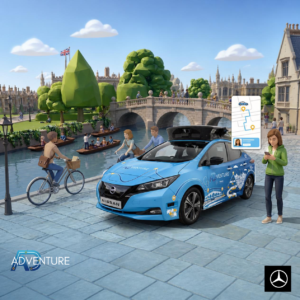
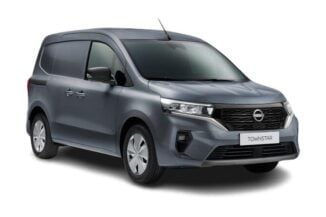
If the vehicle can eventually handle the journey itself, those two hours become available for something else. The technology is already moving beyond the testing phase in some areas, with self-driving technology beginning to enter real-world passenger services in London. Nissan is also exploring how autonomous vehicles could be used as part of future mobility services, with a trial planned on public roads in Cambridge.
You could work during the journey, hold a meeting, watch a film, eat a meal, read a book, make phone calls or simply relax.
The journey itself becomes usable time rather than time spent waiting to arrive.
That represents a fundamental shift in the role of the car. The wider implications could extend beyond the passenger experience, with autonomous vehicles potentially creating higher energy demands for fleets as their use develops.
For much of automotive history, manufacturers have competed on how effectively they can move people from A to B.
Autonomous technology potentially changes the question.
If the vehicle can take care of getting you there, then the experience inside the vehicle becomes far more important.
The focus moves away from reducing the journey and towards improving it.
Bentley And Rolls-Royce May Already Understand This Concept
This could ultimately be where the long history of Bentley and Rolls-Royce becomes particularly relevant.
For decades, these manufacturers have been selling vehicles in which the journey itself is part of the luxury experience.
The objective has not simply been to make a journey quicker.
It has been to make travelling more comfortable, quieter, smoother and more enjoyable.
Electrification supports that philosophy by removing much of the noise and vibration associated with conventional powertrains.
Autonomous driving could support it further by removing the need for the passenger to concentrate on driving at all.
Put those two developments together, and the luxury vehicle of the future could look very different from the cars we know today.
It may be quieter.
It may drive itself.
And its interior may be designed less like a conventional car and more like a private space that happens to be travelling.
That doesn’t mean Bentley or Rolls-Royce will automatically succeed in the electric and autonomous era. The technology, customer expectations and luxury market will continue to evolve, and both manufacturers will still face significant challenges.
But they do have something that many manufacturers are having to develop from scratch: a long-standing understanding that a car can be about far more than driving.
As vehicles become increasingly capable of handling the road themselves, that distinction could become more important than ever.
The question for the next generation of luxury vehicles may therefore not simply be: how quickly can the car get you there?
It could be: what do you want to do while you’re on the way?
 Call our expert team on