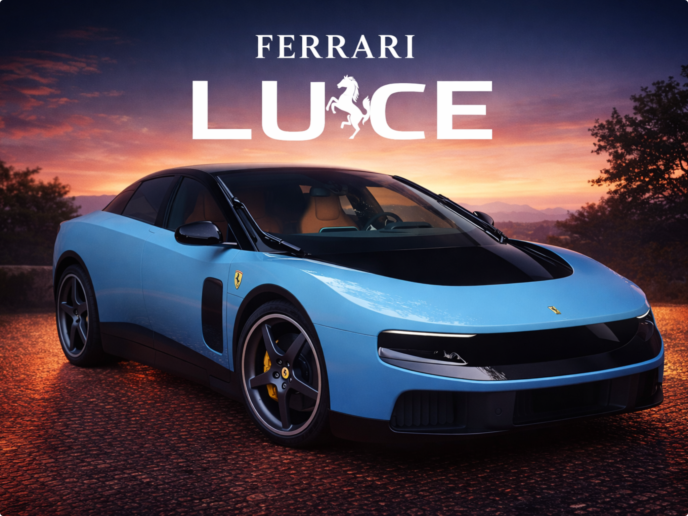
Ferrari has officially unveiled its first fully electric vehicle, signalling a major turning point in the history of the iconic Italian luxury sports car manufacturer.
The new model, named the Ferrari Luce, is expected to be released later this year and carries an estimated price of around $640,000 (£474,320). The car marks a notable shift in Ferrari’s design philosophy, not only because it is fully electric, but also because it is the brand’s first-ever five-seater, moving away from its traditional focus on two-seat performance supercars. The project was developed in collaboration with the LoveFrom design studio, founded by former Apple chief design officer Sir Jony Ive, adding further attention to its styling direction.
According to Ferrari, the Luce—meaning “light” in Italian—has been in development for roughly five years. The vehicle was formally introduced in Rome by chief executive Benedetto Vigna, who described it as a carefully engineered step into electrification rather than a sudden break from the company’s heritage. Ferrari had previously been cautious about fully committing to electric vehicles, instead prioritising hybrid technology that combines petrol engines with electric assistance.
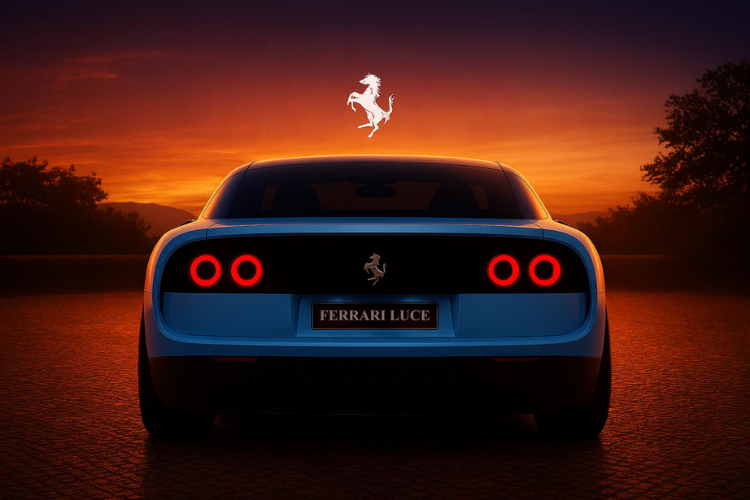
Performance remains central to the brand’s identity. The Luce is powered by an electric motor at each wheel, delivering rapid acceleration and allowing the car to reach 0–60 mph (0–96 km/h) in about 2.5 seconds. Ferrari has also emphasised that all key components are developed and manufactured in-house, a strategy intended to ensure long-term serviceability and protect the vehicle’s exclusivity and resale value over time.
The unveiling has sparked a strong and divided reaction online. Some social media users criticised the design, with comments suggesting it strays too far from Ferrari’s traditional aesthetic and comparing it unfavourably to other luxury EV launches. Others, however, praised the model as a bold step forward, describing it as a “masterclass in design” and a potential “game changer” for the brand.
Ferrari’s chief design officer, Flavio Manzoni, has acknowledged that the response to the Luce is polarising. He noted that groundbreaking designs often generate controversy at first, but suggested that public perception may evolve as the concept becomes more familiar.
Despite introducing its first fully electric model, Ferrari has confirmed that it will continue to offer petrol and hybrid vehicles alongside its EV lineup. This means the company is not abandoning internal combustion engines entirely, but instead adopting a multi-technology approach to meet different customer preferences and market conditions.
The launch comes at a time of uncertainty for the wider high-performance automotive industry. Several rival manufacturers have adjusted their electrification strategies in response to shifting demand. Lamborghini, for example, has scaled back plans for fully electric supercars in favour of hybrid systems, citing limited demand for ultra-luxury EVs. Porsche has also slowed parts of its EV rollout, influenced by weaker sales in key markets such as China and changing trade conditions in the United States.
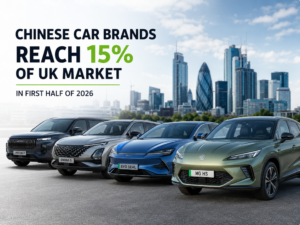
At the same time, European carmakers are facing increasing competition from Chinese manufacturers, who are producing electric vehicles at lower cost and with faster development cycles. This has added further pressure on established luxury brands to justify their pricing and maintain exclusivity.
Ferrari remains Europe’s most valuable carmaker, supported by its strategy of producing highly exclusive, low-volume vehicles that maintain strong demand among wealthy buyers. However, the company has not been immune to broader market pressures. Its share price has fallen by more than 25% over the past year, reflecting wider volatility in the luxury sector as inflation and global economic uncertainty have affected spending on high-end goods.
 Call our expert team on