The KGM Musso EV brings fully electric power to KGM’s double-cab pick-up range, combining four-wheel drive, five-seat practicality and a versatile load bed with zero tailpipe emissions. It offers businesses an alternative to traditional diesel pick-ups, particularly where lower-emission motoring, quieter operation and access to urban areas are important.
Powered by an 80.6kWh battery, the Musso EV has a manufacturer-quoted WLTP combined range of up to 235 miles. It also provides a 690kg payload and braked towing capacity of up to 2,300kg, making it suitable for some working environments where a full one-tonne payload or heavier towing capacity is not essential.
For businesses considering an electric pick-up, the KGM Musso EV available through Commercial Vehicle Contracts is worth considering, although its carrying and towing limits should be checked carefully against the demands of the job.

KGM Musso EV Powertrain And Performance
The Musso EV uses a dual-motor electric powertrain with automatic all-wheel drive. KGM’s current UK product information quotes 207PS and 339Nm of torque, with power distributed between the front and rear wheels to provide traction across different road surfaces.
Unlike a conventional diesel pick-up, the electric motors deliver torque immediately, providing smooth acceleration from a standstill. This can be useful when pulling away with equipment on board or manoeuvring at lower speeds on work sites.
The all-wheel-drive system is designed to maintain traction when conditions become more difficult. Drivers can select different driving modes to suit the terrain, while hill-descent control and regenerative braking add further control when travelling on gradients.
The Musso EV also uses a monocoque platform rather than the traditional ladder-frame construction associated with many diesel pick-ups. This gives it a more car-like driving character, although businesses requiring the maximum carrying capacity or heavy-duty off-road capability of a conventional workhorse should compare the figures carefully.
Drivers wanting to understand the differences between the available systems can read our guide to front-wheel drive, rear-wheel drive, all-wheel drive and four-wheel drive.
Battery Range And Charging
The KGM Musso EV is equipped with an 80.6kWh battery, with KGM quoting a WLTP combined driving range of up to 235 miles. The manufacturer also gives a city-driving range of up to 290 miles, although this figure reflects the more favourable conditions of urban driving rather than mixed-use motoring.
As with any electric vehicle, the range available in everyday use will depend on several factors. Motorway speeds, low temperatures, payload, driving style, terrain and the use of heating or air conditioning can all affect energy consumption.
For businesses covering predictable local or regional routes, the quoted range could make the Musso EV a practical option. Operators regularly travelling longer distances should consider their usual mileage, charging opportunities and the time available between jobs before choosing an electric pick-up.
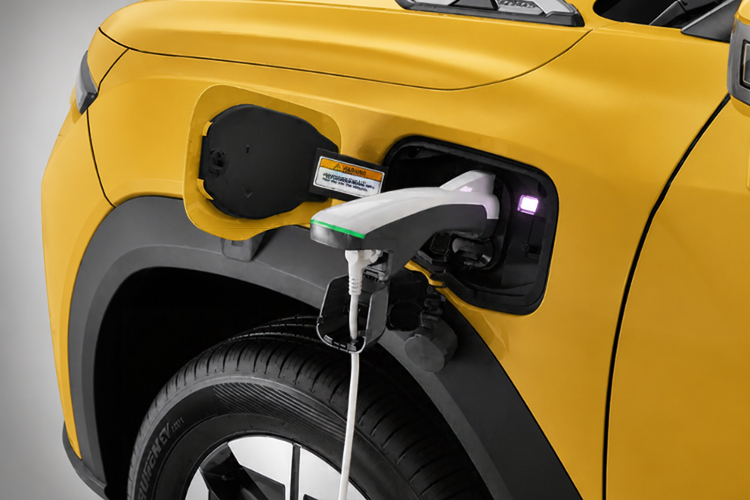
KGM quotes DC rapid charging at up to 120kW, with a charge from 20% to 80% taking approximately 36 minutes under suitable conditions. Actual charging times will depend on the charger, battery temperature, starting charge level and other conditions. Businesses planning charging around their working day can use our EV charging time calculator to estimate how long a vehicle may need to recharge. Our electric vehicle running cost calculator can also help estimate electricity costs based on typical mileage and energy consumption.
For overnight charging, a dedicated home or workplace charging point is likely to be more convenient than relying on public rapid chargers. The vehicle also includes charging management functions, allowing drivers to schedule charging times to make use of available electricity tariffs. Businesses considering the Musso EV should also assess how charging will fit into their daily operations, particularly if vehicles return to a central depot or workplace overnight. Our guide to how EV charging works for businesses explains the practical considerations around workplace charging, charging infrastructure and managing electric vehicles across a business fleet.
The Musso EV includes vehicle-to-load (V2L) functionality, allowing electrical equipment to draw power from the vehicle’s battery. This could be useful for selected work-site or leisure applications, although businesses should check the power requirements of their equipment before relying on it as an alternative to a dedicated generator.
CVC has also covered developments in electric pick-up charging, including the Isuzu D-Max EV’s factory-fit solar charging option.
Payload, Load Bed And Practicality
Payload is one of the most important considerations when choosing a commercial pick-up, and it is an area where the Musso EV requires careful assessment.
KGM quotes a maximum payload of 690kg. While this will be sufficient for some businesses carrying tools, equipment and lighter materials, it is considerably below the one-tonne payload offered by many traditional diesel pick-ups.
The load bed measures 1,345mm long, 1,515mm wide and 510mm deep, with a quoted capacity of 1,039 litres. Its dimensions provide space for a range of work equipment and everyday cargo, while the tailgate and integrated load-securing points help make the rear compartment more versatile.
Self-levelling rear suspension is fitted to help maintain vehicle balance and ride comfort when carrying loads. This is particularly useful when the vehicle is being used for a mixture of passenger and load-carrying duties.
However, the 690kg payload must be treated as a working limit, not simply the weight of equipment that can be placed in the load bed. The weight of the driver, passengers, accessories and any other items carried must also be taken into account. Businesses fitting additional equipment or carrying several occupants should calculate the remaining capacity before putting the vehicle into service.
Businesses unsure how much equipment they can legally carry should use our van payload calculator as part of their vehicle assessment, while checking the manufacturer’s stated payload and plated weights for the specific vehicle.
For operators who regularly need to carry heavier loads, a diesel alternative may be more suitable. The KGM Musso Rhino offers a higher payload, with the standard Rhino quoted at 1,090kg, alongside a braked towing capacity of up to 3,500kg.
Businesses that need a more work-focused configuration can also consider the two-seat diesel commercial versions of the Musso. CVC offers the KGM Musso Saracen Commercial 2-Seat Automatic and the KGM Musso Rebel Commercial 2-Seat. These provide alternatives for operators who prioritise a dedicated working vehicle over the five-seat layout of the electric Musso.
Businesses wanting to compare the available diesel versions can also view CVC’s KGM Musso lease deals, which include different trim levels and configurations of the double-cab pick-up.
The choice therefore depends on the work being carried out. The Musso EV is better suited to businesses whose load requirements fit within its lower payload limit, rather than operators who routinely need the carrying capacity of a traditional one-tonne-plus pick-up.

Towing Capacity
The KGM Musso EV has a maximum braked towing capacity of 2,300kg, with an unbraked towing limit of 750kg.
This gives it the ability to tow a range of trailers and equipment, making it potentially suitable for businesses that need to transport smaller machinery, work equipment or materials between sites.
However, it is important to compare the towing limit with the actual weight of the trailer and its contents. The Musso EV’s 2,300kg braked limit is lower than the 3,500kg capacity available from some diesel pick-ups, so it will not be suitable for every towing requirement. Before towing, businesses should also familiarise themselves with the relevant UK van towing rules, including trailer weights, licence entitlements and applicable vehicle limits.
Businesses should also consider the impact of towing on electric range. Pulling a trailer increases energy consumption, potentially reducing the distance available between charges. Operators who tow regularly over longer distances will need to factor this into their route and charging plans.
Interior, Technology And Safety Equipment
The Musso EV has a five-seat double-cab layout, giving it space for passengers alongside its open load bed. This makes it more versatile than a single-cab pick-up for businesses that need to transport colleagues or use the vehicle outside working hours.
Inside, the dashboard features a pair of 12.3-inch displays, combining the digital instrument cluster with the infotainment and navigation functions. Smartphone connectivity, heated and ventilated front seats, heated rear seats and a 360-degree camera system are among the equipment highlighted in KGM’s UK model information.
Driver assistance and safety technology includes systems such as blind-spot monitoring, rear cross-traffic alerts, lane assistance and intelligent adaptive cruise control. KGM also lists eight airbags, providing additional protection for occupants.
The equipment is designed to make the Musso EV suitable for regular daily use, rather than being purely a work-focused vehicle. Its quieter electric powertrain and passenger-focused cabin may also appeal to businesses where employees spend considerable time travelling between appointments or locations.
KGM Musso EV Business Tax Considerations
The Musso EV’s electric powertrain may offer tax advantages for some business users, but its double-cab configuration and payload make it important to understand the rules before entering into a lease.
KGM currently advertises the Musso EV from £39,995, including a £5,000 government grant discount. This is a manufacturer purchase-price indication rather than a monthly lease rental, and grant availability and advertised prices can change.
For company-car Benefit-in-Kind purposes, zero-emission vehicles benefit from a lower appropriate percentage than petrol or diesel cars. The rate for fully electric company cars is 4% for the 2026/27 tax year. KGM also advertises example Musso EV Benefit-in-Kind costs from around £30 per month, although the actual amount will depend on the vehicle’s taxable list price and the employee’s tax circumstances.
There is an important distinction between Benefit-in-Kind and VAT treatment. HMRC changed the way double-cab pick-ups are assessed for company-car benefit purposes from 6 April 2025. The assessment now considers the vehicle’s construction and primary suitability, with most double-cab pick-ups expected to be treated as cars for this purpose. Our guide to double-cab pick-up tax changes from April 2025 explains how the revised rules affect business users. You can also read our guide to reclaiming VAT on a car or van lease for further information on the VAT considerations.
VAT treatment continues to use a payload test. Double-cab pick-ups with a payload of less than one tonne are treated as cars for VAT purposes. As the Musso EV has a published payload of 690kg, businesses should not assume that it qualifies for the usual commercial-vehicle VAT treatment or that all VAT on a lease can be reclaimed.
The precise tax position will depend on the business, how the vehicle is used and the relevant tax rules. Businesses should obtain professional advice before making assumptions about VAT recovery, company-car tax or other potential savings.
Is The KGM Musso EV Suitable For Your Business?
The Musso EV is likely to be most relevant to businesses that want the flexibility of a double-cab pick-up but do not need the carrying and towing limits of a heavy-duty diesel model.
Its combination of five seats, all-wheel drive, a useful load bed and zero tailpipe emissions could suit certain property maintenance companies, facilities teams, local service businesses and operators carrying lighter equipment.
It may also appeal to businesses working in towns and cities where access to clean-air zones is important. As a fully electric vehicle, it produces no tailpipe emissions, making it suitable for journeys within the London ULEZ and other applicable clean-air zones. Our guide to ULEZ and Clean Air Zones in the UK explains the rules businesses should understand when operating vehicles in these areas.
However, businesses should think carefully before replacing a diesel pick-up if their work involves carrying heavy materials, towing large trailers or regularly travelling long distances without reliable charging access.
The Musso EV’s payload and towing limits are not simply technical details. They determine whether the vehicle can safely and legally perform the work required of it. Checking these figures against actual operating requirements is essential before choosing a vehicle.

Leasing The KGM Musso EV
Leasing can provide businesses with a way to introduce an electric pick-up without purchasing the vehicle outright. Monthly rental is only one part of the overall cost of operating an electric pick-up. Businesses should also consider electricity, charging infrastructure, maintenance, insurance and how the vehicle will be used throughout the agreement. Our guide to total cost of ownership for business vehicles explains the factors to consider when comparing the wider costs of different fleet vehicles. It also allows operators to consider contract length, annual mileage and monthly costs when planning their vehicle requirements.
For businesses considering the KGM Musso EV, the most important starting point is to establish whether its range, payload and towing capacity match the demands of the job. Charging arrangements should also be considered, particularly where vehicles return to a depot or workplace each evening.
Commercial Vehicle Contracts can help businesses explore vehicle leasing options and assess the requirements of their fleet.
For businesses operating multiple vehicles, choosing the right pick-up is only one part of managing an efficient fleet. CVC’s fleet management solutions can support businesses with vehicle sourcing, maintenance management, compliance monitoring, replacement planning and ongoing fleet administration.
Businesses managing several leased vehicles can also use CVC’s Vehicle Lease Management Portal to keep track of vehicle orders, delivery progress, contract information, important dates and ongoing fleet requirements.
Businesses comparing the Musso EV with other models can also read our guide to pickup truck leasing for businesses, which explains the considerations involved in choosing and leasing a pick-up for commercial use.
The KGM Musso EV leasing listing provides a starting point for checking the available vehicle and requesting a quotation.
 Call our expert team on