Kia has confirmed UK pricing and specifications for two additional versions of its all-electric PV5 commercial vehicle range, introducing a new chassis cab and a taller L2/H2 panel van.
Both models will be offered with Kia’s larger 71.2kWh battery and 163PS electric motor, bringing additional options for businesses looking for an electric van that can accommodate different working requirements.
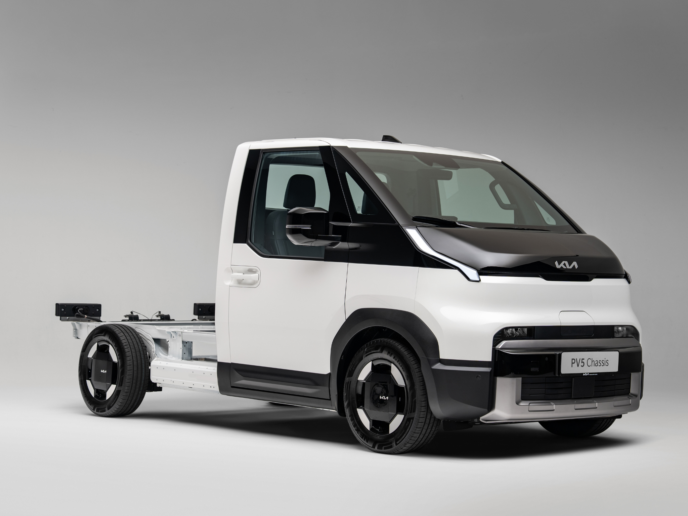
The new variants expand the existing Kia PV5 line-up, which also includes the Kia PV5 Passenger Long Range 71kWh. The Chassis provides a base for specialist conversions, while the high-roof Cargo offers more vertical loading space.
The PV5 Chassis has a basic price of £30,605 excluding VAT as an incomplete vehicle, while the L2/H2 Cargo starts at £27,335 excluding VAT after the £5,000 Government Plug-in Van Grant (PiVG). Kia expects the completed Chassis to qualify for the grant once a body has been fitted. Both models are available to order, with initial Chassis deliveries expected during the first quarter of 2027.
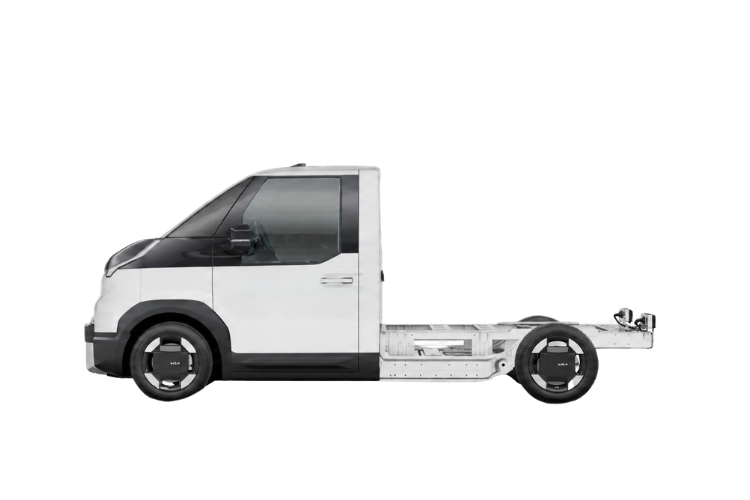
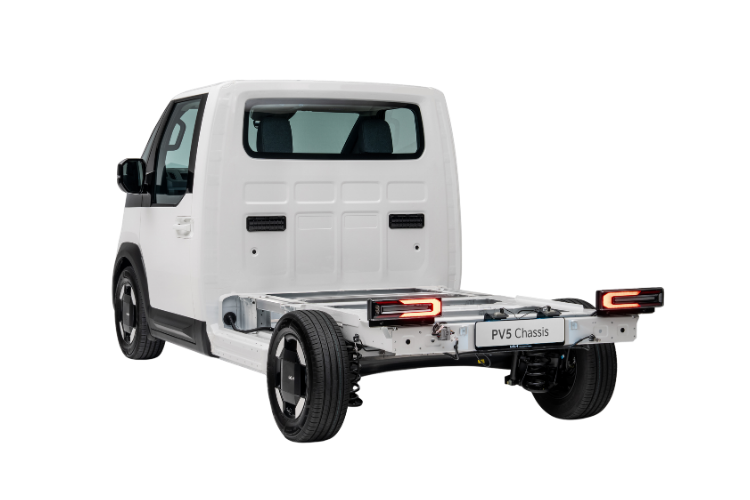
Kia PV5 Chassis: Dimensions, Payload And Conversions
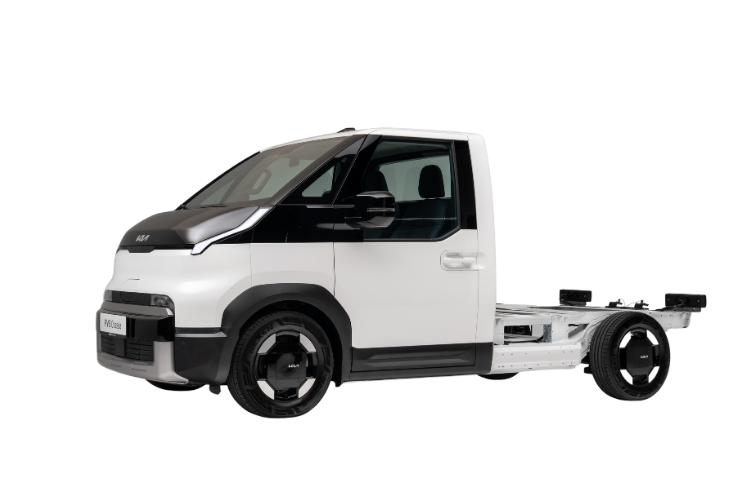
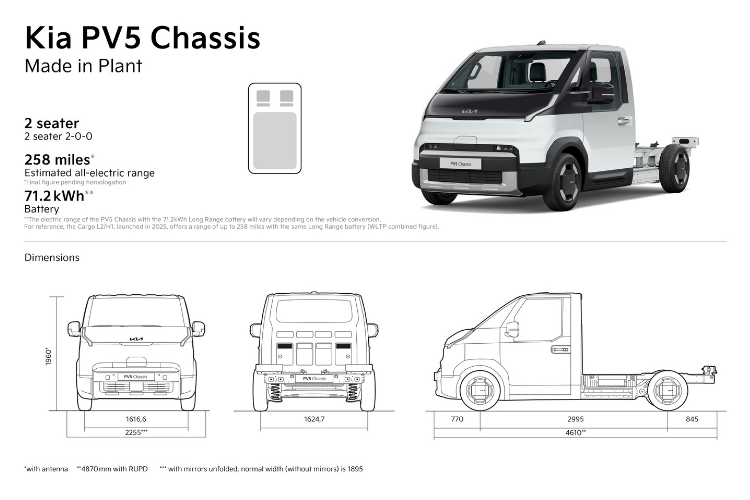
The new PV5 Chassis is designed for businesses that need a vehicle platform that can be adapted to suit specific operational requirements, rather than a conventional panel van.
In its unbodied configuration, the chassis measures 4,610mm long, 1,895mm wide (excluding mirrors) and 1,935mm high. It has a gross vehicle weight (GVW) of 2,650kg and offers a maximum payload of 885kg, including a 75kg allowance for the driver. The Chassis has a 2,995mm wheelbase and a 5.5-metre turning radius, which could be useful for businesses operating in urban areas, restricted-access sites and busy depots. It is powered by a front-mounted 120kW (163PS) electric motor producing 250Nm of torque, paired with a single-speed automatic transmission. Kia quotes a 0–62mph time of 12.4 seconds and a maximum speed of 84mph.
Kia will initially offer the Chassis exclusively in Plus trim, which sits above the Essential specification in the PV5 range. The PV5 Chassis also includes Vehicle-to-Load (V2L) functionality, with a three-pin power socket in the cabin that allows compatible equipment and electrical devices to draw power from the vehicle’s high-voltage battery.
Kia-approved PBV Conversion Partner TGS Automotive Group will provide conversion options for the Chassis, including Dropside and Lightweight Tipper bodies. The company is also planning Box body solutions and modular equipment such as Mesh Cages, Fall Arrest Systems, Chapter 8 markings and warning beacons.
The converted vehicles have the following specifications:
| Specification | Dropside | Tipper |
|---|---|---|
| Length | 4,825mm | 4,825mm |
| Width | 2,310mm | 2,310mm |
| Height | 1,870mm | 1,870mm |
| Maximum payload | 633kg | 561kg |
| Price excluding VAT (after £5,000 PiVG) | £31,600 | £32,600 |
Both conversions retain the Chassis’s 2,995mm wheelbase and 5.5-metre turning radius, helping to maintain manoeuvrability despite the addition of their specialist bodies.
These conversions provide additional flexibility for businesses involved in construction, landscaping, deliveries and other work where an open load area is more practical than an enclosed van.
The prices shown are after the £5,000 PiVG and exclude VAT. Kia’s published basic prices before the grant are £36,600 for the Dropside and £37,600 for the Tipper.
Kia PV5 Cargo L2/H2: More Load Space And Headroom
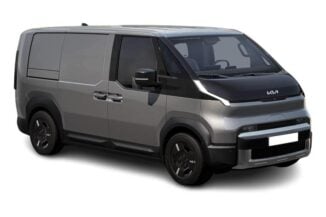
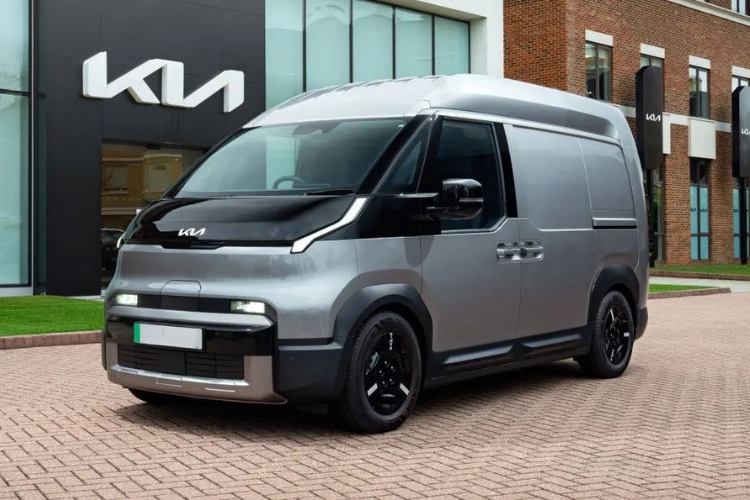
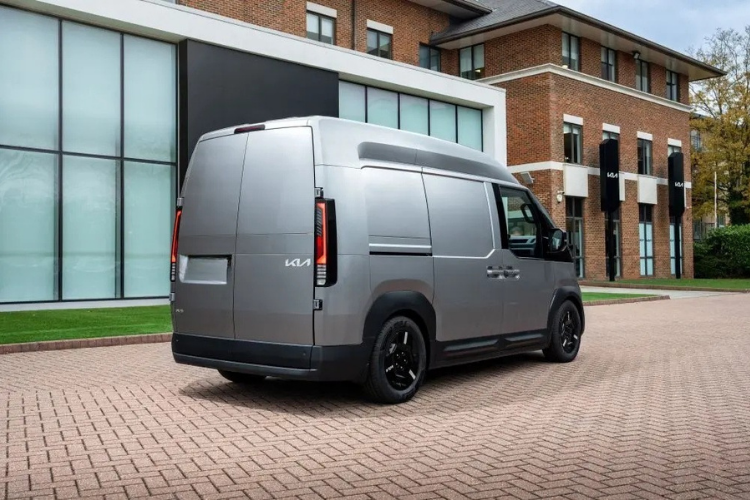
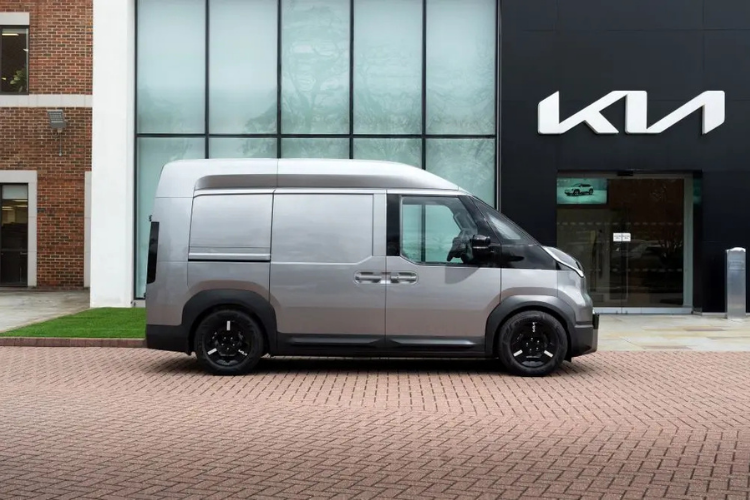
The second addition is the PV5 Cargo L2/H2, which becomes the tallest version of Kia’s electric panel van to date.
It joins the existing L1/H1 and L2/H1 configurations, retaining the longer L2 body while introducing a substantially taller roof. At 2,200mm overall height, it is 311mm taller than the existing H1 models.
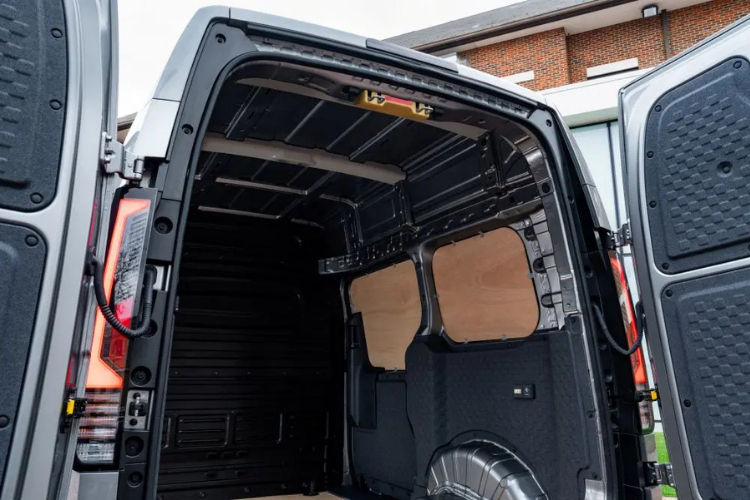
The extra height increases the internal load compartment height to 1,815mm, while total cargo capacity rises to 5.2 cubic metres. That represents an additional 0.8 cubic metres compared with the L2/H1.
However, the larger load area comes with a reduction in payload capacity. Depending on the door configuration, the L2/H2 can carry:
- Three-door versions: Up to 630kg.
- Four-door versions: Up to 600kg.
Both figures include a 75kg allowance for the driver.
The high-roof model also offers a braked towing capacity of up to 1,500kg and can accommodate a maximum roof load of 100kg. Additional storage space above the front seats makes use of the taller cabin.
Equipment And Trim Levels
The PV5 Cargo L2/H2 will be available in Essential and Plus specifications.
Essential provides the entry point, with standard equipment including a 12.9-inch infotainment touchscreen, wireless Apple CarPlay and Android Auto connectivity.
Moving up to Plus adds further comfort and convenience features, including heated front seats, a heated steering wheel and wireless smartphone charging.
Businesses requiring easier access between the cab and load compartment can also choose the Plus Walk Through configuration, which allows occupants to move between the passenger compartment and cargo area without leaving the vehicle. This version features a folding centre seat and a sliding partition door, allowing occupants to move directly between the passenger compartment and cargo area without leaving the vehicle.
Kia also provides a seven-year/100,000-mile vehicle warranty, with separate eight-year coverage for the high-voltage battery. Standard safety equipment includes Forward Collision-Avoidance Assist, Highway Driving Assist and Lane Following Assist, as well as front and rear parking sensors and a reversing camera.
Battery, Range And Charging
Both new PV5 variants are equipped with Kia’s 71.2kWh Long Range battery and a 163PS electric motor, providing the same headline power output across the two configurations.
Kia quotes a range of up to 239 miles for the taller L2/H2 Cargo. The manufacturer has not confirmed an official WLTP range for the completed PV5 Chassis, although it references the PV5 Cargo L2/H1, which uses the same battery and has a quoted range of up to 258 miles. The actual range of a converted Chassis will depend on the body fitted, equipment, payload, route and operating conditions.
Charging performance is also identical across the two versions. When connected to a 150kW DC rapid charger, the battery can be replenished from 10% to 80% in less than 30 minutes.
For overnight or depot charging, an 11kW AC connection takes approximately six-and-a-half hours to charge from 10% to 100%.
Businesses planning to operate the PV5 across different routes should also consider the availability of the UK’s public EV charging network, particularly where drivers cannot rely on charging at home or at their business premises.
The L2/H2’s lower quoted range compared with the L2/H1 reflects the different body configuration, including its taller roof. The final range of the Chassis will depend on the conversion and how the completed vehicle is operated.
For businesses considering the transition to electric commercial vehicles, the available range and charging times will be important when assessing whether either configuration can accommodate daily routes and operating schedules.
Kia PV5 UK Prices
The new high-roof Cargo model is available in Essential and Plus trim, with the Plus Walk Through providing an additional configuration for businesses that want direct access between the cab and load area.
The UK prices, excluding VAT and after the £5,000 Plug-in Van Grant, are:
| Model | Price |
|---|---|
| PV5 Chassis Plus LR – incomplete vehicle | £30,605 |
| PV5 Cargo L2/H2 Essential | £27,335 |
| PV5 Cargo L2/H2 Plus | £28,335 |
| PV5 Cargo L2/H2 Plus Walk Through | £29,405 |
| PV5 Chassis Dropside Conversion | £31,600 |
| PV5 Chassis Tipper Conversion | £32,600 |
The Plus specification adds £1,000 to the L2/H2’s entry-level price, while choosing the Walk Through configuration adds a further £1,070.
The L2/H2 Cargo and completed Dropside and Tipper prices shown above are after the £5,000 PiVG and exclude VAT. The unbodied PV5 Chassis is listed at £30,605 + VAT before the grant. Kia expects it to qualify for the grant once completed with a body, subject to the scheme’s eligibility requirements.
The new models are available to order now, although businesses interested in the Chassis will need to factor in the expected first deliveries during the first quarter of 2027.
What The New PV5 Variants Mean For Businesses
The latest additions give Kia’s electric commercial vehicle range greater flexibility, particularly for businesses that need something beyond a conventional panel van.
The Chassis provides a starting point for specialist bodywork, with dropside and tipper options already available. Meanwhile, the L2/H2 offers additional loading height and cargo volume for operators who need more room without moving into a larger vehicle category.
There are some important differences to consider when choosing between them. The high-roof Cargo provides 5.2m³ of enclosed load space and a quoted range of up to 239 miles. The Chassis offers a different advantage, providing a platform for specialist conversions, although Kia has not yet confirmed an official range for the completed vehicle. Payload requirements will also influence which configuration is most suitable.
Charging arrangements are another important consideration for businesses moving to electric vans. Workplace, depot, home and public charging can all play a role, depending on where vehicles are kept and how they are used. CVC’s guide to electric vehicle charging for businesses explains the options available to employers and fleet operators.
Businesses should assess the complete vehicle specification, including the weight of any conversion, equipment and cargo, rather than relying on headline payload figures alone.
The expansion also strengthens Kia’s position in an increasingly competitive electric van market. The original PV5 Cargo has already attracted considerable attention in the UK, with businesses able to compare it against alternatives such as the Volkswagen ID. Buzz in our Kia PV5 versus Volkswagen ID. Buzz electric van comparison. The introduction of additional body styles gives businesses more reasons to consider the range.
For operators reviewing their next vehicle replacement, the new versions provide further options when comparing electric van leasing against traditional diesel alternatives.
 Call our expert team on