Jaguar Land Rover (JLR) has reportedly secured a court-backed raid on BYD’s Dutch offices as part of an escalating legal dispute over allegations that the Chinese manufacturer copied elements of the Land Rover Defender when developing a new SUV.
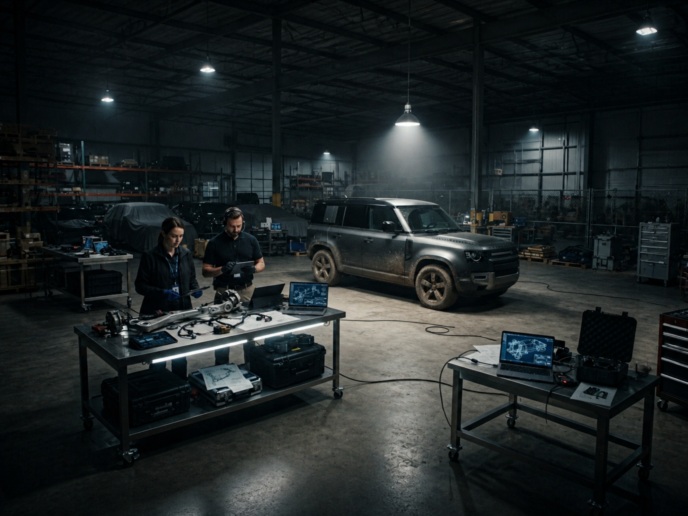
The action is understood to have involved bailiffs entering BYD’s premises to obtain electronic records and internal documents that JLR believes could provide evidence of intellectual property infringement.
The dispute centres on the BYD Ti7, a large seven-seat plug-in hybrid SUV developed for the Chinese market under the Fangchengbao brand. The case is expected to be considered by a court in The Hague this week, where a judge will assess whether JLR’s allegations warrant further legal action.
JLR Seeks Evidence Against Chinese Rival
According to reporting by The Sunday Times, JLR believes BYD may have obtained information about the Land Rover Defender by dismantling and examining an existing vehicle during the development of the Ti7.
The allegations centre on claims that this process involved reverse-engineering aspects of the Defender, potentially allowing BYD to reproduce elements of its technology or design.
JLR’s legal representatives reportedly sought an urgent order to secure digital evidence before relevant records could potentially be deleted or destroyed.
The operation has reportedly encountered resistance, with BYD accused of attempting to delay the seizure of documents. The newspaper also reported that bailiffs described the alleged obstruction as unprecedented.
Neither manufacturer has publicly commented on the specific allegations, with both citing ongoing legal proceedings.
Importantly, the claims have not yet been established in court. The legal process will need to determine whether BYD infringed JLR’s intellectual property and whether the evidence supports the action being pursued.
BYD Ti7 Puts Pressure On Established SUV Manufacturers
The Ti7 is an important addition to BYD’s expanding model range, particularly as the manufacturer continues to target more established automotive brands with increasingly sophisticated vehicles. The growing influence of Chinese manufacturers is also evident in the UK, where brands such as BYD are attracting increasing interest from business and fleet customers. Our report on Chinese EV brands gaining ground in the UK fleet market examines the latest figures and the manufacturers attracting the most attention.
The seven-seat plug-in hybrid is already sold in China and is being introduced to the UK under the BYD name. UK pricing starts at £47,995, placing it considerably below the seven-seat Land Rover Defender 110, with a price difference of more than £20,000.
Pricing is only one part of the competitive picture, with trade policy also influencing the position of Chinese manufacturers in the UK. Our article on the UK’s approach to tariffs on Chinese electric cars examines the debate surrounding import duties and the potential implications for vehicle prices.
The vehicle combines a large SUV format with plug-in hybrid technology, giving buyers an alternative to traditional premium off-road models.
We’ve previously covered the vehicle’s UK arrival, pricing and specification in our guide to the BYD Ti7 seven-seat plug-in hybrid SUV. The arrival of models such as the Ti7 comes as Chinese manufacturers face changing trade conditions in international markets. Our report on potential EU restrictions on Chinese hybrid vehicles looks at how trade measures could affect the availability of Chinese-built hybrids in the UK.
Its positioning illustrates the challenge facing established manufacturers. Chinese brands are increasingly competing across different vehicle categories, rather than concentrating exclusively on affordable electric cars.
Defender-Inspired Designs Are Becoming More Common
JLR’s dispute with BYD comes as other Chinese manufacturers explore similar design territory.
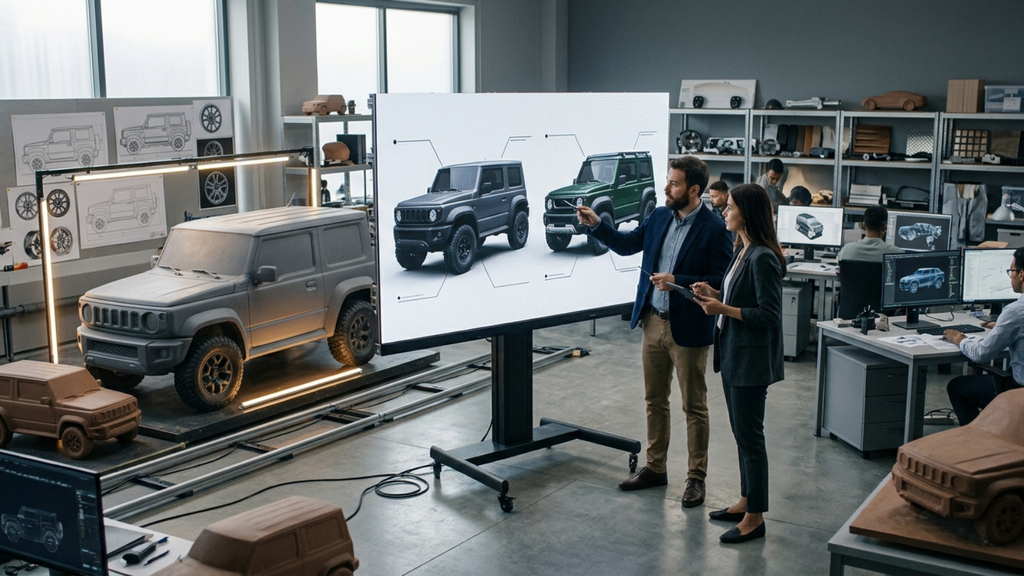
Geely, for example, has unveiled Project K011, an SUV featuring an upright body, squared-off proportions and styling that draws comparisons with the Land Rover Defender.
The vehicle is being developed for a potential European introduction, although its final UK name, pricing and technical specifications have yet to be confirmed.
Our coverage of Geely’s Defender-inspired Project K011 examines how the manufacturer is positioning the new model against established premium off-road SUVs.
However, visual similarities between vehicles do not automatically establish copyright or intellectual property infringement. Automotive manufacturers operate in a competitive market where certain design characteristics, particularly those associated with off-road vehicles, are shared across different models.
The distinction between drawing inspiration from an established vehicle category and unlawfully reproducing protected intellectual property is ultimately a matter for the courts.
JLR Has Previous Experience Of Challenging Chinese Manufacturers
The latest dispute is not JLR’s first major legal confrontation involving a Chinese vehicle manufacturer.
The company previously spent several years pursuing Jiangling Motor over the Landwind X7, a Chinese SUV that attracted considerable attention because of its resemblance to the Range Rover Evoque.
JLR eventually secured a landmark legal victory in Beijing in 2019, with the court finding that the Landwind X7 infringed the Evoque’s design rights.
The outcome was an important development for international manufacturers seeking to protect their intellectual property in China.
The latest proceedings involving BYD demonstrate that concerns over vehicle design, engineering and the protection of proprietary technology remain relevant as competition between international manufacturers intensifies.
Chinese Manufacturers Continue To Expand Their UK Presence
The legal challenge also comes at a time when Chinese automotive brands are becoming increasingly established in the UK.
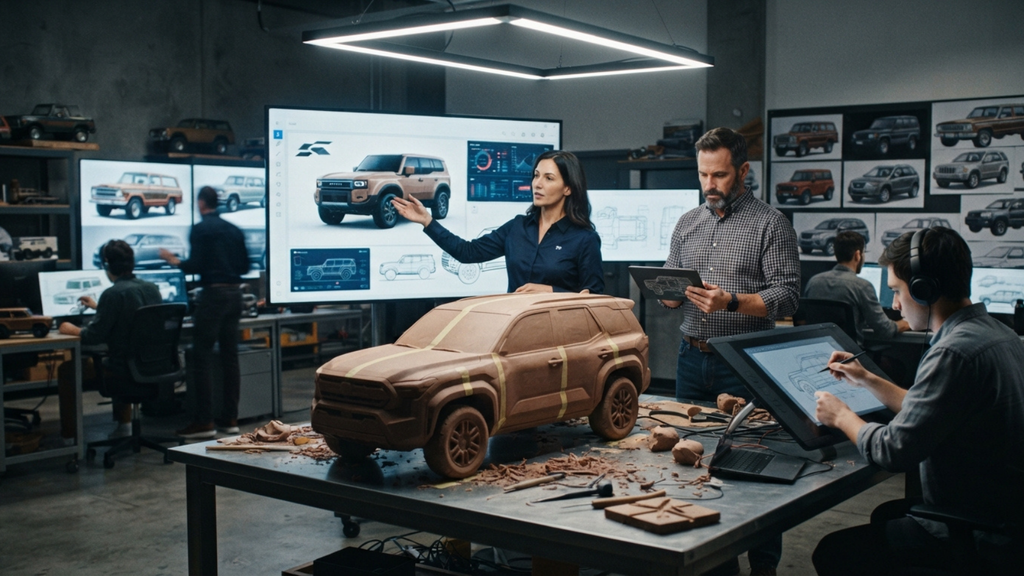
Manufacturers including BYD, Chery, MG, Geely, Jaecoo and Omoda are expanding their model ranges, introducing new technologies and competing for customers traditionally associated with European, Japanese and South Korean brands.
CVC has been following this development, including the rapid expansion of Chinese car manufacturers in the UK market.
The scale of the change is reflected in registration figures. Chinese-owned automotive brands accounted for approximately 15% of UK new car registrations during the first half of 2026, highlighting how quickly their market presence has grown. Our report on Chinese car brands reaching 15% of the UK new-car market examines the registration figures in more detail, including the performance of BYD, MG, Jaecoo and other Chinese manufacturers.
This is part of a much wider shift within the global automotive industry. Our analysis of China’s growing influence over the global car industry by 2035 examines how technology, manufacturing investment and changing consumer expectations could reshape the competitive landscape.
For established manufacturers such as JLR, maintaining a competitive position increasingly involves protecting existing technologies and brand identity while developing vehicles capable of competing on price, performance and innovation.
JLR Takes A Different Approach Through Its Chery Partnership
Interestingly, JLR is also pursuing opportunities through closer cooperation with a Chinese automotive manufacturer.
The company has partnered with Chery Automotive Group through a 50:50 joint venture to bring back the Freelander name as a standalone global automotive brand.
Under the arrangement, JLR retains ownership of the Freelander brand and leads its design through a dedicated Freelander Design Hub. Chery contributes its technology, intelligent vehicle systems and established manufacturing and supply-chain capabilities.
The partnership represents a different approach to the changing automotive industry, allowing JLR to combine its established brand heritage with the resources and technological expertise of a major Chinese manufacturer.
It also demonstrates that competition and collaboration between international automotive groups are increasingly taking place at the same time.
The outcome of JLR’s legal challenge against BYD could therefore have wider implications for how manufacturers protect their designs and technologies as the global automotive market becomes increasingly competitive.
 Call our expert team on