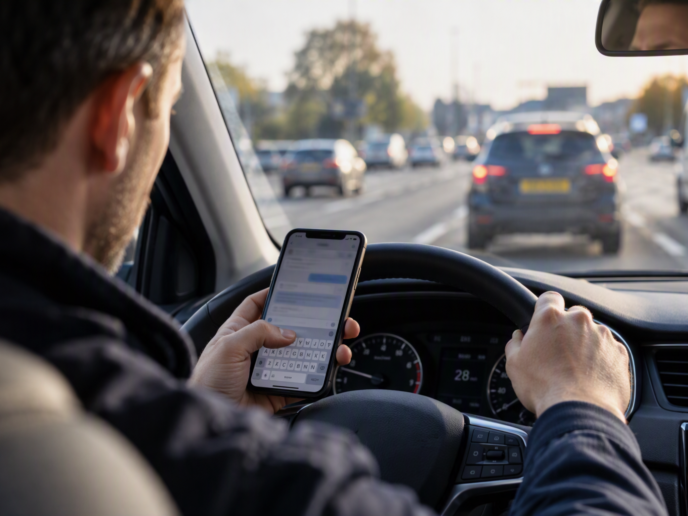
Two-thirds of UK motorists believe penalties for using a mobile phone while driving should be increased, according to research by insurer Allianz. However, the findings also highlight a gap between drivers’ support for tougher enforcement and their own behaviour on the road.
The survey found that 67% of respondents supported higher fines for handheld mobile phone use while driving, despite 31% admitting to texting behind the wheel.
Under current UK rules, drivers caught using a handheld mobile phone while driving face a £200 fine and six penalty points on their licence. Penalties are only one part of road safety enforcement, with educational interventions also used for certain offences, as explained in our guide to speed awareness courses versus three penalty points.
Businesses should also ensure employees understand their legal obligations when driving for work, including the rules covered in this guide to leased vehicle driver responsibilities.
Support for stricter measures extended beyond financial penalties. More than half of those surveyed (54%) backed increased penalty points and driving bans, while 33% wanted more police patrols and camera-based enforcement to identify motorists using their phones illegally.

Mobile Phone Distraction Remains A Road Safety Concern
The findings suggest that mobile phone use remains a concern for motorists, although attitudes towards the risks appear divided.
Almost one in five respondents (19%) said they regularly used their phones for navigation while driving. Meanwhile, 86% acknowledged that staying focused on the road was their personal responsibility.
Despite this awareness, 18% said they had experienced a near-miss caused by mobile phone use in the previous three years. Among those who used their phones heavily, the proportion increased to 59%. Mobile phone distraction is not the only driver behaviour that can put road users at risk. CVC has also covered the dangers of drug driving and the importance of raising awareness among fleet drivers.
The use of technology to identify unsafe driving is also being explored in Scotland, where an AI camera trial targeting mobile phone use and seatbelt offences is examining how these behaviours can be detected on the road.
Driver distraction is one of several safety concerns for businesses operating vehicles, alongside the risks associated with faulty brakes and tyres in commercial fleets.
Perceptions of the danger also varied considerably. Just 37% of respondents viewed handheld phone use while driving as a high-risk activity, while 21% considered it to pose little or almost no risk.
These findings underline the challenge of turning awareness of distracted driving into safer habits, particularly when checking messages, making calls or adjusting navigation can become part of a driver’s routine.
UK Motorists Show Strong Support For Higher Fines
The research forms part of Allianz’s 14th annual Motor Day study, which covers nine countries. Of all the countries surveyed, the UK recorded the strongest support for increasing fines for mobile phone use behind the wheel.
Matt Cox, chief claims officer at Allianz UK, said drivers appeared to recognise both the dangers of distraction and their responsibility to concentrate while driving. However, he emphasised that recognising the risks must lead to changes in behaviour.
He also highlighted how seemingly minor actions, such as checking a message or adjusting a phone screen, can divert a driver’s attention at a critical moment.
While existing legislation carries significant penalties, the insurer stressed that motorists must make a conscious decision to put their phones away and concentrate fully on the road.
For businesses operating cars and vans, the findings highlight the importance of addressing driver distraction as part of wider road safety measures. Clear mobile phone policies, driver awareness and consistent enforcement of safe driving practices can help reduce avoidable risks. Mobile phone use is just one of several driver-safety risks businesses need to address, alongside the dangers covered in our guide to drink and drug driving risks for fleets.
Effective fleet management solutions can also help businesses coordinate their wider vehicle management responsibilities.
 Call our expert team on