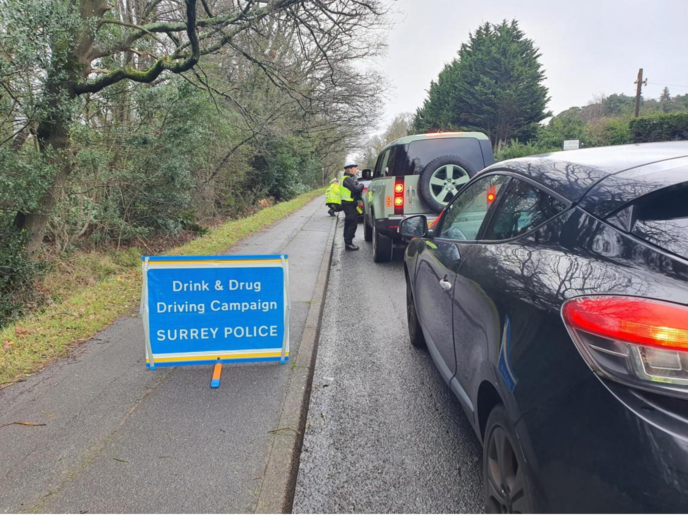
Businesses operating cars and vans need to take drink- and drug-driving seriously, with changes to drink-drive limits being considered alongside growing concerns about illegal drug use among motorists.
For fleet operators, the issue goes beyond whether an employee is fit to drive during working hours. Driver safety and compliance are just two of the responsibilities contributing to why fleet management is becoming more demanding for UK businesses. Drivers can potentially fall foul of the law because of alcohol or drugs consumed outside work, while employers can also face significant safety, legal and reputational consequences when a driver gets behind the wheel while over the limit.
Drug-driving is particularly complicated because, unlike alcohol, there is no straightforward timeframe that tells a driver when a substance will have left their system.
Cannabis Remains The Most Commonly Used Illegal Drug
Cannabis continues to be the most commonly used illegal drug in England and Wales, according to the latest figures from the Office for National Statistics (ONS).
The year ending March 2025 figures show that 6.5% of people aged between 16 and 59 had used cannabis during the previous 12 months. That equates to around 2.3 million people.
Among younger adults, the proportion was considerably higher. Cannabis use was reported by 12.5% of people aged between 16 and 24.
There are no specific official figures showing how many drug-driving convictions relate specifically to THC, the main psychoactive component of cannabis. However, available data indicates that cannabis and cocaine account for the vast majority of substances detected through roadside drug testing, with THC making up most of those cases.
For businesses operating company cars, vans or other work vehicles, this creates a risk that cannot simply be addressed by checking whether a driver appears impaired at the beginning of a working day.

Drug-Driving Law Does Not Rely On Impairment Alone
England and Wales introduced the current drug-driving legislation in 2015.
The legislation established specific limits for a number of controlled substances. For some drugs, the limits are deliberately very low, meaning a driver can commit an offence by having more than the prescribed concentration in their system rather than the prosecution having to demonstrate that their driving was visibly impaired.
This distinction is particularly important when it comes to cannabis.
A driver might no longer feel the effects of cannabis but could still have THC in their bloodstream above the legal threshold.
There is also no universally reliable calculation that tells someone how long they need to wait after using cannabis before they can legally drive.
The amount of time a substance remains in someone’s system can vary considerably depending on factors including the individual, the drug itself, how frequently it is used and how it is consumed.
As a result, advice based on a simple number of hours or a claim that someone will definitely be safe to drive the following morning cannot be relied upon.

There Is No Simple ‘Next Morning’ Rule
This is one of the biggest challenges for businesses attempting to manage drug-driving risks.
With alcohol, drivers can at least understand that their blood or breath alcohol concentration is measured against a specific legal limit. Even then, it is impossible to accurately calculate how many drinks an individual can consume and remain below the limit.
Drug-driving is more complicated because the presence of a substance can remain after its noticeable effects have disappeared.
The source article’s legal experts highlight that a driver does not necessarily have to feel intoxicated or impaired for an offence to have been committed.
THC, for example, has a statutory blood limit of 2 microgrammes per litre.
There is no dependable formula that allows a driver to calculate precisely when their blood concentration will fall below that figure.
This means businesses should be wary of policies or driver guidance that suggests recreational drug use is simply a matter of leaving a certain number of hours between using a substance and driving.
Different Countries Take Different Approaches
The UK’s approach to THC is among the stricter approaches used internationally.
Germany, for example, has a THC threshold of 3.5 microgrammes per litre, while the Netherlands uses a 3 microgrammes per litre limit.
Some other countries use zero-tolerance systems where detectable amounts of certain substances can result in prosecution.
There are also jurisdictions in the United States that use higher THC thresholds, including a 5 microgrammes per litre limit in states such as Washington, Montana and Illinois.
The different approaches highlight the difficulty of establishing a direct relationship between the amount of THC detected in someone’s blood and their actual level of impairment.
The World Health Organisation has recognised the complexity of measuring cannabis impairment because THC clearance can vary significantly between occasional and regular users.
This is one reason there is no equivalent of a simple alcohol-style formula for determining when cannabis use is no longer relevant to driving.
Young Drivers Are A Particular Concern
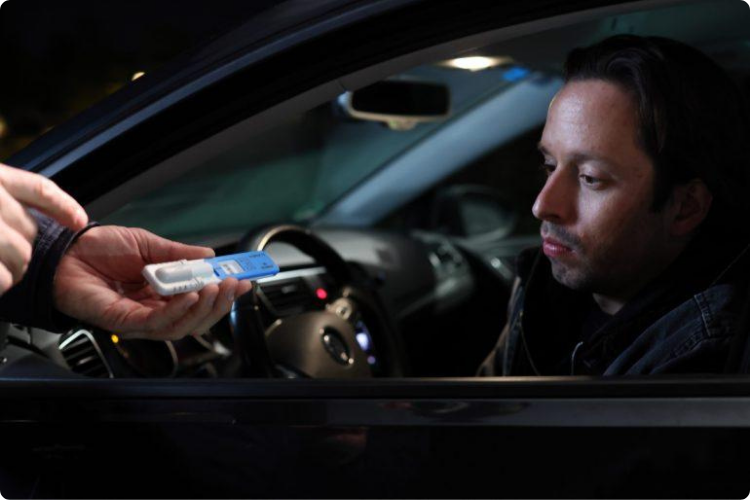
Young male drivers are identified as a particular risk group when it comes to drug-driving.
Department for Transport figures cited in the source material indicate that around 90% of drivers impaired by drugs in collisions are male, while around 40% are aged between 17 and 29.
More recent DVLA data analysed by IAM RoadSmart also indicates that young drivers account for a disproportionate share of drug-driving endorsements.
Drivers aged between 17 and 24 represented around 6% of licence holders but received 18% of drug-driving licence endorsements in 2025.
The youngest drivers were particularly prominent in the figures. Those aged 17 to 19 accumulated more than 1,100 drug-driving endorsements, compared with 464 among drivers aged 60 and over.
For businesses employing younger drivers, this reinforces the importance of making drug-driving part of normal driver education rather than treating it as an issue that only needs to be discussed after an incident.
The ‘I Feel Fine’ Problem
One of the biggest misconceptions around drug-driving is that a driver can safely drive once they no longer feel the effects of a substance. CVC has previously covered the Department for Transport’s drug-driving campaign and the particular risks it highlights for fleet drivers.
The Department for Transport’s Think! campaign has specifically targeted this belief.
According to the campaign information cited in the source material, 41% of young men aged between 17 and 29 believed it was acceptable to drive after taking drugs if they felt fine.
That belief does not reflect the way drug-driving legislation operates.
The effects a driver can feel may disappear before the substance has cleared their bloodstream. Individual differences also mean that there is no universal period that can be applied to every driver.
For fleet operators, this makes education particularly important.
Drivers need to understand that recreational drug use outside working hours can still have consequences for their ability to drive legally when they return to work.
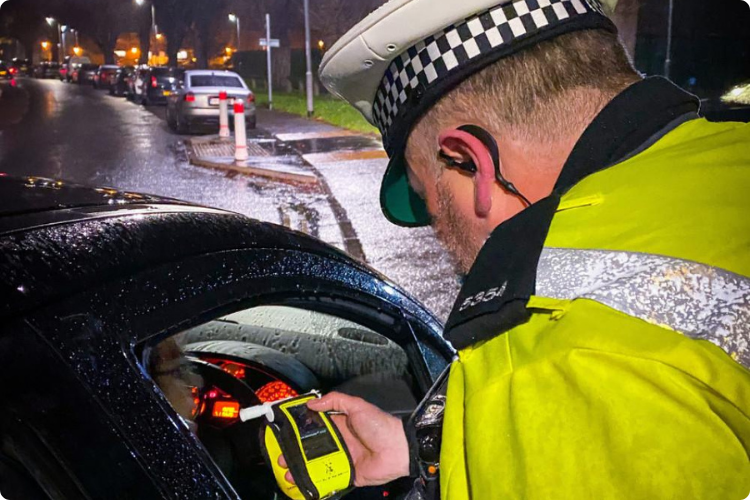
Prescription Medication Also Needs To Be Considered
Drink- and drug-driving policies should not focus exclusively on illegal substances.
Prescription and other medication can also affect a person’s ability to drive.
Fleet managers should therefore make sure drivers understand that they need to tell the appropriate person within their organisation if medication could affect their ability to drive safely.
This is particularly relevant where employees are expected to drive regularly as part of their job.
A driver who is uncertain about whether medication affects their ability to drive should have a clear route for raising the issue without feeling that they will automatically be penalised for doing so.
The aim should be to prevent an unsafe journey from taking place in the first place.
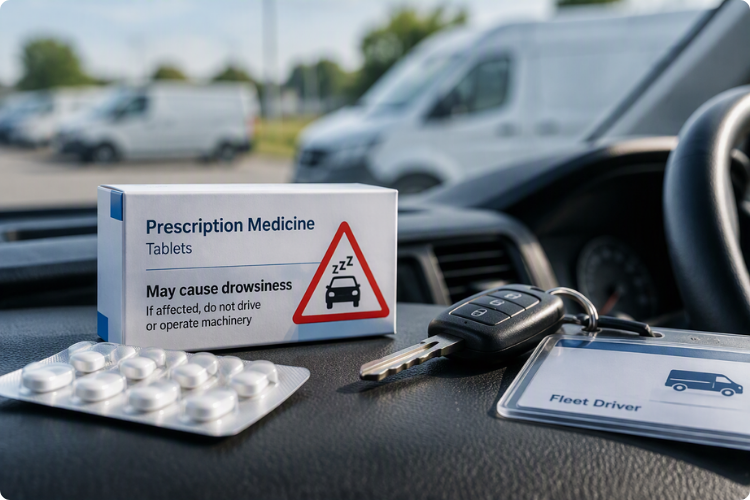
Fleets Need Clear Driver Policies
Fleet operators already recognise that they have an important role to play in tackling drug-driving.
A Fleet News survey cited in the source material found that 84% of fleet respondents had a drug-driving policy.
Two-thirds had a dedicated policy, while a further 18% dealt with drug-driving as part of a wider driving policy.
Having a policy in place, however, is only one part of the process.
Drivers need to understand what the policy means, how it applies to them and what they should do if they are potentially unfit or legally unable to drive. This should form part of their wider leased vehicle driver responsibilities, particularly where a vehicle is being provided for business use.
Policies should also be supported by appropriate training, monitoring and practical procedures. For businesses operating larger fleets, fleet management solutions can also help with the wider administration and oversight involved in managing company vehicles.
For larger fleets, businesses may also consider measures such as drug screening and random testing, depending on their circumstances and legal obligations.
A Supportive Approach Still Matters
Enforcement and testing are only part of effective fleet risk management.
Employees should also understand that there needs to be a way to report concerns about their fitness to drive.
A driver who believes they may be unfit should not feel pressured into getting behind the wheel simply because they are expected to complete a job, attend a meeting or deliver a vehicle.
This is particularly important for fleet managers and line managers, who can play a significant role in creating a workplace culture where safety takes priority over completing a journey at all costs.
A clear policy should therefore explain not only what is prohibited, but also what a driver should do when there is uncertainty.
Drink-Driving Rules Could Also Change
The focus on drug-driving comes as the Government considers the future of drink-driving limits in England and Wales.
The current drink-drive limit has been in place since 1967 and is higher than the limit used in Scotland.
For drivers in England, Wales and Northern Ireland, the current limits are:
| Measurement | Current limit |
|---|---|
| Blood | 80mg of alcohol per 100ml |
| Breath | 35 microgrammes per 100ml |
| Urine | 107mg of alcohol per 100ml |
Scotland operates lower limits of 50mg of alcohol per 100ml of blood, 22 microgrammes per 100ml of breath and 67mg per 100ml of urine.
Northern Ireland is also planning to introduce lower limits.
The possibility of reducing the limit in England and Wales means fleet operators may need to monitor developments and consider whether existing driver guidance will need to be updated.
Scotland Provides An Example Of Lower Limits
Scotland reduced its drink-drive blood alcohol limit in 2014.
Research from Imperial College London cited in the source material found that the change was associated with a 12% reduction in road crashes across Scotland.
The analysis also found a reduction of almost 30% in crashes in rural areas during higher-risk periods, including at night.
However, lowering the legal limit is not considered to be sufficient on its own.
Road safety experts have highlighted the importance of enforcement and continued public awareness alongside any change in legislation.
For fleet operators, this is another reason why driver education should remain an ongoing part of fleet management rather than something carried out only when legislation changes.
What Should Fleet Operators Do?
Businesses running company cars and vans can take several practical steps to reduce drink- and drug-driving risks.
First, the business should have a clear driving policy that specifically addresses alcohol, illegal drugs and medication that could affect driving ability.
Drivers should understand that the policy applies to journeys carried out for work and that substance use outside working hours can still become a workplace issue if it affects their ability to drive legally and safely.
Driver training should also explain the difference between feeling impaired and being over a legal limit.
This is particularly important for drug-driving because the two do not necessarily occur at the same time.
Businesses should also make sure drivers know who to contact if they believe they are not fit to drive. The process should be straightforward and should not encourage employees to take unnecessary risks simply to complete a work journey.
Where appropriate, organisations can also consider drug and alcohol testing as part of a wider risk-management programme, provided the approach is properly designed and implemented.

The Risk Extends Beyond The Driver
Drink- and drug-driving can create consequences for more than the individual behind the wheel.
A collision involving a company vehicle can result in vehicle downtime, disruption to operations, damage to property, injuries to employees or members of the public and potentially significant financial costs.
There can also be consequences for a company’s reputation. For businesses managing multiple vehicles, one-stop fleet solutions can help bring different aspects of vehicle supply and ongoing fleet support together.
For businesses that rely heavily on vehicles, losing a driver through a driving ban can create further operational problems, particularly where there are limited numbers of qualified or experienced drivers available.
This makes drink- and drug-driving an important fleet-management issue rather than simply a matter of individual driver behaviour.
Building A Stronger Fleet Safety Culture
The most effective approach is likely to be one where drink- and drug-driving is treated in the same way as other major fleet risks.
Drivers need clear information about the law, the company’s expectations and the potential consequences of getting behind the wheel when they are not legally or physically fit to drive.
Managers also need to understand their responsibilities and be prepared to support employees who raise concerns.
For fleet operators, the message is straightforward: a driver should not be expected to drive when there is genuine uncertainty about whether they are fit or legally entitled to do so.
With drug-driving convictions having increased substantially since the current legislation was introduced, and potential changes to drink-driving limits being considered, businesses have good reason to keep their fleet policies and driver education under regular review.

 Call our expert team on