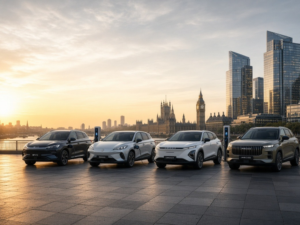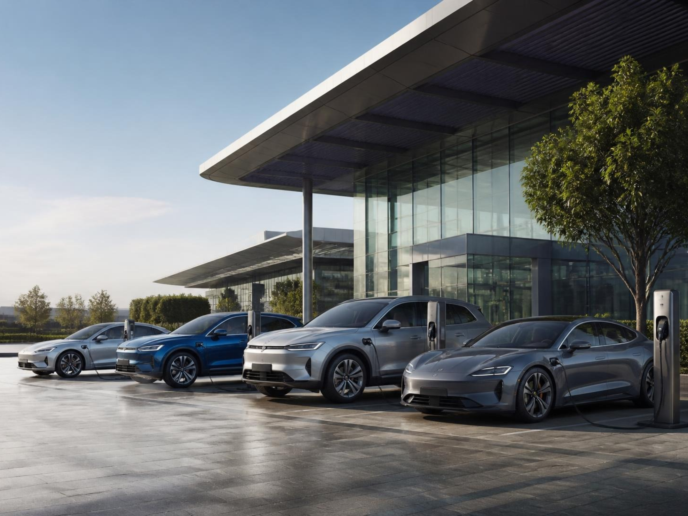
Fleet & Mobility Live returns to the NEC Birmingham on 6 and 7 October 2026, bringing together thousands of fleet professionals for two days focused on the latest developments in company cars, commercial vehicles, mobility, fleet management and vehicle technology.
The event is expected to attract more than 2,000 fleet professionals, with more than 100 exhibitors and over 60 speakers taking part across the two-day event. More than 20 vehicle manufacturers have also been confirmed, giving visitors the opportunity to see a wide selection of new cars and vans in one location.
Electrification will be one of the major themes, with manufacturers continuing to bring longer-range EVs, new electric SUVs and alternative powertrain options to the fleet market. That growing choice comes as electric vehicle sales continue to increase across Europe, highlighting the wider shift taking place across the automotive market.
Among the premium cars attracting attention will be new models from BMW, Volvo, Škoda and Denza.
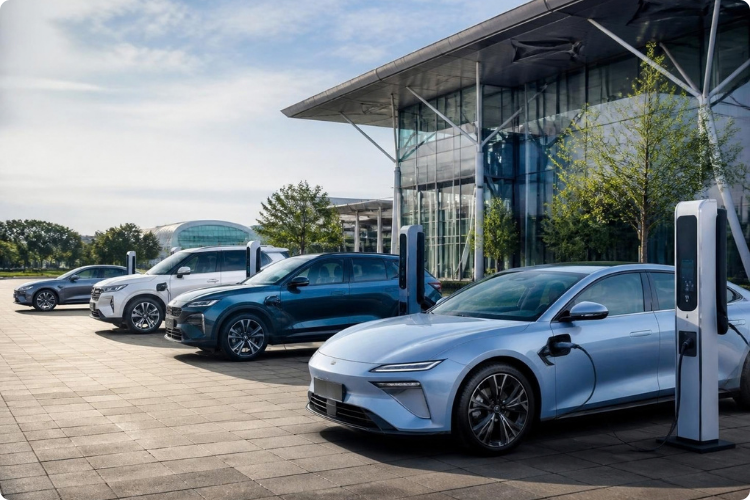
What Is Fleet & Mobility Live 2026?
Fleet & Mobility Live is aimed specifically at the fleet and mobility sector, bringing manufacturers, leasing companies, technology providers, charging specialists and other suppliers together with fleet decision makers responsible for everything from vehicle selection to fleet management.
The 2026 event takes place in Hall 6 at the NEC Birmingham, with the show open from 9:30am to 4:30pm on Tuesday 6 October and from 9:30am to 4pm on Wednesday 7 October. Admission is free for visitors.
The event covers considerably more than new vehicle launches. Its agenda includes areas such as fleet electrification, legislation, sustainability, employee benefits, cost control, compliance and fleet operations, reflecting the increasingly complex decisions businesses have to make when choosing and managing vehicles.
For businesses reviewing their next company cars, this makes the event particularly relevant as manufacturers continue to increase the number of electric models available through business car leasing.
BMW i3
The new BMW i3 is one of the headline electric cars to look out for at the show.
BMW’s new-generation i3 is expected to arrive in the UK towards the end of 2026 and will be offered in both saloon and estate forms. The model is being positioned alongside the combustion-engined BMW 3 Series rather than simply replacing it with an electric alternative.
The i3 will also join an existing BMW electric line-up that already includes models such as the BMW i4, giving fleet and company-car drivers a choice of different electric body styles and specifications from the manufacturer.
One of its biggest selling points is expected to be range. BMW quotes up to 559 miles from a single charge, putting the i3 among the longest-range electric production cars.
The launch model uses a 115kWh battery and supports charging at up to 400kW. BMW says that, under suitable conditions, around 248 miles of additional range can be added in approximately 10 minutes.
That combination of range and charging performance could make the i3 particularly relevant to drivers considering electric company cars and covering high annual mileages, where minimising charging stops can be just as important as the headline battery capacity.
The estate version could also broaden the i3’s appeal to business users who need additional luggage capacity without moving into an SUV.
BMW’s wider electric performance programme is also moving forward, with the forthcoming electric M3 being developed around the company’s Neue Klasse architecture and a four-motor drivetrain. The model has already been spotted testing at the Nürburgring, highlighting how BMW is approaching electric performance alongside its more efficiency-focused models.
Volvo EX60
Volvo’s new EX60 is another major addition to the premium electric SUV market.
The five-seat SUV uses Volvo’s latest 800-volt electrical architecture and is available with several powertrain and battery configurations. The range-topping version can deliver a claimed 503.3 miles of WLTP range, while Volvo says the vehicle can add up to 211 miles of range in 10 minutes using a suitable 400kW DC charger.
The EX60 is available with rear-wheel drive and all-wheel drive configurations, with power outputs extending considerably beyond what would traditionally be expected from a mid-sized family SUV.
The range-topping P12 AWD produces 680hp, can accelerate from 0–62mph in 3.9 seconds and has a top speed of 112mph.
Volvo has also focused heavily on technology. The EX60 uses the company’s next-generation computing architecture and supports over-the-air software updates, while its 800-volt system is designed to improve both charging speed and efficiency. The EX60 is also part of Volvo’s wider expansion of its electrified range, with the manufacturer continuing to introduce new electric and electrified models across different segments.
With the first European customer deliveries already underway, the EX60 is moving beyond being a future model and into the hands of drivers.
For fleet operators, it provides another premium SUV option for drivers who want the practicality and elevated driving position of an SUV without moving away from a fully electric powertrain.
Škoda Peaq
The Škoda Peaq is perhaps one of the more interesting models at the event because it demonstrates how far electric SUVs are developing in terms of practicality and range.
As Škoda’s new flagship, the Peaq is a seven-seat electric SUV and uses the manufacturer’s largest battery to date, with the Peaq 90 equipped with a 91kWh battery.
Škoda quotes more than 640km of range for the Peaq 90, equivalent to more than 397 miles, while the model supports DC charging from 10% to 80% in around 28 minutes. It can also tow up to 2,000kg and offers bidirectional charging capability.
The Peaq has also recently demonstrated just how efficient an electric SUV can be.
In September, a standard production Peaq completed a 581.6-mile journey on a single charge, travelling from Škoda’s headquarters in the Czech Republic to Zandvoort in the Netherlands without recharging. The journey was completed under the supervision of TÜV SÜD and achieved average energy consumption of 9.2kWh per 100km.
That figure should not be confused with the vehicle’s normal real-world range. The journey was specifically designed to maximise efficiency, while everyday driving involves different speeds, temperatures, traffic and road conditions.
Nevertheless, it provides an interesting demonstration of what can be achieved from the Peaq’s combination of battery technology, aerodynamics and efficient electric powertrain.
CVC has already covered the Peaq’s range record in more detail in Škoda Peaq Sets 581-Mile Electric SUV Range Record Ahead Of UK Deliveries.
Denza Z9GT
Denza is BYD’s premium brand and is another manufacturer adding greater choice to the UK’s expanding electric vehicle market, as Chinese EV brands strengthen their position in the UK fleet market.
The Z9GT stands out from many conventional electric SUVs because of its combination of performance, luxury and fast-charging technology.
The model is available with both plug-in hybrid and fully electric powertrains, highlighting the different approaches manufacturers are taking to electrification. Businesses comparing these options can also consider the differences between BEV, PHEV, HEV and ICE powertrains when assessing which type of vehicle is appropriate for individual drivers.
The PHEV combines a 2.0-litre petrol engine with a 64kWh battery and three electric motors, producing up to 776PS.
The fully electric version takes performance considerably further, with up to 1,156PS and a claimed 0–62mph time of just 2.7 seconds.
A 122kWh battery provides a claimed range of up to 373 miles, while Denza’s Flash Charging technology is designed to provide extremely rapid charging when connected to compatible infrastructure.
The Z9GT therefore represents a different approach to premium electrification, combining very high performance with the long-distance capability and charging technology increasingly expected from high-end electric vehicles.
More Than Just New Cars
While the new vehicle displays are likely to be one of the biggest attractions, the scale of Fleet & Mobility Live means there is considerably more for fleet operators to investigate.
The event brings together businesses working across charging infrastructure, fleet management, telematics, vehicle finance, contract hire and leasing, maintenance, insurance, compliance and vehicle technology. The official exhibitor categories reflect the increasingly broad range of services now involved in running a modern fleet.
That wider focus is particularly important as businesses move away from simply choosing a vehicle based on purchase price or monthly leasing cost.
Electric vehicles can require businesses to consider workplace charging, driver mileage, public charging availability, taxation, vehicle range and the suitability of different powertrains for individual drivers. The rapid development of ultra-fast charging infrastructure is also becoming increasingly important, with initiatives such as BYD’s planned 300 Flash Chargers across the UK highlighting how charging networks are evolving alongside the latest electric vehicles.
The expansion of charging infrastructure is particularly relevant for businesses operating vehicles across longer distances, where access to reliable public charging can have a direct impact on journey planning and vehicle downtime. The growth of the wider EV charging infrastructure network is therefore an important part of the wider transition to electric fleets.
For fleet managers, an event bringing vehicle manufacturers and the wider fleet supply chain together provides an opportunity to consider those issues alongside the latest vehicles themselves. The growth of the UK EV charging network is also an important part of this wider transition, particularly for businesses whose drivers regularly undertake longer journeys.
Electric Cars Are Becoming A Bigger Part Of Fleet Choice
The vehicles being showcased at Fleet & Mobility Live also reflect the rapidly expanding choice of electric cars available to businesses, with more than 170 electric car models now available in the UK. That choice already extends across different vehicle sizes and price points, from more compact executive models through to luxury electric saloons such as the BMW i7.
The BMW i3 is targeting long-distance drivers with an exceptionally high claimed range, the Volvo EX60 combines SUV practicality with 800-volt charging, the Škoda Peaq brings seven-seat practicality to the electric market, while the Denza Z9GT demonstrates how electric power can be combined with high-end performance.
This expanding choice is important for businesses developing their fleet electrification strategy because there is no single type of business driver.
A high-mileage sales representative may prioritise range and rapid charging, while a family-focused company-car driver could place greater importance on passenger and luggage space. Other drivers may prioritise performance, technology or the ability to tow.
The increasing variety of electric cars means businesses can increasingly look at the vehicle around the driver’s requirements rather than treating an EV as a one-size-fits-all fleet solution.
For businesses considering the transition, switching to an electric vehicle also requires consideration of charging access, driving requirements and the suitability of different vehicles for individual users. Businesses should also consider how vehicles will be charged at home, at work and through the public network.
Premium Electric Cars At Fleet & Mobility Live 2026
| Model | Powertrain | Battery | Claimed Range | Key Fleet-Relevant Feature |
|---|---|---|---|---|
| BMW i3 | Electric | Up to 115kWh | Up to 559 miles | 400kW charging and long-distance range |
| Volvo EX60 | Electric | Up to 117kWh | Up to 503 miles | 800V architecture and rapid charging |
| Škoda Peaq | Electric | 91kWh | Up to 395 miles UK WLTP | Seven seats and 2,000kg towing capacity |
| Denza Z9GT | Electric / Plug-in Hybrid | Up to 122kWh EV | Up to 373 miles EV | High performance and rapid charging |
Range, battery and performance figures vary according to specification. Official range figures are based on the relevant manufacturer’s testing and should not be regarded as guaranteed real-world range.
Factors To Consider When Choosing An Electric Company Car
| Consideration | Why It Matters For Businesses |
|---|---|
| Annual mileage | Higher-mileage drivers may place greater importance on range and charging speed. |
| Charging access | Home, workplace and public charging availability can influence how practical an EV is. |
| Vehicle range | A longer official range can reduce the frequency of charging stops on longer journeys, although real-world results vary. |
| Charging speed | Faster DC charging can reduce downtime when drivers need to recharge during business journeys. |
| Running costs | Electricity costs, charging arrangements and annual mileage all contribute to the overall cost of operating an EV. |
| Company-car taxation | Benefit-in-kind taxation remains an important consideration when comparing vehicles available to employees. |
| Practicality | Seating capacity, luggage space and towing ability can be particularly important for employees using their cars for work and family purposes. |
| Funding method | Leasing and other funding options can affect monthly costs, cash flow and how businesses manage their vehicle fleets. |
Businesses considering leasing should also understand the vehicle leasing process, from selecting a suitable vehicle and funding method through to application and delivery.
Fleet & Mobility Live 2026 Highlights The Changing Fleet Market
Fleet & Mobility Live 2026 arrives at a time when the UK fleet market is undergoing significant change.
Manufacturers are continuing to expand their electric ranges, new brands are entering the UK market and charging technology is developing alongside the vehicles themselves.
At the same time, fleet operators are having to consider taxation, operating costs, sustainability targets and changing government policy when making vehicle decisions. Benefit-in-kind (BIK) tax is particularly important for businesses providing company cars, as the tax treatment can affect the overall cost of providing vehicles to employees.
The presence of more than 20 vehicle manufacturers and more than 100 exhibitors at this year’s event provides a useful snapshot of just how broad the modern fleet market has become.
For businesses considering their next company cars, the event therefore offers more than an opportunity to look at new models. It provides a chance to compare different approaches to electrification and see how the latest vehicles, technology and fleet services could fit into their wider fleet lifecycle management strategy.
With the BMW i3, Volvo EX60, Škoda Peaq and Denza Z9GT among the premium electric models attracting attention, Fleet & Mobility Live 2026 should provide an interesting look at where the next generation of company cars is heading.
 Call our expert team on