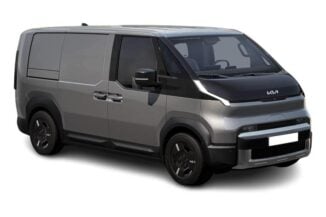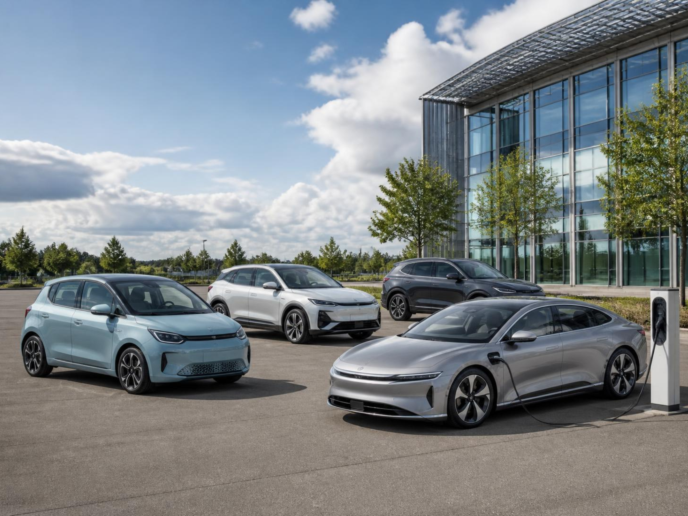
The choice of electric cars available to UK drivers has more than doubled in just three years, with manufacturers continuing to expand their battery electric vehicle ranges across almost every part of the market.
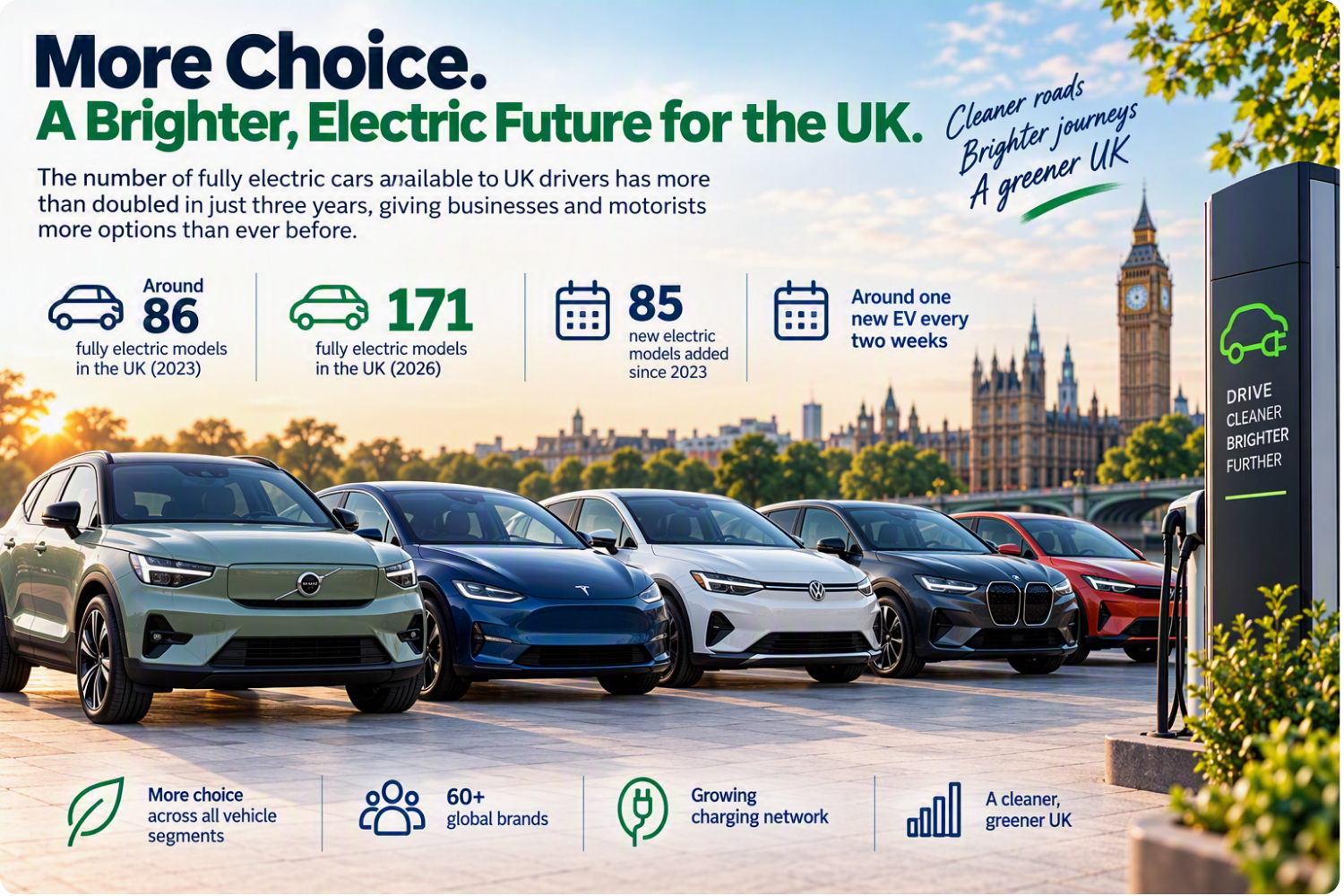
Research from the Society of Motor Manufacturers and Traders (SMMT) shows that around 85 new fully electric cars have entered the UK market since 2023. That has taken the number of battery electric models available to buyers to 171, compared with around 86 three years ago.
The Growth In Electric Vehicle Choice
| Measure | 2023 | 2026 |
|---|---|---|
| Battery electric models | Around 86 | 171 |
| New battery electric models added | — | 85 |
| Rate of new EV introductions | — | Around one every two weeks |
The rapid expansion means electric vehicles are no longer concentrated in a small number of vehicle segments. Manufacturers are now offering electric alternatives across a much broader range of body styles, sizes and price points.
Individual manufacturers are also continuing to expand their electric and electrified line-ups, such as Volvo’s plans for 13 new electrified cars as it reshapes its future range.
This wider choice is also being driven by the arrival and expansion of new manufacturers, with Chinese Car Manufacturers Strengthen Their Position in the UK Automotive Market as businesses are presented with more electric models to consider.
For businesses and company car drivers, the increase in choice also provides more opportunities to consider electric vehicles alongside petrol, diesel and hybrid alternatives.
Our guide to the top 10 electric cars to lease in 2026 also highlights how quickly the range of electric vehicles available to UK drivers has developed.
More Than 170 Electric Cars Now Available
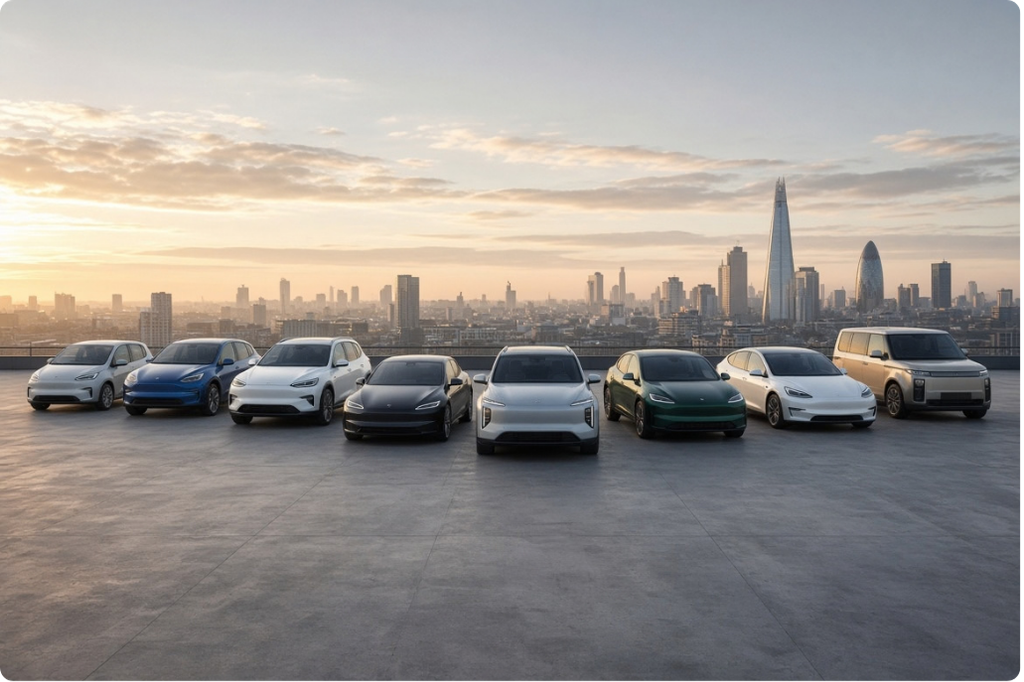
According to the SMMT research, manufacturers have effectively introduced around one new fully electric model every two weeks over the past three years.
That investment has significantly changed the UK new-car market.
There are now 171 battery electric models available, alongside 109 plug-in hybrids and 52 conventional hybrids. Combined, that means more than three-quarters of the models available on the UK market have some ability to drive without relying solely on an internal combustion engine.
The overall UK market now offers around 385 models across different powertrains, with more than 60 global vehicle brands represented.
UK Market Choice By Powertrain
| Powertrain | Models Available |
|---|---|
| Battery electric (BEV) | 171 |
| Plug-in hybrid (PHEV) | 109 |
| Hybrid (HEV) | 52 |
| Other powertrains | 53 |
| Total | 385 |
For motorists considering a switch to an electric vehicle, that means there is considerably more choice than there was only a few years ago.
Electric Vehicles Across More Vehicle Segments
The growth in electric models is not simply about manufacturers adding more versions of the same type of car.
Electric vehicles are increasingly available across different sections of the market, from smaller cars designed for urban driving through to larger family vehicles and premium models.
The expansion is also being helped by new manufacturers entering the UK, with Chinese EV brands gaining ground in the UK fleet market as they introduce more models and compete for business customers.
Electric vehicles are increasingly available across different sections of the market, from smaller cars designed for urban driving through to larger family vehicles and premium models. This reflects the broader change in the UK vehicle market, where buyers now have more choice across different powertrains and vehicle types.
This wider availability is important because the suitability of an electric vehicle depends heavily on how it will be used.
A driver covering relatively predictable daily mileage may have very different requirements from someone regularly travelling long distances. Similarly, businesses operating vehicles for work need to consider payload, charging access, journey patterns and downtime alongside the vehicle itself.
That is why the growth in choice is significant. It gives drivers and businesses more opportunity to select a vehicle that fits their individual requirements rather than having to adapt their requirements around the limited number of electric models available.
Hybrid Vehicles Continue To Provide Another Option
While the growth of battery electric vehicles has been substantial, the SMMT figures also highlight the continued availability of hybrid technology.
There are now 109 plug-in hybrid models and 52 conventional hybrid models on the UK market.
For some drivers, a plug-in hybrid can provide a combination of electric driving for shorter journeys and an internal combustion engine for longer trips. Conventional hybrids provide another option, using electric assistance without requiring the vehicle to be plugged in.
Our guide to BEV, PHEV, HEV and ICE explains the differences between the main powertrain types and how they work.
The expanding range of technologies means the decision is no longer simply about choosing between petrol, diesel or a fully electric vehicle. Drivers and businesses can consider several different powertrains based on how the vehicle will actually be used.
Greater Choice For Business Fleets
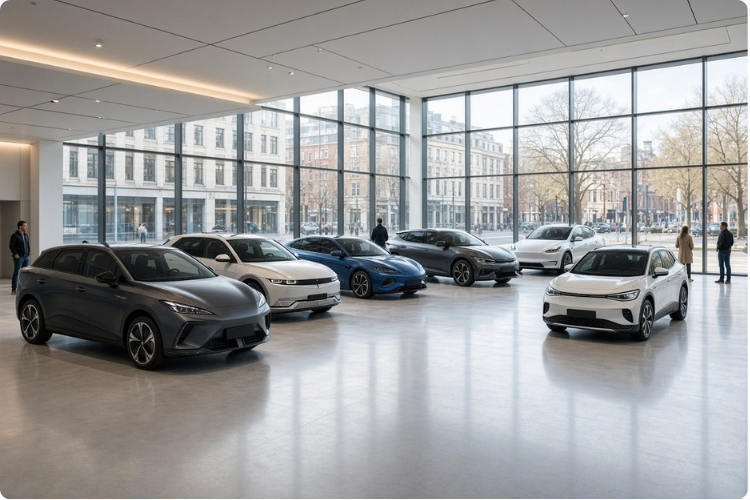
The increase in available electric models is particularly relevant to businesses looking at fleet replacement. For businesses replacing several vehicles, fleet lifecycle management can help provide a structured approach to reviewing vehicle requirements as part of a wider replacement strategy.
Fleet operators have traditionally had to balance vehicle suitability with acquisition costs, running costs, operational requirements and driver expectations. The larger number of electric models now available gives businesses more scope to introduce electric vehicles without necessarily compromising on the type of vehicle required.
The wider choice is also arriving as more businesses consider the practicalities of fleet electrification.
Our article on Leasing Providers Continue to Drive Fleet Electrification looks at the role leasing providers can play as businesses assess the move towards electric vehicles.
For businesses that are considering several vehicles rather than a single company car, fleet management solutions can also provide a broader approach to managing vehicle requirements across the fleet.
Charging Remains An Important Consideration
The growing number of electric vehicles available does not remove some of the practical considerations associated with switching to EVs.
Charging remains one of the key areas businesses and drivers need to consider before choosing an electric vehicle.
For businesses, this can involve workplace charging, home charging for employees, public charging and how vehicles are used during the working day.
Our guide to electric vehicle charging for UK businesses covers the different charging options available to businesses and employees. The UK charging network is also continuing to expand, giving EV drivers more options when charging away from home. Our article on the UK EV charging network looks at how the public charging infrastructure is developing.
The availability of charging infrastructure is also continuing to develop, while drivers without off-street parking face a different set of considerations. We have previously looked at the issue of EV charging without a driveway and the challenges faced by households that cannot install a home charger.
For fleets, understanding charging requirements before choosing vehicles can be just as important as assessing the vehicle’s range or purchase price.
Manufacturers Continue To Invest In Electric Vehicles
The SMMT says the increase in choice is the result of sustained investment by vehicle manufacturers.
Developing a completely new vehicle is a lengthy process, with new models typically taking three to five years to develop and launch.
That means many of the electric vehicles now reaching UK showrooms have been in development for several years.
The increasing number of models therefore provides an indication of how manufacturers have been responding to the long-term shift towards lower-emission vehicles.
It also means the UK market is likely to continue changing as manufacturers bring further electric models to market.
 Call our expert team on