Electric vehicle adoption in the UK is continuing to accelerate, with record sales highlighting just how quickly the market is moving towards its next phase of electrification. But with more EVs arriving on the road, attention is increasingly turning towards charging infrastructure, electricity demand and whether the wider market can keep pace with rising demand.
The UK’s electric vehicle market has reached another significant milestone, with battery-electric car sales continuing to climb as manufacturers expand their ranges and consumers become increasingly familiar with the technology.
According to analysis from BloombergNEF (BNEF), 43,106 battery-electric vehicles were sold in the UK during July 2026. Across 2025, electric vehicles – including battery-electric and plug-in hybrid models – accounted for 35.4% of UK car sales.
That puts the UK ahead of the global average of 25%, while electric vehicles also represented a smaller proportion of new car sales in several major European markets, including France at 28.3% and Germany at 30.4%.
The figures underline the progress already made, but they also raise an increasingly important question: is the UK’s infrastructure ready for the next wave of EV growth?
Chinese EV Manufacturers Are Increasing Competition
One of the factors helping to broaden the choice of electric vehicles available to UK motorists has been the country’s approach to imports from China.
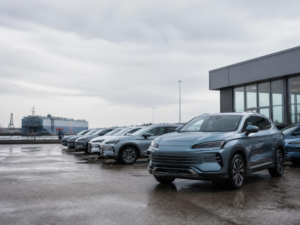
Unlike the European Union, the UK has not introduced additional tariffs specifically targeting Chinese-built electric vehicles. This has allowed manufacturers such as BYD and Jaecoo to compete more aggressively on price and expand their presence in the UK market.
Chinese manufacturers accounted for 23% of UK EV sales in 2025, according to BNEF.
The growing number of manufacturers competing in the market is particularly significant because affordability remains one of the major considerations for motorists and businesses considering the switch to electric.
CVC has already covered the rapid expansion of Chinese manufacturers in the UK, with Chinese car brands continuing their rapid growth in the UK and increasingly competing with established manufacturers across both the retail and fleet markets.
Although the expanding supply of EVs has helped narrow the price difference between electric and petrol-powered cars, electric vehicles remain more expensive on average across Europe.
BNEF estimates that EVs currently carry a 17% price premium compared with equivalent petrol vehicles.
That gap is nevertheless becoming smaller, with increasing competition and a wider range of models giving consumers more choice at different price points.
For the UK leasing market, this expanding choice is particularly important. Businesses and drivers are no longer faced with a relatively small selection of electric models, with manufacturers now offering everything from smaller electric cars to larger family vehicles and commercial vans.
CVC’s guide to the best electric cars to lease in 2026 highlights just how broad the current market has become, with options available across a wide range of vehicle types and price points.
The Charging Network Needs To Keep Growing
As EV sales increase, however, the focus cannot remain solely on vehicle availability.
The charging network will need to expand alongside the number of electric vehicles using it.
BNEF’s long-term outlook forecasts that electric vehicles could account for 67% of UK car sales by 2030. By that point, the electricity consumption associated with the country’s electric car fleet could reach around 18TWh every year.
That would represent approximately 5% of the UK’s total electricity demand.
The increase does not necessarily mean that the electricity system will be unable to cope, but it does highlight the importance of managing when and where vehicles are charged.
Smart charging could play an increasingly important role, allowing drivers to charge vehicles during periods when electricity is cheaper and demand on the wider grid is lower.
However, greater use of EVs will also require substantial investment in both charging infrastructure and electricity network capacity.
For businesses considering the transition, charging availability is already an important part of the decision-making process. CVC’s guide to switching to an electric vehicle looks at the practical considerations involved, including vehicle suitability, daily mileage and charging requirements.
UK Could Need More Than 299,000 Public Chargers By 2030
The scale of the infrastructure challenge is significant.
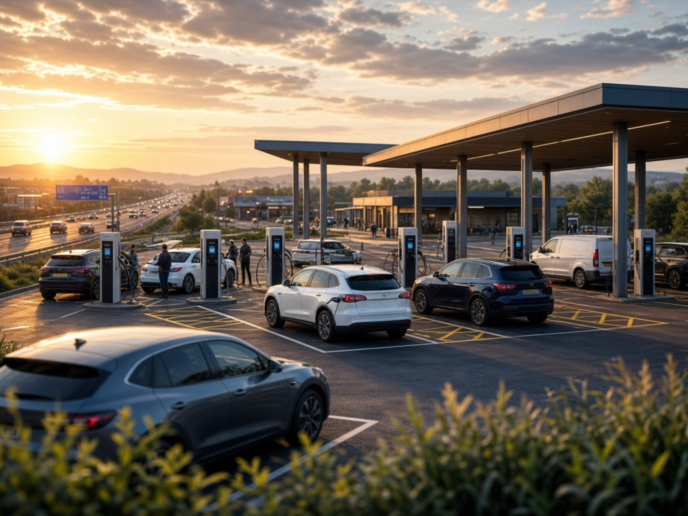
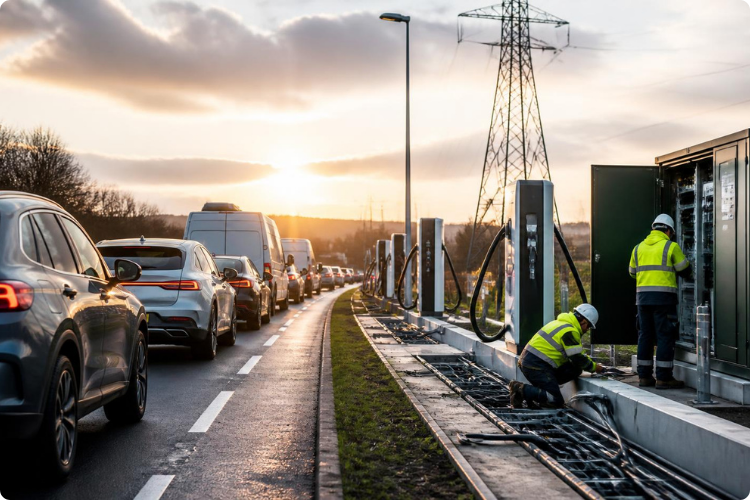
BNEF estimates that the UK could require more than 299,000 public charging connectors by 2030 to support the growing electric vehicle fleet.
That would represent roughly three times the size of the public charging network recorded in 2025.
The investment required is also considerable. BNEF estimates that cumulative investment in the UK’s charging network could reach around $4 billion by 2030, representing a substantial increase compared with investment levels at the start of the decade.
Expanding the network will also mean looking beyond the locations traditionally associated with vehicle refuelling.
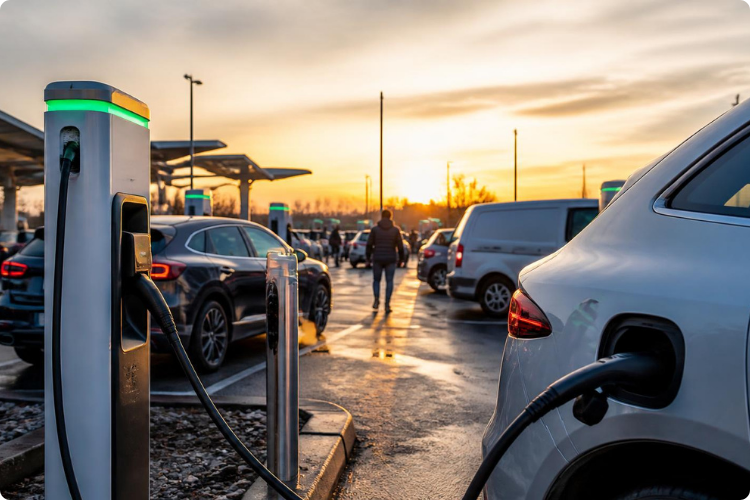
Petrol stations and motorway service areas will continue to have an important role, particularly for longer journeys, but charging is increasingly appearing in other locations.
Bus depots, supermarkets, retail parks, workplaces, car parks and other destinations can all provide opportunities for public charging, particularly where vehicles are parked for longer periods. For businesses, understanding the different ways EVs can be charged is becoming increasingly important, from workplace charging and home charging through to public networks. CVC’s guide to how EV charging works for businesses explains the main charging options and some of the practical considerations for businesses.
This wider approach could become increasingly important as EV ownership moves beyond early adopters and becomes a mainstream part of the UK car market.
What Does The ZEV Mandate Mean For Future EV Growth?
Infrastructure is only one part of the equation.
The Government’s Zero Emission Vehicle (ZEV) Mandate is also playing a major role in determining how quickly manufacturers need to increase their electric vehicle sales.
BNEF’s outlook forecasts that EVs could represent 67% of UK passenger car sales by 2030, with battery-electric vehicles accounting for just under 60%.
Those figures remain below the Government’s current 80% ZEV mandate target for 2030.
The picture is somewhat different across the commercial vehicle market, where electric van adoption has generally progressed more slowly than passenger cars. CVC has previously examined why electric vans remain behind ZEV targets, and the challenges fleets face when moving towards zero-emission vehicles.
Manufacturers have already had to make use of the flexibility built into the ZEV Mandate to meet the requirements during its early stages, including mechanisms that allow manufacturers to borrow allowances from future years. The difficulties manufacturers have faced in meeting the requirements have also been examined by CVC, including the increasing pressure created by the annual targets and the mechanisms available to manufacturers.
As the mandated targets increase, the pressure on manufacturers to increase the proportion of zero-emission vehicles they sell is expected to become more significant.
There is therefore an ongoing debate about how much flexibility manufacturers should have as the market develops.
Greater flexibility could make it easier for manufacturers experiencing difficulties in meeting individual targets. At the same time, continually changing the rules could make it more difficult for manufacturers, infrastructure providers and other businesses to plan long-term investment.
The UK EV Market Is Entering A Different Phase
The rapid increase in EV sales demonstrates that the UK’s transition towards electric motoring is well underway.
The challenge now is becoming less about convincing consumers that electric vehicles exist and more about ensuring the wider system can support millions of them.
That means increasing vehicle availability, improving affordability, expanding the public charging network and ensuring that the electricity grid can accommodate additional demand.
For drivers and businesses considering an electric vehicle, a growing market also means greater choice than ever before.
The next stage of the UK’s electrification journey will therefore involve considerably more than simply increasing EV sales. The vehicles, charging network, electricity system and Government policy will all need to develop alongside one another as electric vehicles become an increasingly familiar sight on Britain’s roads.

 Call our expert team on