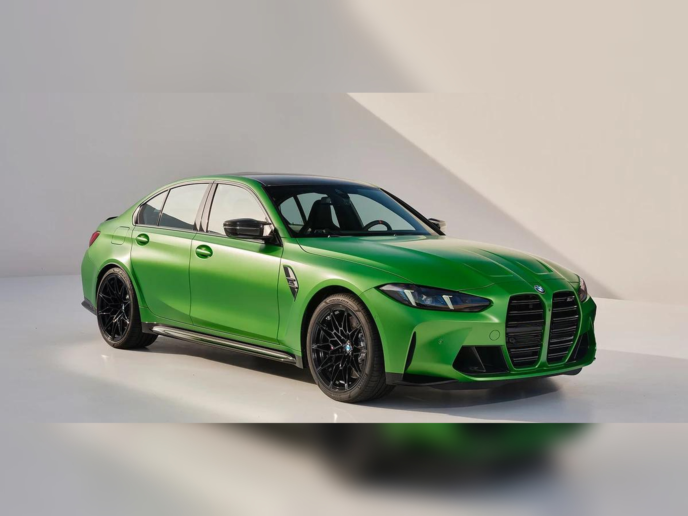
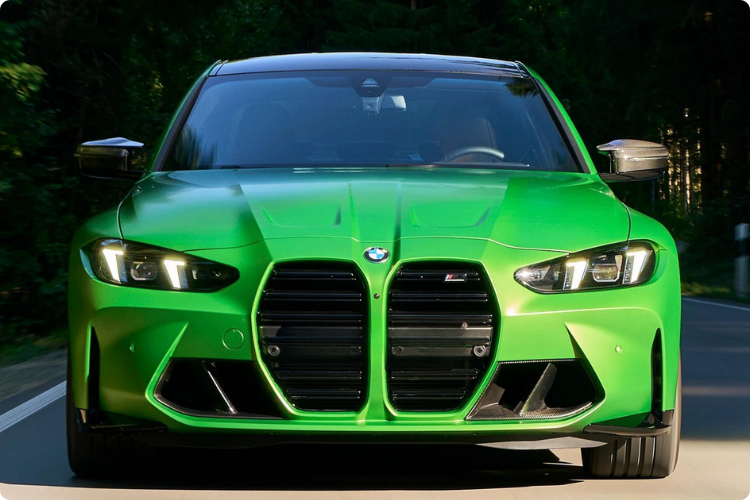
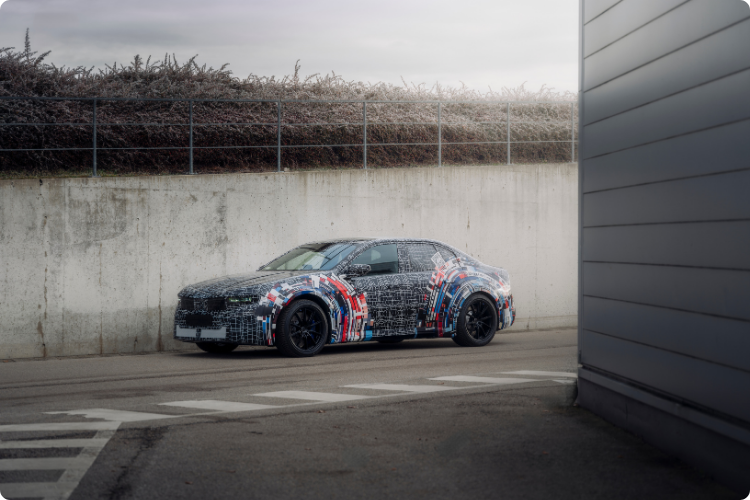
BMW’s first fully electric M3 is beginning to show exactly what it is capable of, with the forthcoming performance saloon caught testing hard at the Nürburgring alongside one of the most powerful electric cars currently coming out of China.
And if these latest spy shots are anything to go by, BMW is determined to ensure that moving away from the combustion engine does not mean abandoning the driving character that has defined the M3 for decades.
The heavily camouflaged prototype was photographed powering through the Nürburgring Nordschleife, leaving four distinct tyre marks behind it as the driver carried out a dramatic four-wheel drift.
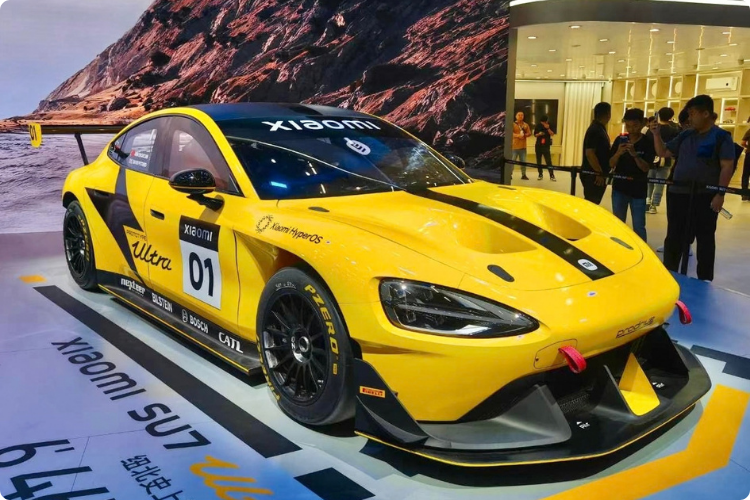
Adding another layer of intrigue to the images, a Xiaomi SU7 Ultra can be seen following closely behind the BMW.
It makes for a fascinating snapshot of where high-performance electric cars are heading – and the growing challenge established European manufacturers face from China’s rapidly developing EV industry.
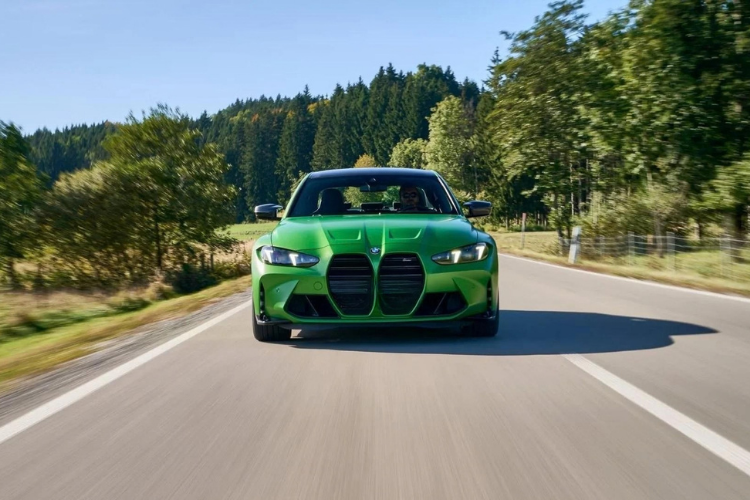
BMW M3 Goes Fully Electric
The forthcoming M3 will be one of the first BMW M models developed around the company’s new Neue Klasse electric architecture.
BMW has already confirmed that its next generation of fully electric M cars will use four electric motors, with one motor controlling each wheel. Rather than relying on a conventional mechanical all-wheel-drive system, BMW is developing a sophisticated electronic control system capable of independently managing torque at every corner of the car. BMW M’s electric high-performance technology.
The system is being developed around BMW M’s Heart of Joy control technology, which brings together powertrain and vehicle dynamics management at a level that would be difficult to achieve with a conventional drivetrain.
That technology is particularly important for the M3 because BMW is not simply trying to make its fastest electric saloon.
It wants the car to behave like an M3.
That means precise responses, controllable oversteer, rapid changes of direction and the sort of chassis balance that allows the driver to exploit the available performance rather than simply relying on enormous straight-line acceleration.
The latest Nürburgring photographs provide perhaps the clearest indication yet that BMW is taking that objective seriously.
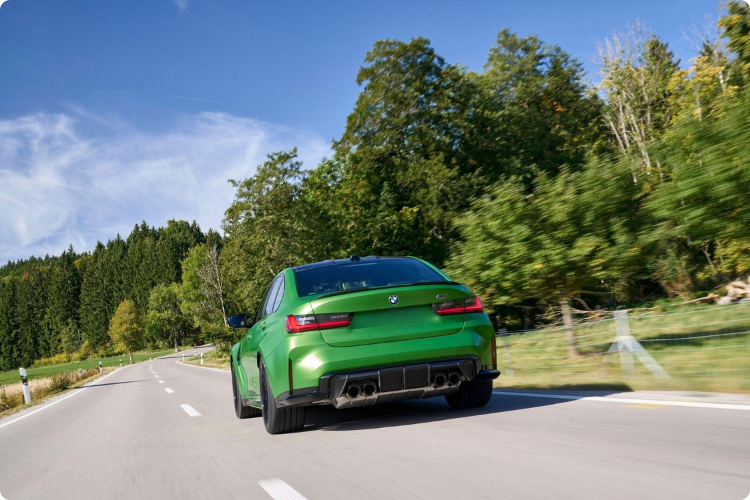
Four-Wheel Drift Shows What The New M3 Can Do
The prototype was captured exiting a corner with the rear stepping out while all four tyres appear to be contributing to the slide.
The result is a substantial amount of rubber being left across the track.
That might seem like an unusual way to develop an electric car, but it demonstrates one of the key advantages of BMW’s four-motor system.
With an individual electric motor controlling each wheel, BMW can adjust torque delivery incredibly quickly and independently. Instead of simply deciding how much power should be sent to the front or rear axle, the control system can continually alter the torque being delivered to individual wheels.
For a performance car, that opens up enormous possibilities.
It can help maximise traction when accelerating, stabilise the car under braking and cornering, or deliberately allow the driver to rotate the car when the system is operating in a more playful setting.
BMW has said its new M eDrive system is designed to combine the advantages of rear-wheel drive with the traction and control available from all-wheel drive, while also allowing the front axle to be completely decoupled when appropriate.
The important point is that this is not simply about producing a huge power figure.
BMW M has repeatedly emphasised that its electric performance cars are being engineered around driving dynamics, rather than chasing headline horsepower numbers.
And Then There Is The Xiaomi SU7 Ultra
Perhaps the most interesting part of these latest photographs is what is happening behind the BMW.
A Xiaomi SU7 Ultra can be seen following the M3 prototype around the Nürburgring.
Xiaomi might be better known in the UK for smartphones and consumer electronics, but the company’s move into electric cars has quickly become one of the more closely watched developments in the global automotive industry.
The SU7 is positioned as a high-performance electric saloon, while the Ultra sits at the top of the range with an extraordinary specification.
The SU7 Ultra uses three electric motors and delivers more than 1,500bhp, while Xiaomi quotes a 0-62mph time of just 1.98 seconds and a top speed of more than 217mph.
Those figures put the SU7 Ultra firmly into supercar territory despite its four-door saloon body.
It has also demonstrated its capabilities at the Nürburgring.
Xiaomi Has Already Made Its Mark At The Nürburgring
The SU7 Ultra completed an official Nürburgring Nordschleife lap in 7:04.957, setting a record in the Electric Executive Car category at the time. The Nürburgring itself confirmed the officially measured lap and the production-specification status of the car used for the record attempt. Nürburgring official Xiaomi SU7 Ultra record.
The record has since been beaten.
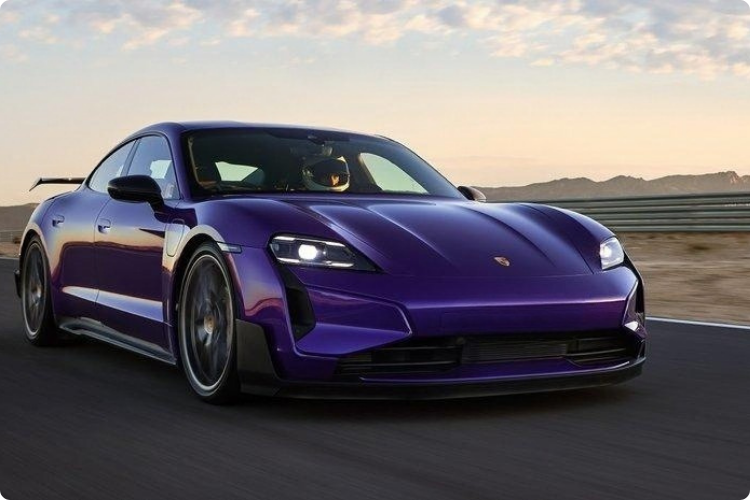
Porsche’s Taycan Turbo GT with the optional Manthey Kit completed the Nordschleife in 6:55.553 in 2026, reclaiming the production electric vehicle record and beating the previous benchmark by more than nine seconds. Porsche’s latest Nürburgring record.
Porsche’s latest Taycan record also highlights just how quickly electric performance has escalated, with the Manthey Kit increasing system output to 804bhp and allowing up to 978bhp for 10 seconds in Attack Mode.
Even so, the Xiaomi remains a serious performance benchmark – and its appearance behind the BMW makes these particular spy shots considerably more interesting.
This is no longer simply a case of a traditional European manufacturer testing an electric performance car.
BMW is developing its next M3 generation in a market where Chinese manufacturers are increasingly challenging established European brands across the electric vehicle market. Models such as the Deepal S07 demonstrate how quickly Chinese EV manufacturers are expanding their presence in the UK.
That wider shift is already becoming apparent in the UK, with Chinese car brands continuing to grow in the UK.
BMW Is Not Trying To Beat Xiaomi On Horsepower Alone
On paper, the BMW may appear to be at a disadvantage.
The SU7 Ultra’s 1,500-plus horsepower figure is considerably higher than the output expected from the initial electric M3.
There have been various reports suggesting the BMW could produce somewhere around the 700-900bhp region, with higher-output versions potentially following later. BMW has not yet published final production specifications, however, so those figures should be treated as estimates rather than confirmed numbers.
But BMW appears to be taking a different approach.
The Neue Klasse M architecture is being designed around four individually controlled motors, meaning BMW can concentrate on how the power is delivered rather than simply how much power the system can produce.
That distinction could become increasingly important as electric performance cars become more powerful.
When 1,000bhp-plus EVs are becoming increasingly common, simply adding more power eventually delivers diminishing returns. Putting that power down effectively, managing the battery and maintaining predictable handling becomes considerably more important on a circuit.
And that is precisely where BMW M has decades of experience.
The New M3 Will Have A Very Different Kind Of Performance
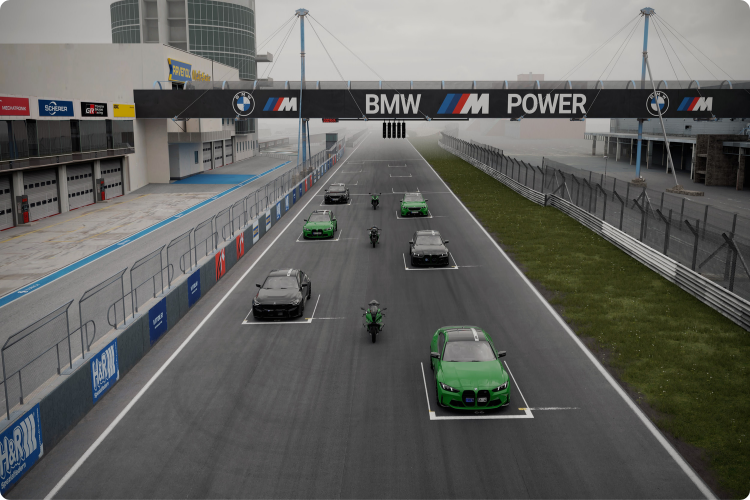
The electric M3 is expected to arrive in 2027, marking a significant change for one of BMW’s most recognisable performance models.
BMW has confirmed that 2027 will mark the beginning of a new era for fully electric BMW M models, with the four-motor drivetrain and new control architecture forming the basis of the cars. BMW M’s electric performance plans.
However, this does not necessarily mean the M3 name is disappearing from the combustion-engine world.
BMW is continuing to develop combustion-powered M cars alongside its electric programme, meaning the move towards electrification is not as simple as one drivetrain immediately replacing another.
That gives BMW the opportunity to offer very different interpretations of performance depending on what buyers want. That approach also places the electric M3 into an increasingly broad premium performance market, alongside cars such as the Mercedes-AMG GT 4-Door Coupé.
The change also reflects the much wider transformation taking place across the car market. For anyone trying to understand the differences between the various powertrain technologies now available, our guide to BEV, PHEV, HEV and ICE explained provides a useful overview.
Electric Performance Cars Are Changing Fast
The BMW and Xiaomi prototypes being photographed together also highlight just how quickly the performance EV market is evolving.
For decades, the world’s established premium manufacturers largely controlled the high-performance saloon market.
That landscape is changing.
Chinese manufacturers are increasingly producing electric vehicles with enormous power outputs, sophisticated torque-vectoring systems and performance capabilities that would have been difficult to imagine from relatively new automotive brands only a few years ago.
At the same time, electric cars are becoming increasingly diverse. They are no longer being developed solely around efficiency, low running costs and maximum driving range. The premium end of the market is changing too, with models such as the Genesis GV90 showing how manufacturers are using electric power for large luxury vehicles as well as performance cars.
Manufacturers are now using electric power to explore entirely new approaches to performance, traction and vehicle control. The shift is not limited to performance saloons, either, with the Range Rover Sport Electric showing how electrification is also moving deeper into the luxury performance SUV market.
That expanding choice is also changing the leasing market, with an increasingly broad selection of electric cars available to private drivers, company-car users and businesses. Our guide to the Top 10 Electric Cars To Lease In 2026 looks at some of the wider options currently available.
For drivers considering the move away from petrol or diesel, the fundamentals of how an EV behaves are also very different from those of a conventional car. Our guide to Automatic vs Electric Vehicles looks at some of those differences in greater detail.
More Than Just A Powertrain Change
The electric M3 is therefore about considerably more than replacing an engine with a battery.
BMW is effectively attempting to use electrification to rethink how an M car delivers its performance.
Four motors mean four individually controlled wheels.
A sophisticated computer system means torque can be adjusted almost instantaneously.
And the combination of software, battery technology and chassis development potentially gives BMW far more control over the behaviour of the car than would be possible with a traditional mechanical drivetrain.
That is one of the reasons the development of modern EVs has moved so quickly. Electric vehicles can use software to influence everything from acceleration and regenerative braking to traction and handling characteristics.
Battery technology is evolving at the same time, with modern EVs benefiting from improvements in thermal management, cell technology and battery protection. Our guide to EV battery safety improvements from 2020 to 2026 looks at how the technology has developed.
The M3 Still Has A Job To Do
There is no escaping the fact that an electric M3 represents a major departure from the traditional formula.
There will be no six-cylinder engine under the bonnet, no conventional driveshaft arrangement and no mechanical differential controlling the distribution of power in the traditional way.
Instead, there will be four electric motors, sophisticated software and a high-performance battery working together to create a completely different type of M car.
But BMW knows that the M3 badge carries enormous expectations.
It is not enough for the car to be quick.
It needs to be engaging.
It needs to respond predictably.
And, crucially, it needs to give the driver something to do beyond simply pressing the accelerator and experiencing an enormous burst of instant torque.
That is why the Nürburgring footage is so interesting.
The prototype is not simply being tested for maximum acceleration or top speed. It is being pushed through corners, with BMW seemingly exploring exactly how far the four-motor system can be used to influence the car’s balance and behaviour.
 Call our expert team on