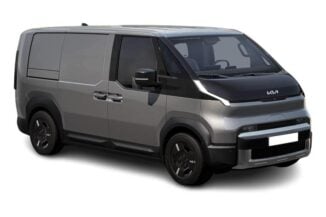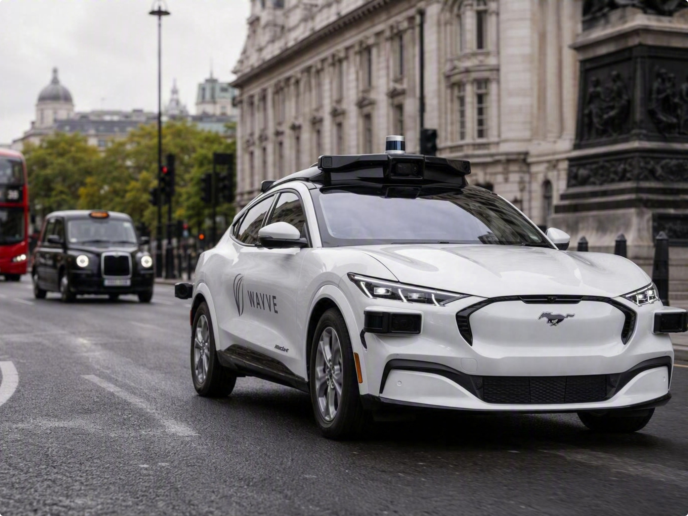
London has entered a new era of motoring, with Wayve and Uber launching supervised autonomous rides on the capital’s roads. But while passengers can now experience an AI-powered vehicle through the Uber app, this is only the beginning of what could become a much bigger transformation for UK transport, businesses and commercial vehicle fleets.
For years, autonomous vehicles have been presented as something that is coming.
That future has now arrived in London.
Wayve and Uber have launched the UK’s first publicly available autonomous ride-hailing service, allowing passengers in London to be matched with an all-electric Ford Mustang Mach-E fitted with Wayve’s AI Driver technology.
There is, however, an important distinction.
These are supervised autonomous journeys, rather than completely driverless taxi rides. A trained and TfL-licensed private-hire driver remains inside the vehicle and can intervene if necessary.
Nevertheless, the significance of the announcement should not be underestimated.
For the first time, members of the UK public can book a commercial journey through a mainstream ride-hailing platform and experience a vehicle that is designed to control the driving itself.
And that could have implications extending far beyond Uber.
Autonomous technology could eventually influence the way people travel, how businesses operate fleets, how vehicles are leased and financed, how deliveries are made and even how manufacturers design their vehicles.
For a UK vehicle leasing industry that is increasingly focused on electrification, fleet efficiency and changing patterns of vehicle use, this is a development worth watching very closely.
For a UK electric van leasing market that is increasingly focused on electrification, fleet efficiency and changing patterns of vehicle use, this is a development worth watching very closely.
Wayve And Uber Launch Autonomous Rides In London
The new service launched on 3 September 2026, marking the first time autonomous trips have been made available to members of the public in the UK.
Londoners requesting an eligible UberX, Uber Electric or Uber Comfort journey may be offered a Wayve autonomous vehicle.
There is no additional charge for choosing the autonomous option, and passengers retain the choice of accepting the Wayve vehicle or switching to a conventional ride before the journey begins.
The vehicles operate through the existing Uber app, meaning passengers do not need to download a separate application or learn a completely new booking system.
Once the vehicle arrives, the passenger can use the Uber app to unlock the car and begin the journey.
At launch, the vehicles can operate across London, with airports excluded from the initial service area.
More than 140,000 Londoners have already opted in to increase their chances of being matched with a Wayve vehicle.
That figure is particularly interesting.
It suggests that there is already significant public curiosity about autonomous vehicles, even before the technology has reached genuinely driverless operation.
However, the initial fleet remains extremely small.
TfL has licensed 15 Ford Mustang Mach-E vehicles for the service, although Wayve and Uber have said the initial rollout will involve only a small number of vehicles and will grow gradually. That is a tiny starting point compared with the more than 100,000 private-hire vehicles operating across London.
This means today’s launch is not about replacing conventional taxis overnight.
It is about proving that autonomous passenger transport can begin operating commercially in one of the world’s most complicated urban environments.
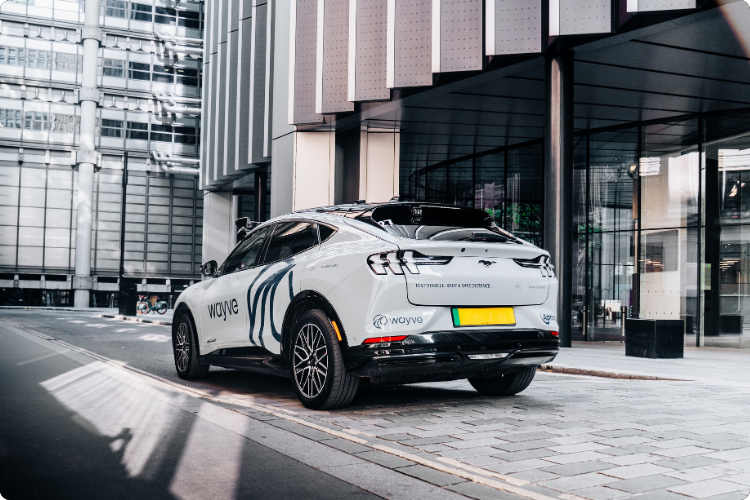
Is The Wayve Uber Completely Driverless?
No.
This is one of the most important points to understand about today’s announcement.
Although the Wayve vehicle is capable of carrying out the driving task autonomously, a trained, TfL-licensed private-hire driver remains inside the vehicle during the initial rollout.
The human is there to supervise the journey and intervene if required.
Therefore, describing the service simply as “driverless taxis” would be misleading.
The more accurate description is supervised autonomous driving.
The distinction matters because the UK’s legal framework separates different levels and forms of automated driving.
The long-term objective is to allow vehicles to operate without somebody having to continuously monitor or control the vehicle.
The UK’s Automated Vehicles Act 2024 provides the legal framework for this transition, including a formal process for authorising vehicles as self-driving.
So today’s launch should be viewed as a significant step towards fully autonomous passenger transport rather than the final destination.
What Car Is Being Used By Wayve?
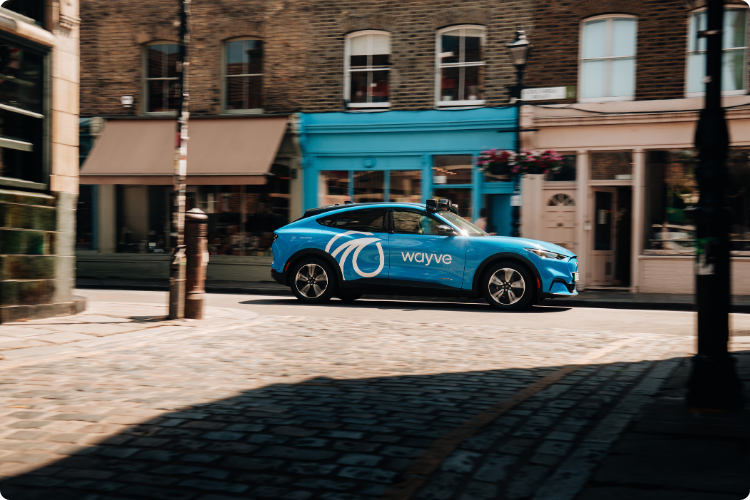
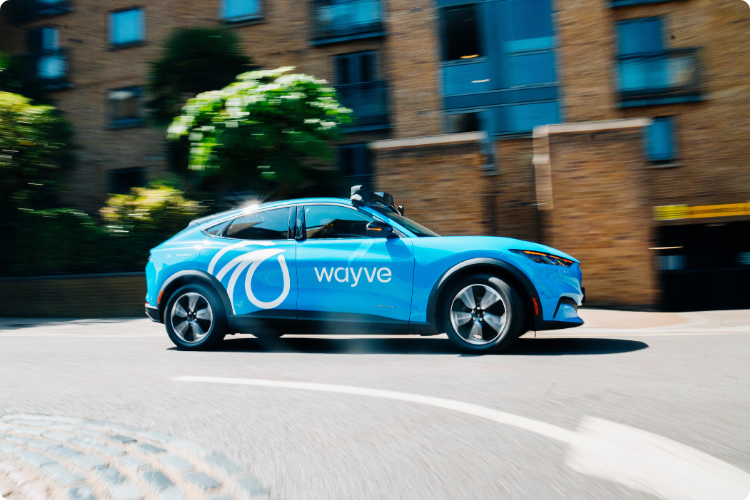
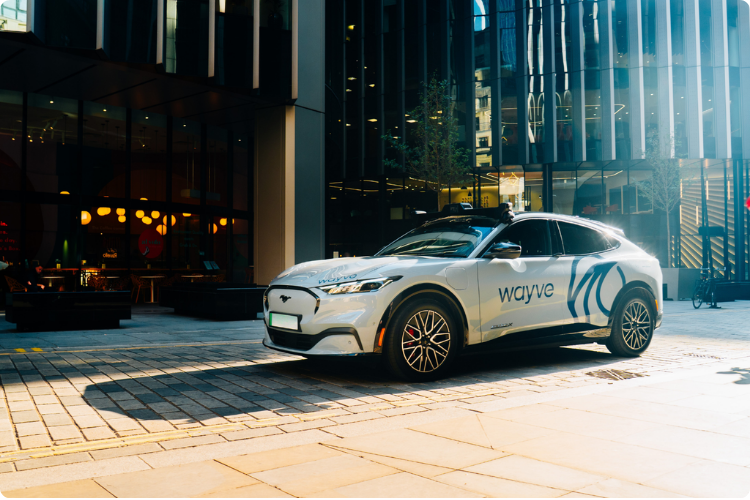
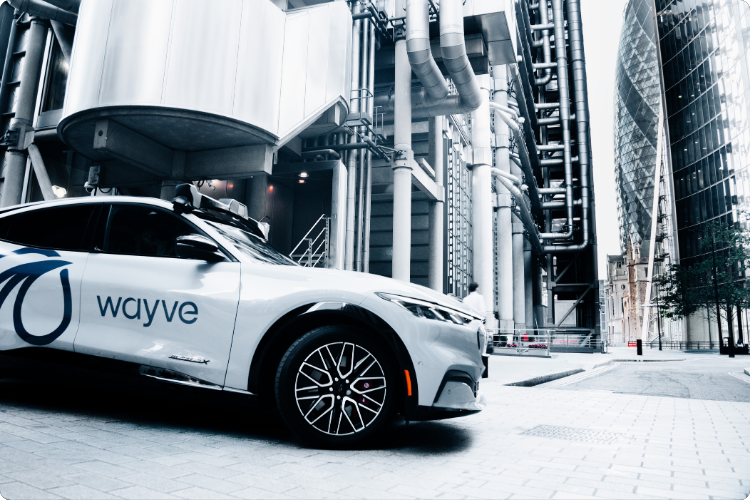
The first autonomous Uber rides in London are being carried out using Ford Mustang Mach-E electric SUVs.
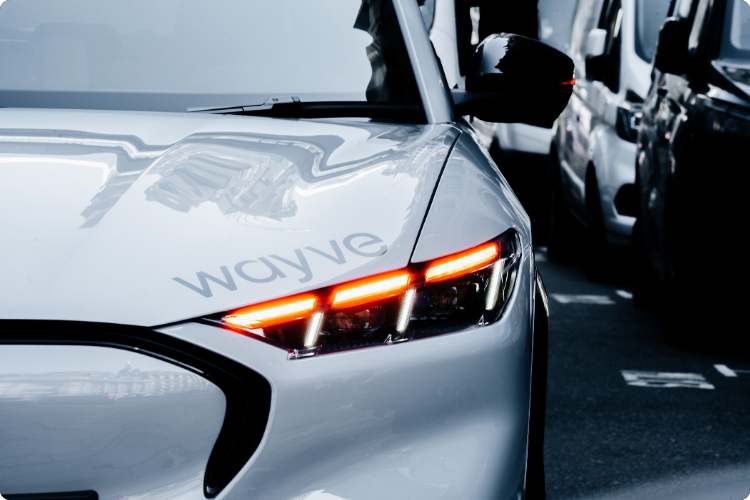
The vehicles are equipped with Wayve’s AI Driver together with surrounding sensors, including cameras and radar.
Inside, Uber has developed an interactive passenger experience that allows riders to see information about their journey and the vehicle’s planned route. The interactive screen is available in 64 languages, while passengers can use the Uber app to unlock the vehicle and begin their journey.
The technology is therefore being added to a recognisable production vehicle rather than requiring passengers to enter a completely unfamiliar purpose-built robotaxi.
That could become increasingly important as autonomous driving develops.
Wayve’s broader ambition is not simply to operate its own fleet of robotaxis.
The company describes its AI Driver as being agnostic to vehicle platforms and sensor configurations. The software is designed to work across different types of vehicles, with Wayve positioning itself as a technology provider for automakers and fleet owners.
For the automotive industry, that distinction could ultimately prove more important than the London taxi launch itself.
How Does Wayve’s AI Driver Work?
Wayve has taken a different approach to autonomous driving from some of its competitors.
The company’s technology is based around an AI Driver designed to learn from driving experience and generalise its understanding of different environments.
Wayve calls its approach AV2.0.
The idea is that an autonomous vehicle should not need to depend entirely on an enormous collection of highly detailed maps and hand-coded instructions telling it how to deal with every possible road situation.
Instead, the AI is designed to interpret its surroundings, understand what is happening and make driving decisions in a way that is closer to how a human driver learns to navigate different environments.
Wayve says its system is designed to operate without traditional high-definition maps and to adapt to new environments.
The company has been developing and testing its technology on London’s roads since 2018.
This is particularly significant in London.
A vehicle driving around a quiet, predictable test route is one thing.
A vehicle attempting to navigate London’s roads is something else entirely.
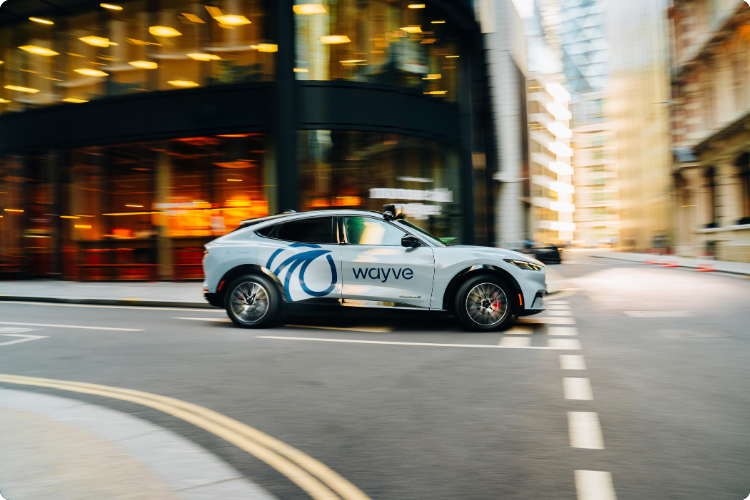
Why London Is Such A Difficult Test For Autonomous Cars
London is not an easy place to drive.
The capital combines:
- Busy multi-lane roads
- Narrow residential streets
- Complex junctions
- Roundabouts
- Bus lanes
- Cyclists
- Motorcycles
- Pedestrians
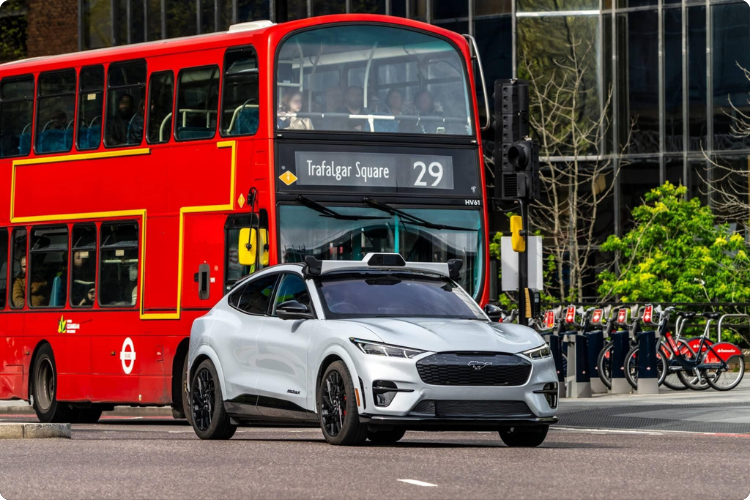
- Double-decker buses
- Delivery vehicles
- Emergency vehicles
- Roadworks
- Temporary traffic restrictions
- Parked vehicles
- Congestion
- Unpredictable human behaviour
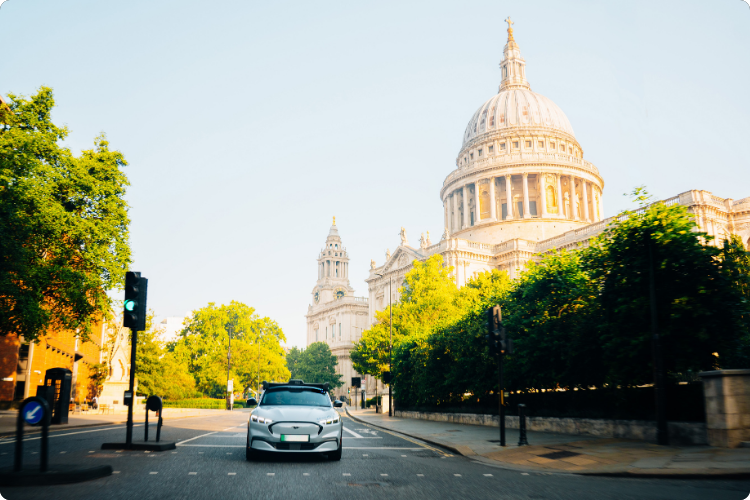
A human driver can make sense of these constantly changing situations using experience, observation and judgement.
An autonomous vehicle has to do something similar using sensors, computing power and artificial intelligence.
That makes London’s streets an important real-world proving ground.
Wayve was founded in London and has been developing its autonomous driving technology in the city since 2018.
The company argues that developing in complex urban environments from the beginning has helped it build technology capable of adapting to different locations.
The company has also reported testing its technology across hundreds of cities globally, reinforcing its argument that the AI Driver is designed to generalise rather than being limited to a handful of pre-mapped areas.
Why Is This Launch Such A Big Deal?
The obvious answer is that autonomous vehicles have finally moved from testing into public use.
But there is something bigger happening.
The technology is being introduced through Uber, a platform already used by millions of people.
That means autonomous driving is not being presented as an experimental technology that requires passengers to seek it out.
Instead, it is becoming another potential option within an app that people already understand.
This could be a crucial step in public acceptance.
A passenger doesn’t need to understand artificial intelligence, autonomous driving systems or sensor technology to use the service.
They simply request an Uber.
If they are matched with a Wayve vehicle, they can decide whether they want to try it.
That lowers one of the biggest barriers to adoption: unfamiliarity.
What Happens If A Passenger Doesn’t Want An Autonomous Vehicle?
They can decline it.
Uber says passengers matched with a Wayve autonomous vehicle will be given the option to accept the journey or switch to a conventional ride before the vehicle arrives.
This is an important part of the rollout.
The technology is not being forced on passengers.
Instead, Uber and Wayve are effectively allowing Londoners to decide whether they want to participate.
That gives the companies an opportunity to gather experience and feedback while the service remains relatively small.
It also provides an interesting indication of how quickly public attitudes towards autonomous vehicles could change.
People who currently say they would never enter a self-driving car may feel differently after seeing one operating safely on the roads.
How Safe Are Autonomous Vehicles?
This is arguably the most important question surrounding the entire technology.
An autonomous vehicle does not get a free pass simply because artificial intelligence is controlling the driving.
It must demonstrate that it can operate safely.
The UK’s regulatory framework is being built around this principle.
Uber is also applying its own safety requirements to autonomous vehicles operating on its platform, meaning Wayve’s vehicles must meet Uber’s safety guidelines in addition to the relevant UK regulatory and licensing requirements.
The Automated Vehicles Act 2024 establishes the legal foundation for authorising self-driving vehicles in Great Britain and introduces a formal “self-driving test”.
The system is designed to determine whether an automated vehicle can drive itself safely and lawfully without requiring a human to monitor the road continuously.
The Government is also developing the safety framework against which automated vehicles will be assessed.
In June 2026, the Department for Transport published a consultation on its proposed Statement of Safety Principles, which will help determine whether self-driving vehicles can be authorised for use on public roads.
This is important because autonomous driving cannot simply be judged on whether a vehicle works most of the time.
The difficult questions involve what happens when something unusual occurs.
What does the vehicle do when:
- A pedestrian suddenly walks into the road?
- A cyclist behaves unpredictably?
- A road is unexpectedly closed?
- A traffic light fails?
- An emergency vehicle approaches?
- A police officer directs traffic?
- A vehicle stops in an unusual location?
- Temporary roadworks completely change the normal route?
These are the situations regulators and manufacturers need to understand.
Who Is Responsible If An Autonomous Car Crashes?
This is one of the areas where autonomous vehicles represent a fundamental change from conventional motoring.
With an ordinary vehicle, the human driver is responsible for controlling the car.
With a properly authorised self-driving vehicle, the legal framework can shift responsibility away from the person inside the vehicle and towards the entities responsible for the automated driving system.
The Automated Vehicles Act establishes the concept of an Authorised Self-Driving Entity, or ASDE.
This entity is responsible for ensuring that an authorised automated vehicle continues to meet the relevant requirements and for other regulatory responsibilities.
That could fundamentally change the traditional relationship between driver, vehicle manufacturer and technology provider.
Instead of asking only:
“Who was driving?”
future investigations may also need to consider:
“Which automated driving system was operating, under what authorisation and who was legally responsible for it?”
That is one reason the development of autonomous vehicles requires a completely new regulatory framework.
What Is The UK Doing To Regulate Autonomous Passenger Services?
The UK has already begun putting the framework for automated passenger services in place.
Under the new system, organisations seeking to deploy automated passenger services require the appropriate permissions, with local authorities and transport bodies playing an important role.
For London, the relationship between the national government and Transport for London is particularly important.
The Driver and Vehicle Standards Agency can issue Automated Passenger Service permits in England, but London deployments require the consent of TfL.
TfL can consider factors including safety, congestion and the impact on London’s transport network.
There is also a separate permitting system for services carrying passengers without a safety driver.
The DVSA’s Automated Passenger Service process specifically covers organisations intending to operate taxi or private-hire-style automated services without a safety driver.
This means there is still a regulatory journey to complete before London’s autonomous taxis can simply operate without a human inside.
Wayve Vs Waymo: Who Is Bringing Self-Driving Cars To London?
Wayve isn’t the only company targeting London.
Google-owned Waymo is also preparing to bring its autonomous driving technology to the capital.
That makes the London market particularly interesting.
Two major approaches to autonomous driving are beginning to converge on the same city.
Wayve has a particularly strong UK connection.
It was founded in London, has been developing its technology on London’s roads since 2018 and is now launching its first public autonomous service in its home city.
Waymo, meanwhile, brings substantial experience from its established autonomous ride-hailing operations in the United States.
This creates a fascinating comparison between two different technology strategies.
Wayve And Waymo Compared
| Wayve | Waymo | |
|---|---|---|
| Origin | UK | US |
| London development | Testing since 2018 | Preparing London deployment |
| Initial London partner | Uber | Waymo mobility service |
| Initial vehicle | Ford Mustang Mach-E | Jaguar I-PACE planned for London |
| Approach | AI-driven, mapless and hardware-agnostic | Autonomous driving system using detailed mapping and sensors |
| Initial London operation | Supervised | London deployment developing |
| Wider ambition | Automakers, fleets and mobility platforms | Autonomous mobility services |
The two companies are therefore competing for more than passengers.
They are demonstrating two different visions for how autonomous driving could scale.
Could London Become Europe’s Robotaxi Battleground?
Quite possibly.
The arrival of Wayve and Uber is occurring alongside the development of other autonomous vehicle programmes.
Government and London authorities have already been dealing with interest from companies including Wayve, Waymo and other autonomous mobility providers.
That could turn London into one of the most closely watched autonomous-driving markets in Europe.
And that competition could ultimately benefit consumers.
More companies operating in the same environment means more testing, more data, greater technological competition and potentially faster development.
But it also means regulators will need to ensure that innovation does not outpace safety.
What Happens To Taxi And Private-Hire Drivers?
This is one of the most sensitive questions surrounding autonomous vehicles.
There are more than 100,000 private-hire vehicles operating in London, and the introduction of autonomous vehicles naturally raises concerns about what happens if automated services eventually become capable of replacing some human-driven journeys.
The answer is not straightforward.
Today’s launch does not mean 100,000 drivers are suddenly going to be replaced.
The initial Wayve fleet contains just 15 vehicles.
There is also no guarantee that autonomous vehicles will eventually replace every human-driven journey.
Instead, the more likely short-term development is a hybrid model.
Uber itself describes its strategy as a network in which autonomous vehicles and human drivers operate alongside each other.
The company says it is already working with more than 30 autonomous vehicle partners across mobility, delivery and freight.
That could mean human drivers remain an important part of the transport network for many years.
However, as autonomous technology improves, the balance between human and automated journeys could gradually change.
That is why the employment implications deserve serious consideration now rather than after the technology has already scaled.
The concerns are already being voiced by workers’ representatives. GMB has warned that the expansion of autonomous driving could create significant social and economic disruption if large numbers of driving jobs are eventually affected. The union has called for TfL and the Government to develop a plan to manage the transition and protect drivers as autonomous services expand.
Could Autonomous Vehicles Reduce Congestion?
Possibly.
But it is far too early to say that robotaxis will automatically make London’s roads less congested.
There are arguments on both sides.
Autonomous vehicles could potentially:
- Drive more efficiently
- Reduce certain types of human driving error
- Coordinate journeys more effectively
- Improve vehicle utilisation
- Reduce the need for privately owned cars in some circumstances
But there is another possibility.
If autonomous vehicles make travelling by car significantly cheaper or more convenient, people could use them more often.
That could increase the number of vehicle miles travelled.
In other words, autonomous vehicles could reduce congestion, increase congestion or have little effect depending on how people use them.
The technology itself will not determine the outcome.
Human behaviour will.
Will Autonomous Vehicles Accelerate The Switch To Electric Cars?
The early evidence points towards autonomous services being closely linked with electrification.
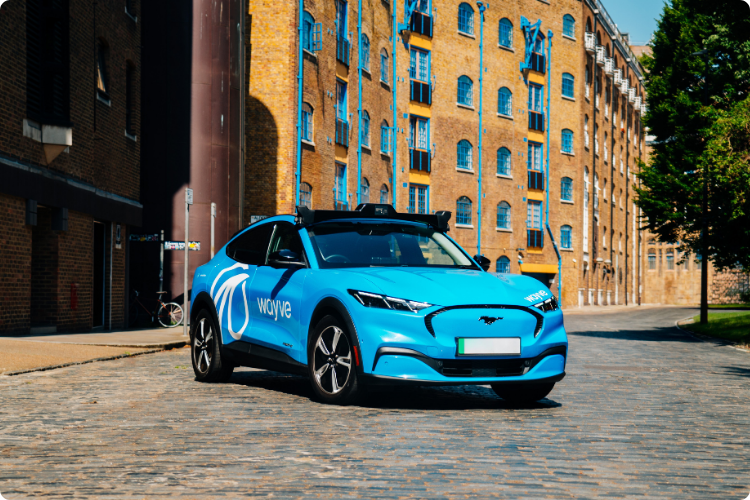
Wayve’s first Uber vehicles in London are all-electric Ford Mustang Mach-Es.
This makes sense from an operational perspective.
Ride-hailing vehicles can cover substantial distances, making running costs, energy efficiency and maintenance important considerations.
Electric vehicles can also operate without tailpipe emissions, which is particularly relevant in dense urban environments.
However, it is important not to confuse the two technologies.
Electric vehicles and autonomous vehicles are separate developments.
An electric car is not automatically autonomous.
An autonomous vehicle does not have to be electric.
But the two technologies could complement each other extremely well.
What Could Autonomous Driving Mean For Company Cars?
The implications for company cars could become significant if autonomous technology eventually becomes widely available.
Today, a company car is still fundamentally a vehicle controlled by an employee.
The business may provide the vehicle, finance it, insure it and manage it, but the employee remains responsible for driving.
Autonomous technology could eventually change that relationship.
Imagine a future in which a company vehicle could:
- Drive an employee to a meeting
- Return to the office
- Collect another employee
- Travel to a depot
- Complete another business journey
- Return for charging
- Pick up the original user later
The vehicle could potentially become a shared business asset rather than simply an employee benefit.
That is still a long way from today’s reality.
But it demonstrates why autonomous technology could eventually affect fleet strategy as much as the taxi industry.
What Could Autonomous Vehicles Mean For Van Fleets?
This is where the story becomes particularly interesting for commercial vehicle operators.
The first Wayve Uber vehicles are passenger cars.
But Wayve’s wider ambition extends beyond robotaxis.
The company says its AI Driver is designed for automakers and fleet owners and is intended to operate across different vehicle platforms.
If that technology eventually becomes suitable for commercial vans, the potential applications become much broader.
Consider a delivery fleet.
A van could theoretically travel between:
- A distribution centre and depot
- Two company sites
- A warehouse and customer
- A depot and charging location
- Different branches of the same business
without necessarily requiring a driver for every movement.
That could fundamentally change fleet utilisation.
However, this should not be interpreted as a prediction that autonomous delivery vans are about to replace Britain’s professional drivers.
They are not.
Commercial vehicles operate in environments that can be even more complicated than passenger cars.
Loading and unloading, securing goods, interacting with customers, navigating private sites and handling unexpected situations all create additional challenges.
But the underlying technology is moving in that direction.
And today’s Wayve launch provides an important glimpse of how that transition could begin.
Could Autonomous Vans Change Vehicle Leasing?
Potentially, yes.
The traditional leasing model is based largely around a vehicle being used by a driver.
Businesses choose a van according to factors such as:
- Payload
- Load volume
- Mileage
- Driver requirements
- Fuel or electricity costs
- Maintenance
- Contract length
- Vehicle availability
- Business use
Autonomous technology could eventually introduce another consideration:
How efficiently can the vehicle operate without human intervention?
That could change the economics of fleet leasing.
A business might eventually care less about simply having enough vehicles and more about how many journeys those vehicles can complete.
This could lead to new leasing models based around utilisation, availability and automated fleet management.
But again, that is a future possibility rather than today’s leasing reality.
For now, businesses should continue choosing vehicles based on their actual operational requirements.
Could Autonomous Vehicles Make Fleets More Efficient?
This is one of the strongest arguments in favour of the technology.
A commercial vehicle is an expensive asset.
If it spends large amounts of time sitting unused, the business is still paying for it.
Autonomous technology could eventually allow some vehicles to operate for longer periods and reposition themselves without requiring a driver for every movement.
That could potentially increase utilisation.
But increased utilisation would also create new challenges.
More vehicle use could mean:
- More mileage
- More tyre wear
- More maintenance
- More charging requirements
- Greater demand for fleet monitoring
- Increased importance of software
- New insurance considerations
The fleet manager of the future could therefore have a very different job from the fleet manager of today.
The Future Fleet Manager May Manage Software As Well As Vehicles
This is an often-overlooked consequence of autonomous driving.
Modern fleet management already involves far more than simply handing drivers a set of keys.
Businesses increasingly manage:
- Telematics
- Charging
- Route planning
- Driver behaviour
- Maintenance
- Compliance
- Vehicle utilisation
- Carbon emissions
- Total cost of ownership
Autonomous vehicles could add another layer.
Fleet managers may eventually need to understand:
- Autonomous driving capabilities
- Software versions
- Operational design domains
- Sensor condition
- Remote oversight
- Automated incident reporting
- Cybersecurity
- AI system performance
The vehicle could become as much a software platform as a mechanical asset.
What About Insurance?
Insurance is another area that could undergo major change.
At present, motor insurance is closely linked to the behaviour and risk profile of the human driver.
If an autonomous system is responsible for the driving, determining liability becomes more complicated.
Was the incident caused by:
- The vehicle?
- The autonomous driving software?
- A sensor?
- Poor maintenance?
- A human intervention?
- Another road user?
- A software update?
- Deliberate interference?
The UK’s new legal framework is designed to address some of these questions by defining responsibilities around authorised automated vehicles and the organisations responsible for them.
But insurance products will inevitably need to evolve alongside the technology.
Could Autonomous Vehicles Change How We Buy Cars?
Eventually, they could.
The traditional car ownership model assumes that a person needs a vehicle because they need to drive themselves.
But imagine a city where autonomous vehicles are widely available.
Would everyone still need to own a car?
For some people, perhaps not.
Instead of owning a vehicle that sits outside the house for most of the day, a person could potentially summon one when required.
That could encourage a shift from vehicle ownership to vehicle access.
But Britain’s geography means this is unlikely to happen uniformly.
Urban residents may have very different requirements from people living in rural areas.
Businesses with specialist vans will also continue to need dedicated vehicles for many applications.
Autonomous technology therefore won’t necessarily eliminate ownership.
It may simply create another option.
Why The Commercial Vehicle Industry Should Be Paying Attention
It would be easy for the van and leasing industry to dismiss Wayve’s announcement as a taxi story.
That would be a mistake.
The passenger car is simply one of the first environments in which autonomous technology is being commercialised.
The same underlying developments in artificial intelligence, sensors, computing and vehicle integration could eventually appear in commercial vehicles.
For businesses operating fleets, the important question isn’t:
“When will my van become driverless?”
It is:
“What happens to fleet management when vehicles can increasingly make decisions for themselves?”
That is a much bigger question.
When Will Fully Driverless Cars Arrive In The UK?
There is no single date when Britain will suddenly become a “driverless country”.
The transition is likely to happen gradually.
The current Wayve service is supervised.
Future deployments could introduce increasingly capable autonomous systems.
Eventually, vehicles may be authorised to operate without a human safety driver in specific circumstances.
The UK’s regulatory framework is designed to accommodate that progression.
The Government says full implementation of the Automated Vehicles Act is intended for the second half of 2027, while the regulatory framework for automated passenger services is already being developed and implemented.
But regulation is only one part of the equation.
Technology, public confidence, insurance, infrastructure, vehicle supply and commercial economics will all determine how quickly autonomous driving becomes mainstream.
What Happens Next For Wayve?
Today’s launch is only the beginning for Wayve.
The company and Uber have announced plans to expand their partnership beyond London, with Wayve-powered autonomous vehicles planned for multiple global markets.
The companies have said their partnership covers 12 markets, beginning with London.
A Nissan LEAF equipped with Wayve’s technology is also expected to form part of the future programme in Tokyo.
That demonstrates the scale of the ambition.
London is the proving ground.
The ultimate objective is global deployment.
Uber’s Bigger Autonomous Vehicle Strategy
There is also a bigger story here for Uber.
The company is no longer trying to build a single proprietary autonomous driving system.
Instead, it is positioning itself as a platform through which multiple autonomous vehicle providers can reach passengers.
Uber says it is working with more than 30 autonomous vehicle partners across mobility, delivery and freight and expects to facilitate autonomous trips in as many as 15 cities globally by the end of 2026.
It has also said it wants to become the world’s largest facilitator of autonomous trips by 2029.
This is potentially a very important business model.
Uber doesn’t necessarily need to build the autonomous vehicle.
It needs to connect the vehicle with the customer.
If that strategy works, Uber could become the operating layer between autonomous vehicles and millions of passengers.
The Bigger Question: Who Will Own The Autonomous Vehicle?
This is where the future becomes particularly interesting.
There are several possible models.
Model One: Private Ownership
- People continue buying or leasing their own autonomous vehicles. The car drives itself when required.
Model Two: Fleet Ownership
- Businesses own autonomous vehicles and use them as shared fleet assets.
Model Three: Robotaxi Ownership
- A technology or mobility company operates a large fleet of autonomous vehicles.
Model Four: Autonomous Vehicle As A Service
- A manufacturer or technology company supplies the vehicle and software while another company operates it.
Model Five: Mixed Human And Autonomous Fleets
- Human-driven vehicles and autonomous vehicles operate alongside each other. The Wayve and Uber launch is effectively demonstrating the beginning of the fifth model. And that may be the most realistic path in the short to medium term.
What Does This Mean For UK Businesses?
For most businesses, very little changes immediately.
There is no need to start replacing existing vans with autonomous vehicles.
There is no reason to redesign a fleet around technology that is still developing.
But fleet managers should pay attention.
The technologies being developed today could eventually influence:
- Fleet utilisation
- Vehicle specification
- Driver requirements
- Insurance
- Maintenance
- Leasing
- Vehicle ownership
- Charging
- Route planning
- Delivery operations
- Total cost of ownership
The businesses that understand these changes early will be better positioned when autonomous commercial vehicles eventually become commercially viable.
Our Verdict: Is This The Start Of Driverless Britain?
Yes — but probably not in the way many people imagine.
London is not suddenly filled with driverless taxis.
There are currently only a small number of Wayve vehicles operating, and each one has a trained human safety driver onboard.
But something important has changed.
Autonomous driving has moved from demonstrations and controlled testing into commercial passenger transport.
A member of the public can now open an Uber app, request a normal journey and potentially find themselves being driven by artificial intelligence.
That would have sounded futuristic only a few years ago.
Now it is happening in London.
And the most significant part of today’s announcement may not be the 15 Mustang Mach-Es currently on the road.
It may be what comes next.
If autonomous driving can demonstrate that it is safe, reliable and commercially viable in one of the world’s most complicated urban environments, the technology could eventually spread into other cars, other cities and other types of vehicles.
That includes commercial vehicles.
For the leasing and fleet industry, that means autonomous driving should no longer be viewed simply as a futuristic technology story.
It is becoming a fleet story.
The UK’s roads have entered the next phase of the autonomous vehicle experiment.
And CVC will be watching closely to see where it goes next.
FAQs About Wayve And Uber’s Autonomous Rides
No. The initial London service is supervised. A trained and TfL-licensed private-hire driver remains in the vehicle and can intervene if necessary.
Wayve vehicles are available through the existing Uber app, with eligible UberX, Uber Electric and Uber Comfort passengers potentially being matched with an autonomous vehicle. Passengers can accept the vehicle or switch to a conventional ride.
The initial London fleet consists of all-electric Ford Mustang Mach-E vehicles equipped with Wayve’s AI Driver and surrounding sensors.
The initial deployment consists of 15 licensed Ford Mustang Mach-E vehicles.
No. Airports are excluded from the initial operating area.
Wayve says it has been developing and testing its technology on London’s roads since 2018.
No. They are separate companies developing their own autonomous-driving technology. Wayve is a UK-founded AI company, while Waymo is a US-based autonomous driving company owned by Alphabet.
There is no immediate replacement of London’s taxi and private-hire workforce. The current Wayve service uses a human safety driver and consists of only a small fleet.
However, widespread autonomous operation could eventually change the demand for some driving jobs.
Not at present.
Autonomous commercial vehicles face additional challenges involving loading, unloading, deliveries, customer interaction and complex commercial operations.
However, the technology could eventually have applications in logistics and fleet operations.
Not necessarily.
Autonomous driving and electric propulsion are separate technologies.
However, the two are increasingly being combined, particularly in urban mobility services.
Wayve’s initial Uber vehicles in London are fully electric.
The Act creates the legal framework for authorising self-driving vehicles in Great Britain and establishes responsibilities for organisations involved in operating and overseeing autonomous vehicles.
There is no single date for all driverless vehicles.
The UK is introducing a regulatory framework that allows individual automated driving systems and passenger services to be authorised once they meet the relevant requirements.
Because it demonstrates that autonomous driving is moving beyond controlled testing and towards commercial operation.
As the technology develops, similar systems could eventually be applied to commercial vehicles, potentially changing how businesses manage and utilise fleets.
Potentially.
If autonomous vehicles become capable of operating commercially without human drivers, fleet utilisation, ownership models, vehicle specification and operating costs could all change.
However, this remains a longer-term possibility rather than an immediate change to the leasing market.
Wayve and Uber plan to expand their autonomous partnership into additional markets.
The companies have said the partnership covers 12 markets, with London acting as the starting point.
For the UK automotive industry, the most important developments to watch will be the expansion of autonomous passenger services, the evolution of regulation and the eventual application of autonomous technology to commercial vehicles.
 Call our expert team on
  Drop us a message