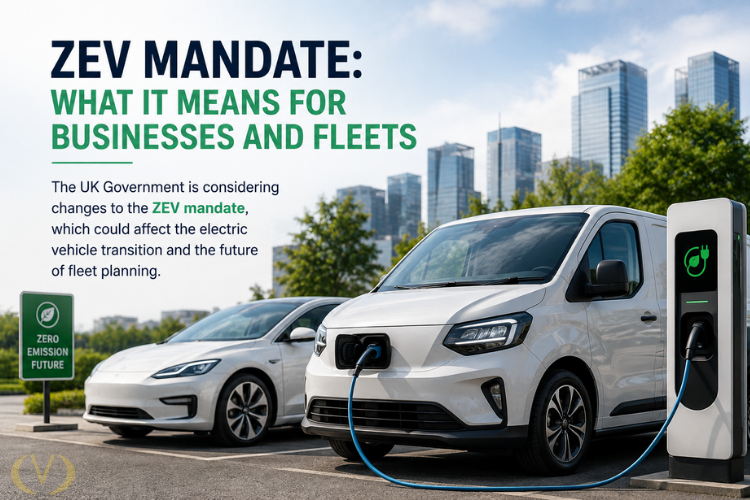
Growing speculation that the UK Government could significantly relax its Zero Emission Vehicle (ZEV) Mandate has prompted strong opposition from organisations across the automotive, charging, fleet and environmental sectors.
Reports suggest ministers are considering reducing the proportion of new cars that must be zero emission by 2030. Options reportedly being considered include lowering the current 80% target to 70%, 60% or potentially as little as 50%.
Such a change would represent a significant shift in the UK’s current approach to electric vehicle adoption and has raised concerns about the potential impact on investment, consumer confidence and the country’s wider electrification strategy.
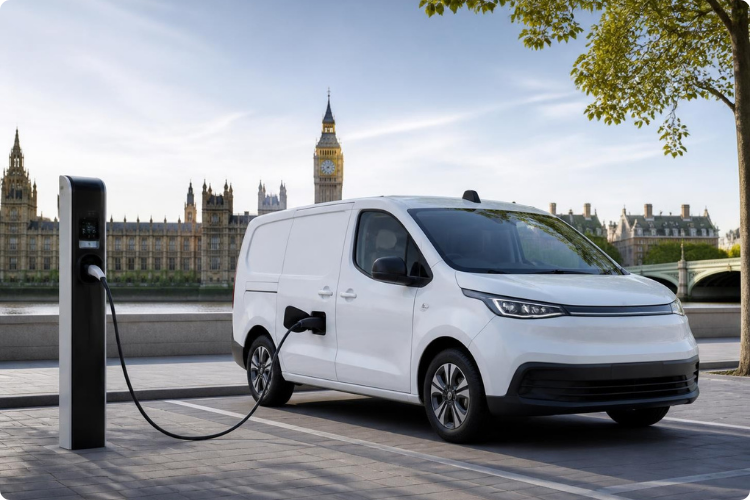
What Is The ZEV Mandate?
The ZEV Mandate was introduced to increase the proportion of new cars and vans sold in the UK that produce zero tailpipe emissions.
Under the existing trajectory, manufacturers face progressively higher annual targets. For cars, the requirement rises from 33% in 2026 to 38% in 2027 before increasing further towards the 80% target set for 2030.
The Government’s wider plan is for the sale of new conventional petrol and diesel cars to end in 2030, while hybrids are currently expected to remain available until 2035.
The system does, however, contain a number of flexibilities that manufacturers can use to help meet their obligations. These mechanisms mean the headline target does not necessarily translate directly into the same percentage of pure electric vehicles being sold across the entire market.
Electric Car Sales Are Increasing, But The Market Remains Below The Headline Target
The debate over the future of the mandate comes at a time when electric car sales are continuing to grow.
Battery electric vehicles have been taking an increasingly large share of the new car market, with July 2026 registrations demonstrating continued year-on-year growth. However, the overall market remains below the headline ZEV trajectory for the year.
The Society of Motor Manufacturers and Traders (SMMT) has also warned that the market could remain behind the Government’s future targets. Its projections indicate that BEVs could account for around 32% of new car registrations in 2027, compared with the Government’s headline target of 38%.
This has intensified the debate about whether the current trajectory is realistic or whether manufacturers need greater flexibility while demand develops.
At the same time, consumers now have a much wider choice of electric cars than they did just a few years ago. Manufacturers are introducing new models across a broader range of price points, while incentives and manufacturer-supported discounts are also being used to encourage buyers to make the switch.
Government Reportedly Considering A Lower 2030 Target
Recent reports indicate that the Department for Transport could consult on changes to the ZEV Mandate in the near future.
One of the most significant proposals being discussed is a reduction in the 2030 requirement for new cars. Rather than requiring 80% of new cars to be zero-emission, the Government is reportedly considering targets of 70%, 60% or 50%.
A 50% target would represent the most substantial change, effectively allowing half of new car sales in 2030 to remain outside the pure-electric category.
Greater flexibility for manufacturers is also reportedly being considered.
Any change would have significant implications for manufacturers, fleet operators, charging providers and consumers, particularly because businesses are making long-term investment decisions based on the UK’s existing electrification strategy.
What About Electric Vans?
The debate is particularly relevant to the commercial vehicle sector.
The ZEV Mandate currently sets a 24% zero-emission sales target for new vans in 2026, increasing to 34% in 2027 and 70% by 2030.
However, electric van adoption has continued to lag behind the equivalent car market.
For businesses, the transition can be more complicated than simply choosing between an electric and petrol or diesel vehicle. Van operators need to consider payload, usable range, charging availability, daily mileage, vehicle downtime and the type of work being carried out.
These considerations make the future of the van market particularly important for businesses that rely on commercial vehicles every day.
While the latest reports surrounding a possible relaxation of the ZEV Mandate have focused primarily on cars, any wider changes to the Government’s approach could also influence manufacturers’ investment decisions in the commercial vehicle sector.
Industry Groups Warn Against Weakening The Mandate
Opposition to a significant reduction in the ZEV targets has come from organisations representing several parts of the electrification industry.
More than 30 organisations have reportedly signed a joint letter to Transport Secretary Heidi Alexander, urging the Government to maintain its existing commitment to the ZEV Mandate.
The signatories include businesses and organisations involved in charging infrastructure, fleet management, battery manufacturing, electric vehicle adoption and environmental policy.
Their argument is that maintaining a clear long-term regulatory framework gives businesses greater confidence when deciding whether to invest in vehicles, charging infrastructure, manufacturing capacity and related technologies.
The concern is that changing the targets could create uncertainty at precisely the time when significant investment is required to support the UK’s transition towards electric transport.
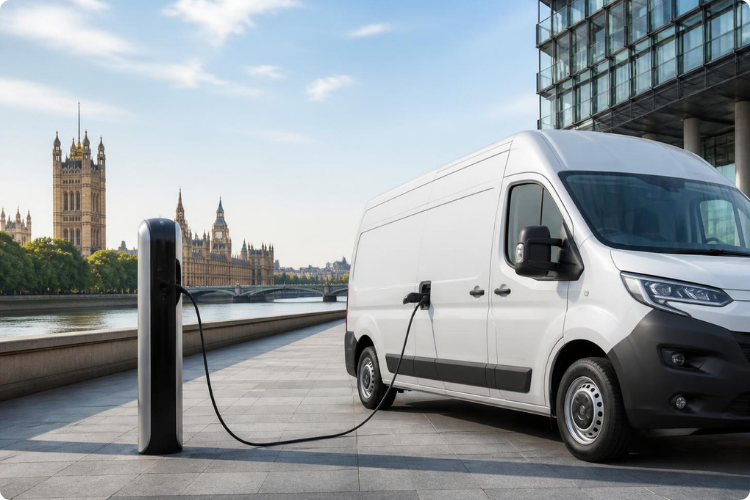
Concerns Over Investment And Business Confidence
One of the strongest arguments against reducing the ZEV targets is the potential impact on investment.
Vehicle manufacturers, charging companies and battery businesses make investment decisions years in advance. New factories, production facilities, charging networks and battery supply chains require substantial amounts of capital and long-term planning.
If the direction of Government policy changes significantly, businesses may question whether future demand for electric vehicles will be strong enough to justify those investments.
For the fleet sector, policy certainty is also important.
Companies considering replacing large numbers of vehicles need to understand what the market is likely to look like several years into the future. Changes to taxation, vehicle availability, charging infrastructure and environmental regulations can all influence fleet purchasing and leasing decisions.
Environmental Groups Also Raise Concerns
There are also concerns about the potential environmental consequences of reducing the 2030 target.
BEAMA, the British Electrotechnical and Allied Manufacturers’ Association, has warned that replacing potential electric vehicle sales with additional petrol and diesel vehicles could result in substantially higher lifetime carbon emissions.
The organisation has argued that reducing the 2030 ZEV target from 80% to 50% could result in millions of tonnes of additional carbon emissions over the lifetime of the vehicles concerned.
This forms part of a wider argument that changing the mandate could have consequences extending beyond vehicle sales figures, particularly if it results in manufacturers slowing investment in electrification.
Supporters Say The ZEV Mandate Is Providing Certainty
Those opposed to weakening the mandate argue that the policy is already helping to accelerate the transition to electric vehicles.
Gurjeet Grewal, CEO of Octopus Electric Vehicles, has argued that the mandate gives manufacturers a clear indication of the direction in which the market is heading while also providing businesses and consumers with greater confidence to invest in electric vehicles.
From this perspective, changing the rules could have the opposite effect.
Rather than encouraging greater investment, a weaker target could create uncertainty about the future size of the electric vehicle market.
This could potentially affect decisions around manufacturing, charging infrastructure, battery production and fleet electrification.
Is The ZEV Mandate Working?
There is an important distinction between saying the ZEV Mandate is failing and recognising that the market is not yet matching the Government’s long-term trajectory.
Electric vehicle registrations have continued to increase, and manufacturers are offering more models than ever before. The challenge is that adoption needs to accelerate considerably if the industry is to remain aligned with the current targets.
The Government has previously stated that the ZEV Mandate will remain under review, with a formal review scheduled for early 2027.
The question now is whether ministers believe the existing framework should remain intact or whether adjustments are necessary to reflect the current level of consumer demand.
What Could A Weaker ZEV Mandate Mean For The UK?
Reducing the target could provide manufacturers with greater flexibility and potentially make it easier for companies to meet their regulatory obligations.
However, there could also be longer-term consequences.
A less ambitious target could slow the rate at which electric vehicles enter the new car market, potentially reducing the number of electric vehicles entering the second-hand market in future years.
It could also influence investment decisions across the charging and battery sectors. At the same time, proposed EV road pricing plans could introduce additional costs for electric vehicle users, creating another consideration for businesses and fleet operators weighing up the move to electric vehicles.
👉 You can read more about the proposed changes and concerns from the leasing and fleet sector in our guide to EV road pricing plans.
What Does This Mean For Businesses And Fleets?
For businesses operating vehicle fleets, the situation is worth monitoring closely.
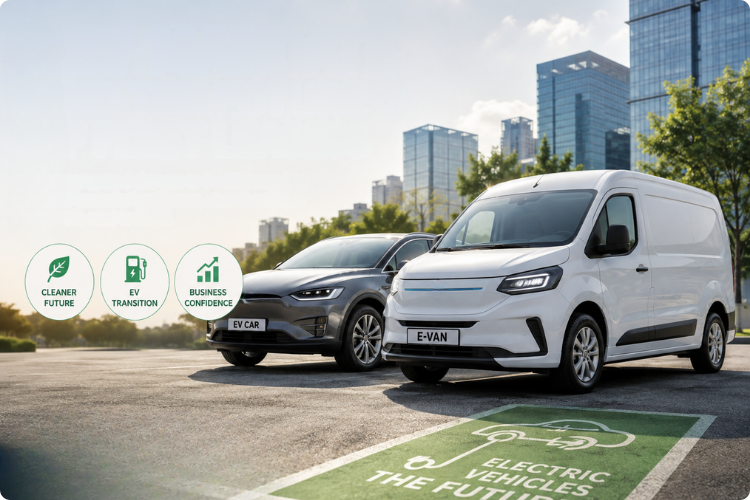
Electric vans and cars are becoming increasingly important options for companies looking to reduce running costs, meet sustainability objectives and prepare for future changes in transport policy.
However, fleet operators should not base their vehicle decisions solely on speculation about potential changes to the ZEV Mandate.
The suitability of an electric vehicle still depends on factors such as daily mileage, charging access, payload requirements, operating patterns and total running costs.
For many businesses, particularly those with predictable daily routes and access to workplace or depot charging, an electric vehicle may already make financial and operational sense.
The Future Of The UK’s EV Transition
The debate surrounding the ZEV Mandate highlights the difficult balance facing the Government.
On one side, manufacturers and some industry representatives are calling for greater flexibility as electric vehicle demand develops. On the other, charging companies, environmental organisations and other businesses argue that weakening the targets could undermine confidence in the UK’s long-term electrification strategy.
The Government’s eventual decision could therefore have consequences far beyond the headline percentage attached to the 2030 target.
The UK’s automotive industry, charging network and fleet sector all require significant investment to support the transition away from petrol and diesel vehicles. Whether the existing ZEV Mandate provides the right framework for achieving that transition remains a subject of intense debate.
For now, businesses should continue to monitor developments closely. Whatever decision the Government ultimately makes, changes to the ZEV Mandate could influence vehicle availability, fleet planning, charging infrastructure and the wider direction of the UK’s electric vehicle market over the coming years.
 Call our expert team on
 Drop us a message