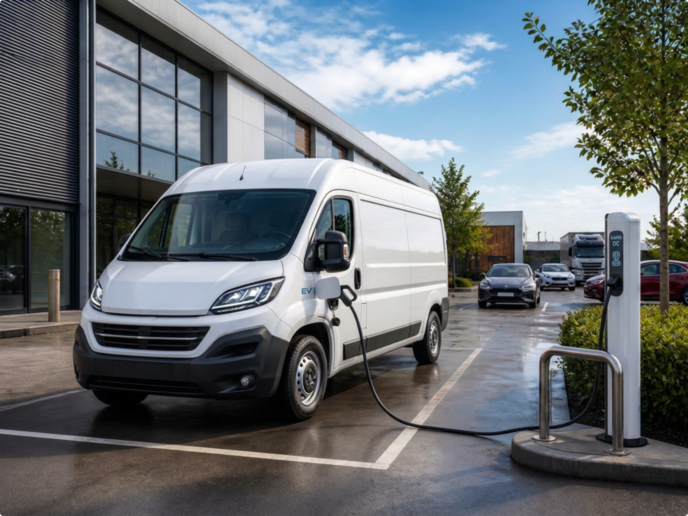
The UK vehicle market is changing quickly.
Businesses looking to replace cars and vans are now faced with a wider choice of manufacturers, rapidly developing electric vehicle technology and increasingly competitive pricing. At the same time, the way people research and compare vehicles is changing, with artificial intelligence (AI) expected to play a much bigger role in the buying process.
For UK businesses, these changes could make choosing the right vehicle more complicated — but they could also create opportunities to secure better value.
New research from OC&C Strategy Consultants suggests that affordability, reliability and convenience are becoming increasingly important to vehicle buyers, while Chinese manufacturers are continuing to build credibility in established automotive markets.
The findings come from the 2026 edition of OC&C’s Global Automotive Disruption Speedometer, which surveyed more than 8,000 drivers across nine countries, including the UK.
For businesses running cars, vans or larger commercial fleets, the research highlights several important developments that could influence vehicle purchasing and leasing decisions over the coming years.
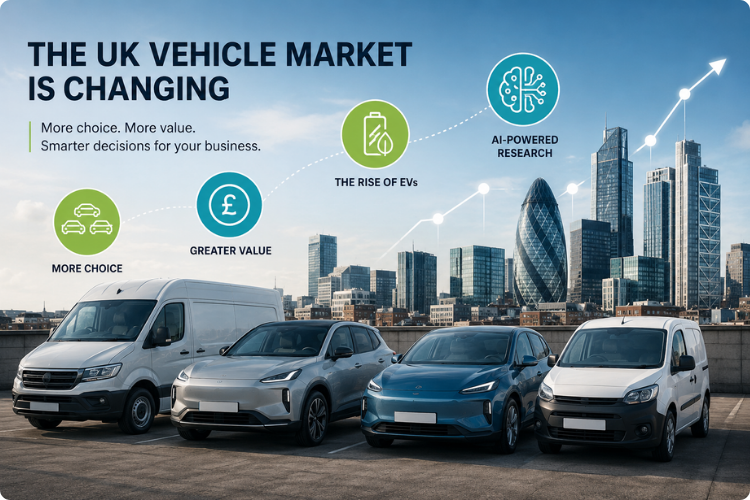
Vehicle Choice Is Expanding
One of the biggest changes facing the automotive market is the growing number of manufacturers competing for customers.
Chinese vehicle manufacturers have established a much stronger presence in the UK in recent years, particularly in the electric vehicle market. Our recent analysis of Chinese car brands’ rapid UK growth looks at how quickly these manufacturers are gaining market share.
Rather than competing purely on price, many of these manufacturers are now attempting to establish themselves through equipment levels, technology, battery range, design and overall value.
OC&C’s research suggests that perceptions are beginning to change.
Across all of the countries surveyed, 40% of consumers said they would be prepared to pay the same amount for an equivalent Chinese vehicle as they would for a Western model. A further 13% said they would actually pay more.
That is significant because it suggests some Chinese manufacturers are no longer being viewed simply as cheaper alternatives.
For UK businesses, the arrival of more credible manufacturers means there could be greater choice when selecting their next vehicle.
This is particularly relevant to electric vehicles, where businesses may previously have had a relatively small selection of established manufacturers to choose from.
As competition increases, manufacturers have a greater incentive to offer competitive monthly costs, generous equipment levels and improved technology.
That competition could ultimately benefit businesses looking for the right vehicle at the right price.
Affordability Is Becoming A Bigger Consideration
For many businesses, the headline purchase price of a vehicle has never told the full story.
When a vehicle is being used as part of a working fleet, the financial impact can extend across the entire period of ownership or lease.
Monthly payments, insurance, servicing, energy or fuel costs, depreciation and residual value can all affect the true cost of putting a vehicle on the road.
The latest OC&C research reinforces the importance of affordability, with 52% of consumers saying that increasing cost-of-living pressures will delay their next vehicle purchase.
While the research focuses on consumer vehicle decisions, the underlying shift towards affordability is also relevant to businesses.
For a company operating several vehicles, even a relatively small difference in monthly costs can become significant when multiplied across an entire fleet.
This is one reason why businesses should avoid judging vehicles purely by their list price.
A vehicle with a slightly higher headline price could potentially represent better value if it offers lower running costs, stronger residual values, better equipment or reduced maintenance requirements.
Equally, the cheapest monthly deal is not automatically the best choice if the vehicle does not meet the operational requirements of the business.
Monthly Cost And Whole-Life Value Matter
For businesses considering vehicle leasing, monthly affordability is naturally an important part of the decision.
However, the right vehicle also needs to work financially and operationally throughout the agreement.
For example, a business might need to consider:
- How much mileage the vehicle will cover
- Whether the payload is sufficient
- How much fuel or electricity it is likely to use
- Servicing and maintenance requirements
- Insurance costs
- Expected reliability
- Charging requirements for an EV
- The length of the agreement
- Whether the vehicle provides the necessary equipment for the job
This becomes particularly important as more electric vans and cars enter the market.
An electric vehicle may have a higher or lower monthly cost than an equivalent petrol or diesel model depending on the vehicle, specification and agreement. But the overall financial picture can also be affected by energy costs, servicing requirements and the way the vehicle is used.
For businesses, the question therefore should not simply be “Which vehicle is cheapest?”
It should be “Which vehicle provides the best overall value for the way our business operates?”
Chinese EVs Could Give Businesses More Options
The growing acceptance of Chinese manufacturers could be particularly significant for businesses considering electric vehicles.
Manufacturers from China have become increasingly active in the UK market, offering models across different segments and competing with established European, Japanese and American brands.
Greater competition could be particularly useful for businesses that have struggled to find an electric vehicle that combines the right range, specification, practicality and monthly cost.
More manufacturers entering the market means businesses have more opportunities to compare vehicles rather than simply choosing between a limited number of familiar brands.
However, businesses should still look beyond the vehicle itself.
When selecting a commercial vehicle, factors such as manufacturer support, warranty arrangements, servicing availability, parts supply and aftersales support can be just as important as the initial specification.
For a working van, being off the road can have a direct impact on a business’s ability to operate.
That means value should always be considered alongside practicality and support.
AI Could Change How Businesses Research Vehicles
Another major development highlighted by OC&C is the growing influence of artificial intelligence.
The research found that 60% of consumers expect to use AI when researching their next car.
This could have a significant impact on the way people find and compare vehicles.
Instead of visiting multiple websites and manually comparing specifications, consumers may increasingly ask AI-powered tools questions such as which vehicle is best for a particular budget, mileage or type of use.
For businesses, this could eventually change how fleet managers research their options.
A company looking for an electric van for urban deliveries, for example, may increasingly use AI to compare range, payload, charging requirements, monthly costs and running expenses before approaching a leasing provider.
This makes accurate and detailed vehicle information increasingly important.
Businesses will also need to become comfortable with using AI as another research tool, while still checking important specifications and financial information directly with manufacturers and leasing providers.
The Electric Vehicle Market Is Becoming More Competitive
The changing automotive market is also likely to accelerate competition between electric vehicle manufacturers.
OC&C found that 57% of people considering an EV now identify price as a motivation, compared with just 5% in its 2024 research.
That represents a major change in the way consumers view electric vehicles.
The conversation around EVs has traditionally focused heavily on environmental benefits, driving experience and technology. Increasingly, however, price and value are becoming central to the decision.
For businesses, this could be particularly important.
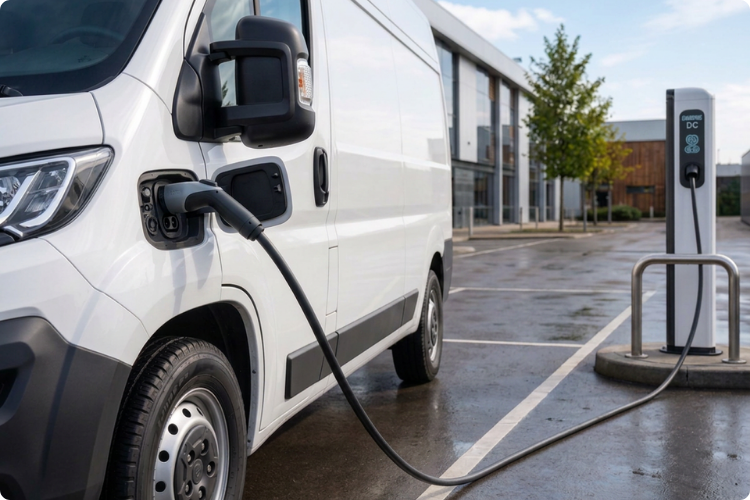
Electric vans can offer potential benefits for businesses with predictable routes, regular mileage and suitable access to charging infrastructure. But whether an EV makes financial sense will depend heavily on how and where the vehicle is used.
A business with high daily mileage and access to convenient overnight charging may have a very different calculation from one where vehicles regularly travel long distances without predictable access to charging.
There is therefore no single answer for every fleet.
What Does This Mean For Businesses Choosing Their Next Vehicle?
The biggest takeaway from the changing market is that businesses have more options than they did previously.
Established manufacturers remain important, but they are facing increasing competition from newer brands and manufacturers entering the UK market.
At the same time, electric vehicles are becoming a more significant part of the commercial vehicle market, while technology is changing how businesses research and compare their options.
This makes the vehicle selection process increasingly about value rather than simply brand.
Businesses should consider the complete financial and operational picture before deciding which vehicle is right for them.
That means looking at the monthly cost, specification, payload, range, running costs and suitability for the job, alongside manufacturer support and expected reliability.
For fleets, the decision can also be more complex because the right choice needs to work across multiple drivers, vehicles and operational requirements.
This is where professional vehicle leasing advice can be particularly useful.
Rather than simply selecting the vehicle with the lowest advertised monthly payment, businesses can compare different models and consider how each one fits their requirements and budget.

A More Competitive Market Could Be Good News For UK Businesses
The automotive industry is entering a period of significant change.
Chinese manufacturers are becoming more credible, electric vehicles are becoming increasingly competitive and AI is changing how customers research their options.
At the same time, affordability is becoming a more important consideration as businesses and consumers look more closely at the cost of running and replacing vehicles.
For UK businesses, the result could be a market offering more choice and greater opportunities to find better value.
However, having more options also makes the decision more complicated.
The best vehicle for a business will not necessarily be the newest model, the cheapest deal or the most recognisable badge. It will be the vehicle that provides the right combination of cost, practicality, reliability and suitability for the job.
As the market continues to evolve, businesses that take the time to compare those factors will be better positioned to make informed vehicle and fleet decisions.
 Call our expert team on