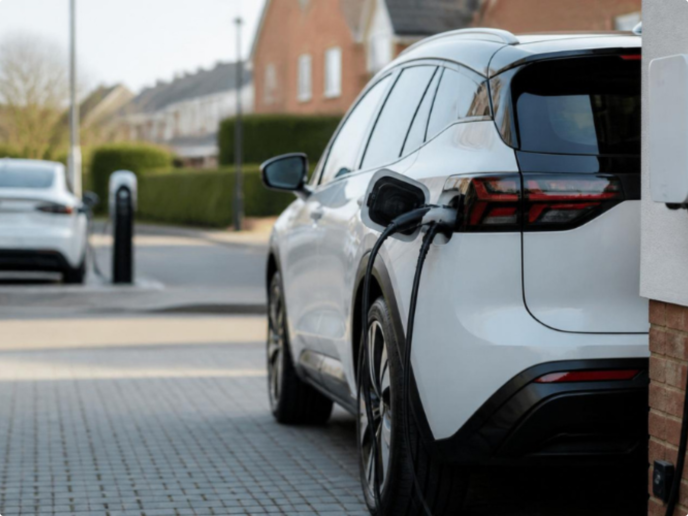
The Government’s decision to remove VAT from domestic electricity bills is expected to widen the cost difference between charging an electric vehicle (EV) at home and using the public charging network.
From 1 October, VAT on household electricity will fall from 5% to 0%, following an announcement by Prime Minister Andy Burnham as one of his first major policy measures after taking office.
The Government says the change is designed to help households manage the cost of living by reducing energy bills and leaving more money in people’s pockets.
Announcing the policy, Burnham said the Government was taking immediate action to cut taxes on household energy bills and provide financial relief for families.
The reduction is expected to lower the annual Ofgem energy price cap by around £45 for the average household.
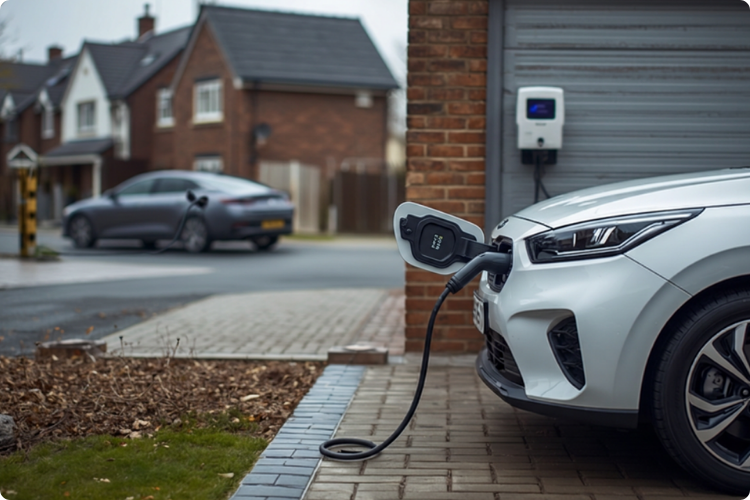
Home Charging Becomes Even More Affordable
The removal of VAT on domestic electricity will make charging an electric vehicle at home even cheaper than it is today.
Home charging is already widely recognised as the most cost-effective way to run an electric vehicle, particularly for motorists who can take advantage of off-peak electricity tariffs. Public charging, especially rapid and ultra-rapid chargers, typically costs significantly more per kilowatt-hour before VAT is even applied.
The latest tax change will therefore increase an existing price gap between home and public charging rather than create a new one.
Drivers who are able to charge at home will benefit directly from the reduction in household electricity costs. However, motorists who rely on the public charging network will continue to pay the standard 20% VAT rate when charging their vehicles.
If you’re considering making the switch, explore our Electric Car Leasing and Electric Van Leasing options to see how an electric vehicle could help reduce your running costs.
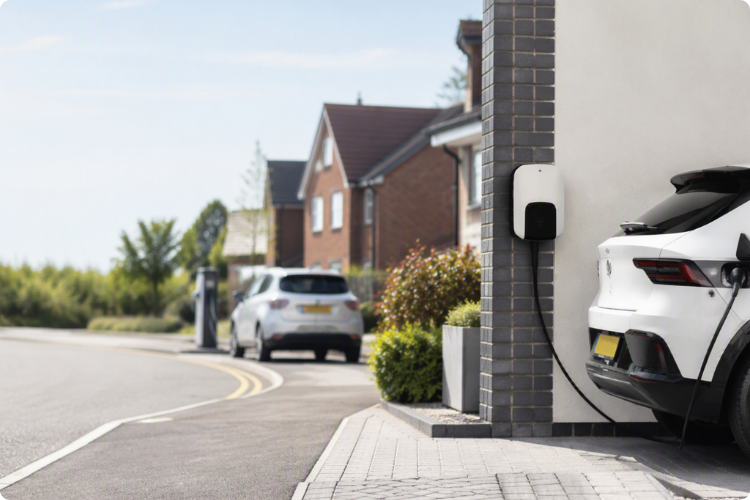
Long-Running Concerns Over VAT Fairness
The different VAT rates applied to home and public charging have been criticised for several years by organisations across the automotive and fleet sectors.
Currently, electricity used to charge an EV at home attracts a reduced VAT rate, while electricity supplied through public charging infrastructure is taxed at the standard rate of 20%.
Industry bodies, including the AA, the RAC and the Association of Fleet Professionals (AFP), have repeatedly called on the Government to reduce VAT on public charging so that drivers without access to home charging are not financially disadvantaged.
Campaigners argue that the current system creates an uneven playing field, with charging costs determined not only by electricity prices but also by where a driver lives and whether they have access to private parking.
Millions of Households Depend on Public Charging
Government figures illustrate why the issue affects a significant proportion of motorists.
According to the English Housing Survey, around eight million households in England, representing approximately 32% of homes, do not have access to off-street parking, such as a driveway, garage or residential parking space.
For many of these households, installing a home charger is simply not possible, leaving public charging as the primary option for owning and operating an electric vehicle.
As EV adoption continues to grow across the UK, industry organisations have argued that addressing the VAT difference could help make electric vehicle ownership more accessible for drivers living in urban areas and higher-density housing.
Implications for Business Fleets
The VAT disparity also has implications for businesses operating electric vehicle fleets.
Employees who charge company vehicles at home may benefit from lower domestic electricity costs following the VAT reduction. However, fleets that rely heavily on public charging while vehicles are on the road will continue to face higher charging costs because of the standard VAT rate.
Employees may also benefit from an EV Salary Sacrifice Scheme, allowing them to drive a new electric car while potentially reducing their monthly motoring costs. Learn more in our guide to EV Salary Sacrifice Explained: How UK Employees Can Drive a New Electric Car for Less.
For businesses without access to depot charging facilities, public charging often forms an important part of day-to-day vehicle operations, meaning the tax difference can have an ongoing impact on running costs.
Businesses looking to transition to lower-emission vehicles can also learn more about our Business Car Leasing and Business Fleet Solutions, which are designed to support companies of all sizes.
Legal Challenge Continues
The debate surrounding VAT on public charging has also become the subject of legal proceedings.
Earlier this year, community charge point operator Charge my Street successfully challenged the current VAT treatment at a First-tier Tribunal.
The company argued that electricity supplied through public charge points should qualify for the reduced domestic VAT rate under existing legislation covering lower-volume electricity supplies. The tribunal ruled in its favour.
However, HM Revenue & Customs (HMRC) subsequently confirmed that it is appealing the decision and maintains that electricity supplied through public EV charging infrastructure should continue to attract the standard 20% VAT rate.
Until the appeal process has concluded, motorists using the public charging network will continue to pay VAT at the higher rate.
Growing Financial Impact
The difference between charging VAT at 5% and 20% also has significant implications for Government tax revenue.
According to figures from Zapmap, the higher VAT rate currently generates around £85 million each year for the Treasury. As the number of electric vehicles on UK roads continues to increase, that figure is projected to rise to approximately £315 million annually by 2030 if the current VAT structure remains unchanged.
With electric vehicle adoption expected to continue growing over the coming years, the debate over VAT on public charging is likely to remain an important issue for motorists, businesses, charge point operators and policymakers alike.
The latest reduction in VAT on household electricity will make charging an EV at home even more affordable, but it also increases the financial gap between those who can charge at home and the millions of drivers who must continue relying on the public charging network.
Related Reading: Discover why electric vehicles are becoming more affordable than petrol cars, and see how lower running costs are helping more businesses make the switch.
Read our guide to the Best Small Electric Vans on the Market if you’re considering an electric commercial vehicle for your business.
Thinking about switching to electric? Browse our latest Electric Car Leasing and Electric Van Leasing deals, or speak to our team about finding the right vehicle for your business and charging requirements.
 Call our expert team on