The Government has announced £100 million in funding to help lower the cost of charging electric vehicles at public charging points, with potential savings for drivers and businesses that cannot rely on cheaper home charging.
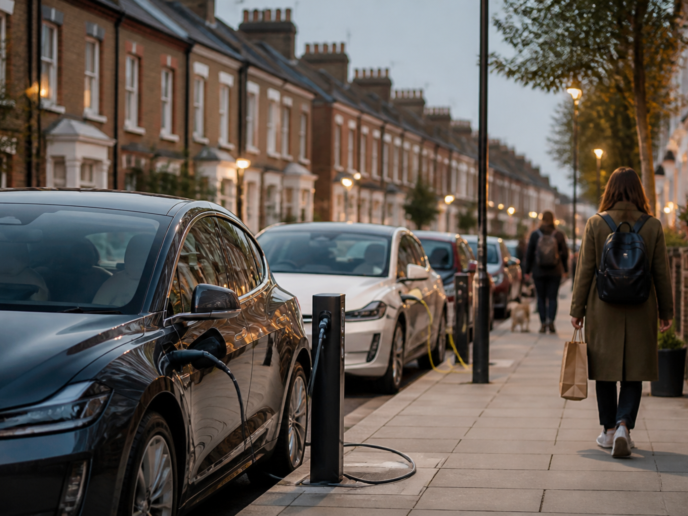
The funding, announced as part of the Autumn Budget 2026, will target lower-powered public chargers, including those located on residential streets where vehicles can be left charging for several hours or overnight. The scheme is expected to begin in spring 2027 and run for two years, with the Government estimating average savings of around £150 a year for drivers who depend on these chargers.
For businesses considering the switch to electric cars and vans, the announcement highlights the importance of charging costs when assessing the overall affordability of running an electric fleet. Although home and depot charging can offer cost advantages where suitable facilities are available, drivers who depend on the public network face a different financial calculation.
The funding forms part of a wider effort to expand public charging provision, with the Government’s EV Infrastructure Support Service helping local authorities and other public bodies plan and develop charging networks across England.

Public EV Charging Costs Have Risen Significantly
The funding follows an independent review of public electric vehicle charging costs led by Philip New and commissioned by the Government. Published alongside the Budget, the review found that average prices for lower-powered public charging had increased by 69% in real terms since 2021. For higher-powered charging, typically used at motorway services and dedicated rapid-charging locations, the increase was even greater at 94%.
These increases have created an additional financial consideration for motorists and businesses weighing up the move away from petrol and diesel vehicles. While electric vehicles can offer lower running costs in certain circumstances, the savings depend on factors including electricity tariffs, mileage, vehicle efficiency and where charging takes place. The difference between domestic and public charging costs is also affected by VAT, an issue explored in CVC’s guide to VAT on home and public EV charging.
Access to off-street parking is a particularly important consideration. Drivers with a suitable driveway or private parking space may be able to install a home charger and benefit from domestic electricity tariffs. Those living in properties without dedicated parking are more likely to rely on public infrastructure, potentially paying considerably more for each unit of electricity. For drivers without off-street parking, EV charging without a driveway remains a practical challenge, making the cost and availability of public charging particularly important.
The Government estimates that around one-third of UK households lack access to off-street parking or a driveway. Its latest funding announcement is intended to address some of the additional costs faced by drivers who cannot easily charge at home.
Key Details Of The Public EV Charging Funding
| Budget measure | Details |
|---|---|
| Government funding | £100 million |
| Expected start | Spring 2027 |
| Funding period | Two years |
| Target chargers | Lower-powered public chargers, including residential street charging points |
| Estimated average saving | Around £150 per driver per year |
| Share of public charging network covered | Approximately one-third |
| Wider proposal | Explore allowing drivers to use domestic electricity tariffs at selected public chargers |
| Current status | Funding announced; delivery arrangements and tariff-porting plans remain under development |
The proposed support will cover lower-powered chargers, which account for approximately one-third of the existing public charging network. However, the funding is not expected to reduce every type of public charging tariff, meaning drivers who regularly use rapid chargers will not necessarily benefit directly from the scheme.
Government Explores Access To Domestic Electricity Tariffs
Alongside the £100 million funding package, the Government is taking forward proposals to investigate whether drivers could use their domestic electricity tariffs when charging at certain public charge points.
The proposed system, known as tariff porting, could allow drivers to charge their vehicles at a suitable public charger near their home while paying for the electricity through their existing domestic energy supplier. A separate access charge would cover the costs of installing, operating and maintaining the charging equipment.
If implemented successfully, this approach could help narrow the price difference between charging at home and using public infrastructure. It could be particularly relevant to drivers who park on residential streets and cannot install a private charging point. The potential benefits will also depend on the electricity rates available to drivers. CVC explains more about the changing landscape in its guide to UK electric vehicle tariffs for 2027.
However, introducing such a system would involve several practical and commercial challenges. These include how electricity suppliers, charging operators and local authorities would coordinate billing, recover infrastructure costs and work within existing charging network agreements.
The Government will establish a task force to examine the proposal, with further details expected from the Department for Transport. Pilot schemes have been recommended as a way to test how tariff porting could operate in different locations and circumstances before any wider rollout.
For now, the proposal remains under development, and there is no confirmed date for a nationwide system to become available.
What The Budget Announcement Means For Electric Fleets
For businesses operating company cars, vans or mixed fleets, the announcement reinforces the need to assess charging arrangements alongside vehicle acquisition costs and day-to-day operating expenses.
Businesses with access to workplace or depot charging may be better positioned to manage electricity expenditure, depending on their facilities, tariffs and vehicle usage. Operators whose drivers charge away from base, however, may have less control over the prices they pay.
For businesses looking to reduce their reliance on public charging, CVC has also covered Government grants for home and workplace EV chargers, which may help eligible operators assess the cost of installing their own charging facilities.
Businesses reimbursing employees for business mileage in electric company cars can also use CVC’s AER reimbursement calculator to estimate charging costs and compare them with the applicable HMRC Advisory Electric Rate.
This is especially relevant to fleets undertaking high annual mileage, regular regional journeys or work across multiple locations. A vehicle’s advertised range and efficiency are important, but the cost and availability of suitable charging facilities also influence whether it is practical for a particular role.
The wider Budget measures affecting business motoring costs are also relevant to fleet planning. CVC’s overview of the Autumn Budget 2026 fuel duty freeze and mileage rates examines other changes that businesses should consider when assessing vehicle expenses and employee mileage.
Businesses can assess these considerations as part of a wider fleet efficiency strategy, reviewing vehicle utilisation, energy consumption and operating costs before committing to a change in fleet composition.
Understanding how charging works for different operating models is equally important. CVC’s guide to EV charging for businesses explains the charging considerations businesses need to weigh up when planning for electric vehicles.
For organisations still evaluating the transition, the potential reduction in public charging costs could improve the financial case for some drivers in the longer term. However, the proposed savings should not yet be treated as an immediate reduction in fleet expenditure.

Charging Access Remains A Barrier To EV Adoption
The funding announcement comes as the Government continues to develop measures intended to make electric vehicles more accessible and affordable.
Recent changes have also removed the requirement for planning permission for certain cross-pavement charging installations, making it easier for some households without driveways to explore charging at home. The effectiveness of this approach will depend on individual properties, pavement layouts and the suitability of local arrangements. For a closer look at the rules affecting household charging options, CVC has explained the changes to EV charging installations for homes without driveways.
Nevertheless, public charging infrastructure remains essential for drivers who cannot install private equipment. Price is only one part of the challenge: charger availability, reliability, location and compatibility with drivers’ routines also influence the practicality of owning or operating an electric vehicle. The scale of the network is therefore important, as explored in CVC’s update on the UK EV charging network, including the growth of public and on-street charging provision.
Reliability is another consideration for businesses that depend on public charging, as CVC’s analysis of EV charger reliability across UK regions highlights differences in how charging networks are monitored and maintained.
Businesses assessing electric vans should therefore consider the needs of individual roles rather than assuming that one charging arrangement will suit every driver. A vehicle used predominantly for local work may have different charging requirements from one covering long distances between customer sites.
CVC’s guide to electric van adoption for UK business fleets explores some of the considerations involved in planning the transition.

 Call our expert team on