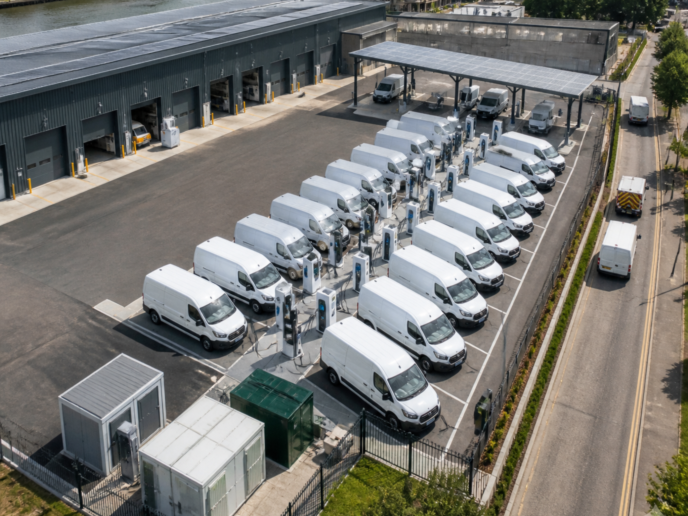
London has been identified as the easiest UK region in which to operate an electric fleet, while the North East faces the greatest challenges, according to new research published on 6 November 2026.
The findings highlight how uneven the transition to electric vehicles remains across the UK. Although more businesses are adopting electric cars and vans, the availability of public charging infrastructure, regional business activity and local transport policies can all influence how practical fleet electrification is.
For businesses considering electric vehicles, the results underline an important point: a fleet transition that works well in one part of the country may be considerably more difficult in another. Employers need to assess the areas their vehicles cover, where drivers park overnight and during working hours, and whether charging facilities can support their daily operations.

UK Regions Ranked By Electric Fleet Readiness
The research assessed 12 UK regions using several indicators, including public charging provision, company-registered electric vehicles, the concentration of logistics businesses and the geographical coverage of Clean Air Zones.
London achieved the highest overall score, at 75.5. The North East came last, with a score of 11.1.
| UK Region | Electric Fleet Readiness Score |
|---|---|
| London | 75.5 |
| East of England | 49.8 |
| West Midlands | 48.9 |
| Scotland | 48.1 |
| South East | 46.8 |
| East Midlands | 41.3 |
| Yorkshire and the Humber | 36.1 |
| South West | 29.1 |
| North West | 27.0 |
| Wales | 24.1 |
| Northern Ireland | 19.4 |
| North East | 11.1 |
The Department for Transport’s July 2026 statistics show that London has the highest overall number of public chargers per 100,000 people, but its provision of rapid and ultra-rapid chargers is much lower. London has 27.9 rapid-or-above chargers per 100,000 people, compared with 59.1 in Scotland. Much of London’s network consists of standard on-street chargers. This is an important distinction for commercial fleet operators who need faster charging during working hours.
The scores show a substantial difference between the leading and lowest-ranked regions. However, they should be treated as an indication of relative readiness rather than a guarantee that every business in a particular region will find electric fleet operation straightforward.
The research combines several regional indicators. Individual businesses will still need to consider their own routes, vehicle requirements, charging access and operating patterns.
London Leads The Electric Fleet Readiness Rankings
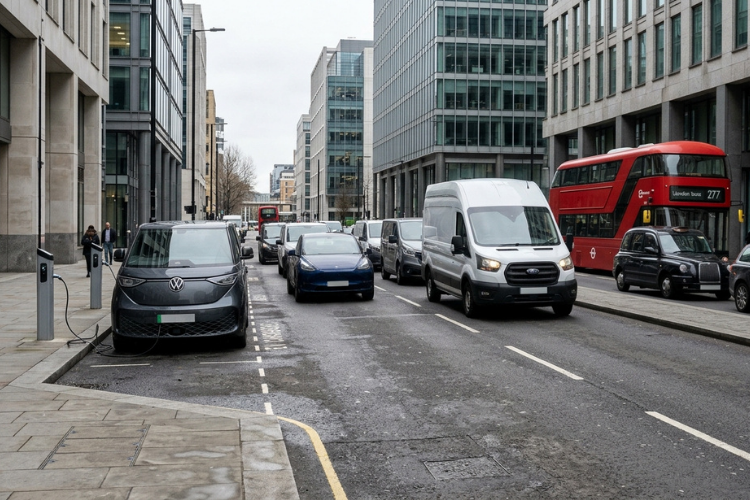
London’s position at the top reflects its comparatively developed public charging network, high concentration of businesses and established policies aimed at reducing vehicle emissions.
The capital has a greater density of public charging facilities than many other parts of the country. This can provide more options for businesses whose drivers cannot rely on depot charging or home charging.
However, a high regional score does not mean that charging is always convenient. Public chargers can be busy, access and pricing vary, and larger commercial vehicles may face restrictions at certain locations.
Businesses operating in London also need to consider local emissions requirements and the impact of charges on their vehicles. Our guide to UK ULEZ and Clean Air Zones explains the key considerations for drivers and fleet operators.
For businesses running vehicles across multiple London locations, charging strategy should form part of wider route and operational planning. Public charging can provide flexibility, but relying on it as the sole source of energy may create additional downtime and cost.
East Of England And West Midlands Among The Strongest Regions
The East of England ranked second with a score of 49.8, closely followed by the West Midlands on 48.9.
Both regions have substantial business and logistics activity, making access to suitable charging facilities an important consideration for companies operating cars, vans and other light commercial vehicles.
The West Midlands has a significant concentration of commercial activity and businesses that depend on road transport. For these operators, the suitability of electric vehicles will depend on more than the number of public chargers. Daily mileage, payload, vehicle availability and the location of charging facilities all influence whether a switch is practical.
The East of England’s second-place position also demonstrates that electric fleet readiness is not confined to major metropolitan areas. Businesses with access to suitable workplace or depot charging may be able to operate electric vehicles effectively even where public infrastructure is less concentrated.
Companies should assess how electric vehicle charging works for businesses before deciding how to introduce electric cars or vans into their fleets.
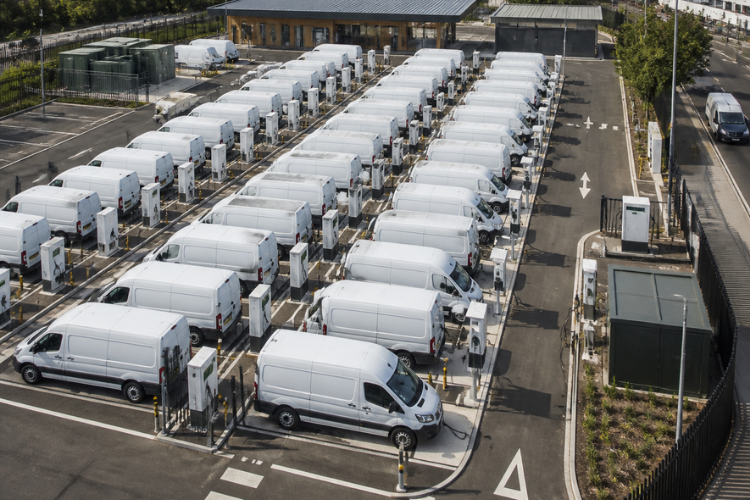
Scotland And The South East Show Different Routes To Readiness
Scotland ranked fourth, with a score of 48.1, while the South East followed closely in fifth place with 46.8.
Scotland’s result is notable because its geography and population distribution create different charging requirements from those found in more densely populated parts of England. Businesses operating across rural areas, towns and cities may need to plan around longer distances between charging locations.
Public charging provision is only one part of the picture. Depot charging, workplace facilities and the ability to recharge vehicles overnight can make a significant difference to fleet operations.
Businesses operating north of the border can refer to our guide to commercial vehicles in Scotland for further information relevant to Scottish operators.
The South East, meanwhile, has a broad mix of urban, suburban and rural operating environments. Businesses may need different charging arrangements depending on whether their vehicles are used for local deliveries, regional service visits or longer-distance journeys.
For companies without off-street parking, access to suitable charging can be a particular challenge. Our guide to EV charging without a driveway looks at the options available to drivers who cannot install a charger at home.
EV Adoption And Charging Infrastructure Do Not Always Move At The Same Pace
One of the wider issues highlighted by the regional results is the relationship between electric vehicle adoption and charging infrastructure.
A growing number of businesses are considering electric cars and vans, but the availability of convenient charging does not develop at the same rate everywhere. This can create a mismatch between the vehicles companies want to introduce and the infrastructure available to support them.
Government statistics published in 2026 also show significant regional differences in public charging provision. London had around 345 public charging devices per 100,000 people, compared with approximately 150 in the North East and East of England. Scotland recorded around 232 per 100,000, while Northern Ireland had approximately 60. Our overview of the UK EV charging network looks at the continued expansion of public charging infrastructure and the developments affecting drivers and businesses.
These figures provide useful context, but charger density alone does not tell the whole story. The location, charging speed, reliability and accessibility of facilities are all important. A high number of chargers does not necessarily mean that a driver can find a suitable available unit when needed.
Businesses should also distinguish between public charging and infrastructure that they can control themselves. A depot-based operation with predictable vehicle movements may be able to make effective use of scheduled overnight charging, while a mobile workforce could need a much broader network of public facilities.
Northern Ireland, Wales And The North East Face Greater Challenges
Northern Ireland scored 19.4, Wales 24.1 and the North East 11.1, placing them towards the bottom of the readiness table.
This does not mean that businesses in these areas cannot operate electric vehicles. It does suggest that regional conditions may require more careful planning, particularly where public charging access, journey distances or the location of business premises create practical barriers.
For companies operating in rural areas, the suitability of an electric vehicle will often depend on the routes covered and the availability of charging at the start and end of the working day.
The North East’s position is particularly striking when compared with London. However, regional averages can conceal local differences. Businesses based near major towns or transport corridors may have access to a different range of charging facilities from those operating in more remote locations.
The findings should therefore be used as a starting point for assessing local requirements, rather than as a reason to rule out electrification altogether.

What The Rankings Mean For Fleet Managers
The regional results provide useful context for businesses considering a move towards electric vehicles, but fleet decisions should be based on operational requirements rather than rankings alone.
Before introducing electric cars or vans, fleet managers should consider:
- Daily mileage: Establish the typical and maximum distances vehicles cover, including any unexpected journeys.
- Charging access: Check whether drivers can charge at home, at business premises, at depots or through public networks.
- Vehicle suitability: Consider payload, load space, passenger capacity, range and charging times alongside the vehicle’s purchase or lease cost.
- Route patterns: Identify whether vehicles return to base regularly or spend most of their working day on the road.
- Total operating costs: Compare energy, maintenance, taxation, insurance and leasing costs rather than focusing solely on the monthly rental.
- Regional coverage: Check the availability of suitable charging facilities across every area in which the fleet operates.
A clear understanding of these factors can help businesses identify which vehicles are suitable for electrification now and where a phased approach may be more appropriate.
Our guide to total cost of ownership for business vehicles explains why whole-life costs should be considered when comparing fleet options.
Planning An Electric Fleet Transition
For many businesses, electrification is likely to be a gradual process rather than a single fleet-wide change. Some vehicles may be suitable for replacement with electric alternatives immediately, while others may need to remain petrol or diesel until vehicle capability, charging access or operating requirements change.
A structured electric van fleet transition can help businesses assess where electric vehicles are likely to work, identify infrastructure requirements and plan vehicle replacement around contract and operational needs.
For van operators, the decision also needs to reflect the demands placed on commercial vehicles. Electric vans can be suitable for many local and regional operations, but payload, range, body configuration and charging arrangements must be considered together. Our guide to electric van adoption for UK business fleets explores some of the practical considerations.
It can also be useful to compare electric and diesel models before committing to a particular vehicle type. Our electric van versus diesel van comparison looks at the factors businesses should weigh up.
Fleet planning should take account of vehicle replacement dates, driver requirements, business growth and the locations in which vehicles operate. Reviewing these factors together can help avoid introducing vehicles that do not fit the work they are expected to undertake.

Choosing The Right Leasing And Fleet Support
The regional readiness rankings demonstrate that there is no single approach to electric fleet adoption that will suit every business.
Some operators may be ready to introduce electric cars or vans across a significant proportion of their fleet. Others may benefit from starting with vehicles that have predictable routes, regular return-to-base patterns or access to workplace charging.
Businesses reviewing their options can consider how fleet management solutions and structured fleet planning and leasing can support decisions around vehicle selection, replacement cycles and ongoing operational requirements.
The most effective approach is to match vehicle choice to the work being carried out, rather than allowing a regional ranking or a general electrification target to dictate the decision.
 Call our expert team on