
Calculate how much you spend on fuel based on your annual mileage, vehicle fuel economy and the price you pay at the pump. Use our fuel cost calculator to estimate your weekly, monthly and annual running costs and compare different vehicles to help make informed decisions about your business fleet.
How to Calculate Your Vehicle Fuel Costs
Calculating your vehicle fuel costs can help you understand how much you spend on business travel and plan your budget more accurately. The main factors are your annual mileage, your vehicle’s fuel economy and the price you pay for fuel.
To estimate your annual fuel spend, divide your annual mileage by your vehicle’s miles per gallon (MPG), then multiply the result by 4.54609 to convert UK gallons into litres. Multiply that figure by the price you pay per litre to calculate your estimated annual fuel cost.
For example, a vehicle travelling 12,000 miles per year and returning 40 MPG will use approximately 1,364 litres of fuel. At £1.50 per litre, that equates to around £2,045 in annual fuel costs.
Your actual expenditure may be higher or lower depending on traffic, driving style, vehicle load, journey type and changing fuel prices. Vans used for deliveries or carrying heavy equipment may achieve different real-world fuel economy from the figures quoted by the manufacturer.
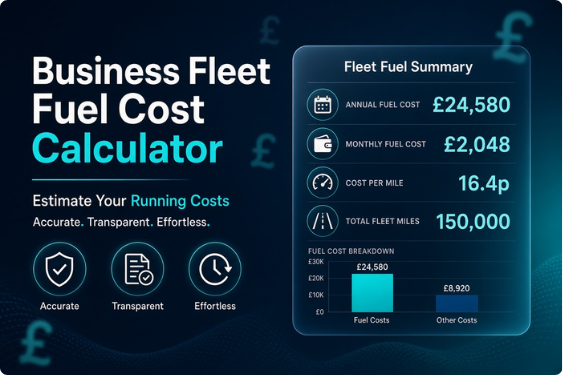
Business Fleet Fuel Cost Calculator
Estimate total fuel costs for your vehicle fleet. Enter the number of vehicles, average annual mileage per vehicle, average UK MPG, and current fuel price.
Estimated total annual fleet fuel cost
Uses UK MPG and the official UK gallon conversion (4.54609 litres). Actual costs vary with driving style, load, weather and real-world economy.
What Affects Business Vehicle Fuel Costs?
Several factors influence how much a business spends on fuel. Annual mileage is particularly important because vehicles covering more miles generally consume more fuel. Fuel economy also makes a difference, as a vehicle returning more miles per gallon will typically cost less to fuel over the same distance.
Fuel prices can fluctuate, while frequent stop-start journeys, motorway driving, payloads and vehicle maintenance can all affect consumption. Businesses operating multiple vehicles may benefit from reviewing mileage records and actual fuel expenditure to identify opportunities to improve efficiency.
If you're considering replacing your current vehicle, comparing fuel economy can help you identify ways to reduce running costs. Our guide to the best MPG vans in the UK compares fuel-efficient models and explains what businesses should consider when choosing an economical van.
When comparing replacement vehicles, consider more than fuel economy alone. Leasing costs, maintenance, downtime and the suitability of each vehicle for your business should also inform your decision.
Managing Your Business Vehicle Costs
Fuel is just one part of the overall cost of running a business vehicle. Maintenance, servicing, insurance, vehicle finance and downtime can also affect your budget. Our fleet management solutions can help businesses manage their vehicles and day-to-day fleet requirements.
If you're considering replacing an existing vehicle, van leasing offers businesses a way to access a vehicle through an agreed contract rather than purchasing it outright. Understanding the vehicle leasing process can help you assess your options and plan for your next vehicle.
You could also compare the running costs of conventional vehicles with electric alternatives. Our electric van leasing options may be worth exploring if you're considering switching to an electric commercial vehicle.
Explore Our Other Vehicle Calculators & Tools
We've created a range of free vehicle calculators and online tools to help businesses, fleet managers and drivers understand vehicle costs, compare expenses and work out tax and mileage obligations.
Whether you're calculating company car or van tax, estimating electric vehicle running costs, checking van payload or working out business fuel expenses, explore our full range of vehicle calculators and tools.
 Call our expert team on