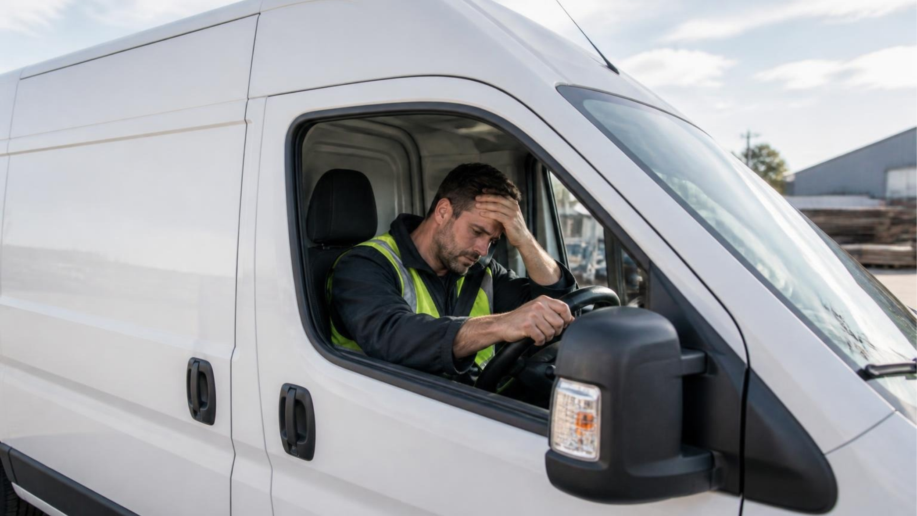
New research suggests transport and logistics managers believe better technology could make one of the biggest differences to their mental health, highlighting the growing link between effective fleet management and employee wellbeing.
With World Mental Health Day taking place on 10 October, new research from transport technology specialist Microlise has put the pressures facing the people responsible for managing fleets firmly under the spotlight.
The research, based on responses from 250 UK transport and logistics managers, found that 20% believe better technology would have the greatest positive impact on their mental health at work.
That placed technology ahead of having more time to rest and recover between shifts, which was selected by 18% of respondents.
The findings raise an important question for businesses operating commercial vehicles: could better fleet management help reduce some of the pressures placed on the people responsible for keeping vehicles, drivers and deliveries moving?
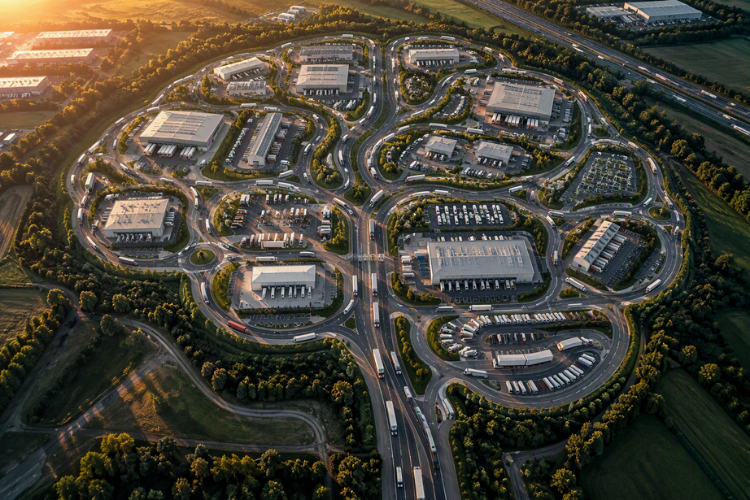
Why Fleet Management Can Be A High-Pressure Role
Managing a fleet involves far more than simply making sure vehicles are available when they are needed.
Transport and fleet managers can be responsible for everything from vehicle maintenance and compliance to route planning, driver management, customer requirements and keeping operational costs under control. Compliance can be another significant source of pressure, particularly for businesses operating multiple commercial vehicles and keeping up with changing standards and requirements. The RHA Van Standard provides businesses with a framework for considering areas such as vehicle condition, safety and operational standards.
For businesses running multiple vehicles, these responsibilities can quickly become complicated, particularly when managers are dealing with different vehicle types, drivers, schedules and maintenance requirements at the same time. Our guide to why fleet management is becoming more demanding for UK businesses looks at some of the wider pressures facing modern fleet operators.
Our guide to fleet management solutions for UK businesses looks at some of the ways businesses can bring different aspects of vehicle management together rather than dealing with every requirement separately.
As fleets become more complicated, the amount of information managers need to monitor can also increase.
Different vehicle types, changing regulations, alternative powertrains, driver requirements and rising operating costs can all add to the workload.
For businesses, these pressures can sometimes become normalised as simply being part of running a fleet.
However, the latest research suggests that the systems used to manage those responsibilities can have an impact on the people doing the job.
What Could Make The Biggest Difference To Mental Health?
The Microlise research provides a useful snapshot of the changes transport and logistics managers believe could have the greatest impact on their mental health.
Better technology came out on top, although several other factors were also highlighted.
| Workplace Change | % of Transport Managers | Potential Benefit |
|---|---|---|
| Better technology | 20% | Reduce manual tasks, improve visibility and make fleet-management processes more efficient |
| More time for rest and recovery | 18% | Give managers greater opportunity to recover between demanding periods |
| Increased pay | 13% | Recognise the responsibility involved in managing transport operations |
| Better distribution of responsibilities | 13% | Reduce pressure on individual managers by spreading workloads across the team |
| Shorter working days | 10% | Reduce the amount of time spent dealing with demanding operational responsibilities |
| Better facilities and support on the road | 9% | Improve working conditions for transport professionals away from the office |
| Greater clarity over tasks and expectations | 9% | Reduce uncertainty around daily responsibilities |
| Less manual paperwork | 4% | Reduce repetitive administration and free up time |
| Greater freedom to improve processes | 4% | Allow managers to address inefficient procedures and introduce practical improvements |
The results suggest that supporting mental health is not necessarily about introducing one major initiative.
In many cases, reducing unnecessary friction from the working day could make a meaningful difference.
If a fleet manager is constantly dealing with duplicated administration, disconnected systems, unclear information or avoidable paperwork, those small frustrations can build up over time.
Technology cannot remove every pressure associated with fleet management, but it can potentially make some tasks easier, quicker and more organised.
Better Technology Could Remove Some Of The Everyday Pressure
According to the Microlise research, one in five transport and logistics managers identified better technology as the single change that would make the biggest difference to their mental health.
That is particularly interesting at a time when fleet technology is becoming increasingly sophisticated.
Modern fleet-management systems can bring together information that might previously have been held across spreadsheets, emails, paper records and separate software platforms.
For a fleet manager, having clearer access to vehicle and driver information can potentially mean less time spent searching for information and more time making decisions.
It can also provide greater visibility of issues before they become larger operational problems.
This is where technology can potentially make a difference to workload rather than simply adding another layer of administration.
Administration Is One Area Where Technology Can Help
One particularly striking finding from the research concerns proof-of-delivery paperwork.
Transport managers estimated that manually processing proof-of-delivery documentation takes more than two hours of working time, with the report putting the associated cost at £172.40 per day.
For a business dealing with a large number of deliveries, that represents a considerable amount of time spent on administration rather than managing the wider operation.
Digital systems can help automate repetitive processes, improve access to information and reduce the need to move between different sources of data.
That can give managers more visibility while potentially reducing the amount of routine administration they have to deal with.
The same principle can apply across other areas of fleet management.
Vehicle maintenance, compliance, mileage, driver information and operational reporting can all generate significant amounts of data.
When that information is difficult to access or spread across disconnected systems, the workload can become unnecessarily complicated.
Businesses can also reduce some of the uncertainty around vehicle upkeep by having a clear approach to vehicle maintenance, particularly where multiple vehicles are being managed at the same time. Having a clear understanding of the difference between routine maintenance and warranty cover can also help fleet managers establish where responsibility lies when a vehicle develops a problem.
AI Is Changing What Fleet Technology Can Do
The development of artificial intelligence could take this further.
AI-enabled fleet systems can analyse large amounts of operational data to help businesses identify patterns, highlight potential problems and make decisions more efficiently.
This can include areas such as route and load planning, maintenance management and the analysis of vehicle and driver information.
CVC has also looked at how fleet managers can use AI to cut costs and reduce total cost of ownership, demonstrating how the technology is moving beyond simple administration and into wider fleet decision-making.
The benefit is not necessarily that technology takes over the role of the fleet manager.
Instead, it can provide better information and reduce some of the repetitive work, allowing managers to concentrate on the decisions that require human judgement.
That distinction is important when discussing mental health.
Technology should not be viewed as a replacement for proper staffing, realistic workloads, appropriate rest or meaningful support.
If anything, the research reinforces the need to look at the whole working environment rather than relying on technology as a standalone solution.
Mental Health Support Needs To Go Beyond Technology
Better systems can certainly help, but technology is only one part of supporting people who work in transport.
CVC’s guide to driver mental health and fleet support looks at how businesses can provide better support for drivers and recognise the pressures that can come with working on the road.
For example, drivers may experience unnecessary stress when instructions are unclear, schedules are unrealistic or operational changes are communicated at short notice.
A fleet manager facing similar pressures may experience frustration when they do not have the information, resources or authority required to resolve problems efficiently.
This is why effective fleet management should consider the people operating the system as well as the vehicles within it.
Driver Wellbeing And Fleet Management Are Closely Connected
The wider issue of driver wellbeing is also becoming increasingly important for businesses.
Our coverage of Driver Health Week 2026 looks at why driver health matters to UK fleets and the wider issues that can affect people who spend a significant amount of their working day behind the wheel.
Although the Microlise research focuses on transport and logistics managers, there is an obvious connection between the wellbeing of managers and the drivers they are responsible for.
A manager under excessive pressure may struggle to give drivers the time, communication and support they need.
Equally, a fleet with unrealistic schedules, poor communication or insufficient support can create additional pressure for everyone involved.
Creating better processes can therefore have benefits across the whole operation rather than for one particular group of employees.

Communication Can Be Just As Important As Technology
One of the findings from the research is particularly interesting when considered alongside the technology issue.
Nine per cent of respondents said greater visibility and clarity around their daily tasks and expectations would make the biggest difference to their mental health.
That does not necessarily require expensive technology.
Sometimes the solution can be as simple as clearer communication, better planning and making sure employees understand what is expected of them.
Fleet managers can also benefit from creating opportunities for employees to raise concerns about workloads, schedules, vehicles or operational processes.
The people using a fleet every day are often in the best position to identify where unnecessary pressure is being created.
Technology can provide the information needed to identify those problems, but businesses still need to listen to the people using the systems.
Managing Driver Responsibilities Effectively
Clear responsibilities are particularly important when multiple people are involved in operating a fleet.
Drivers need to understand what is expected of them, while fleet managers need reliable processes for monitoring vehicle condition, maintenance, compliance and day-to-day issues.
Businesses can use resources such as our guide to leased vehicle driver responsibilities to help clarify the responsibilities that sit with drivers when operating leased vehicles.
The objective should not simply be to create more rules.
Clearer responsibilities can help prevent uncertainty and make it easier for employees to understand where they should turn when something goes wrong.
That can be particularly valuable in busy fleet environments where decisions often need to be made quickly.
Driving Anxiety Is Another Part Of The Picture
Mental health and driving can also intersect in more personal ways.
Some drivers experience anxiety behind the wheel, whether because of previous incidents, concerns about other road users, fear of making mistakes or a lack of confidence.
CVC’s guide to driving anxiety in the UK looks at some of the reasons people can experience anxiety while driving and the steps that can help rebuild confidence.
For fleet operators, this is another reason why a one-size-fits-all approach to driver management may not always be appropriate.
Different employees can experience the same journey, vehicle or working environment very differently.
Creating an environment where people can raise concerns without feeling judged can make it easier for businesses to identify problems before they become more significant.
What Can Fleet Operators Do?
The Microlise research provides a useful reminder that employee wellbeing and fleet management should not necessarily be treated as completely separate issues.
Businesses could consider whether their current systems and processes are adding unnecessary pressure.
| Area | Potential Fleet Improvement | Possible Benefit |
|---|---|---|
| Administration | Automate repetitive paperwork and data entry | Less time spent on routine tasks |
| Fleet visibility | Bring vehicle and driver information together | Faster, better-informed decisions |
| Maintenance | Use digital maintenance planning and reminders | Fewer avoidable issues and better vehicle availability |
| Route planning | Use technology to optimise routes and loads | Less operational pressure and potentially lower running costs |
| Communication | Make tasks, schedules and expectations clearer | Less uncertainty for managers and drivers |
| Workloads | Review how responsibilities are distributed | Reduce excessive pressure on individuals |
| Driver support | Create clear channels for raising concerns | Earlier identification of wellbeing issues |
| Training | Provide appropriate training when introducing new systems | Greater confidence and less frustration |
There is no single solution that will eliminate workplace pressure.
However, businesses can look for areas where relatively simple changes could remove unnecessary work or improve communication.
Fleet Management Should Support The People Behind The Vehicles
For larger businesses, fleet management is increasingly about much more than the vehicles themselves.
The right vehicle needs to be available at the right time, maintained properly, compliant with relevant regulations and suitable for the work it is being used for.
At the same time, someone needs to manage all of that information.
That is why fleet lifecycle management is becoming increasingly important.
Considering the entire lifecycle of a vehicle — from acquisition and operation through to maintenance and replacement — can help businesses take a more structured approach to managing their fleets.
For fleet managers, that structure could also mean fewer reactive problems and less time spent dealing with avoidable issues.
Technology Should Support People, Not Replace Them
The Microlise findings are particularly interesting because better technology ranked above increased pay and shorter working days when managers were asked what could make the biggest difference to their mental health.
That does not mean technology is more important than fair pay, sufficient rest or appropriate staffing.
Instead, it highlights how much frustration can be created by inefficient processes.
For a fleet manager, having the right information at the right time can mean fewer delays, less duplication and greater confidence when making decisions.
For drivers, better communication and clearer processes can reduce uncertainty and make their working day easier to manage.
The most effective technology should therefore be viewed as a tool that supports people rather than simply another system for employees to learn.
A Healthier Fleet Starts With The People Running It
Fleet management is becoming increasingly complex, and the pressure on transport professionals is unlikely to disappear.
Businesses have to balance costs, compliance, vehicle availability, customer expectations, driver safety and operational efficiency, often while dealing with changing technology and increasingly demanding regulations.
The latest Microlise research suggests that some of that pressure could be reduced through better use of technology.
But the wider lesson is that mental health support needs to be built into the way fleets are managed.
Better systems can reduce unnecessary administration. Clearer communication can remove uncertainty. More realistic workloads can reduce pressure. And giving employees a genuine opportunity to raise concerns can help businesses understand where further improvements are needed.
For fleet operators, looking after the people responsible for keeping vehicles moving should be considered just as important as looking after the vehicles themselves.

 Call our expert team on