
A new national initiative is putting driver health and wellbeing firmly on the fleet agenda, with fatigue, sleep, mental health and wider health risks all being highlighted as factors that can influence road safety.
Driver wellbeing is set to come under the spotlight next week as the UK launches its first Driver Health Week, a new initiative designed to encourage businesses and professional drivers to take a closer look at the health challenges associated with life on the road.
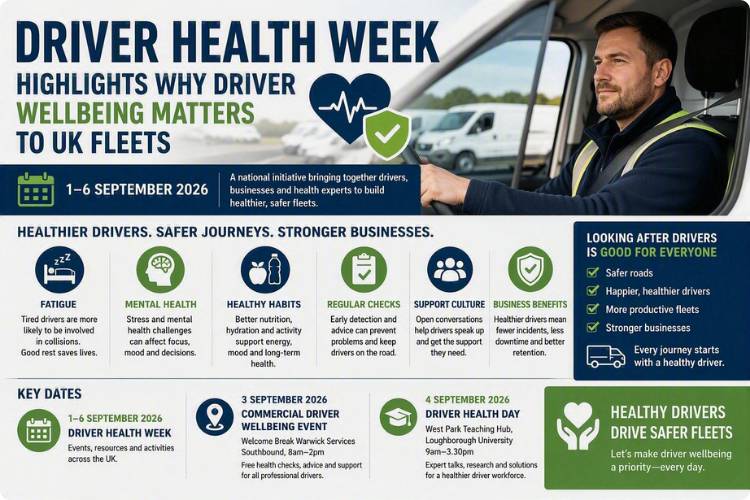
Running from 1 to 6 September 2026, the campaign will bring together drivers, transport businesses, health professionals, researchers and industry organisations to look at how better driver health could contribute to safer and more resilient fleets.
For businesses operating commercial vehicles, the message is particularly relevant.
Driver health is not simply an employee welfare issue. Fatigue, poor sleep, stress and other health problems can potentially affect concentration, alertness and decision-making, making driver wellbeing an important part of wider fleet safety.
The campaign will include health events, practical resources, medical advice and business-focused activities aimed at helping operators better understand the challenges faced by professional drivers.
Why Driver Health Is Becoming A Fleet Issue
The health of professional drivers has traditionally received less attention than areas such as vehicle maintenance, driver training and compliance.
That is beginning to change.
Driving for work can involve long periods of sitting, extended journeys, irregular working patterns and limited access to healthy food and suitable facilities. Over time, these conditions can contribute to a range of physical and mental health challenges.
There is also a changing workforce to consider, with the transport industry facing an ageing population of professional drivers.
The organisers of Driver Health Week argue that supporting healthier drivers should be treated as a long-term priority for the transport sector, rather than something businesses only address when a problem occurs.
For fleet operators, that creates an important connection between driver wellbeing, operational performance and effective fleet management.
A vehicle can be fully maintained and compliant, but the person behind the wheel also needs to be in a suitable condition to drive safely.
Fatigue: A Major Concern For Professional Drivers
One of the biggest themes of Driver Health Week will be fatigue.
Tiredness can affect reaction times, concentration and a driver’s ability to respond appropriately to developing hazards.
The inaugural Driver Health Day at Loughborough University will specifically examine the science of sleep and fatigue, with Professor Ashleigh Filtness scheduled to discuss the risks associated with driving while tired and practical ways of improving sleep, alertness and safety.
According to information published for the event, sleepy drivers can face more than three times the collision risk of alert drivers.
For businesses operating fleets, this highlights why journey planning, working patterns and appropriate rest should be considered alongside the condition of the vehicle itself.
A driver who is struggling with fatigue may not always recognise how significantly their alertness has been affected.
That makes creating a culture where drivers feel able to raise concerns and take appropriate rest particularly important.

Free Health Checks For Commercial Drivers At Warwick
One of the most practical elements of Driver Health Week will take place at Welcome Break Warwick Services Southbound on Thursday 3 September.
From 8am to 2pm, commercial drivers will be able to visit a mobile health and wellbeing facility providing straightforward health checks, information and signposting.
The event is being organised by Project EDWARD (Every Day Without A Road Death), with support from D4 Drivers, Warwickshire Police, Warwickshire’s Police and Crime Commissioner and Welcome Break.
Drivers will be able to receive information covering areas including:
- Fatigue and tiredness
- Sleep
- Mental health
- Nutrition
- Occupational health
- General wellbeing
They will also be invited to complete a short anonymous questionnaire, allowing organisers to gather information about the experiences and challenges facing professional drivers.
The findings will then feed into discussions at the Driver Health Day being held at Loughborough University the following day.
For drivers travelling along the motorway network, the Warwick event provides an opportunity to access support during a normal journey rather than having to arrange a separate appointment.

Industry Leaders To Discuss The Future Of Driver Health
The focus then moves to Loughborough on Friday 4 September, where Driver Health Day will bring together industry leaders, researchers, healthcare professionals and policymakers.
The event is being held at the West Park Teaching Hub at Loughborough University from 9am to 3.30pm.
Representatives from major transport and logistics businesses, including Tesco, GXO, Evri and Whistl, are among those involved, alongside specialists in occupational health, transport safety and driver wellbeing.
The agenda covers a broad range of issues affecting professional drivers, including physical and mental health, fatigue, sleep, occupational health and the practical steps businesses can take to improve driver wellbeing.
There will also be discussions around developing a healthier driver workforce and examples of measures already being implemented by major operators.
That makes the event relevant beyond the haulage sector.
The campaign’s organisers specifically highlight businesses that rely on drivers, whether they operate large commercial fleets or just a handful of company vans.
What Does This Mean For Van Fleets?
The discussion around driver health is often associated with HGV operators, but the underlying issues apply to businesses operating smaller commercial vehicles too.
A tradesperson spending most of the working day behind the wheel can face many of the same challenges as a long-distance driver.
Electricians, plumbers, builders, landscapers and other tradespeople can spend significant amounts of time travelling between jobs, often while working to demanding schedules.
For smaller businesses, the impact of an unwell or fatigued driver can also be significant.
If a key member of a small team is unable to work, it can affect customer appointments, deliveries and the wider operation of the business.
This means driver wellbeing should be considered as part of fleet management, even when a business only operates one or two vans. For businesses looking to simplify the way they manage their vehicles, a one-stop fleet solution can bring vehicle leasing, fleet support and other requirements together rather than requiring businesses to manage multiple suppliers.
How Businesses Can Support Healthier Drivers
There is no single solution to improving driver wellbeing.
However, businesses can take practical steps to create a healthier working environment for people who spend substantial amounts of time on the road.
This could include:
Encouraging appropriate breaks: Drivers should have sufficient opportunities to stop, rest and avoid spending unnecessarily long periods continuously behind the wheel.
Considering journey planning: Realistic schedules can help prevent unnecessary pressure and reduce the temptation for drivers to rush between jobs.
Taking fatigue seriously: Drivers should feel able to raise concerns about tiredness rather than feeling pressured to continue driving.
Supporting wider wellbeing: Mental health should be treated as part of overall driver health, with employees knowing where they can access appropriate support.
Promoting healthier habits: Businesses can encourage drivers to think about hydration, nutrition, physical activity and sleep, particularly where driving forms a large part of their working day.
Keeping communication open: Regular conversations between drivers and managers can help identify problems before they become more serious.
None of these measures replaces proper fleet safety procedures, but together they can contribute to a stronger safety culture.
Driver Wellbeing Could Become A Bigger Part Of Fleet Management
Driver Health Week arrives at a time when fleet operators are facing pressure to manage costs, maintain productivity and keep vehicles and employees safe.
The campaign’s wider message is that these priorities do not have to be viewed separately.
Healthier drivers can contribute to safer journeys, while businesses that take wellbeing seriously may also be better positioned to support employee retention and maintain reliable day-to-day operations.
For van operators, this is particularly important.
A fleet is ultimately about more than the vehicles themselves. The driver, the vehicle and the business operation all form part of the same system. This is why businesses need to consider the entire vehicle lifecycle, from selecting and acquiring vehicles through to maintenance, ongoing management and eventual replacement. Our guide to fleet lifecycle management looks at how businesses can take a more structured approach to managing their commercial vehicles.
That means looking after the person behind the wheel deserves to be given the same consideration as maintaining the vehicle they drive.

A Timely Reminder For UK Businesses
Driver Health Week may only run for six days, but its organisers are clear that the issue extends well beyond the campaign itself.
The objective is to encourage businesses and the wider transport industry to make driver health a year-round priority.
For UK businesses operating commercial vehicles, it is a message worth taking seriously.
Whether a company operates hundreds of vehicles or relies on a single van to get from one customer to the next, driver wellbeing can play an important role in keeping people safe, productive and able to do their jobs effectively.
With fatigue, sleep and wider health risks now receiving greater attention across the transport industry, Driver Health Week could mark the beginning of a much broader conversation about the relationship between healthy drivers and safer fleets.
Driver Health Week 2026: Key Dates
Driver Health Week: 1–6 September 2026
Commercial Driver Wellbeing Event: Welcome Break Warwick Services Southbound, 3 September, 8am–2pm
Driver Health Day: West Park Teaching Hub, Loughborough University, 4 September, 9am–3.30pm
For businesses operating vans and commercial vehicles, the initiative provides a timely reminder that effective fleet management is not only about choosing the right vehicles and keeping them maintained. It is also about supporting the people who keep those vehicles moving.
 Call our expert team on
  Drop us a message