Choosing the right van is about much more than finding a vehicle with enough room for your tools or equipment. The best van for you or your business needs to suit what you carry, how far you travel, how many people you need to transport and how you expect your requirements to change in the future. For businesses operating multiple vehicles, choosing the right combination of vans can also help ensure different teams, roles and applications have the vehicles they actually need.
With so many different van types available, from compact city vans and medium-sized panel vans to pickups, dropsides, tippers and specialist vehicles, it can be difficult to know where to start. Choosing a van that is too small could leave you struggling for space, while choosing one that is unnecessarily large could mean paying more for a vehicle you do not need.
This guide explains the main types of vans available and the key factors to consider when choosing the right van for your business or personal requirements.
Why Choosing The Right Van Matters
A van is often an important working tool rather than simply a means of getting from A to B. For tradespeople and businesses, the right vehicle can make daily work easier, improve efficiency and provide enough capacity to handle the job without unnecessary costs.
Getting the choice wrong can have the opposite effect. A vehicle with insufficient payload could prevent you from carrying everything you need, while a van with too much unused capacity could increase purchase or leasing costs, fuel or energy consumption and running expenses.
There are also practical considerations. A large van may offer plenty of load space but be less convenient for urban driving or parking. A crew van can carry more people, but the additional seating reduces the space available for equipment. An electric van could work extremely well for a predictable local operation but require more planning if your business regularly covers long distances.
The key is to start with your requirements rather than a particular van.

Step 1 – Assess Your Needs
Before comparing different van types, consider how you will actually use the vehicle. A few simple questions can narrow down the options considerably.
What Will You Carry?
Start by looking at the size, weight and shape of your typical load.
A plumber carrying tools and materials may have very different requirements from a builder transporting bulky equipment. A courier could prioritise accessible load space, while a business carrying heavy machinery may be more concerned with payload.
Think about your normal working day rather than the biggest load you might carry once or twice a year. However, it is sensible to leave some capacity for unexpected jobs.
How Many People Need To Travel?
If the van will normally carry one or two people, a conventional panel van may be sufficient. If a team needs to travel together, a crew van could be more appropriate.
Remember that additional passengers take up space and add weight, so passenger requirements can affect both the van type and the payload you need.
Where Will You Drive?
Your typical journeys can influence the best choice just as much as your load.
Consider whether you mainly drive:
- Around towns and cities
- On motorways
- Between different work sites
- Short local journeys
- Long-distance journeys
- On construction sites or other difficult terrain
A compact van can be easier to manoeuvre in urban areas, while a larger van may be better suited to businesses regularly carrying bulky loads. If you are considering a diesel van for predominantly short journeys, it is also worth understanding how systems such as AdBlue fit into modern diesel vehicle ownership.
Your typical journey pattern can also be relevant to diesel vehicle suitability, particularly if the van will spend most of its time on short urban journeys. Understanding how the Diesel Particulate Filter (DPF) works can help you make a more informed choice.
Do You Have Specialist Requirements?
Some jobs need more than a standard load area. You may need refrigeration, additional security, specialist racking, a wheelchair-accessible minibus, tipping equipment or an open load bed.
Identifying these requirements before choosing a vehicle can prevent expensive modifications later.
What Is Your Budget?
Do not look only at the monthly finance or leasing cost. Consider the overall cost of running the van, including insurance, servicing, tyres, fuel or charging, road tax where applicable and any specialist equipment you need. If you are leasing, it is also worth understanding what happens at the end of the agreement and what condition the vehicle is expected to be returned in. Our Van Leasing: Fair Wear & Tear Guide explains what to consider.
Step 2 – Understanding The Different Types Of Vans
There is no single van that is right for every business. The following are some of the most common van types available in the UK.
Small Vans
Small vans are designed for businesses and drivers who need useful load space without the dimensions of a larger commercial vehicle.
They are particularly useful for urban deliveries, maintenance work and tradespeople carrying relatively compact equipment. Their smaller size can make them easier to park and manoeuvre in busy areas.
They may not be suitable if you regularly carry bulky equipment, large quantities of materials or heavy loads.
Typical users include:
- Couriers and delivery businesses
- Electricians
- Maintenance companies
- Mobile service businesses
- Businesses operating mainly in towns and cities
Medium Vans
Medium vans provide a balance between manoeuvrability and load capacity, making them one of the most versatile van types.
They can be suitable for tradespeople who need room for tools and materials while still wanting a vehicle that is manageable for everyday driving. Depending on the model and specification, there can also be different wheelbase and roof-height options.
For many businesses, a medium van provides a useful middle ground between a compact van and a large panel van.
Large Vans
Large vans provide considerably more load space and are designed for businesses that regularly need to transport substantial amounts of equipment, goods or materials.
They are available in different lengths and roof heights, allowing businesses to choose a configuration that suits their requirements.
The trade-off is size. A large van can be less convenient in tight urban environments and may have higher running costs than a smaller vehicle.
Typical users include builders, logistics businesses, wholesalers, furniture companies and larger trade operations.
Crew Vans
Crew vans combine load-carrying capability with additional passenger seating. They are useful when a business needs to transport both workers and equipment in the same vehicle.
For example, a construction company could use a crew van to carry a small team to a site while still having space for tools and equipment.
The compromise is that additional seating reduces the available load space compared with an equivalent panel van.
Pickup Trucks
Pickups combine an enclosed passenger cabin with an open load bed. This makes them particularly useful where bulky, dirty or awkward loads need to be carried separately from passengers.
They can also be well suited to businesses working on construction sites, agricultural operations and other environments where ground clearance and versatility are important.
However, the open load bed offers less protection from the weather than an enclosed van, so the type of goods being transported needs to be considered.
Luton Vans
Luton vans have a large, enclosed box body that extends over the cab, creating substantial load capacity.
They are commonly associated with removals, furniture transportation and other applications where large volumes of goods need to be transported.
Their size and body design can make them less suitable for everyday urban driving than smaller van types.
If you need a tail lift, it is also important to understand the relevant safety and inspection requirements, including LOLER and PUWER compliance.
Tipper Vans
Tipper vans are designed for transporting loose materials such as soil, rubble, aggregate and other materials that need to be unloaded quickly.
The tipping mechanism allows the load area to be raised, making unloading considerably easier than manually removing materials from a conventional van.
They are particularly common in construction, landscaping and groundwork.
Dropside Vans
Dropside vans have an open load bed with hinged side panels that can be lowered to make loading and unloading easier.
They are useful for transporting bulky materials that may be difficult to load through the rear doors of a conventional panel van.
Dropsides can also be adapted with different bodies and equipment depending on the work being carried out.
Box Vans
Box vans use a large enclosed body mounted onto a commercial vehicle chassis. They provide substantial, protected load space and can be particularly useful for businesses transporting bulky goods.
Depending on the specification, features such as tail lifts can also make it easier to load heavy or large items.
Curtainside Vans
Curtainside vans have a rigid load platform with flexible curtains on the sides. These can be opened to provide easier side access when loading and unloading.
This can be particularly useful for logistics and delivery operations where access to the load from different sides is important.
Car-Derived Vans
Car-derived vans are based on passenger cars but have their rear seating and associated interior replaced or adapted to create a load area.
They can be a practical option for businesses that need modest cargo capacity but want the compact dimensions and driving characteristics of a car.
Refrigerated And Catering Vans
Some businesses need specialist temperature-controlled or food-safe vehicles rather than a conventional van.
Refrigerated vans are designed to transport goods that need to remain within a controlled temperature range, while catering vans can be converted for food preparation, storage or mobile catering.
These are specialist van types where the conversion and equipment can be just as important as the base vehicle.
Electric And Hybrid Vans
Electric vans are becoming an increasingly important option for businesses considering their next vehicle. They can be particularly attractive for predictable local and urban operations where daily mileage is manageable and charging can be incorporated into the working routine.
Electric vans also produce no tailpipe emissions while driving, which can be beneficial for businesses operating in areas affected by clean-air or emissions restrictions.
However, businesses should consider range, charging availability, payload requirements and the type of journeys undertaken before making the switch. Our electric van leasing guide provides more information for businesses considering the move away from petrol or diesel.
Hybrid technology can also provide another option where available, although the suitability depends heavily on the individual vehicle and how it will be used.
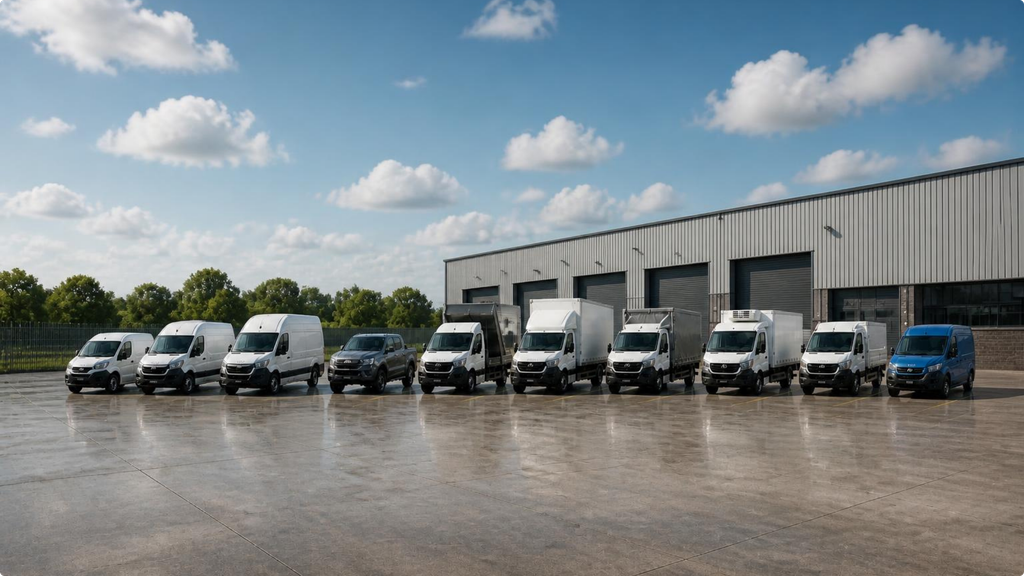
Van Types Comparison
The table below provides a quick starting point when comparing the main types of vans. Exact payload, dimensions and passenger capacity vary considerably between individual models and specifications.
| Van Type | Best Suited To | Main Advantage | Potential Limitation |
|---|---|---|---|
| Small van | Urban work, light loads, deliveries | Compact and easy to manoeuvre | Limited load capacity |
| Medium van | Trades and general business use | Good balance of size and capacity | May not suit very bulky loads |
| Large van | Heavy-duty trade and commercial use | Large load area | Larger physical dimensions |
| Crew van | Carrying workers and equipment | Passenger and cargo capability | Less load space |
| Pickup | Construction, agriculture, bulky loads | Open and versatile load bed | Load exposed to weather |
| Luton | Removals and bulky goods | Large enclosed body | Large overall size |
| Tipper | Construction and landscaping | Easy unloading | Specialist use |
| Dropside | Building materials and bulky loads | Easy side loading | Open load area |
| Box van | Large-volume goods | Protected load space | Less manoeuvrable |
| Curtainside | Logistics and deliveries | Flexible loading access | Less weather protection when open |
| Car-derived van | Light commercial use | Compact and car-like | Smaller load area |
| Refrigerated/specialist | Temperature-sensitive goods | Purpose-built equipment | Higher specialist costs |
| Electric van | Local and predictable journeys | Zero tailpipe emissions | Charging and range need consideration |
Step 3 – Key Factors When Choosing A Van
Once you have identified the van types that could suit your work, there are several specifications that deserve closer attention.
Payload
Payload is the maximum weight the vehicle can safely carry, including passengers and anything fitted or loaded into the vehicle.
Do not simply estimate the weight of your tools or materials. Think about the combined weight of everything you regularly carry.
A van with plenty of physical load space is not necessarily suitable if its payload is insufficient.
Load Space
Look beyond the headline load volume. Consider the dimensions of the individual items you need to carry.
A long but narrow load may require a different van from a large, bulky object. Load length, width and height can all matter.
Wheelbase
Wheelbase refers to the distance between the front and rear axles. Longer-wheelbase vans generally provide additional load length, although they can also be more difficult to manoeuvre in tight spaces.
If you regularly work in towns or restricted areas, consider whether the additional capacity is worth the compromise in manoeuvrability.
Roof Height
Roof height affects how much you can carry vertically and whether you can stand inside the load area.
For some trades, being able to stand and work inside the van can make a significant difference. However, a taller vehicle may be less convenient for car parks and areas with height restrictions.
Doors And Access
Think about how you actually load your van. Rear doors may be sufficient for some businesses, while side loading doors can make a major difference when accessing tools or equipment throughout the working day.
If you regularly use pallets or heavy equipment, loading access should be considered before choosing a vehicle.
Comfort And Equipment
If you spend several hours a day in your van, the cab environment matters. Seating, storage, infotainment, connectivity, climate control and driver assistance technology can all contribute to a more comfortable working environment.
A van is a workplace for many drivers, so comfort should not be treated as an unnecessary luxury.
Running Costs
The purchase or lease price is only one part of the overall cost. Think about fuel or electricity consumption, servicing, tyres, insurance and any specialist equipment. It is also important to understand the difference between maintenance and warranty cover, as these cover different aspects of keeping your van on the road. For businesses covering high annual mileages, fuel economy can have a significant effect on operating costs. It is worth comparing the best MPG vans in the UK if keeping fuel costs down is a priority.
For businesses running multiple vehicles, relatively small differences in operating costs can become significant over time.
Think About What You Will Need In The Future
One of the easiest mistakes is choosing a van based entirely on what your business needs today.
If you expect your workload, team or equipment requirements to increase, consider whether the vehicle will still be suitable in two or three years. For businesses operating multiple vehicles, this is part of the wider fleet lifecycle management process, from selecting vehicles and managing them through their working life to eventually replacing them.
At the same time, avoid paying for capacity you are unlikely to use simply because you might need it one day. The aim is to find the right balance.
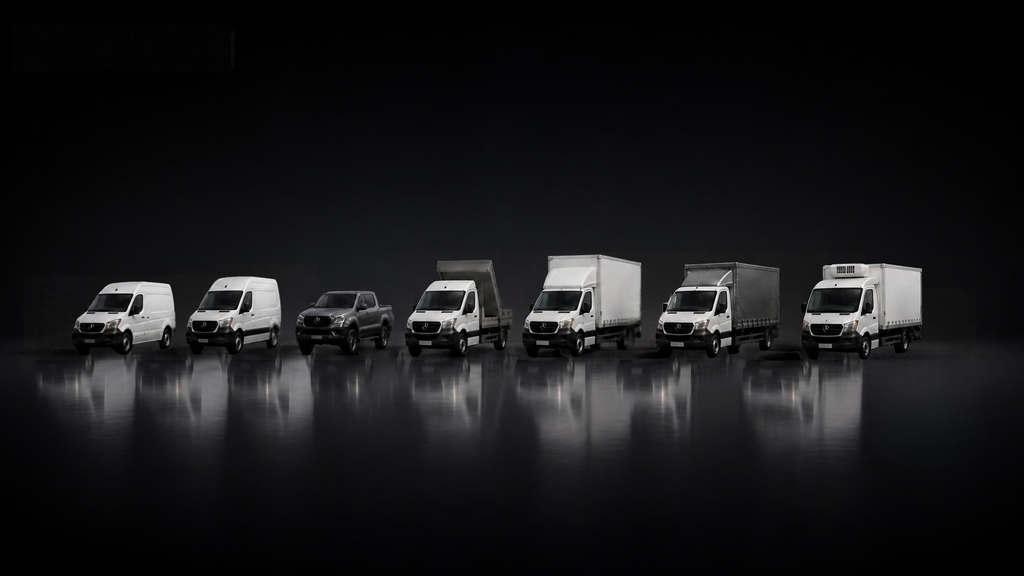
Common Mistakes To Avoid When Choosing A Van
Choosing the right van becomes much easier when you know what can go wrong.
Common mistakes include:
- Choosing based solely on the monthly price
- Underestimating the weight of tools, equipment and materials
- Choosing load volume without checking actual dimensions
- Ignoring the impact of additional passengers on payload
- Buying more van than the business genuinely needs
- Failing to consider future business growth
- Overlooking access, parking and height restrictions
- Ignoring specialist requirements until after choosing the base vehicle
- Forgetting about running costs
- Choosing a vehicle based on appearance rather than suitability
The cheapest van is not necessarily the most cost-effective option. Likewise, the largest van is not automatically the most practical.
How To Choose The Right Van For Your Business
If you are still unsure which option is best, start by writing down what a typical working day looks like.
How many people travel? What do you carry? How heavy is it? How large are the individual items? How far do you drive? Where do you park? Do you regularly visit urban areas, construction sites or motorways? Could your requirements change as the business grows?
Once you have answered these questions, you can narrow down the van types that genuinely fit your requirements rather than choosing from the entire commercial vehicle market.
For businesses running multiple vehicles, the decision can be more complicated because different teams or jobs may require different types of commercial vehicle. A one-stop fleet solution can help businesses manage their wider vehicle requirements rather than treating every vehicle as a separate decision.
It is also worth comparing several models within the same category. Payload, dimensions, fuel economy, electric range, equipment and available body styles can vary significantly between manufacturers and specifications.
Get Help Choosing The Right Van
You do not have to work through all of these decisions alone.
At Commercial Vehicle Contracts, we help businesses and individuals compare van options based on how they actually intend to use their vehicle. For businesses operating several vehicles, our fleet management solutions can also help with the wider challenges of managing a commercial vehicle fleet. Whether you need a compact van for local work, a large panel van for a growing trade business, a crew van for transporting your team or a specialist commercial vehicle, the right choice depends on your individual requirements.
We can help you compare suitable van types, understand the available options and find a leasing solution that fits your needs and budget.
If you are ready to choose your next van, browse our range of van leasing options or get in touch with the CVC team for tailored advice.
Frequently Asked Questions About Choosing A Van
The best van for a small business depends on what you carry, how much space you need, how many people travel in it and where you normally drive. A small van can work well for light loads and urban driving, while a medium or large van may be more suitable for businesses carrying tools, equipment or materials.
Start by considering the size and weight of your usual loads rather than choosing a van based on its exterior dimensions alone. Check the load length, width and height, as well as the vehicle’s payload. If your requirements vary considerably, it can also be worth allowing some additional capacity for larger or heavier jobs.
The most practical van for a tradesperson depends on the trade and the equipment being carried. Electricians and maintenance businesses may find a small or medium van suitable, while builders and other trades carrying bulky materials may need a larger van. Racking, shelving and other storage solutions can also make the load area much more practical.
Your required payload depends on the combined weight of your passengers, tools, equipment and materials. It is important not to confuse load volume with payload, as a van can have plenty of physical space but still be unable to safely carry a particularly heavy load.
The right powertrain depends on how and where you use the van. Electric vans can be particularly suitable for predictable local journeys where charging can be incorporated into the working day, while diesel may remain a practical choice for businesses covering longer distances or carrying heavier loads. Your annual mileage, journey patterns, charging access and local emissions restrictions should all be considered.
No. A larger van provides more load space, but it can also cost more to lease or buy and may have higher running costs. It can also be more difficult to park and manoeuvre in urban areas. The aim is to choose a van that provides enough capacity for your normal requirements without paying for space you are unlikely to use.
When leasing a van, look beyond the monthly payment. Consider the initial payment, contract mileage, agreement length, running costs, maintenance arrangements, insurance requirements and what condition the van needs to be in when it is returned. Understanding fair wear and tear is also important when considering the potential end-of-contract costs.
Think about how your requirements could change over the next few years rather than focusing only on your current workload. You should avoid choosing a vehicle that will quickly become too small, but also avoid paying for capacity you are unlikely to use. Businesses operating multiple vehicles may also benefit from considering their wider fleet requirements rather than selecting each van in isolation.
 Call our expert team on