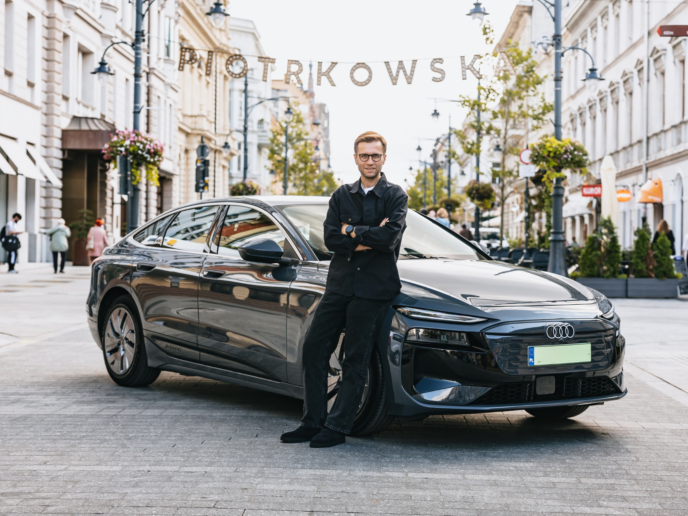
The Audi A6 Sportback e-tron has demonstrated just how far electric vehicle efficiency can be pushed after covering 1,338 kilometres on a single battery charge, setting a new Guinness World Record in the process.
The record attempt was completed in Poland by rally driver Miko Marczyk, who drove an Audi A6 Sportback e-tron performance through a mixture of urban roads, major routes and busy traffic conditions.
By the end of the journey, the car had achieved an average energy consumption figure of just 7.09 kWh per 100 kilometres, significantly exceeding the model’s official WLTP range.
Audi A6 e-tron Covers Almost 1,340 Kilometres
The journey began in the early hours of September 11, with Marczyk setting off at 1:55am.
The route took him from Krakow along the Vistula River towards Poland’s Baltic coast, passing through locations including Sandomierz, Warsaw, Toruń and Grudziądz before reaching Hel.
Rather than ending the attempt at the coast, Marczyk then retraced the route. The drive eventually came to an end between Toruń and Ciechocinek more than 45 hours after it had started.
In total, the Audi covered 1,338 kilometres on one charge.
Importantly, this wasn’t a controlled test carried out exclusively on a private circuit. The record attempt took place on public roads and included periods of heavy traffic, including rush-hour driving.
Temperatures averaged around 15°C during the journey, although conditions became considerably cooler overnight, with temperatures falling to around 7°C in Grudziądz.
How Far Can the Audi A6 Sportback e-tron Go?
The Audi A6 Sportback e-tron performance used for the attempt has an official WLTP range of up to 777 kilometres.
That makes the 1,338-kilometre record particularly striking, although the two figures represent very different types of driving.
The WLTP figure is produced under a standardised procedure designed to allow vehicles to be compared, while the Guinness World Record attempt involved an exceptionally careful driving strategy focused on minimising energy consumption. For more information on the factors that influence vehicle efficiency, see our Ultimate Fuel Economy Guide.
The Audi achievement follows a growing number of demonstrations of how far modern EV technology can be pushed, including the Škoda Peaq range record, which also highlighted the importance of efficiency and aerodynamic design.
The car was fitted with a 94.9kWh usable battery, while its 800-volt electrical architecture forms part of Audi’s broader Premium Platform Electric (PPE) technology.
The A6 Sportback e-tron performance also produces 367hp and can accelerate from 0-62mph in 5.4 seconds, showing that the car’s efficiency credentials don’t come at the expense of performance.
Driving Style Played a Major Role
The record wasn’t simply a demonstration of battery capacity. Marczyk’s approach to driving was critical to achieving such a low consumption figure.
Smooth acceleration, anticipating changes in traffic and avoiding unnecessary braking all helped to reduce the amount of energy required.
Regenerative braking was also used extensively, allowing energy normally lost during deceleration to be recovered and returned to the battery.
Tyre pressures were another important consideration. Maintaining the recommended pressure helps reduce rolling resistance, which can have a noticeable effect on efficiency over a journey of this length.
The record attempt therefore highlights something that applies to electric cars more generally: the way a vehicle is driven can have a substantial impact on the amount of range available.
Aerodynamics Help the A6 e-tron Go Further
Aerodynamics are another important part of the A6 Sportback e-tron’s efficiency.
Audi quotes a drag coefficient of 0.21, making it the most aerodynamic model the manufacturer has produced.
This becomes increasingly important as speed rises, because aerodynamic resistance accounts for a significant proportion of an electric vehicle’s energy consumption when travelling at higher speeds.
The Sportback’s low, streamlined profile has therefore been designed not just for appearance, but to reduce the energy required to push the car through the air.
According to Audi, aerodynamic drag accounts for around 40% of the Sportback’s energy consumption within the WLTP cycle.
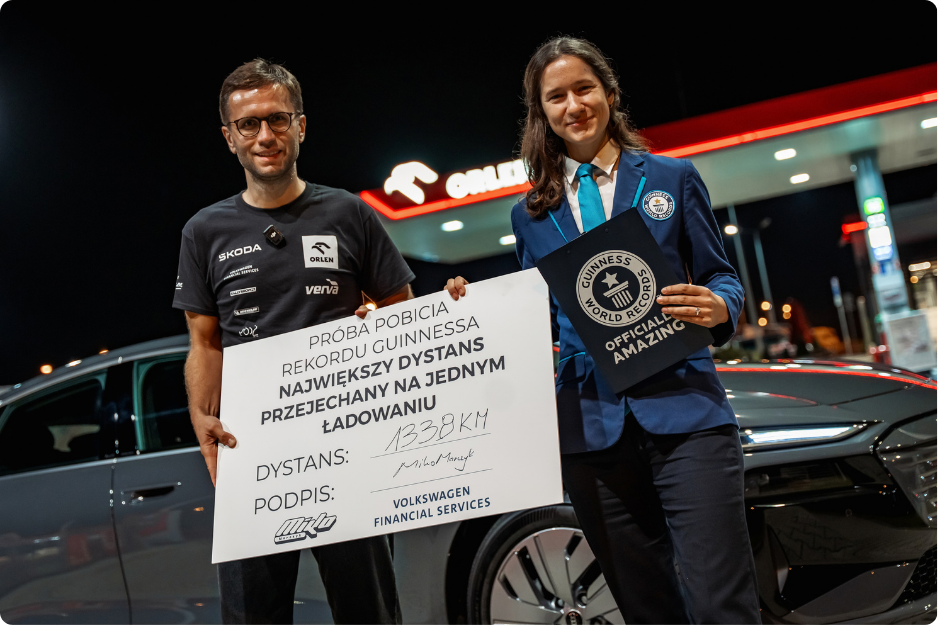
1,338 kilometres on a single battery charge: Miko Marczyk sets a Guinness World Record in the Audi A6 Sportback e-tron performance.
Regenerative Braking Recovers Energy
The A6 Sportback e-tron’s regenerative braking system can provide up to 220kW of regenerative braking power.
Audi says regenerative braking can handle around 95% of braking events during everyday driving.
Rather than relying solely on the conventional friction brakes, the electric motors can be used to slow the vehicle while converting some of its kinetic energy back into electrical energy.
This is one of the fundamental differences between driving an EV and a conventional petrol or diesel vehicle, and careful use of regeneration can help maximise the distance available from a battery. The differences in how electric vehicles deliver power and respond on the road are explored further in our guide to automatic vs electric vehicles.
Charging strategy is another consideration for businesses operating electric vehicles, particularly where vehicles cover high annual mileage or undertake longer journeys. Our guide explains whether you should charge an electric vehicle to 100% and how charging habits can affect everyday EV use.
What the Record Means for Electric Vehicle Range
The 1,338-kilometre journey shouldn’t be interpreted as the typical range an A6 Sportback e-tron owner can expect from a single charge.
Instead, it demonstrates the considerable difference that driving conditions and driving style can make to an EV’s energy consumption.
Audi’s official WLTP figure for the A6 Sportback e-tron performance is up to 777 kilometres, while the Guinness World Record journey involved a deliberate focus on efficiency over more than 45 hours.
Nevertheless, achieving more than 1,300 kilometres from a single charge shows the potential of combining a large battery with efficient electric motors, sophisticated thermal management and highly aerodynamic bodywork.
For businesses and motorists considering switching to an electric vehicle, it also highlights why factors such as energy consumption, charging requirements, journey planning and vehicle range need to be considered when choosing a vehicle, particularly when assessing business car leasing.
Audi A6 Sportback e-tron Sets New Efficiency Benchmark
Miko Marczyk’s record-breaking drive provides an unusual demonstration of what the Audi A6 Sportback e-tron can achieve when its efficiency is prioritised.
The car’s 1,338-kilometre journey and 7.09kWh/100km consumption figure are a long way beyond the conditions most drivers will experience in everyday motoring, but they demonstrate the potential available from modern EV technology.
For Audi, the achievement also provides another showcase for the combination of its PPE platform, 800-volt electrical architecture, battery technology and aerodynamic design.
As electric vehicles become increasingly common, efficiency will remain an important part of the conversation around range. For businesses assessing whether an EV is suitable for their fleet, understanding real-world range, charging requirements, and operating costs will be increasingly important when considering why now is the perfect time to lease an electric vehicle.
 Call our expert team on