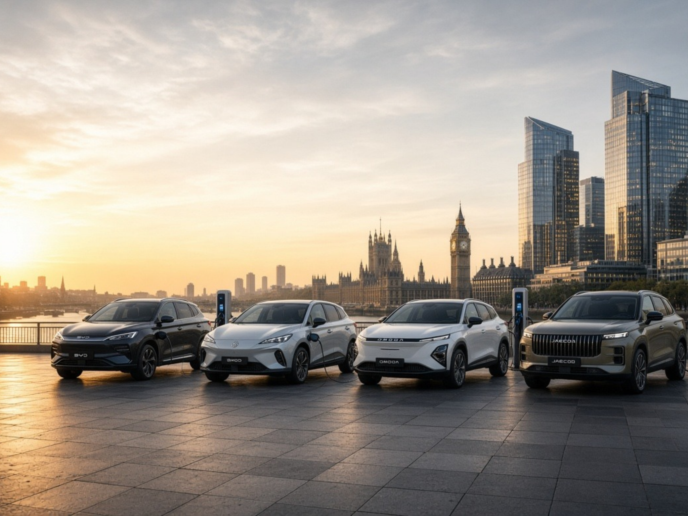
The growing presence of Chinese car manufacturers in the UK is helping to reshape the electric vehicle market, with greater competition, increased model choice and changing prices all contributing to improving conditions for drivers considering an EV.
That is one of the findings from the latest AA UK EV Readiness Index, which has reached its highest level since the index was introduced.
The index rose to 60 out of 100 during the third quarter of 2026, up from 58.8 in Q2. It considers a range of factors that influence how practical and attractive switching to an electric vehicle is for UK drivers, including purchase prices, charging costs, charging availability, insurance, maintenance and roadside assistance.
The AA says the latest improvement coincides with the rapid growth of Chinese manufacturers in the UK market. Chinese brands accounted for 15.8% of new vehicle sales in August 2026, compared with 5.5% a year earlier.
The findings come at an important time for the UK automotive industry, with electric vehicle registrations continuing to increase and consumers having access to more EV models than ever before.
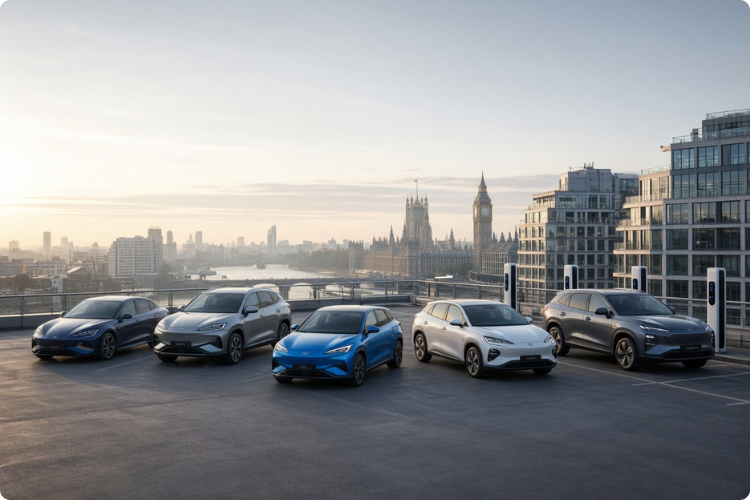
Chinese Brands Bring Greater Competition To The UK
Chinese automotive manufacturers have established a much more significant presence in the UK over the past few years.
Brands including BYD, MG, OMODA, JAECOO and other emerging manufacturers are increasingly competing with established European, Japanese and Korean manufacturers across both the car and commercial vehicle markets.
This expansion is particularly significant in the electric vehicle sector, where Chinese manufacturers have developed extensive experience in battery technology, electric drivetrains and vehicle production.
Our guide to Chinese Car Manufacturers Strengthen Their Position in the UK Automotive Market looks in more detail at the rapid expansion of these manufacturers and their growing influence on the UK market.
The AA’s latest research suggests that consumers are beginning to recognise the effect of this additional competition. Our article on Chinese EV Brands Continue To Gain Ground In The UK Fleet Market looks specifically at how these manufacturers are gaining traction among UK fleet and leasing customers.
Around 47% of AA members surveyed said increased competition from Chinese manufacturers would benefit buyers, although attitudes towards Chinese-made vehicles remain mixed.
Around 42% said they would not consider buying a Chinese-made car. At the same time, only around a quarter of those surveyed believed established manufacturers offered better quality than Chinese brands.
That suggests that perceptions of Chinese vehicles are changing, even though consumer confidence is not uniform across the market.
More Electric Vehicles Means More Choice
One of the biggest changes to the UK car market is the sheer number of electric vehicles now available.
Drivers are no longer choosing between a relatively small selection of early-generation EVs. Manufacturers now offer electric hatchbacks, SUVs, saloons and performance cars across a much wider range of prices and specifications.
The latest SMMT figures show that 28,063 new battery electric cars were registered in August 2026, giving BEVs a 29.8% share of the UK new-car market. Registrations were 27.7% higher than in August 2025.
Across the first eight months of 2026, BEVs accounted for 25.62% of all new-car registrations, with 355,746 electric cars registered. That represents a 28.6% increase compared with the same period of 2025.
Chinese manufacturers are contributing to this wider choice, but they are doing so alongside increasingly strong electric ranges from established manufacturers.
For consumers, that means the question is increasingly shifting from whether an EV is available to which electric vehicle is most appropriate for their requirements.
EV Prices Are Becoming More Competitive
Price remains one of the biggest considerations when comparing an electric vehicle with a petrol or diesel alternative.
The AA’s latest index found that the average new EV was around 25% more expensive than an equivalent petrol vehicle during Q3 2026, although this represented a slight improvement from the 26% difference recorded during Q2.
The situation is considerably closer in the used market.
The AA found that used EVs were approximately 1% more expensive than equivalent petrol vehicles, compared with a 3% difference during the previous quarter.
This narrowing price gap could become increasingly important as more electric vehicles enter the used-car market.
The increasing number of EVs entering the second-hand market also gives private motorists and businesses more opportunities to access electric vehicles without paying the full cost of a brand-new model.
The changing relationship between EV and petrol prices is also explored in our article on EV Prices Fall Below Petrol Cars in UK Market First.
Home Charging Remains A Major EV Advantage
Purchase price is only one part of the overall cost of running an electric vehicle.
Charging costs can make a significant difference to the economics of EV ownership, particularly for drivers who can install and use a home charger.
According to the AA, charging an EV at home was around 66% cheaper per mile than using petrol during the latest quarter.
However, public charging presents a different picture.
The AA found that ultra-rapid public charging remained approximately 15% more expensive per mile than petrol.
This highlights the importance of considering how a vehicle will actually be charged before making the switch to electric.
For a driver who can charge overnight at home, electricity costs can provide a substantial running-cost advantage. For someone who relies almost entirely on public rapid chargers, the financial calculation can be very different.
For businesses operating electric cars or vans, workplace charging can also play an important role.
Our guide to Electric Vehicle Charging Explained: Home, Workplace & Employee Solutions for UK Businesses explains the different charging options available to businesses and their employees.
The UK Charging Network Is Continuing To Expand
Charging availability remains another important part of the UK’s transition towards electric vehicles.
Although the number of public chargepoints has increased substantially, the experience of charging an EV can still vary depending on location, vehicle type and the type of charger being used.
The continued expansion of public infrastructure is therefore important if electric vehicles are to become a practical option for drivers who cannot rely on home charging.
Our article on the UK EV Charging Network Continues To Grow As Councils Expand On-Street Provision looks at the continuing development of the UK’s charging infrastructure.
For businesses, charging requirements can be even more complicated.
A company operating several electric vehicles may need to consider workplace charging, overnight charging, employee charging and public rapid-charging requirements, rather than simply relying on a domestic wallbox.
EV Breakdown Data Provides Encouraging Signs
The latest AA data also provides an interesting insight into electric vehicle reliability.
During Q3 2026, 88.1% of EV breakdown callouts attended by AA patrols were resolved at the roadside, compared with 83.5% for petrol vehicles.
The AA also reported that only 1.3% of EV callouts were caused by the vehicle running out of charge.
Running out of battery is often raised as a concern by motorists considering an EV, particularly those unfamiliar with electric vehicle ownership.
However, breakdown data needs to be interpreted carefully. It does not provide a complete assessment of overall vehicle reliability, as it only covers vehicles requiring roadside assistance.
Nevertheless, the figures provide some useful evidence that battery depletion is responsible for only a small proportion of EV breakdown callouts handled by the AA.
Drivers considering an electric vehicle can also benefit from understanding what happens when an EV does experience a problem.
Our guide What Happens If an Electric Vehicle Breaks Down? explains what drivers can expect and how EV breakdown situations can differ from conventional vehicles.
Consumer Confidence Is Still Developing
Despite the improvements identified by the AA, the research also shows that the UK is not yet at a point where every driver considers an electric vehicle an obvious choice.
The EV Readiness Index reaching 60 out of 100 means the overall conditions are improving, but there are still barriers preventing some consumers from making the switch.
Upfront vehicle costs, access to charging, public charging prices, insurance and concerns about whether an EV will suit a particular driving pattern can all influence the decision.
There is also a significant difference between drivers who have convenient access to home charging and those who rely on public infrastructure.
This means that the growth of the EV market should not necessarily be interpreted as every driver being equally ready to switch.
Instead, the market is becoming increasingly diverse.
Some motorists may benefit considerably from switching to an EV, while others may still find a hybrid, petrol or diesel vehicle more appropriate for their particular circumstances.
Electric Vehicles Are Becoming Increasingly Important For Fleets
The change is particularly relevant to businesses and fleet operators.
Fleet registrations account for a substantial proportion of the UK new-car market, with SMMT data showing that fleet buyers represented 57.2% of new car registrations in August 2026.
For businesses, choosing an electric vehicle involves more than simply comparing its purchase price with a petrol equivalent.
Companies may need to consider taxation, Benefit-in-Kind, charging arrangements, annual mileage, employee driving patterns, vehicle range and whole-life costs. Electric vehicles can also require businesses to consider the practical needs of individual drivers. A high-mileage employee may prioritise vehicle range and access to rapid charging, while a driver covering shorter daily journeys may place greater importance on home or workplace charging. Passenger space, luggage capacity and the suitability of different powertrains can also influence which vehicle is appropriate for a particular role.
The continued expansion of the UK charging network is therefore an important part of fleet electrification, particularly for businesses operating vehicles across longer distances. Access to reliable public charging can influence journey planning and vehicle utilisation, while the development of faster charging infrastructure is helping to improve the practicality of electric vehicles for higher-mileage users.
For company-car drivers, the tax treatment of electric vehicles can also make the overall cost considerably different from that of an equivalent petrol or diesel vehicle.
Our Business Car Leasing: The Complete Guide for Companies and Fleet Managers provides a broader look at how businesses can approach vehicle leasing and fleet requirements.
For companies considering a transition to electric vehicles, leasing can also provide a way to introduce EVs without committing to the long-term ownership risks associated with rapidly changing vehicle technology.
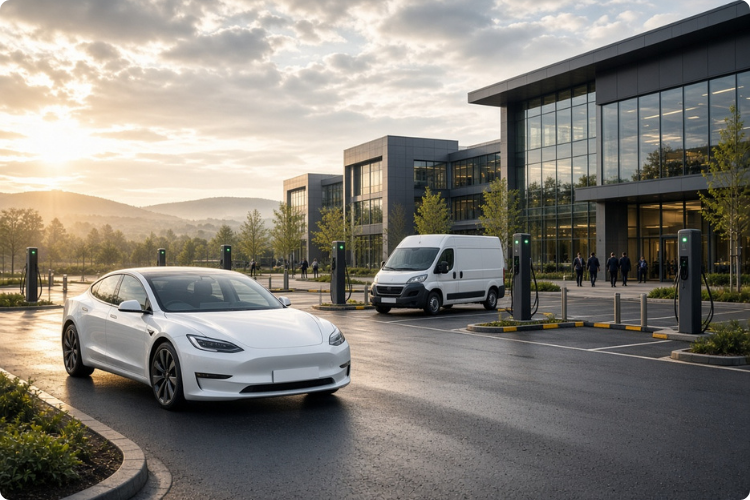
Chinese Manufacturers Are Adding Pressure To Established Brands
The growth of Chinese manufacturers is not happening in isolation.
Established manufacturers are also expanding their electric ranges, improving battery technology and introducing new models designed to compete across increasingly competitive segments.
That creates a more dynamic market for consumers.
A new electric vehicle from a Chinese manufacturer may compete directly against an established European or Japanese model, while established brands are also responding with new electric platforms and increasingly competitive specifications.
The result is a market where equipment, range, charging speed, technology and price can vary considerably between vehicles.
For drivers and businesses, this makes comparing individual vehicles increasingly important.
Rather than assuming that one particular type of manufacturer or powertrain will automatically be the cheapest or most practical, buyers can assess the vehicles against their own mileage, charging access and requirements.
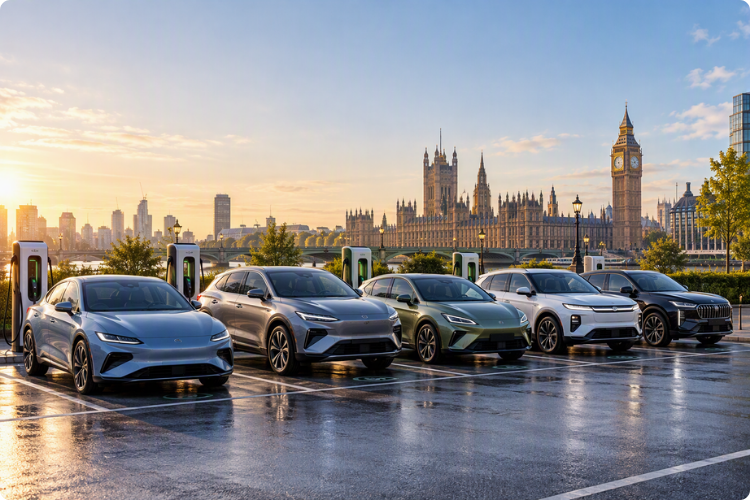
What Does This Mean For The UK EV Transition?
The AA’s latest EV Readiness Index provides another indication that the UK electric vehicle market is moving forward.
A score of 60 out of 100 represents an improvement from previous quarters, while the increasing presence of Chinese manufacturers is adding further competition to an already rapidly changing market.
At the same time, the latest SMMT figures show that electric cars now represent almost 30% of new-car registrations in August and more than a quarter of the market across the first eight months of 2026.
However, the transition is not without challenges.
Charging infrastructure still needs to expand, public charging costs remain an issue for some drivers and the upfront price of many EVs remains higher than comparable petrol vehicles.
For some motorists and businesses, Clean Air Zones and other vehicle emissions restrictions can also influence vehicle choice, particularly where vehicles are regularly driven in areas with emissions-based charges or restrictions.
Our guide to ULEZ & Clean Air Zones In The UK explains how these schemes operate and what drivers need to know about vehicle compliance.
There is also ongoing debate around the UK’s Zero Emission Vehicle (ZEV) Mandate, with the Government reviewing the current framework and the automotive industry continuing to call for a transition that reflects consumer demand and market conditions.
Our coverage of the Government Reviews ZEV Mandate As EV Sales Targets Face Potential Changes looks at the latest developments.
A Changing Market Gives Drivers More Options
The UK’s electric vehicle market is now significantly different from the one motorists faced only a few years ago.
There are more manufacturers, more models, more charging options and a much broader range of electric vehicles available.
Chinese manufacturers are an increasingly important part of that change.
Their growing market share is adding competition, while their increasing presence is also forcing established manufacturers to compete more aggressively on technology, specification and pricing.
For consumers, that increased competition can make the process of choosing a vehicle more complicated, but it also provides considerably more choice. Our article on More Choice, Greater Value: How The UK Vehicle Market Is Changing looks at the wider changes taking place across the UK vehicle market.
The latest AA figures suggest that the overall conditions for EV adoption are improving, but the transition is still developing.
For drivers and businesses, the most important consideration is therefore not simply whether an electric vehicle is becoming more popular, but whether the particular vehicle fits their budget, driving requirements, charging access and expected usage.
 Call our expert team on