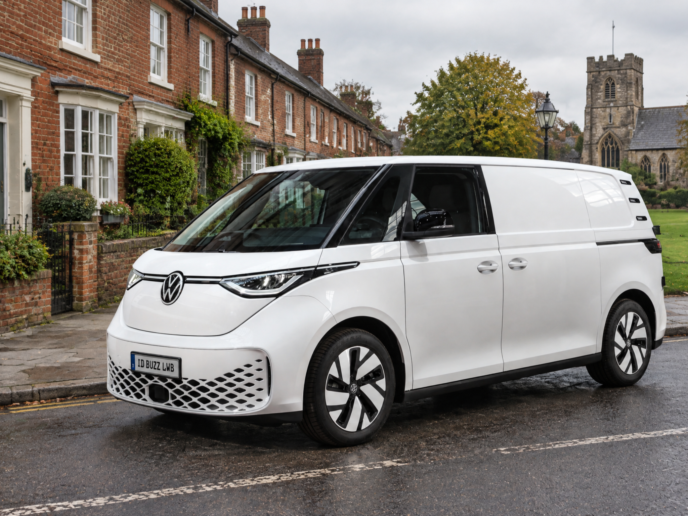
Volkswagen Commercial Vehicles is expanding its electric van range with the new long-wheelbase ID. Buzz Cargo, following the introduction of the Volkswagen ID. Buzz Life Pro LWB in the passenger range.
The Volkswagen ID. Buzz Cargo LWB is expected to arrive in the UK in 2027, bringing a 250mm-longer wheelbase, increased load space and greater carrying capacity to Volkswagen’s electric van range, while offering rear-wheel drive and 4MOTION all-wheel drive options.
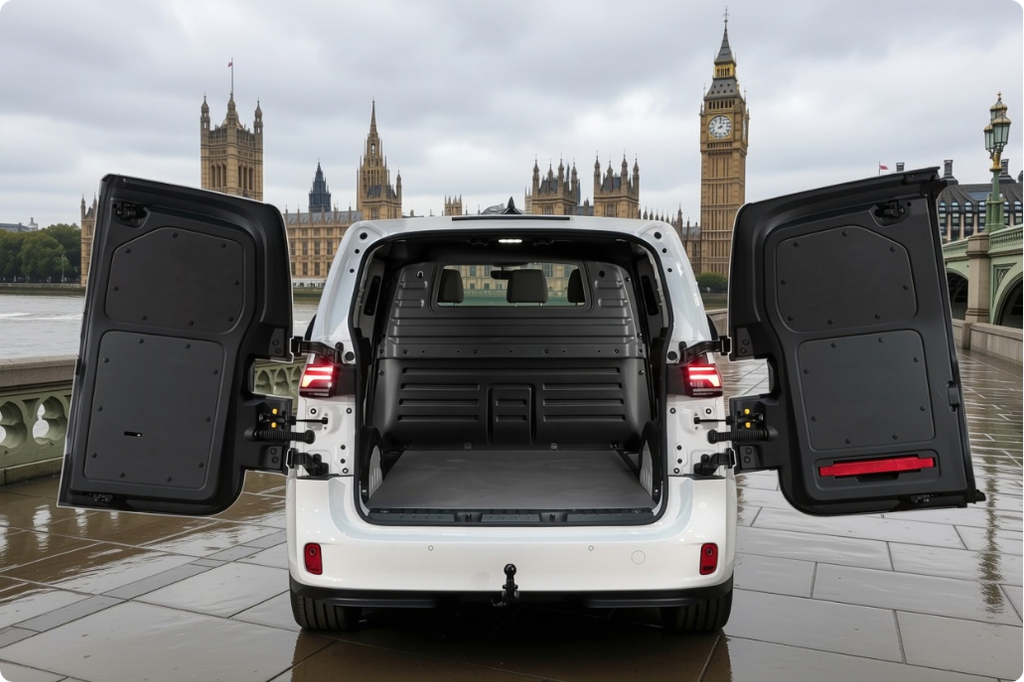
The extra space increases the ID. Buzz Cargo’s load volume from 3.9m³ to 4.4m³, while the load compartment itself measures 2,458mm in length.
| Volkswagen ID. Buzz Cargo LWB | Details |
|---|---|
| UK launch | Expected 2027 |
| Battery | 86kWh (net) |
| Drive options | Rear-wheel drive / 4MOTION all-wheel drive |
| Power | Up to 286PS / 340PS |
| Load volume | Up to 4.4m³ |
| Payload | Up to 700kg (RWD), with the 4MOTION version offering up to 606kg. |
| Maximum towing capacity | Towing capacity will depend on the final UK specification and powertrain |
| UK pricing | To be confirmed |
| UK WLTP range | To be confirmed |
More Loadspace For Electric Van Operators
The longer body is designed to make the ID. Buzz Cargo more useful for businesses carrying larger or more bulky loads. The new model builds on the existing Volkswagen ID. Buzz Cargo, but adds 250mm to the wheelbase, increasing the available load volume from 3.9m³ to 4.4m³.
At 4.4m³, the LWB version gains around 0.5m³ of additional load volume compared with the standard-wheelbase model. The extended load area could make the difference for businesses that need more carrying capacity but still want the benefits of a relatively compact electric van.
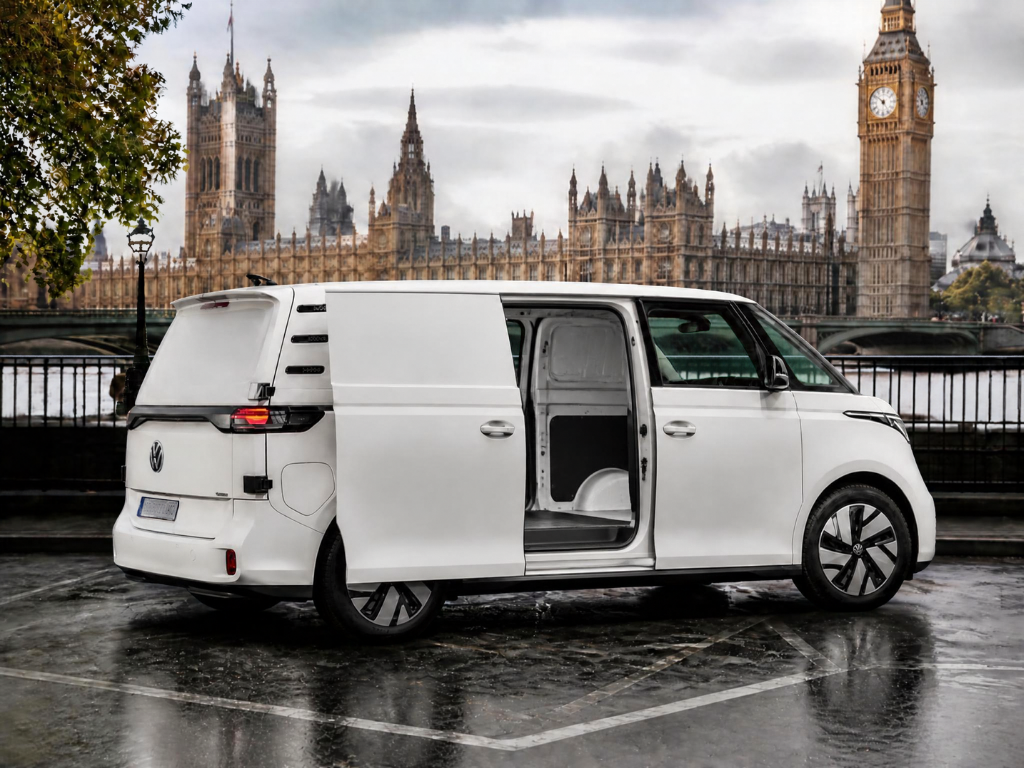
Volkswagen has also increased access to the load area. The LWB version also benefits from a wider side loading opening, making it easier to load and unload goods, with the opening 190mm wider than before. This means a Euro pallet can be loaded through the side door, potentially making day-to-day loading considerably easier for some operators.
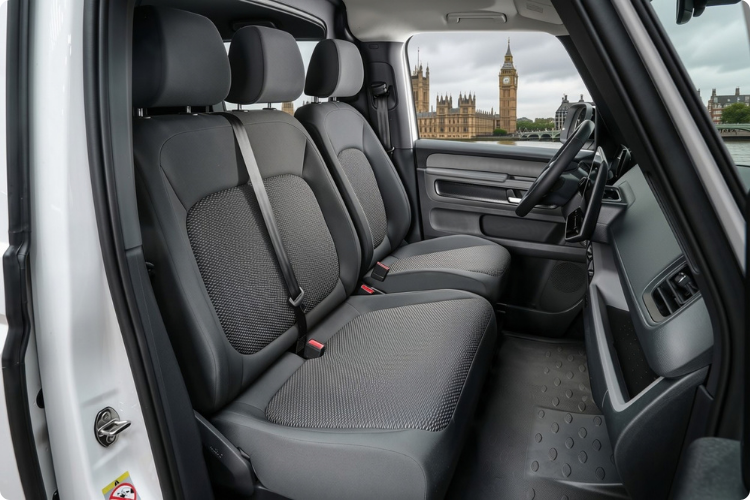
A wooden load floor is also standard, while businesses can continue to specify the van with either two or three seats.
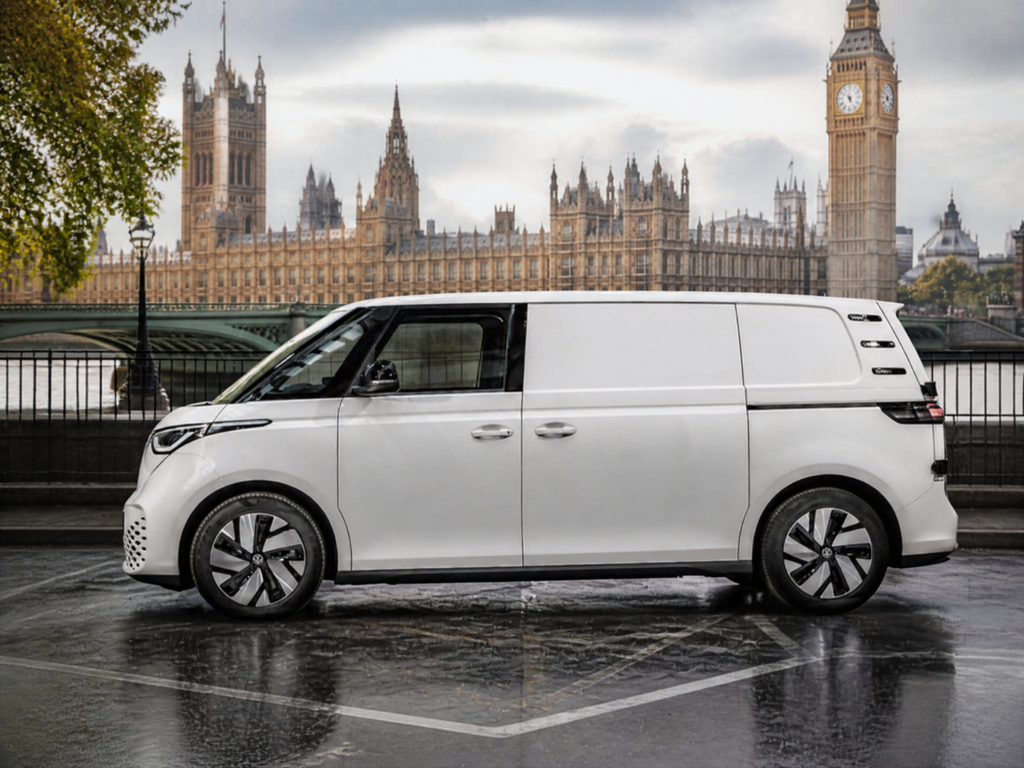
Volkswagen ID. Buzz Cargo LWB: Key Specifications
| Specification | ID. Buzz Cargo LWB |
|---|---|
| Load volume | 4.4m³ |
| Load compartment length | 2,458mm |
| Battery | 86kWh (net) |
| Maximum payload | Up to 700kg |
| Maximum towing capacity | 1,800kg |
| Seating | 2 or 3 seats |
| Wider side loading opening | Standard |
| Euro pallet through side door | Yes |
| UK orders | Early 2027 |
| UK launch | Expected to arrive in the UK in 2027 |
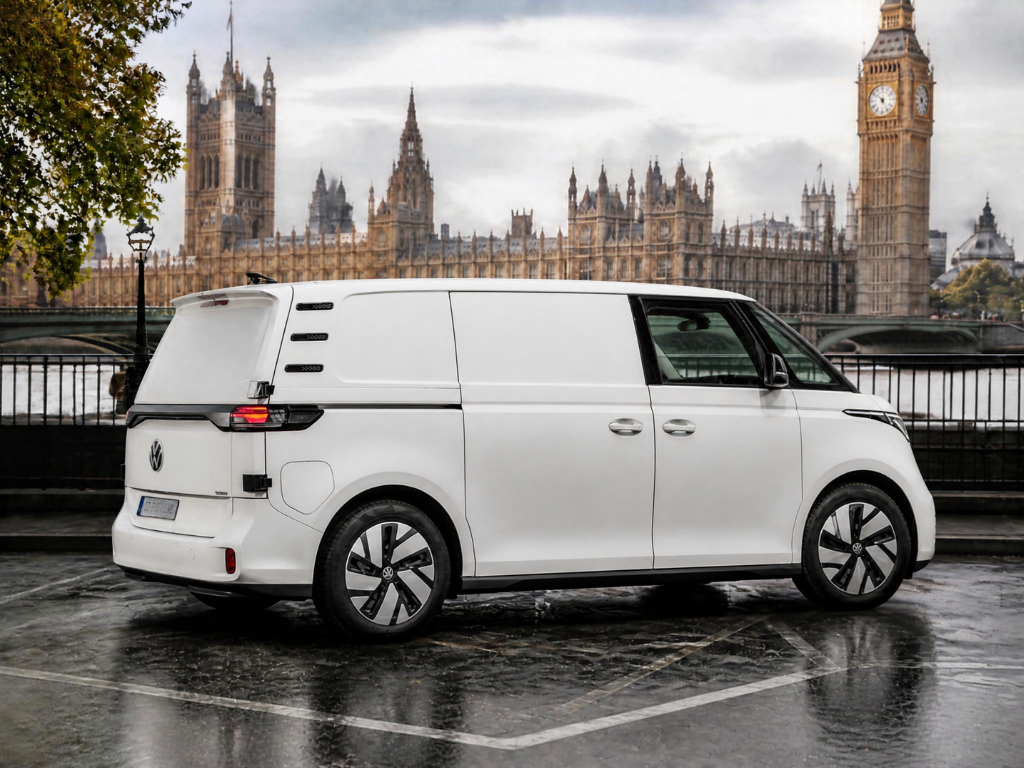
Larger 86kWh (net) Battery
The ID. Buzz Cargo LWB also receives the larger 86kWh (net) battery, compared with the 79kWh unit used by the standard-wheelbase Cargo.
Volkswagen has not yet published a final UK WLTP range figure for the new commercial vehicle. Reported figures from other markets indicate that range varies according to the drivetrain, so businesses should wait for the final UK specification before comparing the vehicle directly with other electric vans on range alone.
The larger battery should nevertheless give the LWB version the capacity required to handle longer working days, while the vehicle’s charging capability will also be an important consideration for businesses assessing an electric van.
For companies considering switching to an electric vehicle, factors such as daily mileage, charging access, payload requirements and the type of work being carried remain important when choosing the right van.
Two Powertrains Available
Businesses will have a choice of rear-wheel drive and all-wheel drive.
The rear-wheel-drive version produces 286PS, while the 4MOTION all-wheel-drive model increases output to 340PS.
There is a difference in payload between the two versions, with the rear-wheel-drive model offering up to 700kg compared with 606kg for the all-wheel-drive version.
Both models have a maximum towing capacity of 1,800kg, giving the ID. Buzz Cargo LWB additional flexibility for businesses that regularly tow trailers or specialist equipment.
ID. Buzz Cargo LWB Powertrain Comparison
| Rear-Wheel Drive | 4MOTION All-Wheel Drive | |
|---|---|---|
| Power | 286PS | 340PS |
| Battery | 86kWh (net) | 86kWh (net) |
| Maximum payload | 700kg | 606kg |
| Maximum towing capacity | 1,800kg | 1,800kg |
| Drive | RWD | AWD |
For many commercial operators, the payload difference may be more significant than the additional power offered by the all-wheel-drive model. Businesses carrying heavier equipment should therefore consider the actual payload requirement of their work before selecting a specification.
Wider Sliding Door Makes Loading Easier
One of the more practical changes to the LWB model is the enlarged side access.
The ID. Buzz Cargo LWB features a sliding door with an opening 190mm wider than before, allowing a Euro pallet to pass through the side of the van and giving operators another loading option where access to the rear doors may be restricted.
That could be particularly useful for businesses working at commercial premises, construction sites or other locations where vehicles cannot always be positioned perfectly for rear loading.
The increased load area also means businesses can carry longer items while retaining the advantages of an electric van designed primarily for urban and regional commercial use.
New Technology For The ID. Buzz Cargo
Volkswagen is also introducing several technology updates across the ID. Buzz range.
The latest version of Travel Assist can recognise traffic lights and, when the relevant driving assistance systems are active, help bring the vehicle to a stop when approaching a red light.
The ID. Buzz Cargo also gains one-pedal driving, allowing the driver to use the accelerator pedal to control acceleration and make greater use of regenerative braking when slowing down.
Another addition is vehicle-to-load (V2L) capability, allowing electricity from the vehicle’s high-voltage battery to be used to power external equipment. This could be particularly useful for tradespeople and mobile workers who need access to electrical power away from a fixed supply.
For businesses considering electric vans, practical features such as these can be just as important as headline range figures. Our guide to electric vehicle charging covers the different charging considerations for businesses and their drivers.
ID. Buzz Cargo Faces Growing Electric Van Competition
The arrival of the longer ID. Buzz comes at a time when businesses have considerably more choice when it comes to electric vans.
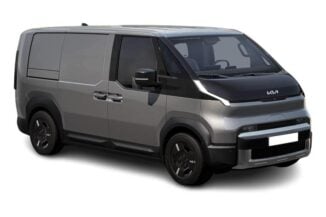
The additional load volume brings the ID. Buzz Cargo LWB closer to other electric vans competing for the same type of business customer, including the Kia PV5 Cargo. The two models can therefore be compared in terms of load capacity, payload, range, charging and overall suitability for different types of business use.
We’ve also looked at the differences between the two models in our Volkswagen ID. Buzz vs Kia PV5 guide.
Businesses looking at the wider market can also compare the ID. Buzz with other models in our guide to the best small electric vans.
Volkswagen ID. Buzz Cargo LWB UK Launch
The Volkswagen ID. Buzz Cargo LWB is expected to become available to UK customers in early 2027, with the market launch planned for spring.
Volkswagen has yet to confirm UK pricing and final UK-specific specification details, including the official WLTP range figure.
What is already clear is that the LWB version gives the ID. Buzz Cargo greater versatility. The combination of 4.4m³ of loadspace, an 86kWh (net) battery, up to 700kg payload, 1,800kg towing capacity and a choice of rear- or all-wheel drive makes it a more flexible proposition for businesses that need additional capacity from an electric van.
For businesses considering an electric van, the arrival of the Volkswagen ID. Buzz Cargo LWB adds another option to an increasingly broad range of electric commercial vehicles. The additional loadspace and higher payload of the LWB version could make it particularly relevant to businesses that need more carrying capacity than the standard ID. Buzz Cargo provides.
The long-wheelbase Volkswagen ID. Buzz Cargo provides 4.4m³ of loadspace, giving businesses an additional 0.5m³ of capacity compared with the standard-wheelbase version. The load compartment has a maximum length of 2,458mm.
Maximum payload depends on the chosen drivetrain. The rear-wheel-drive version can carry up to 700kg, while the all-wheel-drive version has a maximum payload of 606kg.
Both versions of the Volkswagen ID. Buzz Cargo LWB have a maximum towing capacity of 1,800kg. This gives businesses additional flexibility where trailers or other towable equipment form part of their day-to-day operations.
The Volkswagen ID. Buzz Cargo LWB is equipped with an 86kWh (net) battery, compared with the 79kWh battery used by the standard-wheelbase Cargo. Volkswagen has yet to confirm the final UK WLTP range figure for the new commercial vehicle.
The Volkswagen ID. Buzz Cargo LWB is expected to open for UK orders in early 2027, with the UK market launch expected in spring 2027. Volkswagen has yet to confirm UK pricing and the final UK-specific specification.
The Volkswagen ID. Buzz Cargo LWB is expected to be offered with a 286PS rear-wheel-drive powertrain, while the 4MOTION version produces up to 340PS.
The ID. Buzz Cargo LWB benefits from the latest developments to Volkswagen’s ID. software and driver assistance technology, including Travel Assist with traffic-light recognition, which can help bring the vehicle to a stop when approaching a red light when the relevant driving assistance systems are active.
The van also gains one-pedal driving and vehicle-to-load (V2L) capability, allowing electricity from the vehicle’s battery to power compatible external equipment. These updates add further driver assistance and practical functionality for businesses using the van during the working day.
 Call our expert team on