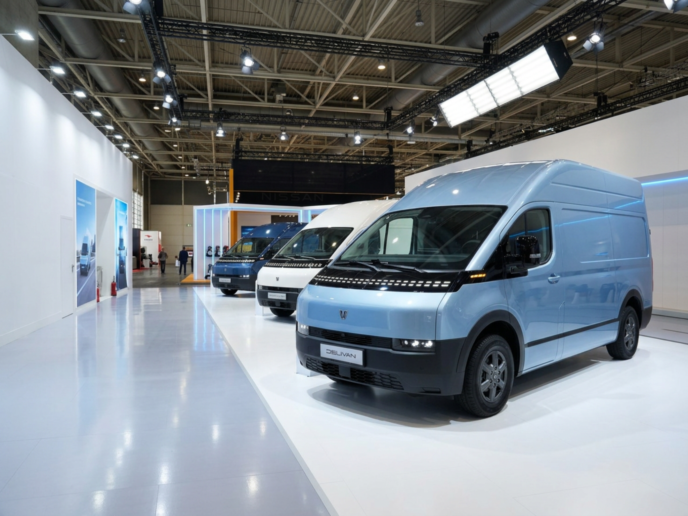
A new commercial vehicle brand from Chery is preparing to enter the UK market with a range of electric vans designed specifically for European operators.
DELIVAN, the commercial vehicle arm of Chery Commercial Vehicle, has used IAA Transportation 2026 in Hannover to showcase its first production-focused electric vans as it prepares for a European and UK launch in 2027.
The new brand made its global debut at the Commercial Vehicle Show in Birmingham earlier this year, with its appearance at IAA Transportation representing another significant step towards bringing its vehicles to European customers.
Chery is already establishing itself in the UK passenger car market through its Chery, Omoda and Jaecoo brands. DELIVAN will now give the wider group a dedicated presence in the light-commercial vehicle sector.
Two Electric Vans Form The Core Of The Range
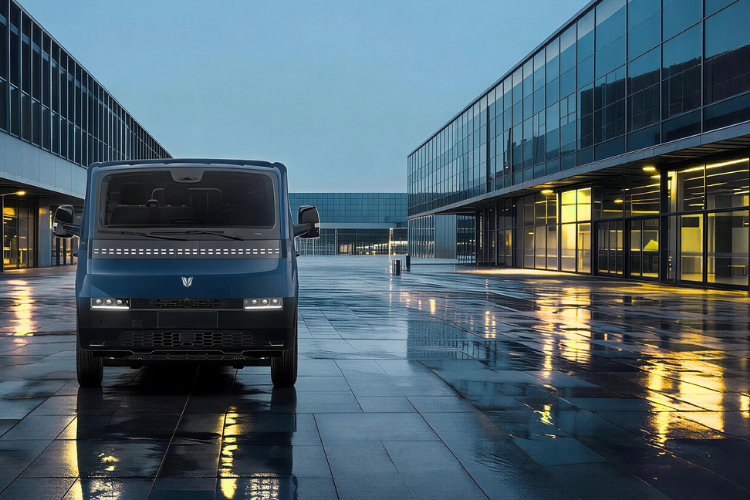
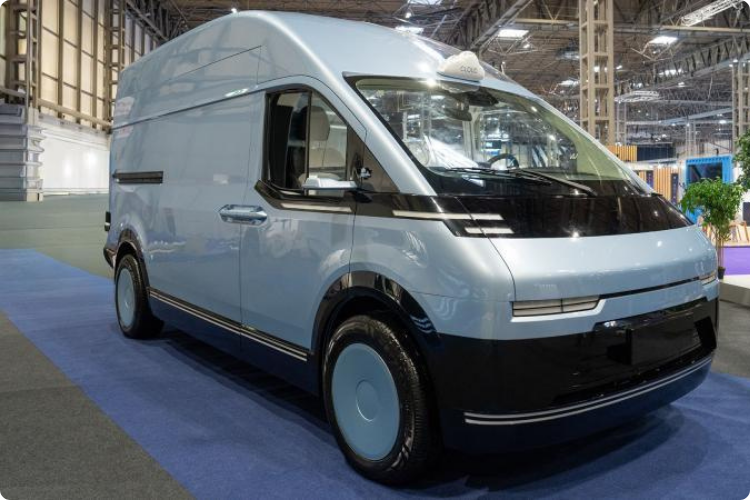
The initial DELIVAN line-up is centred around two electric vans, the L1H1 and L2H3, giving businesses another option as the choice of zero-emission commercial vehicles continues to expand.
The two models are designed to cover different areas of the commercial vehicle market, from urban distribution and last-mile deliveries through to larger-volume fleet operations.
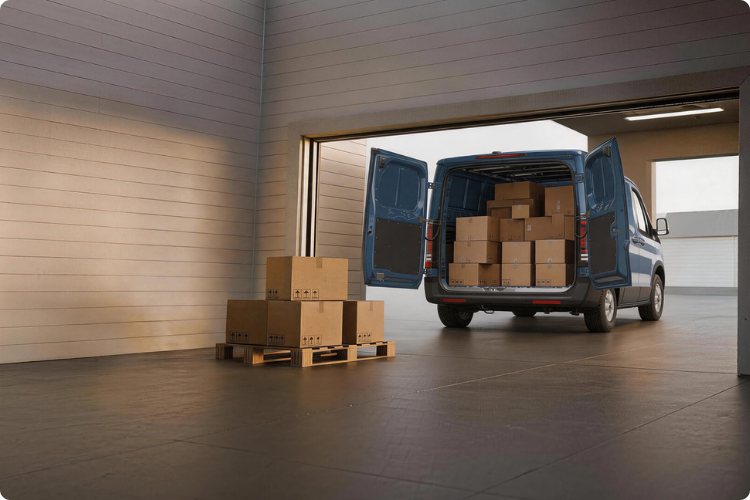
The L1H1 offers up to 6.9m³ of cargo space and a maximum payload of 1,400kg, while the larger L2H3 provides up to 11.6m³ of load volume.
Both panel vans have a maximum towing capacity of 2,500kg. DELIVAN is also displaying an L3CC chassis cab, which provides a flexible base for specialist applications and offers a maximum payload of up to 2,120kg.
| Model | Load Volume | Maximum Payload | Maximum Towing Capacity |
|---|---|---|---|
| DELIVAN L1H1 | Up to 6.9m³ | Up to 1,400kg | Up to 2,500kg |
| DELIVAN L2H3 | Up to 11.6m³ | Up to 1,300kg | Up to 2,500kg |
| DELIVAN L3CC | Chassis cab | Up to 2,120kg | – |
The combination of conventional panel vans and a chassis cab gives DELIVAN a platform that can potentially serve a broad range of businesses, with the L3CC particularly suited to operators requiring a body or conversion beyond a standard panel van.
For businesses assessing an electric commercial vehicle, factors such as van payload will remain just as important as battery range, particularly for trades, deliveries and other applications where vehicles regularly carry heavy equipment or cargo.
Battery Options And Electric Range
Battery capacity across the DELIVAN range will span from 50.4kWh to 97.4kWh, giving operators different options depending on the vehicle and their individual requirements.
DELIVAN quotes a maximum WLTP combined range of up to 426km, equivalent to around 265 miles. The maximum quoted range is based on the vehicle being limited to 100km/h.
The larger battery option is available for the L2H3, while the different battery capacities allow the range to cater for a variety of operating requirements.
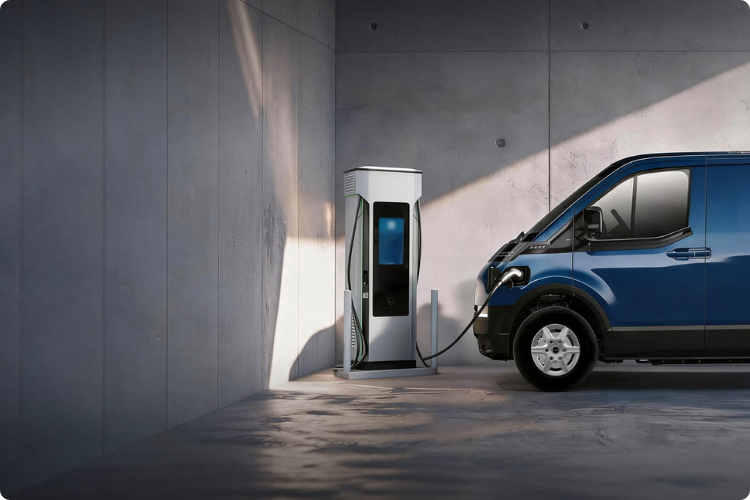
Charging performance is another area where DELIVAN is targeting commercial operators. DC charging from 15% to 80% is claimed to take approximately 22 minutes.
For businesses operating electric vans intensively, charging time can have a direct impact on vehicle utilisation and daily productivity. Access to suitable electric vehicle charging will therefore be an important consideration alongside the headline range figure.
Developed Around European Fleet Requirements
DELIVAN is positioning its new vans as vehicles developed with European requirements in mind rather than simply existing Chinese-market products being introduced to Europe.
The company says the L1H1 and L2H3 have been developed using input from customers and fleet partners in the UK, Germany, France, the Netherlands and Spain.
That approach is intended to ensure the vehicles reflect the practical requirements of European commercial operators, including payload, range, charging and different types of fleet operation.
Ross Davies, chief operating officer of Chery Commercial Vehicle UK, said Europe was the standard the company had set for itself and described DELIVAN as being built “not only for Europe, but with Europe”.
The company has also been developing its European infrastructure, with local operations in the UK and Germany, European research and development and an expanding network of commercial and conversion partners.
Specialist Conversions Expand The Range
DELIVAN’s IAA display is not limited to standard panel vans.
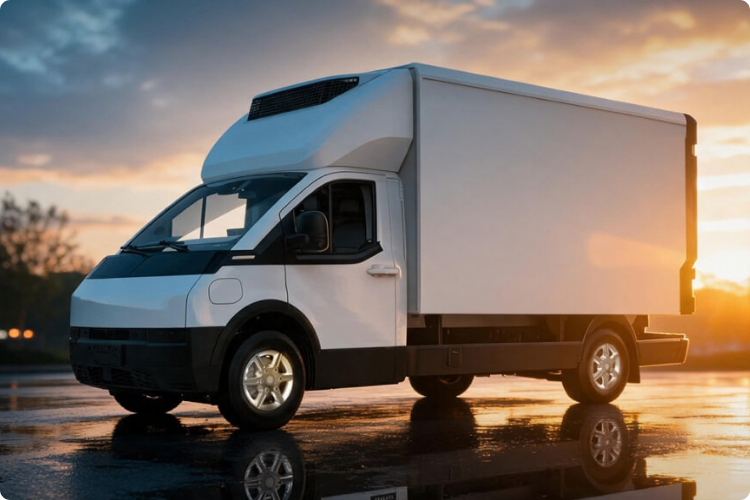
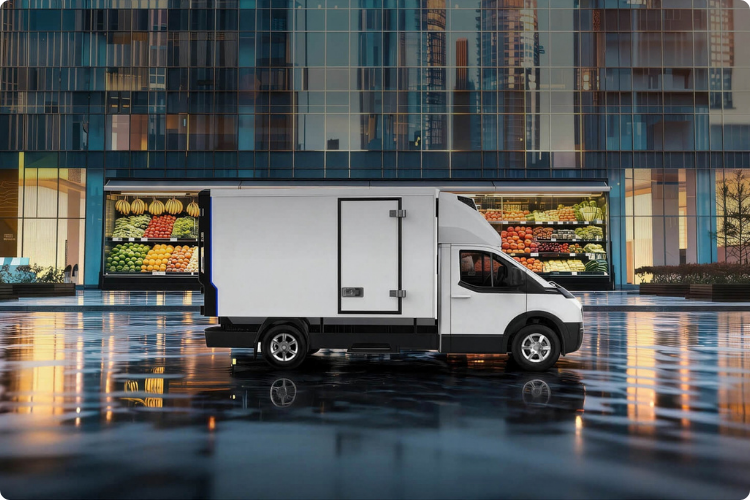
The company is also showcasing four specialist applications based on its commercial vehicle platforms: a Crew Van, Fridge Box, Tool Storage vehicle and 3-Way Tipper.
These demonstrate how the vehicles could be adapted for different sectors, including temperature-controlled deliveries, trades and engineering work, passenger-carrying applications and construction-related operations.
The approach could be particularly relevant to businesses that need something beyond a standard panel van. DELIVAN has established partnerships with European conversion specialists including GRUAU, SORTIMO, JUNGE and BOTT as it develops its conversion offering.
The wider commercial vehicle conversion market already covers a wide range of applications, from refrigeration and welfare vehicles through to tippers, dropsides, storage systems and specialist trade vehicles.
DELIVAN’s L3CC chassis cab is particularly suited to this approach, providing a platform that can be adapted to different body styles and business requirements.
A Wider Fleet Technology Strategy
Electric power is only one part of DELIVAN’s proposition.
The company is also placing significant emphasis on connectivity, data and fleet management, with its wider “1+3” proposition designed to combine the vehicles with supporting technology and services.
DELIVAN I focuses on connected fleet technology, while DELIVAN PRO covers servicing and vehicle uptime. DELIVAN X is responsible for conversions and vehicle customisation. This broader approach reflects the increasingly important role of fleet lifecycle management, where businesses need to consider acquisition, operation, maintenance, charging, utilisation and eventual replacement as connected parts of the fleet strategy.
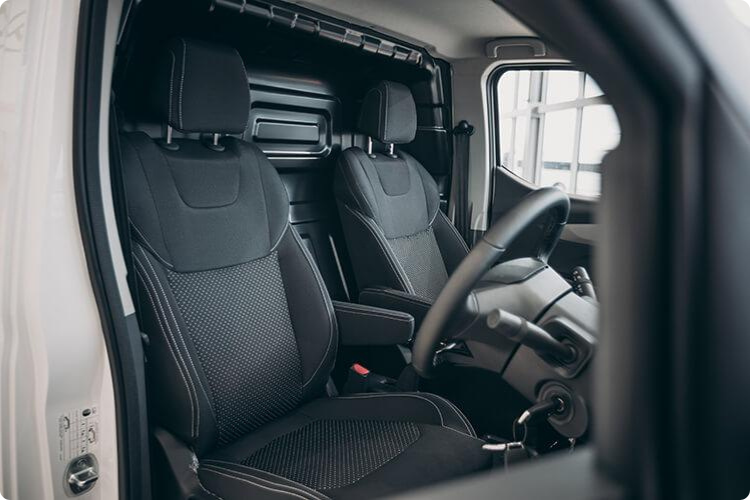
The manufacturer says its connected systems will use vehicle data to provide operators with information covering areas such as vehicle status, driver behaviour, route efficiency and energy consumption.
For electric fleets, this type of information could help businesses monitor real-world energy use, charging requirements and vehicle utilisation across different routes.
It also fits into the wider role of fleet management, where businesses increasingly need to consider the vehicle, driver, maintenance, charging and operational data as part of one overall system.
UK Launch Planned For 2027
The UK is expected to be one of DELIVAN’s key European markets when the brand begins its commercial rollout in 2027.
The company chose the UK for the global debut of DELIVAN at the Commercial Vehicle Show in Birmingham in April, before returning to Europe later in the year with the production-oriented range at IAA Transportation.
Right-hand-drive production is planned alongside the vehicles destined for mainland European markets, with the UK therefore being treated as an important part of the brand’s initial expansion rather than an afterthought.
DELIVAN is continuing to develop its European dealer, service and conversion network ahead of launch. The precise structure of the UK retail and support network will become clearer as the company moves closer to bringing the first vehicles to market.
Another Chinese Brand Enters The UK Van Market
DELIVAN’s arrival comes at a time when the number of Chinese automotive brands operating in the UK is continuing to grow.
Chery has already established passenger car brands including Chery, Omoda and Jaecoo in Britain, while other Chinese manufacturers are also increasing their presence across the UK automotive market.
That wider expansion is covered in our guide to Chinese car brands in the UK, but DELIVAN represents a slightly different proposition because it is entering the commercial vehicle market with a dedicated electric van operation.
For UK businesses, the arrival of another manufacturer will add further choice at a time when the electric van market is becoming increasingly competitive.
Established manufacturers already offer electric versions of some of the UK’s most popular commercial vehicles, while newer brands are targeting specific gaps in the market.
What Will DELIVAN Need To Prove In The UK?
The headline figures give DELIVAN a starting point, but fleet operators will ultimately need to look beyond battery capacity and driving range.
Factors such as vehicle pricing, availability, warranty provision, servicing, parts supply, dealer coverage, charging support and long-term vehicle maintenance will all influence how attractive the vans are to businesses.
Warranty provision will also be important, particularly for businesses relying on their vans every day and looking to understand how manufacturer support works over the course of the vehicle’s lease or ownership period.
This is particularly important for commercial vehicles, where downtime can have a direct impact on a company’s ability to operate.
DELIVAN’s decision to combine electric vans with connected fleet technology, specialist conversions and dedicated servicing and uptime support suggests Chery is attempting to address these requirements as part of the overall product rather than treating them as separate services.
With the UK launch planned for 2027, DELIVAN will soon have the opportunity to demonstrate whether its European-focused approach can translate into a competitive proposition for British businesses.
The arrival also gives UK operators another option as they consider the transition towards electric commercial vehicles, particularly those looking for a van that combines zero-emission driving with specialist conversion potential and connected fleet technology.
 Call our expert team on