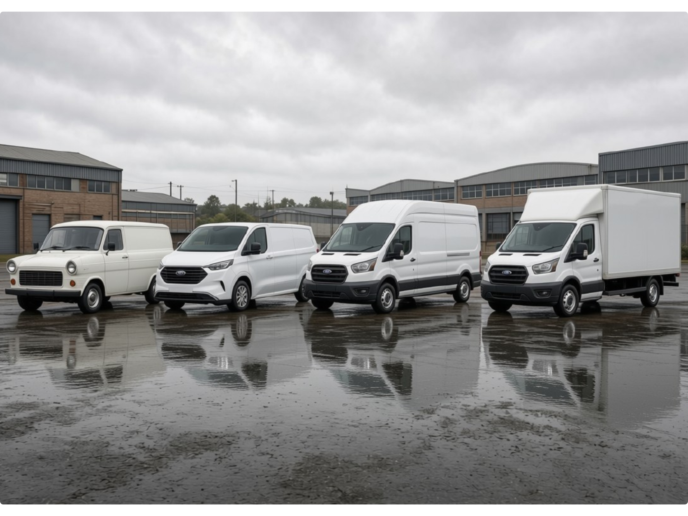
The Ford Transit has been a familiar sight on UK roads for more than six decades, becoming one of the most recognisable names in the history of commercial vehicles.
First introduced in 1965, the Transit celebrated its 60th anniversary in 2025. Since entering production, Ford has continually developed the van to meet changing demands from businesses, tradespeople, fleet operators and drivers.
What started as a relatively straightforward commercial vehicle has evolved into a sophisticated family of vans offering different sizes, body styles, drivetrains and technologies, giving businesses more choice when it comes to van leasing, including the Ford Transit.
The modern Transit family now includes conventional diesel models alongside plug-in hybrid and fully electric vehicles, while features such as advanced driver assistance systems, connected technology and improved cabin comfort have transformed the experience of driving a van.
Yet despite all those changes, the basic purpose of the Transit has remained remarkably consistent: provide businesses with a practical, adaptable and capable vehicle that can get the job done.
Here’s how the Ford Transit developed from its launch in 1965 into the modern range available today.
Ford Transit Mk1: Where It All Began
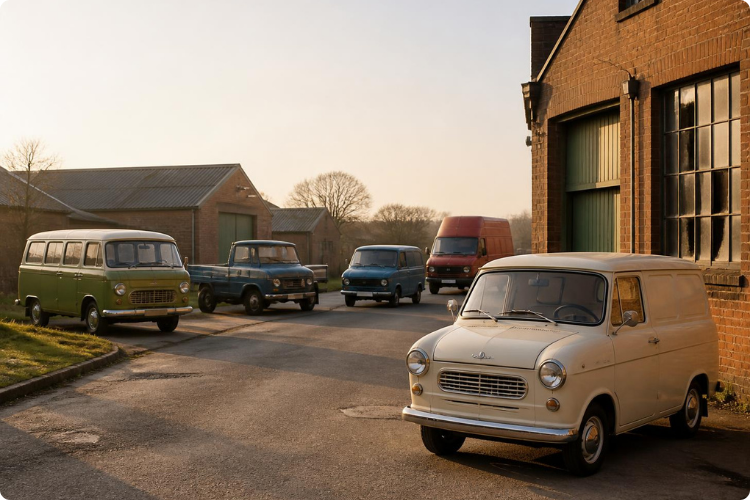
The first Ford Transit arrived in 1965 following development under the internal project name Project Redcap.
The name could have been very different. Ford initially considered calling the new commercial vehicle the V-Series, before deciding to revive the Transit name previously used by the Taunus Transit.
That decision created a name which would eventually become synonymous with vans across the UK.
The original Transit brought several important changes to the commercial vehicle market. Rather than placing the engine between the driver and passenger, Ford positioned it ahead of the cab.
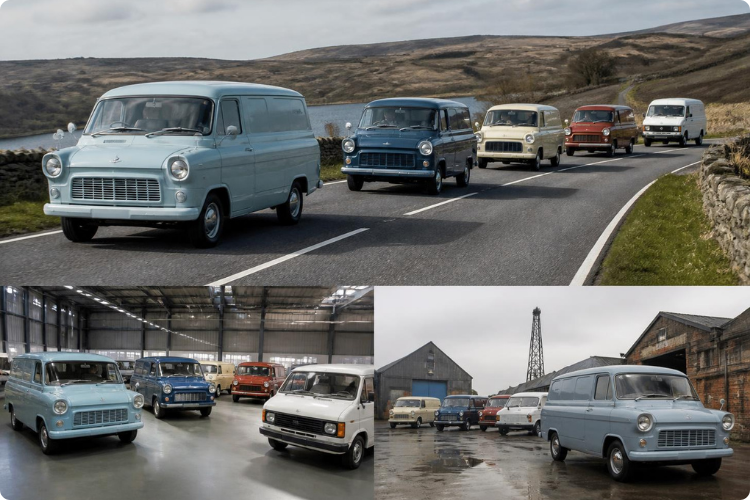
This helped create a more spacious driving environment while also giving Ford greater flexibility when developing different versions of the vehicle.
Production began at Ford’s Langley plant, initially concentrating on short-wheelbase models. The range soon expanded, however, with long-wheelbase versions, chassis cabs, minibuses and Kombi models joining the line-up. The Transit’s ability to be adapted for different applications has remained important throughout its history, with commercial vehicle conversions continuing to play a major role today.
Panel van buyers could also choose between different payload capacities and loading configurations, including side-loading doors and different rear-door arrangements.
That versatility would become one of the defining characteristics of the Transit.
The Transit was not simply designed for one type of business, helping establish the foundations for the business van as a flexible working vehicle.
It could be adapted for a wide variety of jobs, helping establish the foundations for the Transit family that exists today.
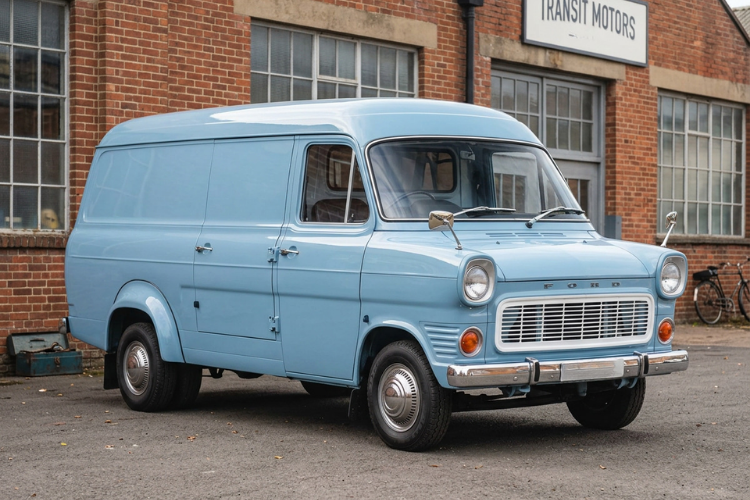
Ford Transit Mk2: Making The Van Better For Drivers
Ford introduced the second-generation Transit in 1975, with improvements aimed not only at carrying loads but also at making life easier for the person driving the vehicle.
The driving position was revised considerably. The pedals were moved forwards and the driver’s seat repositioned, creating more legroom, while changes to the steering column helped produce a more comfortable driving position.
Ford also continued to develop the Transit’s braking systems.
Servo-assisted front brakes were introduced, followed by the adoption of front disc brakes across the range. The Transit 190 subsequently arrived with a gross vehicle weight of up to 3.5 tonnes, increasing the vehicle’s ability to take on heavier commercial work.
The Mk2 also demonstrated just how quickly the Transit had gained popularity.
In 1976, only 11 years after the original model was launched, Ford produced its one-millionth Transit.
For a commercial vehicle still in its relative infancy, that was a major milestone.
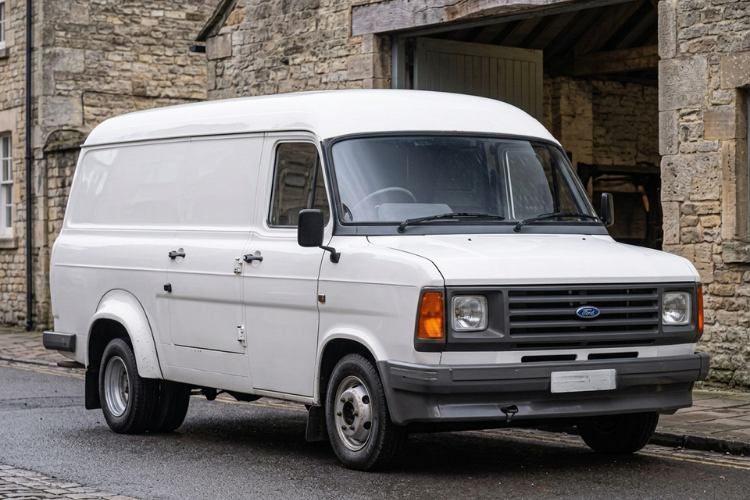
Ford Transit Mk3: Greater Focus On Safety And Efficiency
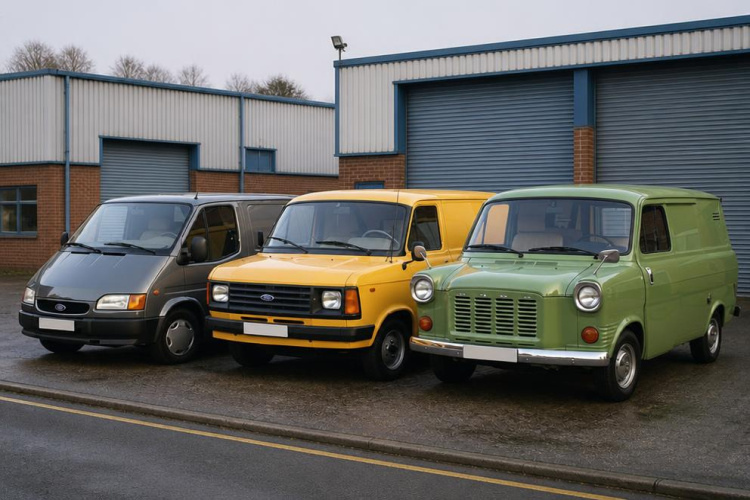
By the time the third-generation Transit arrived in 1986, Ford had already produced more than two million examples.
The Mk3 brought a much more modern appearance, with a smoother front end replacing the boxier design of earlier generations.
The new shape was developed with both aerodynamics and safety in mind. Its more streamlined profile helped reduce aerodynamic drag, contributing to improved fuel efficiency even as Ford increased the available load capacity.
The Transit was also becoming more sophisticated in terms of security and occupant protection.
During the Mk3’s lifespan, Ford introduced features including central locking, an alarm, double locking and passive anti-theft technology.
Safety equipment continued to develop, with three-point seatbelts becoming standard and airbags becoming available.
These improvements weren’t restricted to panel vans either. Ford carried many of the developments across the wider Transit family, including its 17-seat minibus derivatives.
By the 1990s, the Transit was becoming much more than a basic work vehicle.
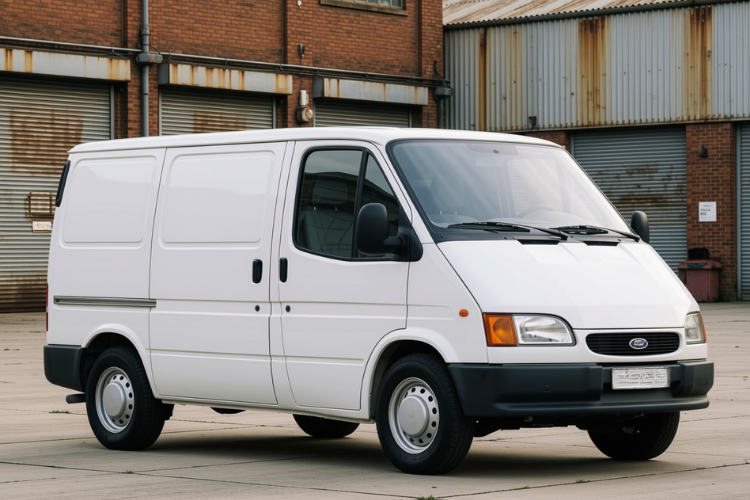
Ford Transit Mk4: Expanding The Transit Family
The fourth-generation Transit arrived in 2000, at a time when Ford had already produced more than four million examples of the model.
The new generation was built around a common platform that could accommodate both front- and rear-wheel-drive configurations, allowing Ford to offer different solutions for different types of commercial use.
The new Transit made an immediate impression and went on to win the International Van of the Year award in 2001.
Ford also began to expand the Transit name into a broader family of commercial vehicles.
The Transit Jumbo arrived in 2002, providing operators with a larger version capable of handling heavier loads and highlighting the importance of van payload when choosing a commercial vehicle. At the other end of the spectrum, Ford introduced the smaller Transit Connect.
The Transit Connect proved to be another success, winning the International Van of the Year award in 2003.
This marked an important development in Ford’s commercial vehicle strategy.
Rather than relying on one van to cover every requirement, the Transit name was beginning to represent a range of vehicles designed for different businesses and applications.
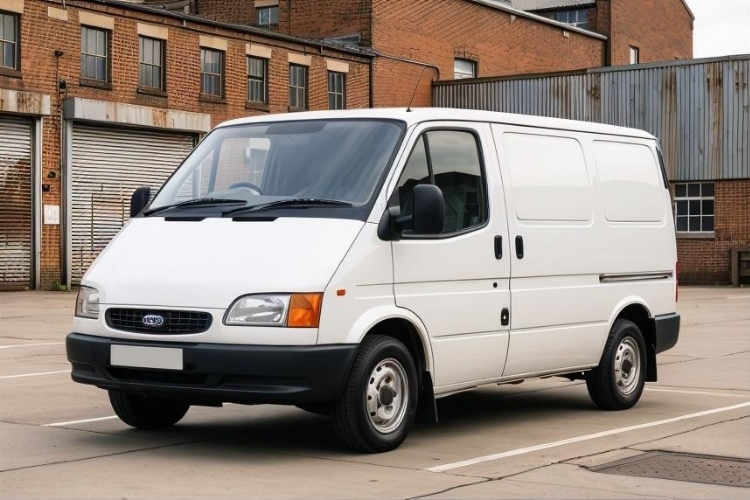
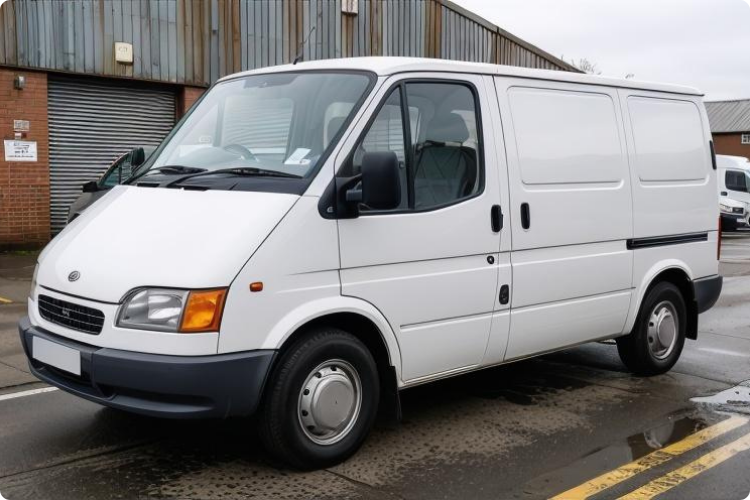
Ford Transit Mk5: More Comfort, Technology And Choice
The next major generation arrived in 2006, continuing the trend towards making commercial vehicles more comfortable and easier to live with.
The cabin received a substantial redesign, including a dashboard-mounted gear selector and improved storage. The changes reflected the growing expectation that vans should provide a driving environment closer to that of a passenger vehicle without compromising their working capabilities.
Ford offered a wide choice of engines, with diesel power dominating the range while petrol and alternative-fuel options were also available.
Different drivetrain configurations continued to be offered, including front-, rear- and all-wheel drive.
Safety technology also became increasingly important. Electronic Stability Programme became standard, while ongoing engine developments were aimed at improving both performance and fuel economy.
The Transit continued to collect industry recognition too, winning another International Van of the Year award in 2007.
By 2010, Ford had reached another significant production milestone, building its six-millionth Transit.
The vehicle had now been on sale for 45 years, but its development was far from complete.
Ford Transit Mk6: The Modern Era
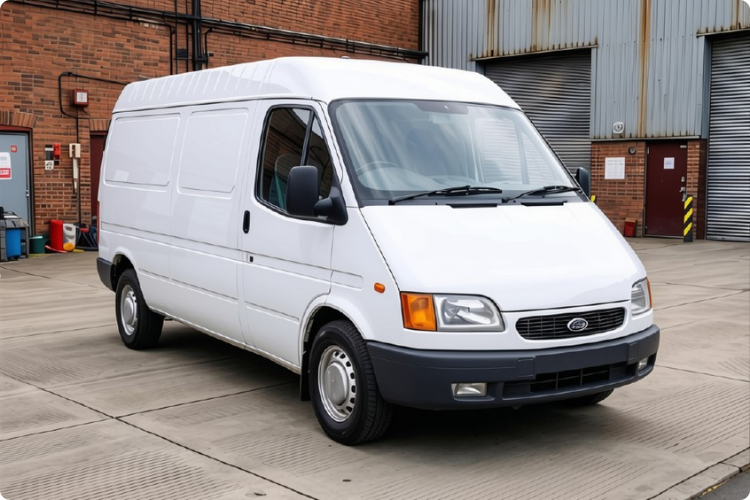
The sixth-generation Transit arrived in 2013, bringing a more refined design, improved efficiency and greater levels of technology. Ford continued to develop the large Transit around the needs of different businesses, offering a wide range of wheelbases, roof heights, gross vehicle weights and drivetrain configurations.
The range also expanded beyond the traditional panel van, with crew cab versions and chassis cab models providing the basis for specialist commercial vehicles. These include dropside, curtainside and tipper conversions, demonstrating how the Transit platform can be adapted for very different working requirements.
The large Transit remained the core vehicle, but Ford increasingly expanded the wider family around it.
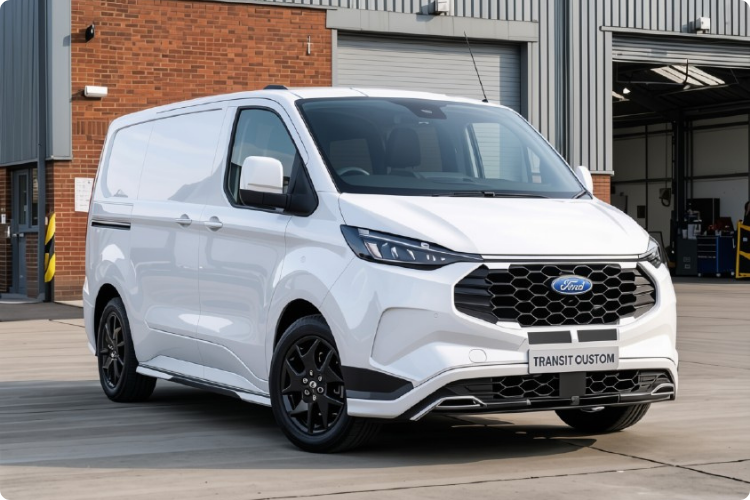
Today, the Transit name covers vehicles ranging from the compact Transit Courier through to the large Transit, with the Ford Transit Custom sitting between the two.
The Transit Custom has become particularly important to Ford’s commercial vehicle strategy and is now available with diesel, plug-in hybrid and fully electric powertrains.
The current Transit Custom diesel range includes 2.0-litre EcoBlue engines, while the plug-in hybrid version combines petrol and electric power. The E-Transit Custom takes the same basic concept into fully electric territory.
Ford’s electric development has also extended to the larger E-Transit.
The E-Transit provides businesses with a fully electric alternative to the conventional large van, with different body styles and battery options designed to accommodate a variety of commercial requirements.
At the smaller end of the range, the E-Transit Courier provides another fully electric option for businesses that do not require the capacity of a larger van. Ford’s UK range continues to offer both Transit Courier and E-Transit Courier models in 2026.
The result is a Transit family that looks very different from the one Ford introduced in 1965.
The Transit Moves Into An Electric Future
Electrification is arguably one of the biggest changes to the Transit story in its 60-plus years.
For decades, diesel engines were the natural choice for businesses requiring a combination of range, payload capability and everyday practicality.
That is now changing.
Ford’s E-Transit brought a fully electric version of its large van to the market, while the E-Transit Custom has brought electric power into one of the most important parts of Ford’s commercial vehicle range.
The latest E-Transit Custom offers a claimed range of up to 230 miles, while Ford also offers features such as Pro Power Onboard, allowing selected electrical equipment and tools to be powered directly from the van.
The electric Transit family also demonstrates how much commercial vehicle technology has progressed, particularly as businesses have more choice when considering an electric van.
As electric vans become more common within business fleets, operators also need to consider practical issues such as charging, range and what happens if an electric vehicle breaks down.
Modern Ford vans can feature connected navigation, large touchscreen displays, advanced driver assistance systems, smartphone integration and sophisticated fleet technology.
For businesses, electrification is therefore about more than simply replacing a diesel engine with a battery. Charging requirements, workplace infrastructure and day-to-day operating patterns can all play a role when making the switch. It is part of a much wider change in how commercial vehicles are operated and managed.
The Ford Transit Custom Continues To Evolve
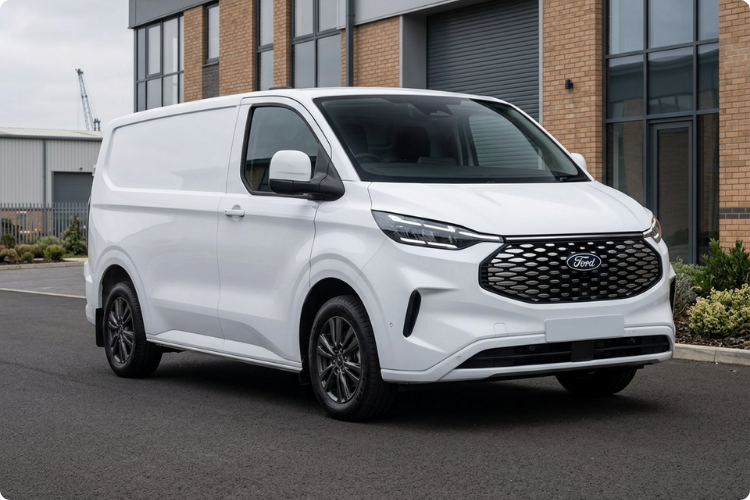
Although the Transit name dates back to 1965, the modern Transit Custom has become an important part of the story in its own right.
The latest Transit Custom is designed to offer the practicality expected from a working van while providing a more refined driving environment.
It is available with diesel power, plug-in hybrid technology and an all-electric drivetrain, with different body and seating configurations providing flexibility for different businesses.
Ford also offers features designed specifically around the working environment. These include a 13-inch touchscreen, 5G connectivity, flexible cab storage and an optional tilting steering wheel that can help turn the cabin into a mobile office.
For businesses carrying people as well as equipment, the range can also be configured in different passenger-carrying formats.
The result is a van that would have been almost unrecognisable to someone stepping out of a first-generation Transit in 1965.
Ford Transit Supervan: When A Van Became A Racing Machine
The Transit has always been designed as a working vehicle, but Ford has occasionally demonstrated what happens when the concept is taken to an extreme.
The answer is Supervan.
The first Supervan appeared in 1971 and looked broadly like a Transit from the outside, but underneath it was anything but ordinary.
A 4.7-litre V8 engine derived from the Ford GT40 provided the power, transforming the humble-looking van into a serious performance machine.
Ford returned to the idea in 1985 with Supervan 2.
This time, a Transit body was mounted onto a racing-car chassis and powered by a Cosworth V8 producing around 590bhp. The result was capable of reaching approximately 174mph.
Supervan 3 followed during the 1990s, continuing the theme of combining Transit styling with increasingly sophisticated motorsport technology.
Then Ford completely changed the formula again.
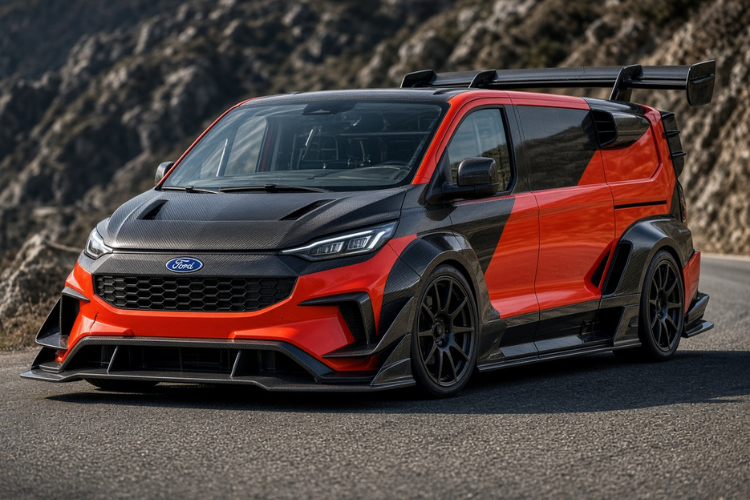
Supervan 4 arrived in 2022 with an all-electric powertrain and an extraordinary output of around 2,000bhp.
The electric Supervan demonstrated just how dramatically commercial vehicle technology had changed. The Transit name, which had originally represented a practical working van, was now being used on a machine capable of genuine motorsport performance.
The concept evolved again with Supervan 4.2, which received aerodynamic and weight-saving modifications for its Pikes Peak challenge.
It may be a world away from the Transit used by a plumber or electrician every morning, but Supervan has become an entertaining part of the model’s history.
Some Of The Ford Transit’s Strangest Stories
A vehicle that has been around for more than 60 years is inevitably going to accumulate some unusual stories.
The Transit was involved in some remarkable demonstrations almost from the beginning.
In 1965, a Transit minibus was used by 48 students from Barking College in an attempt to demonstrate just how much space could be found inside the vehicle.
The Transit was also used to transport two baby elephants at London Zoo, providing one of the more unusual loads ever carried by the van.
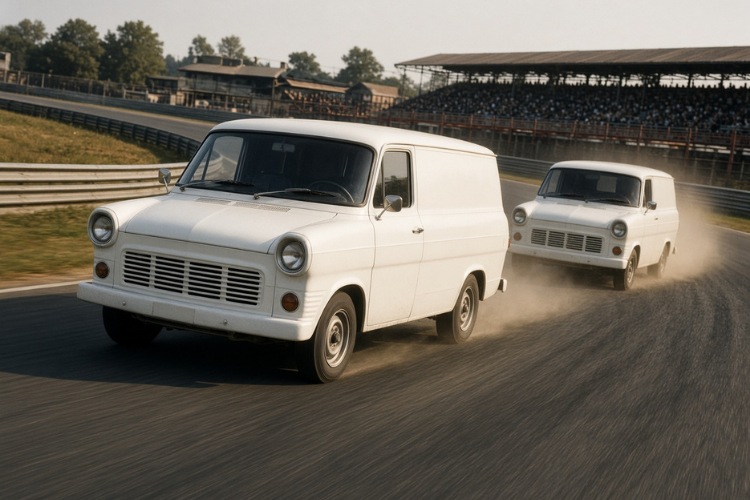
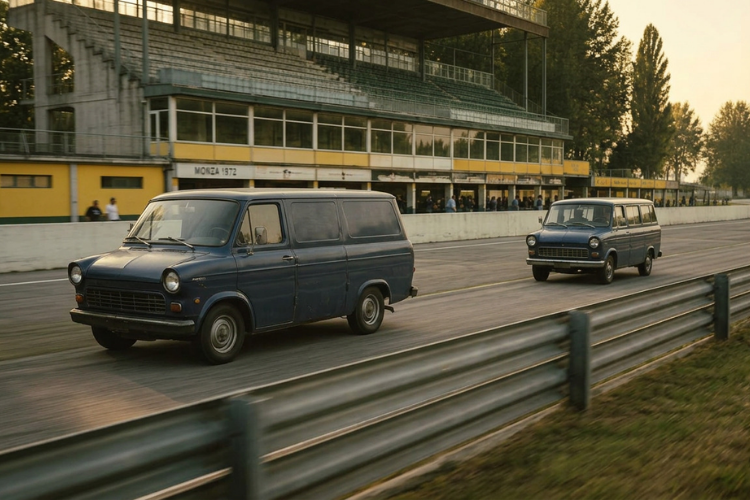
Ford later used the Transit to demonstrate the durability of its diesel technology. In 1972, two Transits spent a week at the Monza circuit and established three endurance records, including a 10,000-mile run completed at an average speed of more than 73mph.
The Transit even took to the water. In 1985, a group of Ford apprentices from Dunton built a floating Transit for an annual boat and raft race in Southend, Essex. The ambitious project was certainly memorable, although the Transit never actually made it to the Thames for the event.
The Transit also gained some unwanted notoriety during the 1970s.
The Metropolitan Police reportedly referred to it as Britain’s “most wanted van” because of its alleged popularity as a getaway vehicle following bank robberies.
The van has also transported some decidedly unusual cargo.
One of the more bizarre examples involved a huge prehistoric creature being transported on a Transit chassis cab, while stuntman Steve Matthews used a Transit in 1985 for a spectacular jump over 15 cars.
And then there was the Transit XXL.
Introduced in 2006, this stretched Transit was approximately 7.4 metres long and featured four sliding doors, seven leather captain’s chairs and individual video screens.
It was hardly a conventional commercial vehicle, but it showed just how far Ford was willing to stretch the Transit concept.
The Transit has also been adapted into specialist commercial vehicles, including Luton vans with tail lifts designed for businesses that need additional load space and easier loading.
💡 Random Fact
The Ford Transit name was almost very different.
When Ford was developing the original van, it was initially known internally as Project Redcap, while the company considered calling the finished vehicle the V-Series before settling on the Transit name.
More Interesting Van Facts
Enjoyed the more unusual side of the Ford Transit story? Take a look at our Little-Known Car & Van Facts for more surprising facts and stories from the automotive world.
You can also explore some of the weirdest vans in the world, including some truly extraordinary commercial vehicles.
 Call our expert team on