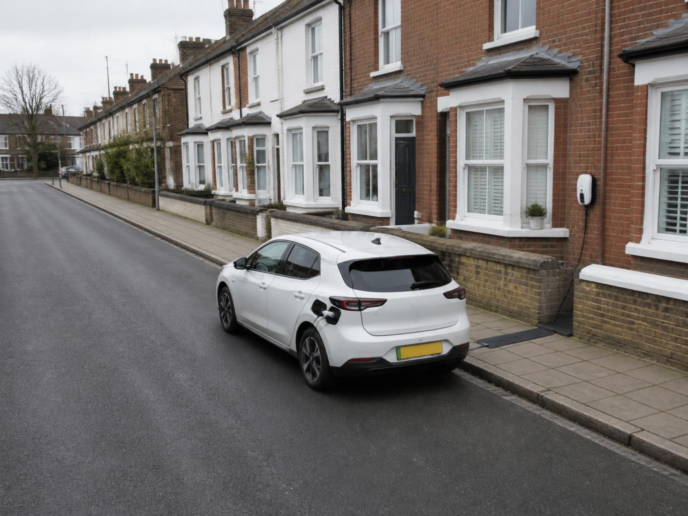
The Government is moving ahead with plans to make it easier for electric vehicle drivers without a driveway to install home charging equipment.
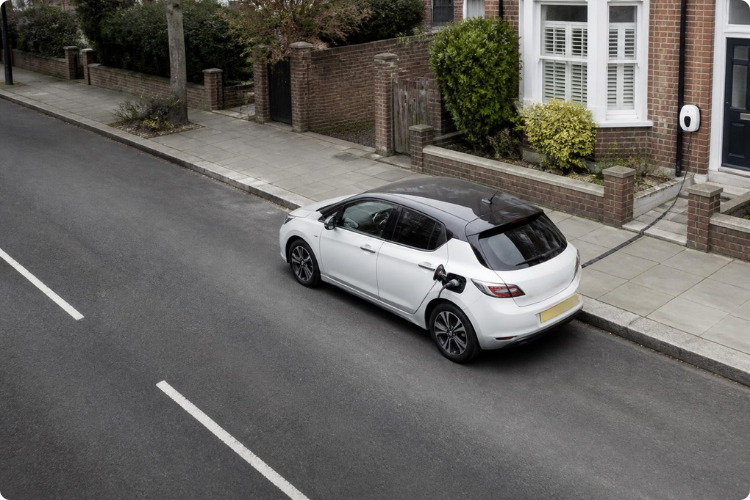
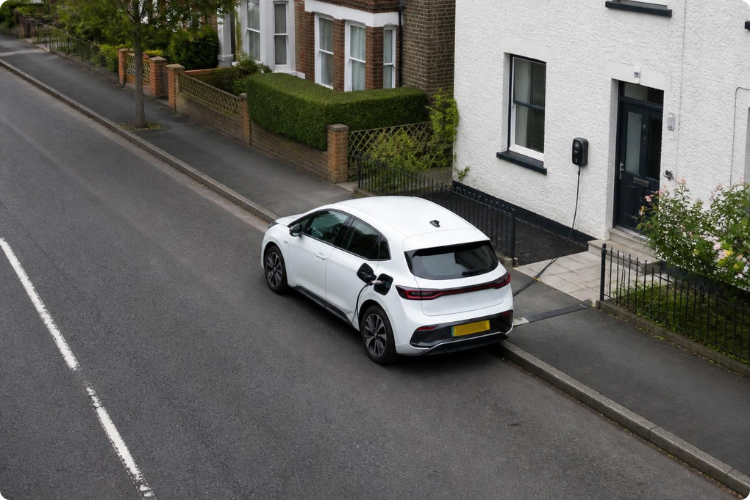
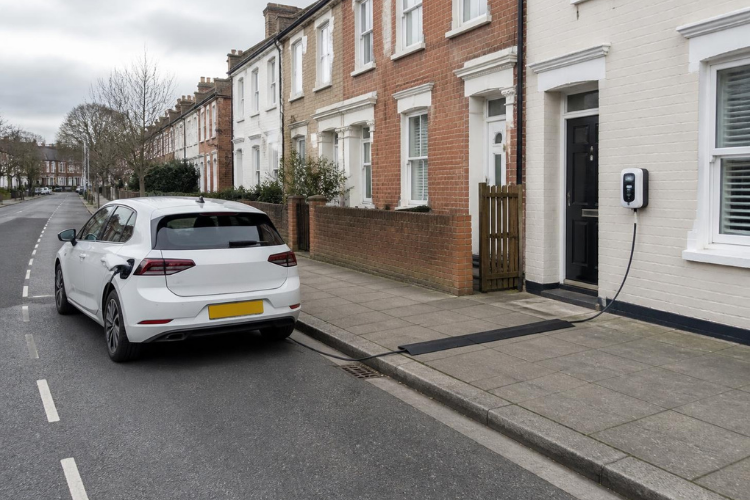
A new permitted development right is being introduced for approved cross-pavement EV charging solutions, removing the need for a separate planning application in qualifying circumstances once the new rules come into force.
The change is aimed at tackling one of the biggest practical challenges facing households that rely on on-street parking: how to charge an electric vehicle at home when there is nowhere to park directly on private property.
The Government confirmed on 11 September 2026 that it will proceed with the proposed changes to permitted development rights for electric vehicle charging, with the necessary legislation now being prepared. Secondary legislation is expected to be laid before Parliament in Autumn 2026, subject to Parliamentary time and commencement arrangements.
New Planning Rules For Cross-Pavement EV Charging
Under the current system, installing a charging point for a property without off-street parking can involve additional planning and highways requirements, creating another hurdle for people considering an electric vehicle.
The Government has now confirmed that it will move forward with changes designed to address this issue.
Following a Department for Transport consultation on proposed amendments to permitted development rights, ministers have agreed to introduce new rights covering approved cross-pavement charging solutions and associated domestic chargepoints.
The new permitted development right is intended to simplify the process for properties immediately next to the public highway, allowing eligible households to install an appropriate charging solution without going through a separate planning application process.
However, the change does not mean installations will be completely unrestricted.
Highways permissions and safety requirements will continue to apply, meaning householders will still need to use an approved solution and comply with the relevant requirements governing work on or alongside the public highway. The Government has specifically stated that it is not changing existing highway licensing processes at this stage.
The precise legal requirements will depend on the final legislation and commencement of the new permitted development rights.
Millions Of Households Could Benefit
The announcement addresses a significant issue for prospective EV drivers in the UK.
Having access to convenient home charging can make electric vehicle ownership considerably easier, particularly for people who can charge overnight using their domestic electricity supply. For drivers using home charging regularly, understanding how often an EV should be charged is also important, particularly when it comes to whether charging to 100% is necessary.
That option has traditionally been much more straightforward for households with a driveway, garage or private parking space.
For these drivers, understanding the different options available is becoming increasingly important. Our guide to electric vehicle charging explains the different ways EVs can be charged at home, at work and through the public charging network.
For people without driveways, however, charging an EV can instead mean relying on public charge points, workplace charging or finding a suitable way to connect a home charger with a vehicle parked on the street.
Government figures from the English Housing Survey indicate that around eight million households in England, equivalent to approximately 32%, do not have access to off-street parking.
That makes access to suitable residential charging an important consideration as EV ownership increases.
The planning change is designed to remove some of the administrative barriers around finding a practical home-charging solution for these households.
Cross-Pavement Charging Could Help Close The Charging Gap
The availability of suitable charging infrastructure is an important consideration as more motorists move towards electric vehicles.
While public charging networks continue to expand, being able to charge at home remains an attractive option for many drivers because it can provide greater convenience and allow vehicles to be charged when they are parked overnight.
For people without driveways, however, that has often been more complicated.
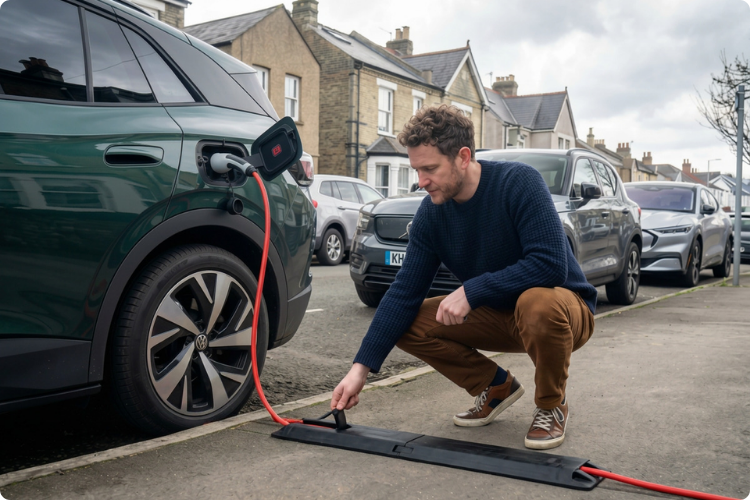
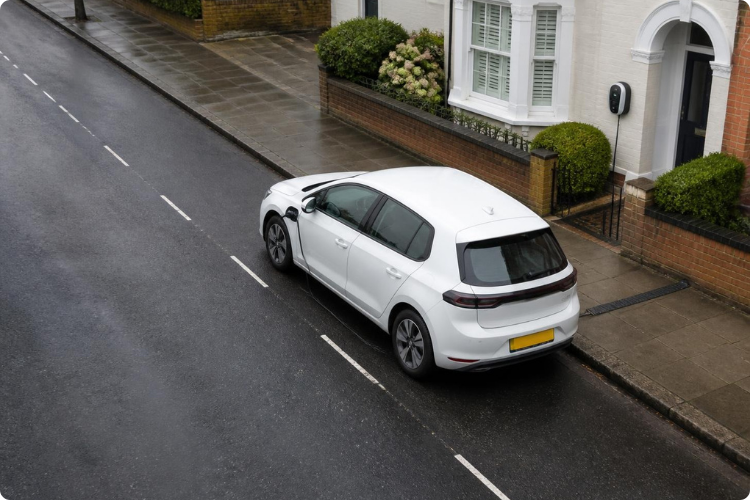
Cross-pavement systems provide a potential solution by creating a managed route between a property and a vehicle parked at the roadside.
The Government’s decision to introduce a dedicated permitted development right should make the process more straightforward for qualifying properties, although highways and safety requirements will still need to be met.
The change comes as councils and charging operators continue to increase the availability of on-street EV charging, with infrastructure being developed in areas where many households do not have access to private parking.
Recent CVC research has highlighted the continued expansion of the UK charging network, with more than 90% of councils now having at least one public EV charger within their area and on-street charging provision continuing to increase.
For businesses and organisations involved in installing this infrastructure, the growing market also creates new opportunities. CVC’s guide to the best vans for EV charging installers looks at the commercial vehicles suited to businesses working in this increasingly important sector.
EV charging installers may need to carry everything from charging units and cables to testing equipment, ladders, tools and specialist installation materials, making the right commercial vehicle an important part of their operation.
Government To Change Rules For Larger Public Charging Sites
The Government has also announced changes affecting public EV charging infrastructure.
The consultation included proposals to make it easier to install multiple units of equipment housing or storage equipment at larger charging locations in non-domestic, off-street car parks.
The Government has confirmed that it will proceed with the proposed changes to permitted development rights for EV charging infrastructure.
The consultation had proposed increasing the cumulative permitted volume for multiple equipment housing units from the existing 29 cubic metre limit, with the Government considering an increase to 45 cubic metres.
These changes are intended to make it easier for charging operators to develop larger sites and install the supporting equipment needed for higher-powered charging infrastructure.
This could become increasingly important as demand for faster charging grows and more electric cars and vans enter the UK market.
Larger charging sites require increasingly sophisticated supporting equipment, including transformers, control systems and other infrastructure needed to deliver higher charging power.
Making the planning system more flexible could therefore help charging operators expand existing sites and develop infrastructure capable of supporting the next stage of EV adoption.
Government Support For Home And Workplace Charging
The planning changes form part of a wider package of measures designed to improve access to EV charging.
The Government has already increased support for charging infrastructure, including funding for home and workplace EV chargers.
From April 2026, government support for eligible EV chargepoint installations increased, with grants of up to £500 available under the relevant schemes.
For businesses, workplace charging can provide an important alternative to relying entirely on public infrastructure.
It can also be particularly useful for company car and van drivers who return to a depot or workplace during the day, allowing vehicles to recharge while they are parked.
For employees who take electric vehicles home, however, access to charging can be more complicated if they do not have a driveway.
That is where the Government’s proposed cross-pavement changes could make a difference.
What The Changes Mean For EV Drivers
For motorists without a driveway, the most significant change is the Government’s decision to proceed with a new permitted development right covering approved cross-pavement charging arrangements and associated domestic chargepoints.
Once implemented, this should reduce the need for a separate planning application in qualifying circumstances.
It could therefore reduce both the administration involved and one of the potential costs associated with installing a home charging solution.
It also helps address one of the differences between households with private parking and those that depend on on-street parking.
However, motorists should not assume that they can simply run a charging cable across a pavement. This is also separate from the wider rules surrounding pavement parking in England, which determine where vehicles can legally be parked on or alongside pavements.
The Government’s proposals are based around approved cross-pavement solutions, with highway safety remaining an important consideration. Existing highway permissions and licensing requirements will continue to apply.
For anyone considering making the switch, the continued expansion of charging infrastructure should make it easier to assess whether an EV is suitable for their circumstances. CVC’s guide to switching to an electric vehicle covers some of the key considerations for drivers moving from petrol or diesel.
Electric Vehicle Charging Infrastructure Continues To Expand
The changes to planning rules come at a time when the UK’s EV charging network is continuing to develop.
More charging options are important not only for households without driveways but also for businesses operating electric cars and vans, particularly where vehicles cannot be charged at a company’s premises overnight.
The combination of greater public charging provision, workplace charging and easier access to suitable home charging solutions should give more motorists flexibility when considering an electric vehicle. However, as more drivers become dependent on public infrastructure, the reliability and availability of individual chargepoints will remain an important consideration. CVC has previously examined how EV charger reliability varies across UK regions, including what differences in charging performance could mean for electric vehicle drivers and fleets.
The Government’s separate Electric Vehicle Infrastructure Support Service also provides support around the development of charging infrastructure in England, highlighting the wider focus on expanding the network.
The service is designed to help public-sector organisations with areas including EV infrastructure planning, technical advice, procurement and network development. It also supports the wider rollout of charging infrastructure through programmes such as the Local Electric Vehicle Infrastructure Fund.
The wider public charging network is also expanding rapidly.
CVC’s latest coverage found that more than 122,000 public charging points were available across the UK, with more than 50,000 added since the end of 2023. On-street charging is also becoming an increasingly important part of the network for drivers without access to private parking.
As more electric vehicles enter the UK market, charging infrastructure will remain an important part of making the transition practical for different types of drivers and businesses.
Charging Access Is Becoming An Increasingly Important EV Consideration
For drivers considering an electric vehicle without access to a driveway, charging arrangements should be considered before choosing a vehicle.
Home charging can offer considerable convenience, but it is not available to every household.
Public charging, workplace charging and on-street infrastructure therefore all have an important role to play in supporting drivers who cannot charge on private land.
For businesses, the same principle applies.
Companies considering electric cars or vans need to think about where vehicles will be charged, whether employees can charge at home, whether workplace infrastructure is required and how often public charging will be needed.
As charging infrastructure develops, these considerations are becoming easier to manage.
The Government’s permitted development changes could also help close one of the remaining gaps by making it easier for some households without driveways to access a suitable home charging arrangement.
EV Charging Becomes More Accessible For More Drivers
The Government’s decision to simplify the planning process for cross-pavement EV charging removes another barrier for drivers who do not have access to a driveway or private parking.
With millions of households in England relying on on-street parking, making home charging more accessible could play an important role in supporting wider EV adoption.
At the same time, changes to permitted development rights for larger public charging sites should help the UK continue expanding its charging network as demand increases.
The legislation still needs to pass through the necessary parliamentary and commencement processes, meaning drivers should check the final rules and local highway requirements before arranging an installation.
For drivers and businesses considering an electric vehicle, charging availability is becoming less of a barrier as the infrastructure develops.
Electric vehicle leasing can also provide a straightforward way to access the latest EVs without the upfront cost of buying a vehicle outright, with a growing choice of electric cars and vans now available for both personal and business use.
 Call our expert team on