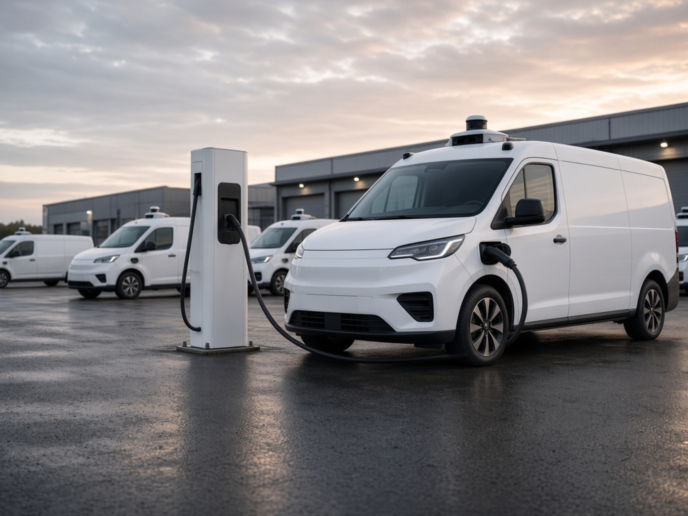
Autonomous vehicles could require significantly more energy than conventional electric vehicles, potentially creating new challenges for businesses considering autonomous technology for future fleets.
As vehicle technology becomes increasingly automated, fleets are likely to gain access to more advanced driver assistance and autonomous driving systems. This follows the wider development of autonomous vehicles in the UK fleet and leasing market. However, the additional technology required to operate these vehicles could have an impact that goes beyond the driving experience.
Research into prototype autonomous vehicles suggests that a relatively small proportion of their total electricity consumption may be used simply to move the vehicle.
For businesses considering electric vehicles, this raises an important question: how much additional energy could autonomous driving technology require, and what could this mean for vehicle range and charging requirements?
Why Do Autonomous Vehicles Use More Energy?
Electric vehicles already use electricity for several different purposes, including propulsion, heating, air conditioning, infotainment and other onboard systems.
Autonomous vehicles add another layer of electrical demand.
Highly automated vehicles can rely on a combination of cameras, radar, lidar, sensors, communications equipment and powerful onboard computers to monitor their surroundings and make driving decisions.
Research published in Nature examined the energy requirements of prototype robotaxis and found that only around 57% of their overall power consumption was used for propulsion.
The remaining energy was associated with systems supporting autonomous operation, including sensing, computing and communications, alongside infrastructure used away from the vehicle.
While robotaxis represent an especially advanced form of autonomous driving, the findings highlight an issue that could become increasingly relevant as similar technology makes its way into mainstream passenger cars, vans and fleet vehicles.
Could Autonomous Technology Reduce EV Range?
For fleet operators, vehicle range is already an important consideration when choosing an electric vehicle.
Adding more energy-intensive technology could potentially reduce the amount of electricity available for propulsion, particularly where vehicles are operating for long periods or covering significant distances.
This does not necessarily mean that autonomous electric vehicles will have poor range. Manufacturers could compensate through larger batteries, more efficient hardware and software, improved energy management and advances in autonomous technology.
However, the additional electricity required by autonomous systems could become another factor when assessing an EV’s real-world operating requirements.
For a business running vehicles throughout the day, even a relatively modest increase in energy consumption could affect:
- Daily driving range
- Charging frequency
- Vehicle downtime
- Charging infrastructure requirements
- Fleet operating schedules
- Overall vehicle utilisation
These considerations could become particularly important for commercial vehicles, where keeping a van on the road for as much of the working day as possible is often a priority.
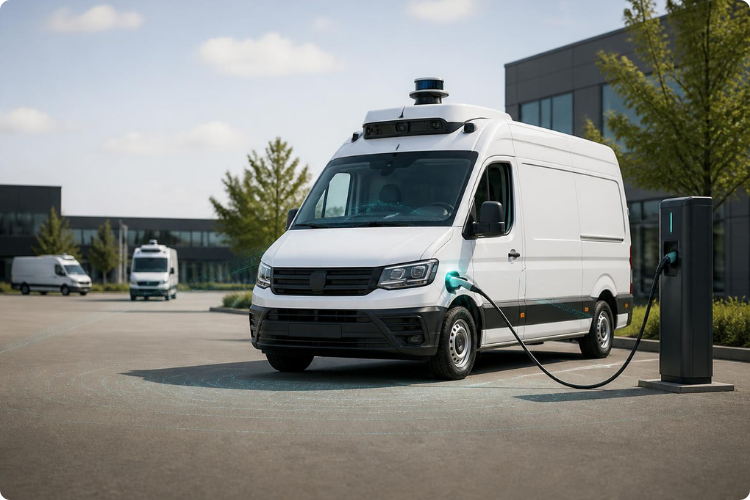
What Could This Mean For Electric Van Fleets?
The potential impact could be particularly interesting for businesses operating electric vans.
An electric van used for local deliveries, engineering work or other commercial applications may already have a demanding daily operating cycle. Adding increasingly sophisticated autonomous or driver assistance technology could introduce another source of electricity consumption.
At present, there is not enough real-world evidence to suggest that today’s advanced driver assistance systems have a major impact on the range of typical fleet vehicles.
However, future autonomous systems are likely to become considerably more capable.
As the technology develops, fleet managers may therefore need to look beyond the battery capacity and quoted range of an electric vehicle and consider the complete electrical demands of the vehicle.
Autonomous Driving Could Add Another Factor To Vehicle Selection
Traditionally, businesses choosing an electric vehicle have primarily considered factors such as battery size, charging speed, range, payload and the type of work the vehicle will undertake. These considerations are also becoming increasingly important as part of fleet lifecycle management.
As autonomous technology develops, energy consumption from onboard technology could become another consideration.
An electric vehicle’s battery effectively has to supply power to three broad areas:
- Propulsion – the electricity required to move the vehicle.
- Climate control and auxiliary systems – including heating and air conditioning.
- Autonomous and driver assistance technology – including sensors, cameras, computing hardware and communications systems.
The balance between these demands could vary considerably depending on the vehicle and the level of automation being used.
For fleet operators, understanding how these systems affect energy consumption could become increasingly important when comparing different electric vehicles.
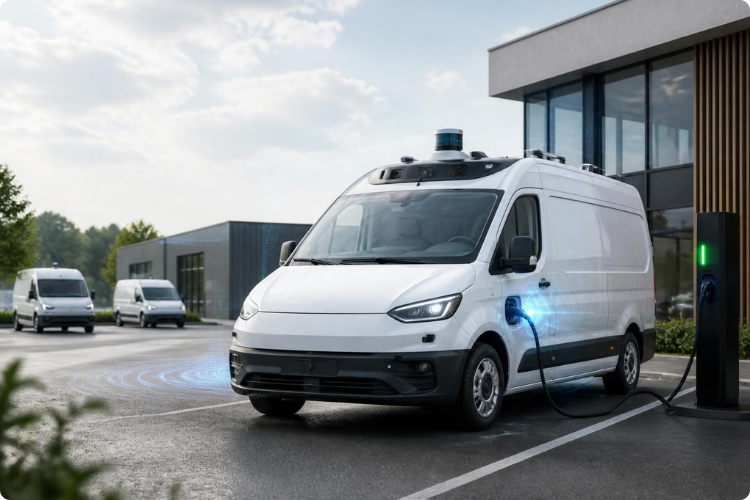
Will Autonomous Vehicles Need More Frequent Charging?
Potentially, although the extent of the impact will depend heavily on how autonomous technology develops.
Future vehicles could use more efficient sensors and processors, while manufacturers may also develop software specifically designed to minimise energy consumption.
Battery technology is also continuing to improve, potentially helping manufacturers offset some of the additional electrical demand created by autonomous systems.
However, if autonomous vehicles require substantially more electricity to operate their technology, fleets may need to consider whether vehicles require more frequent charging than an equivalent conventional EV.
For businesses running large fleets, this could have wider implications for EV charging infrastructure, particularly where vehicles need to be charged during the working day or between shifts.
A vehicle that needs to return to base for charging more frequently could affect driver schedules, vehicle availability and operational efficiency. Businesses may therefore need to consider charging capacity alongside the vehicles themselves.
What About Advanced Driver Assistance Systems?
The same principle could eventually apply to advanced driver assistance systems (ADAS).
Many modern cars and vans already feature technologies such as adaptive cruise control, lane-keeping assistance, automatic emergency braking and parking assistance.
These systems generally do not create the same level of electrical demand as a fully autonomous vehicle because they require considerably less computing and sensing capability.
However, as ADAS becomes more sophisticated, vehicles could increasingly rely on additional cameras, radar, lidar and processing power.
That means energy consumption could become a more relevant consideration even before fully autonomous vehicles become commonplace.
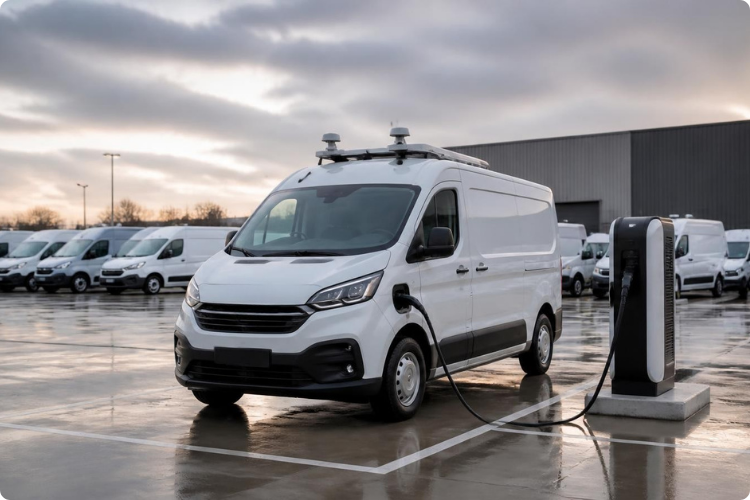
Autonomous Vehicles Remain A Developing Technology
It is important to remember that much of the available research into autonomous vehicle energy consumption is based on highly advanced prototype vehicles.
Robotaxis are among the most technologically complex autonomous vehicles currently being tested, so their energy requirements should not automatically be applied to today’s electric cars and vans.
There are also still significant unknowns surrounding the practical operation of autonomous fleets, including maintenance, reliability, charging requirements, vehicle downtime and how autonomous vehicles will be managed within existing fleet operations.
Real-world trials will provide valuable information as autonomous technology develops.
The UK’s ongoing autonomous vehicle trials could therefore offer an important insight into how these vehicles perform outside controlled testing environments, particularly as Waymo’s self-driving technology begins to attract greater attention in the UK.
 Call our expert team on
  Drop us a message