For many businesses, the monthly cost of acquiring a van is one of the first things considered when choosing a new vehicle. However, the monthly lease or finance payment is only one part of the overall cost of running a commercial vehicle.
Fuel, insurance, servicing, tyres, vehicle tax, repairs and downtime can all add significantly to the cost of operating a van throughout its working life. Choosing a vehicle based purely on its headline monthly payment can therefore give businesses an incomplete picture of what their van will actually cost.
As businesses plan their budgets for 2027, understanding the true cost of running a van can help with vehicle selection, cash-flow planning and long-term fleet management.
What Is The True Cost Of Running A Van?
The true cost of running a van is made up of all the expenses associated with acquiring, operating and maintaining the vehicle.
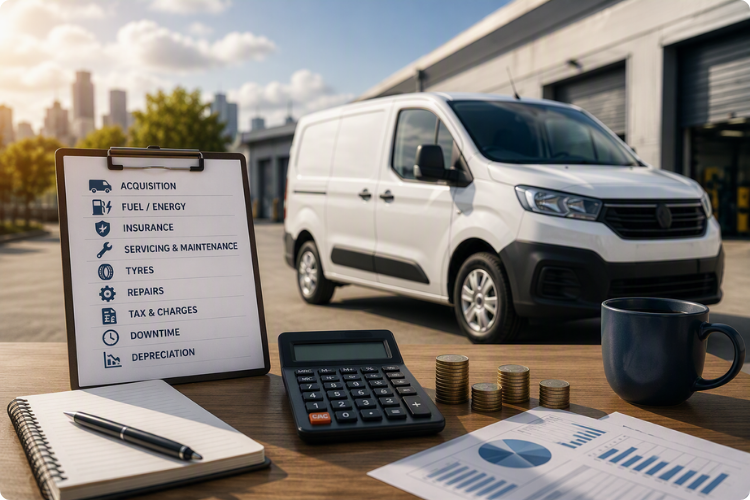
These can include:
- The monthly lease or finance payment
- Fuel or charging costs
- Insurance
- Servicing and maintenance
- Tyres and other consumables
- Vehicle tax
- Repairs and unexpected expenses
- Downtime and lost productivity
- Depreciation where the vehicle is purchased
The balance between these costs will vary depending on the type of van, annual mileage, how the vehicle is used and whether it is purchased, financed or leased.
This means that the cheapest van to acquire is not necessarily the cheapest van to operate.
1. The Cost Of Acquiring A Van
The first cost businesses usually consider is how much it will cost to acquire the vehicle.
For a leased van, this will typically include an initial rental followed by regular monthly payments. For a financed or purchased vehicle, businesses may instead have to consider a deposit, finance payments or the full purchase price.
The specification of the vehicle can also affect the cost.
A business may need a larger van, automatic transmission, additional safety equipment, specialist storage or a conversion such as a tipper, dropside or refrigerated body. These requirements can increase the initial cost but may be essential for the vehicle to perform its intended role.
Businesses should therefore consider what the van needs to do, rather than simply choosing the cheapest vehicle available.
Mileage Matters Too
When leasing a van, the agreed annual mileage is particularly important.
A contract based on an unrealistic mileage allowance can result in additional charges if the vehicle exceeds the agreed mileage. Businesses should therefore estimate their expected annual mileage as accurately as possible before entering into a contract.
2. Fuel And Charging Costs
Fuel can be one of the largest ongoing expenses associated with running a van.
For diesel and petrol vans, the cost will depend on fuel prices, annual mileage, vehicle efficiency, driving conditions and how the van is loaded.
A van making frequent short journeys through urban areas may achieve significantly different real-world fuel economy from one spending most of its time travelling on motorways.
Electric vans introduce a different cost structure.
Instead of purchasing fuel, businesses need to consider the cost of electricity and how and where the vehicle will be charged. Charging at a business premises can provide a different cost per mile from relying heavily on public charging infrastructure.
The important point is that businesses should consider energy cost per mile, rather than simply comparing the advertised fuel economy or electric range of different vehicles.
3. Insurance Costs
Commercial vehicle insurance is another unavoidable operating expense.
Premiums can vary depending on factors including:
- The vehicle itself
- The business and its industry
- Driver history
- Annual mileage
- Where the vehicle is kept
- How the vehicle is used
- The level of cover required
- The number of vehicles within a fleet
Businesses operating specialist or high-value vehicles may also have different insurance requirements.
Insurance should therefore be included when calculating the annual cost of operating a van rather than treated as a separate business expense.
4. Servicing And Routine Maintenance
Every van requires regular maintenance.
This can include scheduled servicing, replacement filters, fluids, brake components and other routine maintenance items.
Following the manufacturer’s servicing schedule is important for maintaining the vehicle and identifying potential problems before they develop into more expensive failures.
For businesses, maintenance also has an operational benefit.
A properly maintained van is less likely to suffer unexpected problems that could take it off the road and disrupt the working day.
Some businesses may choose a maintenance package alongside their vehicle lease. Understanding the difference between maintenance and warranty cover can also help businesses budget more accurately for vehicle ownership and operation. While a maintenance package adds to the regular cost, it can make budgeting easier by reducing the risk of unexpected maintenance bills.
5. Tyres, Brakes And Other Consumables
Tyres are another cost that businesses can easily overlook when calculating the cost of running a van.
Commercial vehicles can cover significant annual mileage and may regularly carry heavy loads. This can contribute to tyre wear, particularly when vehicles are used intensively.
Other consumable items can include:
- Brake pads and discs
- Windscreen wipers
- AdBlue where applicable
- Engine oil and other fluids
- Replacement bulbs
- Batteries
These may seem like relatively small expenses individually, but over several years they can become a significant part of the overall running cost.
Regular checks and preventative maintenance can also help businesses identify problems before they become more expensive.
6. Vehicle Tax And Other Charges
Businesses also need to account for the costs associated with keeping a van legally on the road.
Vehicle Excise Duty is one consideration, while some businesses may also face additional charges depending on where and how their vans operate.
For example, businesses working in urban areas may need to consider clean air or other local road-user charges where applicable.
The location and type of work undertaken by a business can therefore influence the true cost of operating a van.
7. Downtime Can Be One Of The Biggest Costs
One of the most overlooked costs associated with commercial vehicles is downtime.
If a van is unavailable because it requires repairs, servicing or accident damage, the cost to a business can extend far beyond the repair bill.
A vehicle that cannot work could mean:
- Missed appointments
- Delayed deliveries
- Cancelled jobs
- Lost revenue
- Additional transport costs
- Employee downtime
- The need to hire a replacement vehicle
For a tradesperson, engineer or delivery business, a van is often an essential working tool rather than simply a means of transport.
This makes reliability and preventative maintenance important considerations when assessing the overall cost of a vehicle.
8. Depreciation And Residual Value
For businesses purchasing vehicles outright, depreciation can represent a substantial cost.
A vehicle normally loses value over time, and the difference between what a business paid for the van and what it can eventually sell it for represents a real cost of ownership.
This is one reason why the financial comparison between purchasing and leasing can be more complicated than simply comparing monthly payments.
Leasing can provide greater certainty around monthly costs and allows a business to replace vehicles at the end of the contract without having to sell the vehicle itself.
For businesses considering buying, however, residual value should be included when calculating the overall cost of ownership.
9. The Cost Of Choosing The Wrong Van
The cheapest van on paper can become an expensive choice if it isn’t suitable for the job.
A business that regularly carries more equipment than the vehicle can comfortably accommodate may need additional journeys. A van with insufficient payload may not be appropriate for heavier loads, while a business that requires specialist equipment may need a conversion.
Choosing a vehicle that doesn’t match the business’s requirements can lead to:
- Increased fuel or energy consumption
- More journeys
- Reduced productivity
- Excessive vehicle wear
- Additional equipment costs
- Premature vehicle replacement
Getting the specification right from the beginning can therefore be an important part of controlling long-term operating costs.
10. How Businesses Can Reduce Van Running Costs
There is no single way to minimise the cost of running a commercial vehicle. Instead, businesses should look at the entire cost of operation.
Choose The Right Vehicle
The most efficient vehicle is not necessarily the smallest or cheapest.
Businesses should consider the required load space, payload, mileage, passenger requirements and typical driving conditions before choosing a van.
Maintain Vehicles Properly
Keeping up with servicing and routine maintenance can help reduce the likelihood of expensive mechanical problems and unnecessary downtime.
Monitor Mileage And Fuel Consumption
Businesses can monitor mileage and fuel or electricity usage to identify vehicles or driving patterns that are costing more than expected.
Look After Tyres
Correct tyre pressures, regular inspections and timely replacement can help businesses manage tyre costs while also supporting vehicle safety.
Consider Maintenance Packages
For businesses that want greater certainty over monthly expenditure, a maintenance package can help spread the cost of routine servicing and eligible repairs.
Review Fleet Utilisation
Businesses with multiple vehicles should regularly assess how their vans are being used. A vehicle that spends much of its time unused may represent an unnecessary cost, while an overworked van could be contributing to excessive mileage, maintenance requirements and downtime.
11. How Much Does It Really Cost To Run A Van?
There is no single figure that applies to every business.
Consider two businesses running identical vans.
One might cover 8,000 miles a year, operate mainly from a single premises and carry relatively light loads. Another could cover 25,000 miles annually, spend most of its time in urban traffic and regularly carry heavy equipment.
Although they operate the same vehicle, their annual running costs could be dramatically different.
For this reason, businesses should calculate their own expected total cost of operation rather than relying solely on the vehicle’s advertised monthly payment.
A simple calculation could include:
Annual vehicle cost + fuel/charging + insurance + maintenance + tyres + tax + other operating costs = estimated annual running cost
Dividing this figure by 12 can then provide an approximate monthly operating cost.
This gives businesses a much more realistic view of what their vehicle is costing them.
Buying, Financing Or Leasing: Which Is Cheapest?
There is no universal answer to which option is cheapest, as the overall cost will depend on how the vehicle is acquired, how long it is kept and how it is used.
Buying or leasing a van gives a business different financial considerations. Buying provides ownership of the vehicle, but the business also has to account for depreciation and the eventual cost of replacing it.
Finance can spread the cost of acquisition while allowing the business to own the vehicle once the relevant agreement has been completed.
Leasing can provide predictable monthly payments and allow businesses to replace vehicles regularly, potentially reducing concerns around resale and depreciation.
The right option depends on the business’s cash flow, mileage, vehicle requirements and approach to fleet management.
Rather than focusing solely on the monthly payment, businesses should consider the total cost over the period they expect to operate the vehicle.
The Importance Of Total Cost Of Ownership
The true cost of ownership should also be considered as part of a wider vehicle strategy, particularly for businesses operating multiple vehicles. A one-stop fleet solution can help simplify vehicle acquisition, maintenance, replacement planning and long-term cost management.
For businesses managing more than one vehicle, taking a broader approach to total cost of ownership can help reduce administrative burdens and improve control over overall operating costs. The most cost-effective vehicle is not necessarily the one with the lowest purchase price or monthly payment, but the one that provides the right combination of price, practicality, reliability, efficiency and suitability for the job.
 Call our expert team on