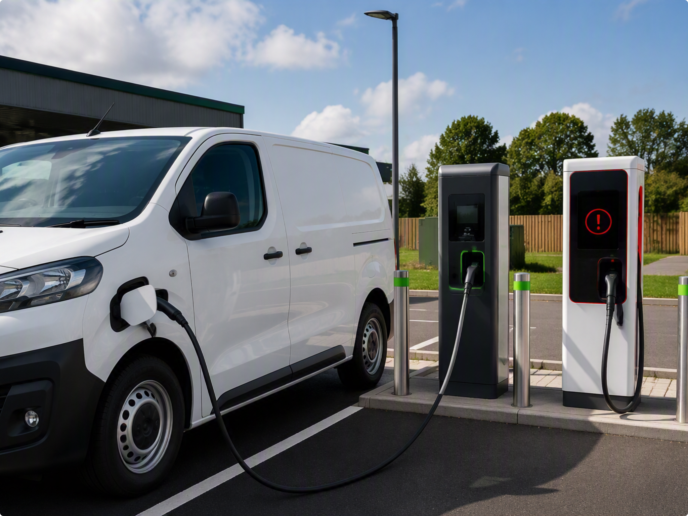
Significant differences in the reliability and monitoring of public EV charging infrastructure have been highlighted by new research, raising questions about how easily electric vehicle drivers can rely on public chargers when travelling.
A Freedom of Information investigation by Close Brothers Motor Finance has found considerable differences in how public charging infrastructure is monitored across English county councils.
While some councils closely monitor charger performance and can respond quickly when faults occur, others do not hold operational reliability data because their charging networks are managed by private chargepoint operators.
For businesses considering an electric van through leasing, the findings highlight an important consideration when moving to electric: choosing the right vehicle is only part of the decision. Businesses also need to think carefully about how and where that vehicle will be charged.
Significant Differences In EV Charger Reliability
The research, which gathered Freedom of Information responses from 17 English county councils, found a wide variation in the way public charging infrastructure is monitored and maintained.
Northumberland County Council, for example, monitors all 487 of its public chargers every hour using a digital management platform. It reported 97% uptime across its rapid charging network.
Surrey County Council also monitors its charging infrastructure, with 411 charging sockets and reported downtime of less than 3%.
Elsewhere, however, the picture was very different.
Hampshire County Council reported that 39 of its 157 public chargers were unavailable. That equates to almost a quarter of its network, although 27 of those chargers had deliberately been switched off because of low utilisation.
Leicestershire County Council also reported that 10 of its 53 charging sockets had been permanently removed from service.
The findings suggest that the experience of using public charging infrastructure can vary considerably depending on where a driver is travelling.
Some Councils Do Not Hold Charger Reliability Data
One of the more notable findings from the investigation was not simply the differences in charger performance, but the differences in the data available to local authorities.
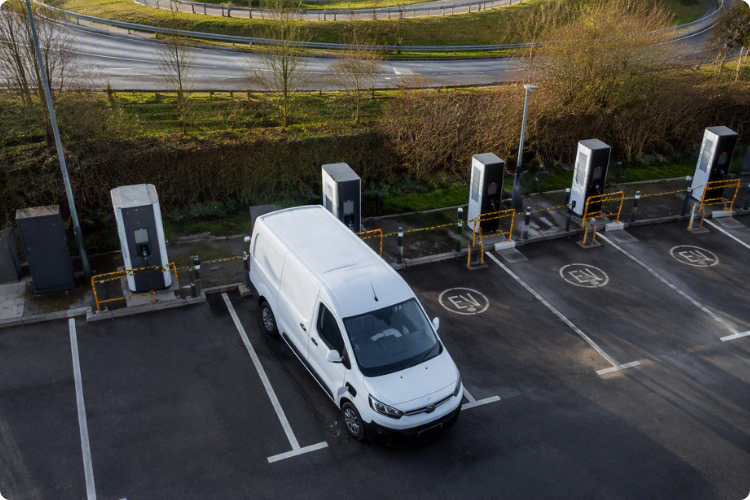
Lancashire, West Sussex, Nottinghamshire and Essex councils all said they did not hold operational fault or reliability data for their public charging infrastructure because networks were being managed by third-party operators.
West Sussex County Council said operational data belonged to Connected Kerb and was therefore not information held by the authority.
This creates a potential problem for drivers and businesses.
If a local authority does not have access to information about how often chargers are working, it can be difficult to build a consistent picture of charging reliability across different areas.
For an electric van operator, this can be particularly important.
A private driver who arrives at a faulty charger may simply find another location. For a business driver with a full day’s schedule, a failed charging stop could potentially result in delays, additional mileage and disruption to planned work.
More Than Half Of Drivers Say They Never Use Public Chargers
The research also looked at attitudes towards public charging.
More than half of the EV drivers surveyed – 52% – said they never use public charging points.
Cost was one of the concerns, with 13% saying public charging was too expensive or that pricing was unclear.
A further 10% said chargers were often busy or unavailable, while 8% cited unreliable or frequently out-of-service charging points.
Safety was also a consideration, with concerns including poorly lit locations and leaving vehicles unattended while charging.
The figures highlight an important distinction when discussing electric vehicle charging.
The issue is not simply how many chargers exist.
For drivers and businesses, the quality of the charging experience can also depend on whether a charger is working, available, conveniently located and reasonably priced.
What Does This Mean For Electric Van Leasing?
For businesses looking at electric van leasing, the findings shouldn’t necessarily be viewed as a reason to avoid electric vehicles.
Instead, they reinforce the importance of matching an electric van to the way a business actually operates.
Electric vans have become increasingly capable, with a growing choice of models available across different sizes and applications.
However, businesses should consider their typical daily mileage, routes, payload requirements and charging arrangements before choosing a vehicle.
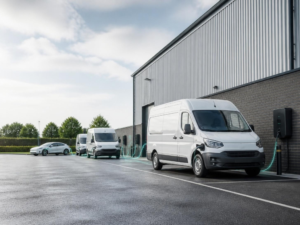
For some businesses, most charging may be carried out overnight at a depot or business premises.
For others, home charging could provide the majority of their energy requirements, with public rapid chargers used occasionally for longer journeys.
Businesses covering significant distances every day may have a greater reliance on the public charging network, making charger availability and location more important when assessing whether an electric van is suitable.
This means there is no single charging strategy that will work for every business.
Home And Depot Charging Can Reduce Reliance On Public Chargers
One of the advantages of running an electric van for a business is the ability to establish a predictable charging routine.
Where suitable facilities are available, charging overnight at a business premises can mean starting each working day with a known level of charge.
For businesses operating several electric vans, installing workplace charging infrastructure can also provide greater control over when and where vehicles are charged.
This can reduce reliance on public chargers for everyday operations, although public charging can still provide an important backup for longer journeys and unexpected additional mileage.
For businesses considering an electric van lease, assessing the available charging infrastructure should therefore form part of the decision-making process before selecting a vehicle.
Public Charging Still Has An Important Role To Play
The findings do not mean that public charging infrastructure is unsuitable for electric vans.
Far from it.
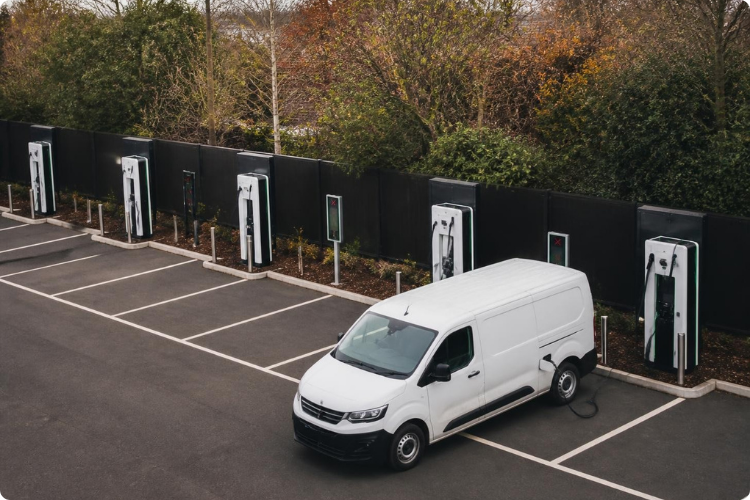
Public rapid charging can be particularly useful for businesses undertaking longer journeys or operating outside their normal area.
The issue highlighted by the research is that reliability and consistency matter.
A charging network can continue to expand while drivers still experience problems with individual chargepoints.
For businesses, this makes route planning and having alternative charging options increasingly important.
An electric van may have more than enough range for the majority of a company’s normal daily journeys, but occasional longer trips can introduce a greater dependence on public infrastructure.
Having a backup charging location or planning routes around suitable rapid charging sites can help reduce the potential impact of a charger being unavailable.
Electric Van Leasing Requires More Than Looking At Range
Range is understandably one of the first things businesses consider when choosing an electric van.
However, range alone doesn’t tell the whole story.
Businesses should also consider:
- Typical daily mileage
- Where the van will be parked overnight
- Whether workplace charging is available
- Access to home charging where appropriate
- The location of public charging points along regular routes
- The availability of rapid charging
- Payload and load requirements
- How the van will be used throughout the working day
- Whether alternative charging locations are available
These factors can help businesses determine whether an electric van is suitable for their particular operation.
The right electric van can work extremely well for many businesses, particularly where daily mileage is predictable and charging can be incorporated into the normal working routine.
Does Charger Reliability Make Electric Vans A Risky Choice?
The latest research highlights genuine issues with public charging infrastructure, but it would be misleading to suggest that charger reliability makes electric vans unsuitable for businesses.
Instead, it demonstrates why charging should be considered as part of the overall vehicle selection process.
Businesses already consider factors such as payload, load space, fuel costs, insurance, maintenance and vehicle downtime when choosing commercial vehicles.
Charging requirements should be treated in the same way.
For a business with predictable local routes and access to overnight charging, reliance on public infrastructure may be relatively low.
For a business whose vans regularly travel long distances, public charging availability may be much more important.
Understanding that difference can help businesses choose an electric van and leasing arrangement that better fits their operational requirements.
The Charging Network Needs To Become More Consistent
The findings from Close Brothers Motor Finance ultimately highlight an issue that goes beyond individual drivers.
The UK’s transition towards electric vehicles depends not only on increasing the number of chargepoints but also on creating a charging network that motorists and businesses can confidently use.
The fact that some councils monitor their networks closely while others do not hold operational reliability data demonstrates that there is still room for greater consistency.
For electric van operators, confidence is particularly important.
A commercial vehicle is there to keep a business moving. Charging should therefore be something that can be planned into the working day rather than an unpredictable source of delays.
Improving reliability, transparency and monitoring across the public charging network could help strengthen confidence in electric vehicles as more businesses consider making the switch.
What Should Businesses Consider Before Leasing An Electric Van?
Businesses shouldn’t simply ask how far an electric van can travel on a single charge.
A better question is:
How does the vehicle fit into our entire working day?
Understanding daily mileage, routes, parking arrangements and charging availability can provide a much clearer picture of whether an electric van will work for the business.
For businesses that can charge overnight at home or at their premises, public charging reliability may have less impact on everyday operations.
The current market includes vehicles such as:
- Kia PV5 Cargo
- Kia PV5 Passenger
- Ford E-Transit
- Ford E-Transit Custom
- Mercedes-Benz eSprinter
- Mercedes-Benz eVito
- Volkswagen ID. Buzz Cargo
- Renault Kangoo E-Tech
- Peugeot e-Partner
- Vauxhall Vivaro Electric
- Toyota Proace Electric
- Maxus eDELIVER range
For businesses undertaking longer journeys, however, access to dependable public charging should form part of the vehicle selection and route-planning process.
This is where taking advice before choosing a vehicle can be particularly valuable.
 Call our expert team on