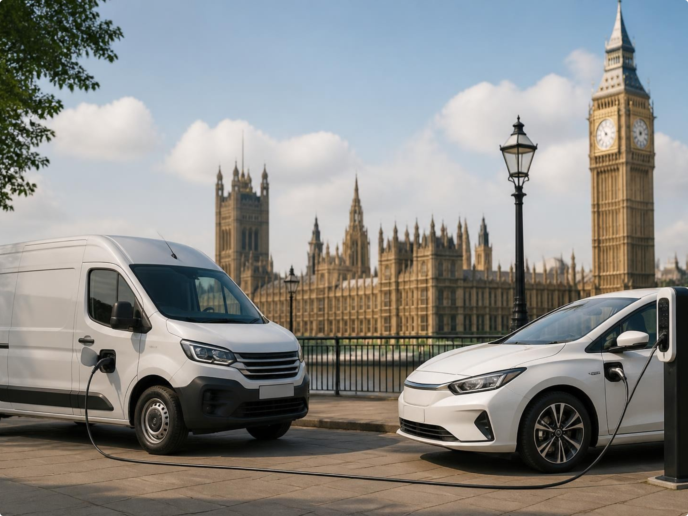
The Government has launched an early review of the UK’s Zero Emission Vehicle (ZEV) Mandate, raising the possibility of changes to the annual targets manufacturers must meet for electric car and van sales.
The review could result in greater flexibility for manufacturers as the automotive industry continues to deal with changing consumer demand, supply chain pressures and wider economic uncertainty.
However, the Government has made clear that the long-term destination has not changed. New petrol and diesel cars are still due to be phased out from 2030, while all new cars and vans are expected to be zero-emission by 2035.
The consultation was launched on 14 August 2026, a year earlier than the Government’s previously planned review. It will consider whether the existing annual targets remain appropriate and whether changes are needed to support the UK’s transition while maintaining investment and competitiveness within the automotive industry.
What Is The ZEV Mandate?
The ZEV Mandate sets minimum annual targets for the proportion of new cars and vans manufacturers must sell as zero-emission vehicles.
The required percentage increases each year as the UK moves towards the planned end of new petrol and diesel vehicle sales.
Manufacturers have access to a number of flexibilities within the system, but the Government is now assessing whether the existing framework remains suitable given the changing conditions in the automotive market.
For fleet operators, the outcome could influence the pace at which manufacturers introduce electric models, as well as the availability and choice of different powertrains over the coming years.
Government Brings Forward ZEV Mandate Review
The review was originally expected to take place in 2027, but the Government has brought it forward in response to changes within the automotive sector.
It comes after increasing pressure from parts of the industry for the ZEV Mandate to be adjusted, with manufacturers and unions warning about the potential impact of the current rules on investment, jobs and competitiveness.
The Society of Motor Manufacturers and Traders (SMMT) has argued that the market conditions that existed when the ZEV Mandate was introduced have changed considerably.
The organisation says manufacturers remain committed to electrification but believes the transition needs to reflect current levels of consumer demand and wider economic conditions.
There is also opposition to any significant reduction in the pace of electrification.
Charging industry representatives and other organisations have warned that weakening the mandate could undermine investor confidence and slow the development of the infrastructure needed to support electric vehicle adoption.
EV Demand Continues To Increase
The review comes at an interesting point for the UK electric vehicle market, with EV registrations continuing to grow.
Government figures show that electric cars accounted for more than one in four new car registrations in July, while EV sales were 45% higher than in July 2025.
More than two million electric vehicles are now registered on UK roads, demonstrating the continued expansion of the market.
The Government also points to the introduction of the Electric Car Grant as another factor supporting adoption. The scheme provides eligible buyers with up to £3,750 towards the purchase of a new electric car and has reportedly helped more than 160,000 drivers make the switch.
Increasing numbers of electric models are also giving consumers and businesses greater choice, with the Government arguing that EVs are becoming increasingly competitive with equivalent petrol and diesel vehicles.
For company car users, the continued expansion of the electric market is particularly significant because of the comparatively low Benefit-in-Kind tax rates available for zero-emission vehicles.
Industry Divided Over Potential Changes
The consultation has prompted different responses from organisations involved in the UK’s transition to electric vehicles, with previous calls to protect the UK’s Zero Emission Vehicle Mandate highlighting concerns about the potential impact of changing the current framework.
The SMMT has welcomed the review, arguing that the industry needs a commercially sustainable route towards electrification that protects investment, employment and the competitiveness of UK automotive manufacturing.
The charging sector, however, has raised concerns about any move to weaken the existing targets.
ChargeUK has argued that maintaining a clear regulatory framework is important for attracting investment into charging infrastructure. It estimates that wider transport electrification could ultimately support 334,000 jobs and generate £385 billion in economic value for the UK.
New polling commissioned by ChargeUK also found that only 37% of the public supported slowing the transition to electric vehicles. Among people who voted Labour at the 2024 general election, the figure was lower at 21%.
The British Vehicle Rental and Leasing Association (BVRLA) has also welcomed the opportunity to review the policy, while stressing the important role that leasing and rental businesses are already playing in the transition.
According to the BVRLA, its members have invested more than £36 billion in 750,000 electric vehicles.
There are therefore differing views over how quickly the UK should progress towards its zero-emission targets, with some organisations calling for greater flexibility while others believe maintaining clear targets is essential for investment.
What Could The Review Mean For UK Fleets?
For businesses operating cars and vans, any changes to the ZEV Mandate could have implications beyond the headline sales targets and the wider fleet electrification strategy.
Manufacturers use regulatory requirements to help determine their future product strategies. Changes to the annual trajectory could therefore influence which models manufacturers prioritise and how quickly different electric powertrains are introduced.
For fleet managers, this could affect:
- The availability of electric cars and vans
- The range of models offered by manufacturers
- The balance between petrol, diesel, hybrid and electric powertrains
- Vehicle replacement planning
- Charging infrastructure requirements
- The timing of future fleet electrification decisions
However, businesses should not interpret the review as a reversal of the UK’s move towards electric vehicles.
The Government has confirmed that the 2030 phase-out of new petrol and diesel cars remains in place, while the longer-term objective remains for all new cars and vans to be zero-emission by 2035.
The review is therefore more likely to affect the pace and flexibility of the transition rather than its overall direction. For businesses considering their next company car or commercial vehicle, electric vehicle leasing is likely to become an increasingly important part of longer-term fleet planning.
Charging Infrastructure Remains A Key Issue
The availability of suitable EV charging infrastructure will remain particularly important as more businesses move towards electric vehicles.
The Government says there are now approximately 120,000 public charge points across the UK, alongside more than one million home and workplace chargers.
A further £600 million is being committed to expanding the charging network, in addition to £400 million already being used to deliver more than 100,000 additional public charge points.
For commercial vehicle operators, infrastructure is especially important.
Many vans are used intensively, cover high annual mileage or operate from locations where overnight home charging is not possible. Businesses therefore need to consider not only the vehicle itself but also where and how it will be charged.
For some operators, workplace charging could become an increasingly important part of their fleet strategy, particularly where several electric vans return to the same depot each day.
Current ZEV Targets For Cars And Vans
The existing ZEV framework requires manufacturers to increase the proportion of zero-emission vehicles they sell each year.
The current targets are:
Car ZEV Targets
- 2026: 33%
- 2027: 38%
- 2028: 52%
- 2029: 66%
- 2030: 80%
- 2035: 100%
Van ZEV Targets
- 2026: 24%
- 2027: 34%
- 2028: 46%
- 2029: 58%
- 2030: 70%
- 2035: 100%
These targets are now being examined as part of the Government consultation, meaning the annual pathway could potentially be changed.
When Will The ZEV Mandate Review End?
The Government’s consultation is open to manufacturers, suppliers, dealers, charging companies, consumers, communities and other interested parties.
Responses can be submitted until 23 October 2026.
The Government has said it wants to provide greater certainty on the outcome as quickly as possible once the consultation process has concluded.
Until then, businesses should continue to plan around the existing transition rather than assuming that the current targets will be relaxed.
 Call our expert team on