As more businesses switch to electric vans and electric cars, one question is asked time and time again:
Should you charge your EV battery to 100% every time?
The simple answer is not usually.
While modern lithium-ion batteries are designed to safely reach a full charge, regularly charging to 100% can accelerate battery ageing over the long term. Most manufacturers recommend limiting daily charging to around 80–90% unless you need the additional driving range.
Understanding how lithium-ion batteries work can help businesses maximise battery lifespan, maintain performance and reduce long-term running costs.
How Lithium-Ion EV Batteries Work
Almost every modern electric vehicle uses a lithium-ion battery pack. These batteries store electricity through chemical reactions between their cells.
Each time the battery charges and discharges, tiny amounts of chemical wear occur. This is completely normal and is why all batteries gradually lose capacity over many years.
However, the higher the battery’s state of charge, the greater the internal voltage, which increases chemical stress within the battery cells.
This doesn’t mean charging to 100% is dangerous—it simply means doing it every day may slightly increase battery degradation over time.

Is Charging to 100% Bad for an EV Battery?
Not exactly.
Manufacturers have sophisticated battery management systems that protect the battery from damage. Charging to 100% occasionally will not harm your vehicle.
However, consistently keeping the battery at maximum charge places the cells under more stress than keeping them at lower charge levels.
Over several years, this can contribute to:
- Faster battery capacity loss
- Slightly reduced driving range over time
- Increased chemical ageing
- Higher heat generation during charging
For this reason, many manufacturers recommend limiting routine charging.
What Is the Best Charging Percentage?
For everyday driving, most experts recommend keeping the battery between:
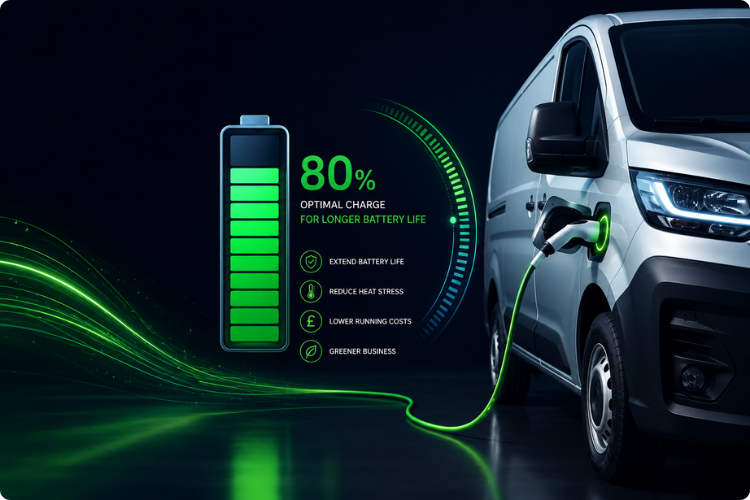
- 20% and 80% (ideal)
- 20% and 90% (also perfectly acceptable)
This range reduces voltage stress while still providing plenty of usable range for most journeys.
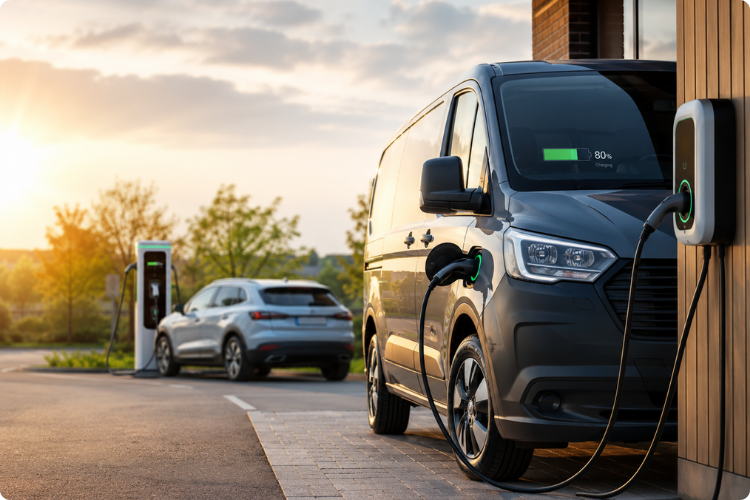
Many electric vehicles allow owners to set a charging limit directly within the infotainment system or mobile app.
Once the chosen limit is reached, charging automatically stops.
When Should You Charge to 100%?
Charging to full isn’t something to avoid completely.
There are several occasions when a full charge makes perfect sense.
Before Long Journeys
If you’re travelling long distances or won’t have convenient access to charging, charging to 100% ensures maximum range.
This is exactly what manufacturers expect owners to do.
Before Heavy Business Use
Commercial fleets may require the maximum possible driving range during busy working days.
Examples include:
- Multi-drop delivery routes
- Mobile engineers
- Regional sales teams
- Couriers
- Long-distance transport operators
In these situations, charging to 100% is entirely appropriate.
Occasionally for Battery Calibration
Some manufacturers recommend occasional full charges to help the battery management system accurately estimate the remaining range.
This doesn’t improve battery health but can improve range accuracy displayed on the dashboard.
Always follow the guidance provided in your vehicle’s handbook.
Does Charging to 100% Void Your EV Warranty?
No. Charging your electric vehicle to 100% will not void your manufacturer’s warranty, provided you use the vehicle as intended and follow the guidance set out in the owner’s handbook.
Modern EVs are equipped with sophisticated battery management systems that are designed to protect the battery during both charging and driving. Manufacturers understand that there will be occasions when owners need the maximum possible driving range, such as before long journeys, and their vehicles are engineered to accommodate this.
In fact, many manufacturers recommend charging to 80–90% for everyday driving, while advising that charging to 100% is perfectly acceptable when extra range is required. Some models even allow drivers to set a daily charging limit through the vehicle’s infotainment system or smartphone app, making it easy to balance convenience with long-term battery health.
Battery warranties typically cover the battery against excessive degradation for a set period—often 8 years or 100,000 miles, although this varies by manufacturer. Following the recommended charging practices can help preserve battery capacity over the lifetime of the vehicle, but occasional full charges are considered normal use and are not a cause for concern.
As always, it’s best to follow the charging recommendations provided by your vehicle manufacturer, as guidance can vary slightly between different makes and models.
Does Charging Speed Affect Battery Health?
Charging speed also plays a role in long-term battery care.
Slow AC Charging
Charging at home or the workplace using an AC charger is generally considered the gentlest method.
Benefits include:
- Lower battery temperatures
- Reduced stress on battery cells
- Improved long-term battery longevity
- Ideal for overnight home or workplace charging
For most business users, overnight workplace or home charging is the best routine.
Rapid DC Charging
Rapid chargers are incredibly convenient but generate more heat because they deliver significantly higher power.
Occasional rapid charging is absolutely fine.
However, relying on rapid charging every day may contribute to slightly faster battery degradation over many years compared with predominantly AC charging.
Many modern EVs actively cool the battery during rapid charging to minimise this effect.
Typical EV Charging Times
Charging time depends on three main factors:
- Battery size
- Charger power
- Maximum charging speed accepted by the vehicle
Here’s a general guide:
| Charger Type | Power Output | Typical Charging Time |
|---|---|---|
| 3-pin household socket | 2.3kW | 20–35 hours |
| Home wallbox | 7kW | 6–12 hours |
| Workplace charger | 11–22kW* | 3–8 hours |
| Rapid charger | 50kW | Around 45–90 minutes (10–80%) |
| Ultra-rapid charger | 100–350kW | Around 20–40 minutes (10–80%) |
*Actual charging speed depends on the vehicle’s onboard AC charger.
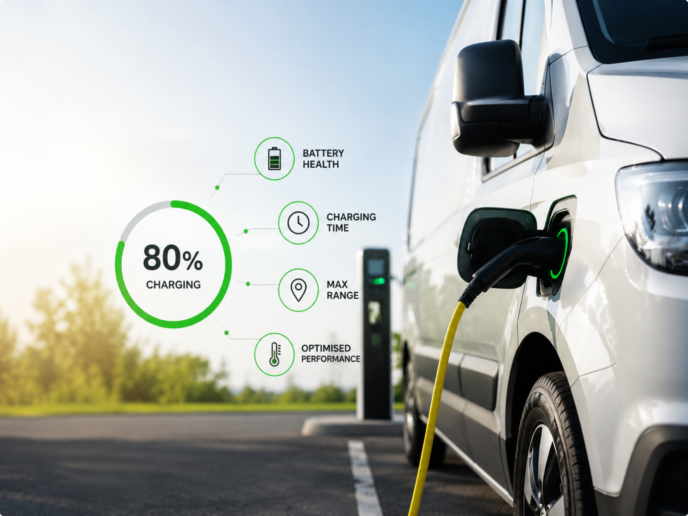
It’s worth noting that DC rapid charging is fastest between approximately 10% and 80%. Above 80%, the charging speed typically slows significantly to protect the battery.
Why Does Charging Slow Down After 80%?
Many new EV owners notice rapid charging slows dramatically after reaching around 80%.
This is completely normal.
As the battery fills, the vehicle reduces charging power to:
- Prevent the battery from overheating
- Reduce stress on battery cells
- Help maximise long-term battery lifespan
- Maintain safe charging performance
This is why charging from 10% to 80% often takes about the same amount of time as charging from 80% to 100%.
Does Temperature Affect Charging?
Yes.
Battery temperature has a significant impact on both charging speed and battery longevity.
Cold Weather
Cold batteries accept charge more slowly.
Many modern EVs automatically pre-condition the battery before arriving at a rapid charger to improve charging performance.
Hot Weather
High temperatures increase chemical ageing.
To help protect the battery:
- Park in the shade where possible.
- Avoid charging immediately after demanding driving if the battery is already very hot.
- Use scheduled charging during cooler overnight hours when practical.
Modern EVs include thermal management systems that actively regulate battery temperature during driving and charging.
What About Battery Health Features?
Most new electric vehicles include intelligent battery management software.
Common features include:
- Charge limit settings (typically 80–90%)
- Battery pre-conditioning
- Temperature management
- Scheduled charging
- Smart charging through mobile apps
These systems are designed to maximise battery lifespan while still providing convenient day-to-day use.
Best EV Charging Practices
To get the most from your electric vehicle battery:
- Charge to 80–90% for everyday driving.
- Charge to 100% only when you need the additional range.
- Avoid regularly allowing the battery to fall below 20%.
- Use AC charging whenever practical.
- Reserve rapid charging for longer journeys or when time is limited.
- Avoid charging in extremely hot conditions whenever possible.
- Use your vehicle’s built-in charge limit settings if available.
Continue Your Electric Vehicle Journey
If you’re considering switching to an electric van or company car, there’s plenty more to learn. We’ve created a range of expert guides covering EV ownership, charging, battery technology and the latest developments in electric commercial vehicles.
You may also find these guides useful:
- Government Confirms Special eVED Rules for Fleet, Leasing and Rental Companies Ahead of 2028 Rollout
Browse Our Latest Electric Vehicle Lease Deals
Looking for your next electric vehicle?
At Commercial Vehicle Contracts, we offer competitive leasing deals on the latest electric vans and company vehicles from leading manufacturers, including Ford, Mercedes-Benz, Volkswagen, Renault, Vauxhall, Peugeot, Citroën, Nissan, Maxus and many more.
Whether you’re adding a single electric van to your business or transitioning an entire fleet, our experienced team can help you find the right vehicle and lease package to suit your requirements.
Browse our latest Electric Vehicle Special Offers to compare the newest EV lease deals available for UK businesses.
Alternatively, call 01424 863 456 to speak with one of our leasing specialists and discuss your electric vehicle requirements.
 Call our expert team on