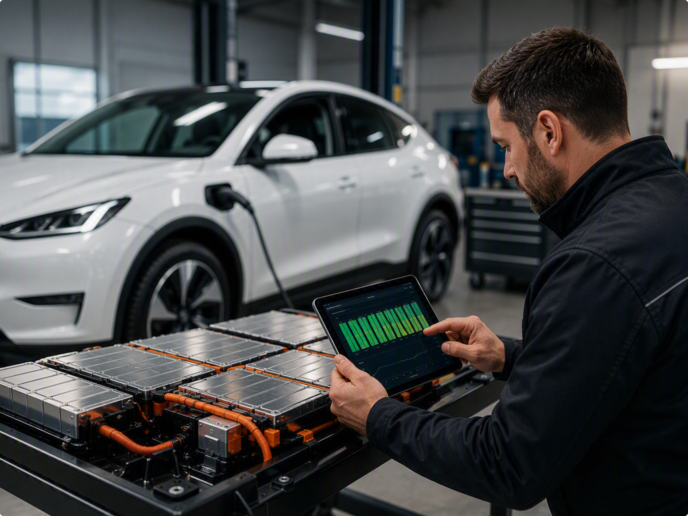
New analysis of around 10,000 UK EV battery tests has highlighted the importance of looking beyond headline battery health figures when assessing used electric vehicles.
Research from battery health specialist Generational suggests that around one in every 85 used electric vehicles tested showed a significant imbalance between individual battery cells.
The company analysed approximately 10,000 battery tests and found that the vast majority of vehicles had well-balanced battery packs. However, around one in 85 tests recorded a difference of more than 50 millivolts (mV) between the highest and lowest-voltage cells.
Around one in 200 tests showed a more serious difference of more than 100mV, which Generational said could indicate an underlying battery issue requiring further investigation.
The findings do not suggest that widespread battery failure is becoming a problem for used EVs. Instead, they highlight why checking the overall condition of a battery can sometimes tell only part of the story.

What Is Battery Cell Imbalance?
An EV battery pack is made up of numerous individual cells that work together to provide the energy needed to power the vehicle.
Ideally, those cells should remain closely matched in voltage. As batteries age, however, differences can develop between individual cells due to factors including natural degradation, temperature and charging behaviour.
Generational’s analysis found that the median used EV had a difference of just 8mV between its highest and lowest cell voltage, suggesting that most batteries were operating within a relatively narrow and healthy range.
The concern arises when the difference becomes significantly larger.
A battery can still show a strong overall State of Health (SoH) figure while an individual cell is beginning to behave differently from the rest of the pack. Generational says this is one reason why SoH testing and cell-level testing should be viewed as complementary rather than interchangeable assessments.
Why Does Cell Imbalance Matter?
The battery management system (BMS) has to protect the cells within the pack.
If one cell reaches its charging limit before the others, the vehicle may have to stop charging even though other cells still have additional capacity available. Equally, if one weaker cell reaches its lower voltage limit first during discharge, the system can restrict how much energy can be taken from the pack.
This means that a single underperforming cell can potentially affect the usable performance of the wider battery.
Depending on the severity of the issue, the consequences could include reduced available range, changes to charging performance or restrictions on how the battery can be used.
Cell imbalance can also be difficult to identify from behind the wheel.
A driver may not initially see a warning message or experience an obvious change in vehicle performance. By the time symptoms become noticeable, the underlying problem may have developed further.
A Good Battery Health Score Does Not Tell The Whole Story
One of the more reassuring findings from Generational’s wider Battery Performance Index is that EV batteries are generally performing well.
Its analysis of more than 8,000 battery assessments put average battery SoH at 95.15%.
That broadly supports the growing body of evidence that modern EV batteries are proving considerably more durable than some early concerns suggested.
For fleets, this is important.
The prospect of expensive battery replacement has often been cited as one of the major risks associated with electric vehicles. However, battery degradation is not the same thing as battery failure, and a vehicle showing some reduction in capacity can still have a perfectly serviceable battery.
Geotab’s analysis of more than 22,700 EVs similarly found that modern electric vehicle batteries are generally robust, although degradation varies according to factors including vehicle type, battery chemistry and usage patterns.
The emerging issue is therefore less about whether EV batteries are inherently unreliable and more about being able to accurately identify the condition of an individual battery.
Why This Matters For Used Electric Vehicles
Battery condition is becoming an increasingly important consideration as more electric vehicles enter the used market.
For a business buying a used EV, the battery represents one of the most valuable and important components of the vehicle. A standard vehicle inspection may identify obvious mechanical or cosmetic problems, but it does not necessarily provide the same level of information about the condition of individual battery cells.
That creates an additional consideration for businesses looking at used electric cars and vans.
A vehicle could have:
- Good overall battery State of Health
- Strong remaining capacity
- A clean service history
- No obvious dashboard warnings
…and still warrant further investigation if one or more cells are behaving differently from the rest of the pack.
For fleet operators, that makes independent battery testing potentially useful when purchasing older EVs, assessing vehicles coming off lease or evaluating the condition of vehicles as part of fleet lifecycle management.
Battery Repairs Can Vary Significantly
A cell imbalance does not automatically mean that an entire battery pack needs replacing.
The repair options depend heavily on the vehicle and the design of its battery.
Some battery packs are constructed in a way that allows individual components or modules to be accessed and replaced. In other designs, repairs can be considerably more complicated.
The development of cell-to-pack battery technology is another factor that could make future repairs more challenging. Rather than grouping cells into easily replaceable modules, some manufacturers are integrating cells more directly into the battery structure.
That can provide advantages in terms of packaging, weight and manufacturing costs, but it can also make individual component repairs more difficult.
For a business assessing a used EV, therefore, knowing that a battery has an issue is only the first step. Understanding what that issue means in practical and financial terms is equally important.
Battery Testing Could Become A Normal Part Of Used EV Buying
The used EV market is growing, and battery transparency is likely to become increasingly important alongside it.
Generational’s findings come at a time when the industry is developing more sophisticated ways of assessing battery condition.
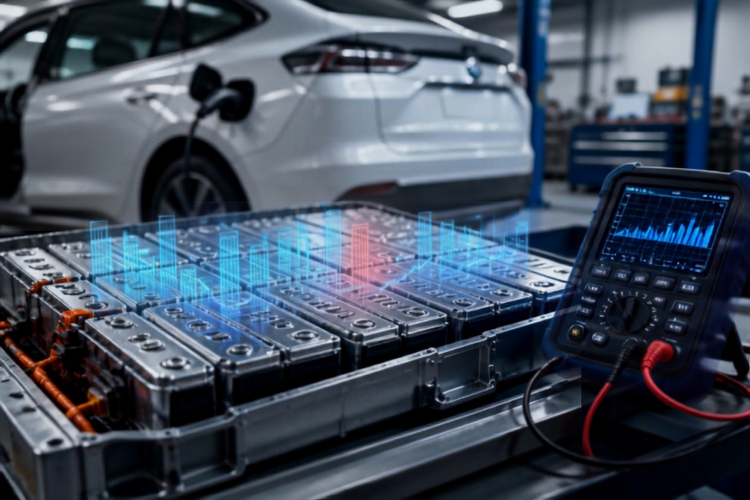
Its cell-level testing is designed to identify voltage differences between individual cells, providing another layer of information alongside conventional SoH measurements.
That could be particularly valuable for dealers, finance providers and businesses dealing with vehicles towards the end of their first lease period.
For fleets, the principle is straightforward: the more expensive and important the component, the more useful it is to understand its condition before committing to the vehicle.
What Does This Mean For Businesses Considering An EV?
The findings should not be interpreted as a reason for businesses to avoid electric vehicles.
In fact, the wider battery data is encouraging.
The overwhelming majority of batteries tested by Generational were well balanced, while its wider testing showed high average levels of battery health.
Instead, the results reinforce the importance of treating battery condition as an important part of the overall vehicle assessment.
For businesses considering a used electric vehicle, checking the battery can provide additional reassurance and help support the wider transition to electric fleets.
This is particularly relevant for higher-mileage vehicles or those that have experienced intensive use, where understanding the battery’s condition can help businesses make a more informed purchasing decision.
Businesses considering a new electric vehicle also have the option of leasing an electric vehicle rather than purchasing a used model outright.
 Call our expert team on