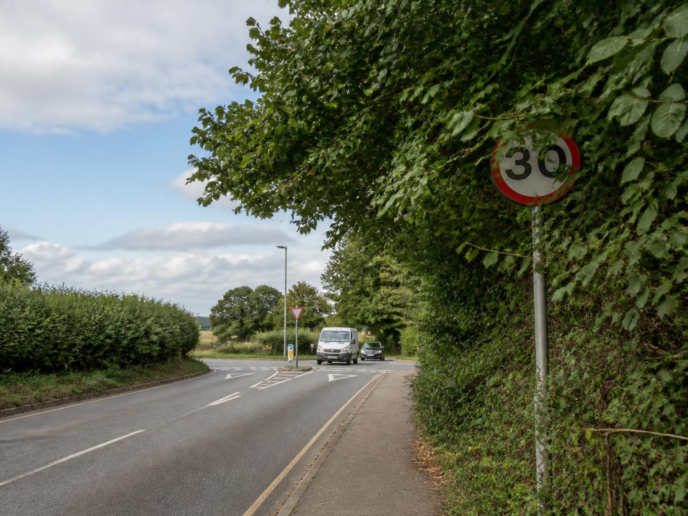
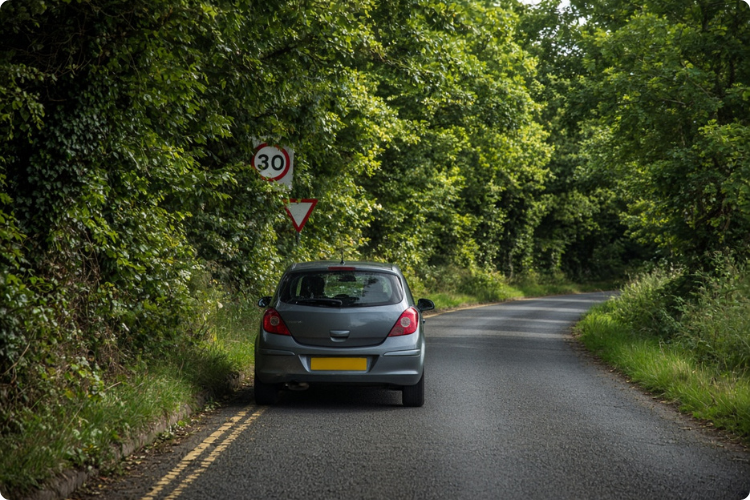
Almost one in five drivers say they have accidentally exceeded the speed limit because overgrown trees, hedges and other vegetation have obscured road signs, according to new research from the RAC.
The survey highlights a wider road safety issue, with road signs becoming increasingly difficult to see as vegetation grows over roads and pavements.
The RAC found that 19% of drivers had unintentionally broken a speed limit after being unable to see a road sign because it was hidden by foliage.
The problem appears to be widespread across the UK. 94% of drivers surveyed said they had seen road signs obscured by overhanging branches, trees or hedges, while 51% said they regularly encountered signs in this condition.
Speed limit signs were among the signs most commonly affected, along with stop and give way signs.
Overgrown Foliage Creating Wider Road Safety Problems
The issue is not limited to drivers accidentally exceeding the speed limit.
The RAC’s research found that 21% of motorists had missed a turning because of obscured signage, while 13% had been forced to brake sharply after struggling to see a sign.
A further 5% said they had accidentally failed to observe a give way sign.
Overgrown vegetation can also restrict a driver’s view when approaching junctions and roundabouts.
In fact, 80% of those surveyed said foliage had made it more difficult to safely pull out of a junction or roundabout.
This can be particularly problematic for drivers travelling through unfamiliar areas, where clear signage and good visibility are important for identifying speed limits, junction priorities and upcoming turns.
Speed limit signs were among the signs most commonly affected, along with stop and give way signs. Clear and visible signage plays an important role in helping drivers understand changing restrictions and road priorities, as explained in our guide to UK traffic signs.
Homeowners Could Face Action Over Obstructive Vegetation
The RAC is also urging homeowners to check whether trees, shrubs or hedges on their property are growing onto public roads or pavements.
Aside from creating potential hazards for motorists and pedestrians, property owners could face action from their local authority if vegetation is causing an obstruction.
More than half of the drivers surveyed – 58% – were unaware that homeowners could potentially face a bill if a council has to deal with obstructive vegetation.
Under Section 154 of the Highways Act 1980, local authorities can require vegetation obstructing a highway to be cut back. If the required work is not completed, the authority can arrange for it to be carried out and recover the cost.
There can also be more serious consequences where a highway is deliberately obstructed.
Why Clear Road Signs Matter For Drivers
For drivers covering significant distances each day, including those using vans for work, clear road signs are an important part of safe and efficient journeys. For businesses operating commercial vehicles, this also forms part of the wider approach to driver and vehicle compliance.
A driver may already be navigating an unfamiliar area, looking for a customer’s address or dealing with heavy urban traffic. If vegetation is also blocking a speed limit, give way or directional sign, it can make an already demanding section of road more difficult to negotiate safely.
Obscured signs can also create problems where speed limits change, particularly in built-up areas where drivers may encounter several different limits during a relatively short journey.
Drivers should continue to follow the applicable speed limit even where signage is difficult to see, rather than assuming that an obscured sign means a restriction no longer applies. This is part of the wider responsibility of operating a leased vehicle safely and in accordance with the rules of the road.
How To Report An Obscured Road Sign
Drivers who come across a road sign that is hidden by trees, hedges or other vegetation can report the issue to the relevant local authority.
Where the problem is on a motorway or major trunk road, it can instead be reported to National Highways. The RAC also highlights FixMyStreet as another way of reporting highway issues.
The RAC’s research was carried out by Online95, which surveyed 1,412 UK drivers during August 2026, with the results weighted to be nationally representative of UK motorists.
 Call our expert team on