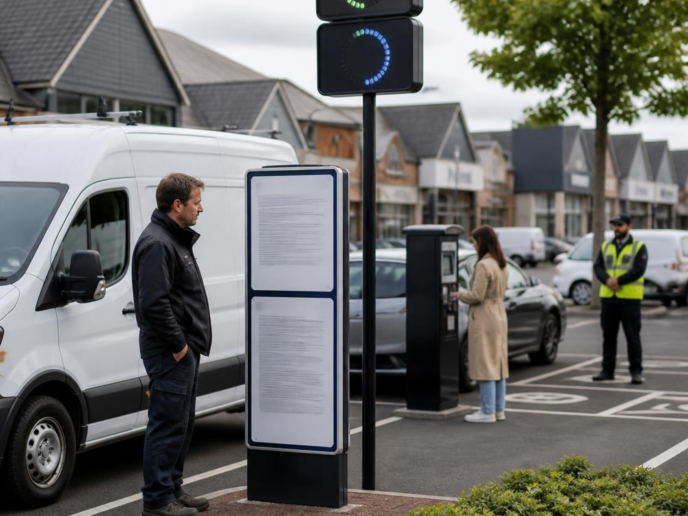
Drivers across the UK are set to receive stronger protections against unfair private parking charges under a new Government code of practice. The measures are intended to make parking rules clearer, provide greater flexibility for motorists and reduce penalties for genuine mistakes.
Drivers travelling to unfamiliar destinations may also need to account for local vehicle restrictions and charges. Our guides to UK ULEZ and Clean Air Zones and Clean Air Zone charges explain the restrictions and costs that can affect journeys in cars and commercial vehicles.
For businesses operating cars, vans and other light commercial vehicles, the changes could be particularly relevant to employees who regularly park at retail sites, customer premises, hospitals, service stations and privately managed car parks.
However, the reforms will not resolve every concern surrounding private parking. Additional fees added by debt recovery companies remain under review, while the new rules must pass through parliamentary scrutiny before they come into force.
What Will Change Under The New Private Parking Code?
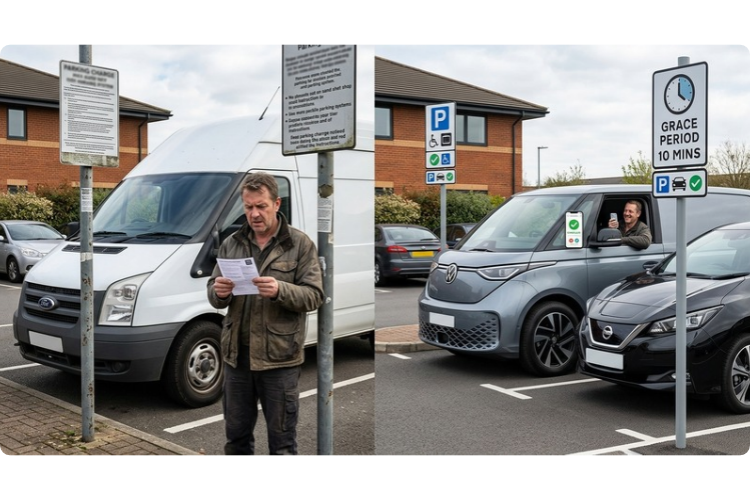
The revised Private Parking Code of Practice introduces several measures designed to give motorists more time and a fairer opportunity to challenge charges.
Under the proposed rules, drivers will receive:
- Five minutes to decide whether to park: motorists will have a short period to review the parking conditions before committing to a stay.
- A 10-minute grace period: drivers will have additional time to leave after their permitted parking session expires.
- A £100 maximum parking charge: the code retains a cap on the standard parking penalty.
- Greater protection against genuine mistakes: certain charges can be cancelled following an appeal, provided the motorist supplies evidence that their circumstances qualify.
The intention is to distinguish between deliberate breaches of parking conditions and situations where a driver has made an honest error or encountered circumstances beyond their control.
The proposed code focuses on private parking enforcement, but it is not the only parking issue drivers need to understand. Businesses and motorists should also familiarise themselves with the separate rules governing pavement parking in England, particularly when parking in built-up areas.
Drivers Could Have Charges Cancelled For Genuine Mistakes
One of the most significant changes concerns the circumstances in which motorists can successfully appeal a private parking charge.
Under the new appeals provisions, charges are intended to be cancelled where drivers can demonstrate that an eligible situation applies to their case.
Examples include briefly stopping to check directions, dealing with a vehicle breakdown or attending to a medical emergency. A faulty payment machine could also provide grounds for cancellation where the driver was unable to pay as required.
The code also addresses common administrative errors. Drivers who forget to display or register a parking permit, enter an incorrect vehicle registration number or fail to confirm their registration at a payment machine could have their charge reduced to a maximum of £20 on appeal.
These protections are not necessarily automatic. Motorists will need to provide evidence that their circumstances meet the conditions set out in the appeals charter.
For businesses, this could offer additional reassurance when employees use unfamiliar car parks or make frequent visits to different customer locations. Nevertheless, drivers should continue to check signs, payment requirements and parking restrictions wherever possible.
Understanding road signage is also important when travelling for work, particularly when restrictions or instructions are unfamiliar. Our guide to UK traffic signs and their meanings explains how to interpret the signs drivers encounter on the road.

Parking Companies Face Tougher Compliance Requirements
The reforms also introduce greater accountability for private parking operators.
Companies that fail to follow the code risk losing access to the Driver and Vehicle Licensing Agency’s (DVLA) vehicle keeper information. Parking operators rely on this information to identify registered keepers when pursuing unpaid parking charges.
The Government also intends to require operators to report information about the penalties they issue and the way they handle appeals. This data will be monitored by a new independent scrutiny and oversight board, with work to establish the body expected to begin once the code becomes law.
These measures are intended to improve transparency and make it more difficult for operators to issue or pursue charges without following the required procedures.
However, the effectiveness of the changes will depend on how consistently the rules are enforced and how the appeals protections work in practice.
Debt Recovery Fees Remain A Major Concern
Despite the proposed changes, one contentious issue remains unresolved: additional fees imposed when private parking charges are passed to debt recovery companies.
The existing £70 cap on these additional fees has not been removed or reduced under the announced code. The Government has instead indicated that it will consult further on the issue as soon as possible.
This has attracted criticism from motoring organisations, which argue that extra recovery fees can significantly increase the amount a motorist is asked to pay.
The AA has welcomed the prospect of stronger driver protections but has stressed that more work is needed to address debt recovery charges and prevent unfair penalties from being issued in the first place.
The RAC has similarly described the changes as progress while highlighting the absence of a ban on additional recovery fees and the lack of a single independent appeals body to replace the existing industry-run arrangements.
The outstanding questions matter because a lower initial parking penalty does not necessarily prevent a dispute from becoming more expensive if further fees are added.

Industry Response Highlights Concerns Over Fairness
Reaction from the wider parking industry has also highlighted concerns about whether the reforms go far enough.
Parc founder Erin Short argued that retaining the £100 maximum charge while postponing a decision on debt recovery fees leaves important questions about the economics of private parking enforcement unanswered.
The figures cited in the debate underline the scale of the issue: the industry has been reported to issue more than 16.9 million private parking tickets annually, with over 1.2 million motorists referred to debt collectors each year.
Critics argue that motorists should not have to navigate complicated appeals procedures to obtain fair treatment. Clearer signage, reliable payment systems and proportionate enforcement are also important if unnecessary disputes are to be avoided.
For businesses managing multiple vehicles, these concerns reinforce the importance of clear internal procedures for parking payments, permit requirements and reporting parking notices. Effective fleet management can help organisations keep these responsibilities and day-to-day administration organised, supported by appropriate fleet administration and account support.

When Will The New Parking Rules Take Effect?
The code is not yet in force. Parliament will have an opportunity to scrutinise the proposals before they are implemented.
The latest announcement follows several years of work to establish a consistent framework for private parking enforcement.
The Parking (Code of Practice) Act became law in 2019, creating the basis for a Government-backed code. An earlier version was published in February 2022 but withdrawn four months later following a legal challenge.
The challenge raised concerns about the proposed parking charge limits, restrictions on debt recovery fees and whether the measures had been adequately consulted on and assessed.
The Government subsequently gathered further evidence before launching a consultation that ran from July to September 2025. It received 4,526 responses from members of the public and industry stakeholders.
The latest code represents a further attempt to introduce consistent standards across private parking operations. Its eventual impact will depend on the final implementation arrangements, enforcement and any subsequent changes following further consultation.

What Should Company Car And Van Drivers Do Now?
Until the new code comes into force, drivers should continue to follow the parking conditions displayed at each site and use the existing appeal process when challenging a charge.
Businesses can also help reduce avoidable parking disputes by reminding employees of their responsibilities when driving a leased vehicle, including checking registration details, retaining payment receipts and keeping evidence of exceptional circumstances.
Where a private parking charge is received, drivers should review the notice, check the relevant deadlines and gather supporting evidence before submitting an appeal.
The proposed reforms could provide a fairer system for motorists, particularly those penalised for genuine mistakes. However, questions surrounding debt recovery fees and the practical enforcement of the new standards remain outstanding.

 Call our expert team on