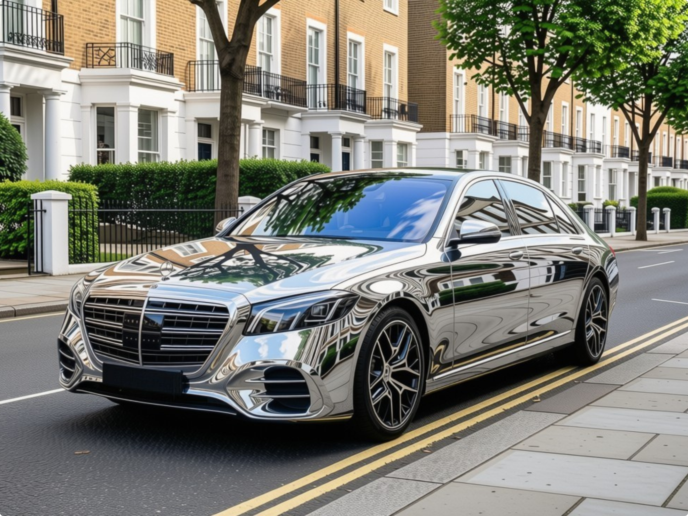
Mercedes-Benz has significantly updated its flagship S-Class Saloon, bringing a sharper design, more advanced technology, greater comfort and a choice of petrol, diesel and plug-in hybrid powertrains to its luxury four-door model.
The latest Mercedes-Benz S-Class represents one of the most comprehensive updates to the current generation, with the manufacturer stating that more than 50% of the vehicle – around 2,700 components – have been newly developed, updated or refined.
Rather than completely reinventing its flagship saloon, Mercedes-Benz has concentrated on improving the areas that have traditionally made the S-Class successful while introducing substantially more technology, artificial intelligence and electrification.
The updated S-Class also arrives as Mercedes-Benz celebrates 140 years since Carl Benz invented the automobile, with the flagship continuing to occupy the top end of the brand’s conventional passenger-car range.
A More Imposing New S-Class Design
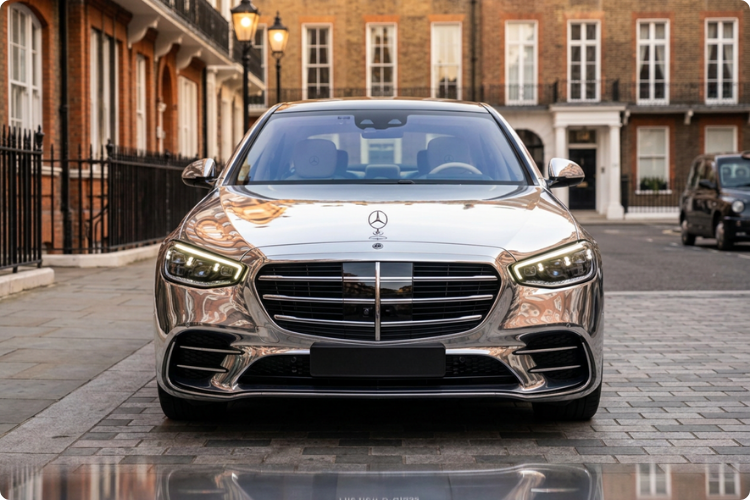
The most obvious changes can be found at the front of the new S-Class.
Mercedes-Benz has increased the size of the radiator grille by around 20%, while the revised design incorporates three-dimensional chrome Mercedes stars.
An illuminated grille surround is available, while customers can also specify an illuminated Mercedes-Benz star on the bonnet.
The latest DIGITAL LIGHT headlamps feature a new twin-star signature, while the rear lights have been redesigned with three chrome-framed star signatures.
Mercedes-Benz has also introduced new wheel designs, including a 20-inch multi-spoke option produced using high-pressure casting technology.
The result is an S-Class that remains instantly recognisable but has a more imposing appearance.
Top Gear also highlights the enlarged grille and illuminated detailing as some of the most noticeable visual changes to the updated model.
New DIGITAL LIGHT Technology
The S-Class introduces an upgraded DIGITAL LIGHT system using micro-LED technology.
Mercedes-Benz says the new system increases the high-resolution illumination field by approximately 40% compared with the previous system.
The Dynamic ULTRA RANGE high beam can illuminate the road ahead for up to 600 metres, while the system can adapt its lighting according to the road layout, traffic and surrounding conditions.
Camera and map data are also used to improve illumination around corners.
The lighting system is integrated with the car’s wider digital architecture, allowing the S-Class to combine lighting technology with its navigation and driver assistance systems.
The technology is another example of Mercedes-Benz using the latest S-Class as a showcase for features that could eventually filter down to other models.
MB.OS Brings A New Digital Experience
One of the biggest changes to the new S-Class is not visible from the outside.
The flagship introduces the Mercedes-Benz Operating System, known as MB.OS, which acts as the central digital architecture for the vehicle.
It connects functions including infotainment, navigation and driver assistance, while allowing software updates to be delivered over the air.
Mercedes-Benz describes MB.OS as a high-performance computing platform designed to bring the car’s various systems together rather than treating them as separate functions.
This moves the S-Class further towards the type of software-defined vehicle already becoming increasingly common across the automotive industry.
AI-Powered MBUX Virtual Assistant
The new S-Class also introduces the latest generation of Mercedes-Benz’s MBUX system.
At the heart of the system is the MBUX Virtual Assistant, which uses generative artificial intelligence to provide more natural conversations with the driver and passengers.
Mercedes-Benz says the system combines AI technology from ChatGPT-4o, Microsoft Bing and Google Gemini.
The assistant can maintain multi-turn conversations and features short-term memory, while new avatar designs have also been introduced.
The system can support a wide variety of functions, from answering questions and controlling vehicle settings to providing information and assisting with navigation.
This is one of the clearest signs that the new S-Class is becoming as much a technology platform as a traditional luxury saloon.
MBUX Superscreen Comes As Standard
The new MBUX Superscreen is another major feature.
The system combines a 14.4-inch central display with a 12.3-inch passenger display beneath a single glass surface.
This gives the front passenger their own dedicated digital environment where they can watch films, use applications and access entertainment while travelling.
A camera-based privacy function helps prevent the passenger display from distracting the driver.
A separate 12.3-inch digital instrument display sits behind the steering wheel, with 3D functionality available as an option.
The S-Class can also support wireless smartphone connectivity and a range of applications through its integrated digital ecosystem.
A Luxury Interior With Even More Technology
Inside, the S-Class remains focused on comfort and premium materials, but the cabin has received a series of technology and design upgrades.
The dashboard, centre console and door panels have been revised, with new trim and wood finishes available.
The centre console can include illuminated storage areas and wireless charging for two smartphones.
USB-C charging with power delivery of up to 100W is also available.
Mercedes-Benz has revised the multifunction steering wheel too, bringing back physical rocker switches for important controls alongside a rotary volume control.
Top Gear’s review highlights the technology-heavy character of the latest cabin, with the extensive display technology becoming an increasingly important part of the S-Class experience.
First-Class Rear Passenger Experience
For many S-Class buyers, the rear cabin remains just as important as the driving experience.
The long-wheelbase S-Class can be specified with the First-Class rear compartment, effectively turning the rear of the vehicle into a mobile business lounge.
The rear centre console can incorporate storage, wireless charging, USB-C connections, a refrigerated compartment and temperature-controlled cupholders.
Folding tables can provide a workspace for passengers travelling with laptops or documents.
Rear-seat entertainment is also available, with two 13.1-inch displays.
Passengers can control various vehicle functions using detachable MBUX remote controls, while integrated cameras allow video conferencing through platforms including Microsoft Teams, Zoom and Webex.
The S-Class can also be equipped with Burmester 3D surround sound or the higher-end Burmester 4D surround sound system with Dolby Atmos.
This emphasis on rear-seat technology is particularly important in the luxury saloon market, where chauffeur-driven customers remain a significant part of the target audience.
Heated Seat Belts And Advanced Air Filtration
Mercedes-Benz has introduced several smaller features designed to make the S-Class more comfortable.
One of the more unusual additions is the heated seat belt.
The system can warm the belt to temperatures of up to 44°C, providing additional warmth for occupants during colder conditions.
Mercedes-Benz has also introduced Digital Vent Control and an advanced electric air filter.
The system can purify the cabin air approximately every 90 seconds, while air ionisation technology is also available.
Ambient lighting can work alongside the ventilation system, with the air vents automatically adjusting according to the selected climate settings.
Enhanced Driver Assistance Technology
The new S-Class is also equipped with an extensive range of driver assistance technology.
Mercedes-Benz uses a combination of cameras, radar sensors and ultrasonic sensors to monitor the vehicle’s surroundings.
The available systems include DISTRONIC adaptive cruise control with Steering Assist, Lane Change Assist and technology designed to help the driver avoid obstacles.
The S-Class can also be equipped with more advanced MB.DRIVE ASSIST systems, depending on specification and market availability.
Parking assistance has been improved too, with a 360-degree camera providing a detailed view around the car.
The technology is particularly useful given the size of the S-Class, which stretches beyond five metres in length.
Rear-Axle Steering Helps Make The S-Class Easier To Manoeuvre
Despite its substantial dimensions, the S-Class is designed to remain relatively easy to manoeuvre.
Rear-axle steering is standard, while a system offering up to 10 degrees of rear-wheel steering is available.
Mercedes-Benz says the latter can reduce the turning circle of the long-wheelbase model by almost two metres.
This should make the S-Class easier to park and manoeuvre through narrow urban streets.
AIRMATIC air suspension is also available, providing adaptive damping and helping maintain the high levels of ride comfort expected from the flagship model.
This remains an important part of the S-Class proposition. Although the car has become considerably more technology-focused, it has not abandoned the traditional emphasis on comfort and refinement.
Petrol, Diesel And Plug-In Hybrid Powertrains
The new S-Class continues to offer buyers a choice of powertrains rather than moving exclusively towards electrification.
The UK range includes diesel, petrol and plug-in hybrid options.
The entry point is the S 350 d L 4MATIC, which uses a 2,989cc six-cylinder diesel engine with mild-hybrid technology.
It produces 313hp from the combustion engine, with a further 23hp available from its 48-volt electrical system.
The S 350 d develops 650Nm of torque and uses a nine-speed automatic transmission.
Mercedes-Benz quotes a 0-62mph time of 5.4 seconds, a top speed of 155mph, combined fuel consumption of 44.2mpg and CO₂ emissions of 168g/km.
The wider range includes the S 450 d 4MATIC, S 500 L 4MATIC, S 450 e L and S 580 e 4MATIC L, giving buyers a choice between diesel, petrol and plug-in hybrid power.
The S 500 L uses a 3.0-litre six-cylinder petrol engine with mild-hybrid technology and produces 449hp.
Plug-In Hybrid S-Class Offers Up To 67 Miles Of Electric Range
The plug-in hybrid models are particularly interesting for drivers looking to combine long-distance capability with the ability to complete shorter journeys using electric power.
The S 450 e L produces a combined 435hp and offers up to 67 miles of official WLTP electric range, or 68 miles on the equivalent all-electric range measurement.
The more powerful S 580 e 4MATIC L produces a combined 585hp and 750Nm of torque.
It can accelerate from 0-62mph in just 4.4 seconds and offers up to 60 miles of official WLTP electric range, or 62 miles on the EAER measurement.
Both plug-in hybrid versions use a battery of around 22kWh and support DC charging at up to 60kW.
Mercedes-Benz quotes a 10-80% DC charging time of around 20 minutes, while AC charging is supported at up to 11kW.
For drivers whose daily journeys fall within the car’s electric range, the plug-in hybrid versions could therefore allow a substantial proportion of everyday driving to be completed without using the petrol engine.
Real-World Electric Range Will Be Lower
As with any plug-in hybrid, however, the official WLTP figure should not be treated as a guarantee of everyday electric range.
Actual range will vary according to temperature, driving style, road conditions, traffic and use of heating or air conditioning.
Independent testing has suggested that real-world electric range can be significantly lower than the official figure.
That does not necessarily undermine the appeal of the S-Class PHEV. Instead, it highlights the importance of considering how the vehicle will actually be used.
A driver with a predictable 30- or 40-mile daily commute who can charge at home or at work could make considerably more use of the S 450 e’s electric capability than someone regularly covering hundreds of motorway miles between charging opportunities.
Mild-Hybrid Technology Across The Range
The conventional petrol and diesel models also benefit from 48-volt mild-hybrid technology.
A 17kW integrated starter-generator can provide additional assistance during acceleration, recover energy under braking and support coasting functions.
This allows Mercedes-Benz to improve efficiency without moving completely away from traditional combustion engines.
It also demonstrates that Mercedes-Benz is taking a multi-powertrain approach with its flagship saloon.
While the manufacturer has expanded its fully electric range, the S-Class continues to offer customers diesel and petrol options alongside plug-in hybrid technology.
The S-Class And Company-Car Tax
The plug-in hybrid versions could also be particularly relevant to business users and company-car drivers.
Their relatively low official CO₂ emissions can result in a significantly different Benefit-in-Kind position compared with the higher-emission petrol and diesel models.
The UK S 450 e L is officially rated at 55g/km of CO₂, while the S 580 e 4MATIC L is rated at 65g/km. This means the S-Class PHEV could make more financial sense for some company-car users than its list price might initially suggest.
However, the actual tax position depends on the vehicle’s certified emissions, its P11D value and the relevant tax year’s Benefit-in-Kind rates.
For businesses considering a luxury vehicle for a director or senior executive, business car leasing could provide an alternative to purchasing the S-Class outright. The plug-in hybrid S-Class therefore deserves consideration alongside the conventional diesel and petrol versions.
How Much Does The New Mercedes-Benz S-Class Cost?
The S-Class remains firmly positioned at the top end of the luxury saloon market.
Current UK pricing puts the range at around £103,450 for the S 350 d L 4MATIC AMG Line Premium, with prices rising to around £135,675 for the higher-specification S 580 e L 4MATIC AMG Line Premium Plus Executive.
The S 450 e L starts at around £114,725, while the S 500 is priced from around £116,020, according to Top Gear’s current UK review.
The final cost can rise substantially once customers begin adding optional technology, upgraded interiors, rear-seat equipment and other luxury features. Buyers should also consider the £40,000 expensive car supplement when assessing the overall cost of a vehicle at this level.
That makes the S-Class one of the most expensive mainstream Mercedes-Benz passenger cars available in the UK, although it sits below the ultra-luxury Mercedes-Maybach and high-performance AMG versions.
Over 150 Exterior And 400 Interior Colours
Customers wanting to personalise their S-Class can also access Mercedes-Benz’s MANUFAKTUR programme.
More than 150 exterior paint colours and over 400 interior colour combinations are available through the MANUFAKTUR Made to Measure programme.
This allows buyers to create highly individual combinations of paint, upholstery and trim.
Two new MANUFAKTUR colours introduced for the updated S-Class are MANUFAKTUR black sparkling and MANUFAKTUR verdesilver magno.
For a car frequently purchased as a chauffeur-driven executive vehicle, this level of personalisation allows owners to create a specification that is considerably more individual than a typical premium saloon.
Safety Remains A Major Focus
Safety continues to be a major part of the S-Class’s appeal.
The latest model features advanced restraint technology, including PRE-SAFE systems, adaptive seat belts and sophisticated airbag technology.
Depending on specification, the S-Class can be equipped with up to 15 airbags.
Rear beltbags are designed to help reduce chest loads during certain frontal impacts, while additional rear airbags are available.
Mercedes-Benz also offers PRE-SAFE Impulse Side technology, designed to help improve occupant protection before a potential side impact.
The extensive driver assistance technology also gives the S-Class a significant role as a showcase for Mercedes-Benz’s latest safety systems.
Mercedes-Benz S-Class Dimensions And Practicality
The long-wheelbase S-Class is a substantial vehicle.
The UK-listed model measures:
- Length: 5,304mm
- Width with mirrors: 2,123mm
- Width with mirrors folded: 1,986mm
- Width without mirrors: 1,921mm
- Height: 1,503mm
- Seats: 5
- Doors: 4
Boot capacity varies according to powertrain.
The S 350 d L 4MATIC offers 515 litres of luggage space, while the plug-in hybrid versions provide 350 litres because of their additional battery hardware.
The S 500 L 4MATIC provides 535 litres.
This is one of the compromises of choosing the PHEV models: buyers gain the ability to drive on electric power but sacrifice some luggage capacity compared with the conventional versions.
How Does The New S-Class Compare With Its Rivals?
The Mercedes-Benz S-Class continues to compete against a relatively small group of luxury saloons, most notably the BMW 7 Series and Audi A8.
BMW’s 7 Series has taken a similarly technology-focused approach, with a wide range of powertrains and a cabin designed around digital displays and premium comfort.
The BMW 750e plug-in hybrid is particularly relevant to the S-Class PHEV, although Mercedes-Benz has an advantage in official electric range.
The S 450 e L can travel up to 67 miles on electric power according to WLTP, compared with the BMW 750e’s quoted 49-mile WLTP electric range.
Audi’s A8 remains another alternative for customers prioritising comfort, refinement and premium technology, although the S-Class’s latest digital architecture and AI technology give Mercedes-Benz a strong talking point. The wider luxury market is also becoming increasingly electrified, with models such as the Genesis GV90 demonstrating how premium manufacturers are moving towards large, technology-focused electric vehicles.
The S-Class therefore continues to differentiate itself through a combination of rear-seat luxury, advanced technology and the breadth of its powertrain options.
What Do The Experts Think?
Independent reviews suggest Mercedes-Benz has taken a deliberately evolutionary approach with the new S-Class.
Top Gear awarded the updated model 8/10, highlighting its continued position as a highly accomplished luxury saloon while assessing the latest technology, interior and driving experience.
Autocar has also praised the updated S-Class for its refinement, technology and powertrain options, while describing the facelift as a detailed improvement rather than a complete reinvention of the model.
This independent feedback is important because the S-Class is no longer competing purely on traditional measures such as ride quality, refinement and rear-seat comfort.
Its digital experience, electrification and driver assistance technology are now just as important to its overall appeal.
 Call our expert team on
 Drop us a message