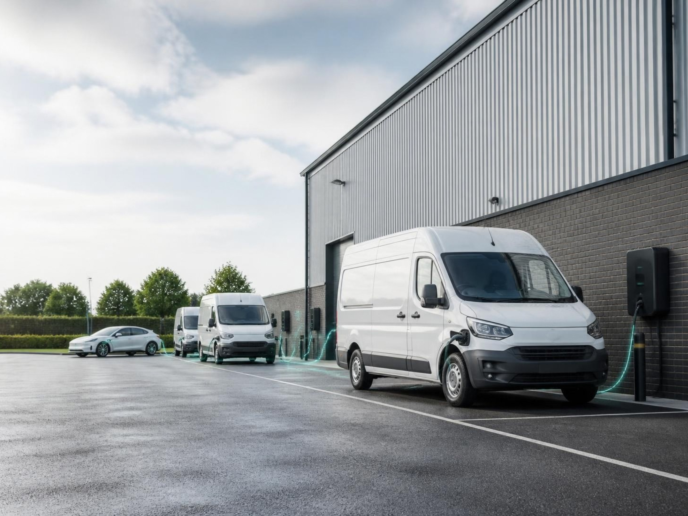
As more businesses introduce electric cars and vans into their fleets, charging infrastructure is becoming an increasingly important part of the transition.
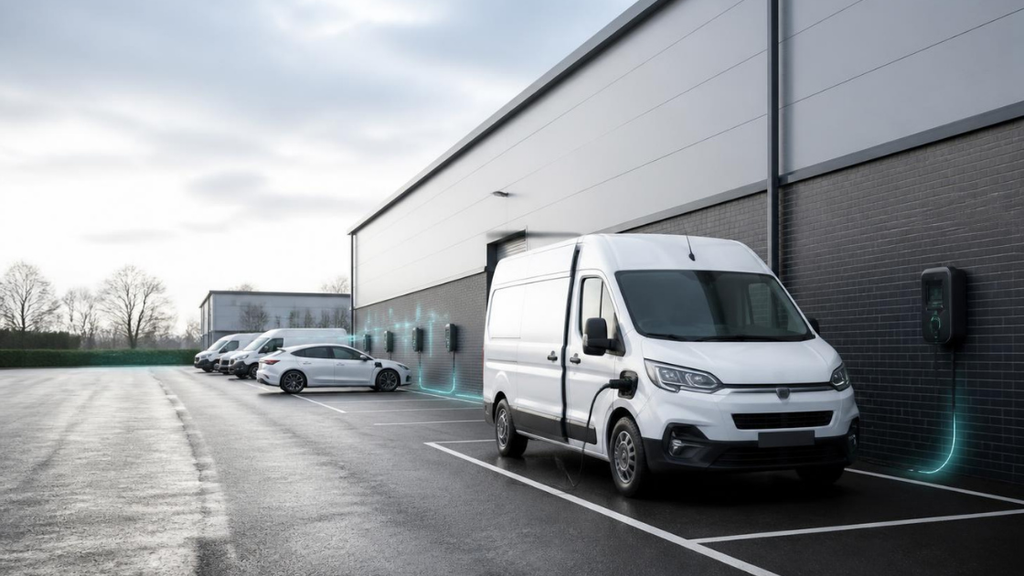
Humax EV Charging has introduced a new 22kW charger designed specifically for commercial applications, including business fleets, vehicle depots, workplaces, commercial buildings and apartment developments.
The Humax MX PRO 22kW EV charger has been developed with a particular focus on businesses that need charging infrastructure capable of expanding alongside their electric vehicle requirements.
Rather than simply providing a charging point for one vehicle, the MX PRO is designed to support larger and growing charging installations, with features intended to simplify installation, manage available electrical capacity and provide businesses with greater flexibility over how their charging network is operated.
This is becoming increasingly important as more businesses consider electric vehicle charging for their employees and fleets, particularly where several vehicles may need to charge at the same location.
A Charger Designed For Commercial Use
The charging requirements of a business can be very different from those of a private EV driver.
A homeowner may only need a single charger for one vehicle. A business, meanwhile, could eventually need to provide charging for several cars and vans, with vehicles arriving and leaving at different times throughout the working day.
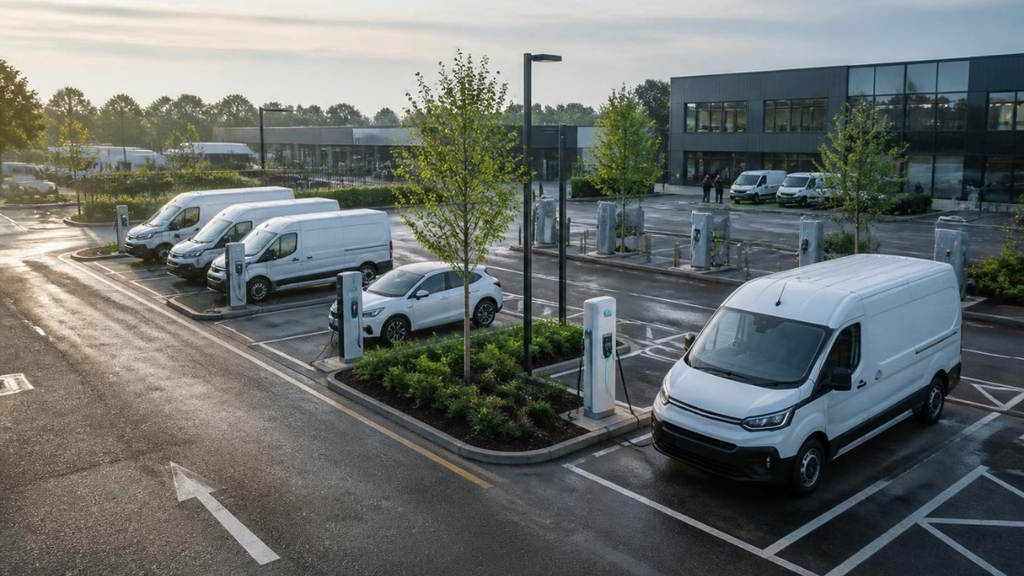
Depots and larger workplaces can face an even greater challenge, with multiple electric vehicles potentially requiring power simultaneously.
The Humax MX PRO has been designed specifically around these types of environments.
It can provide up to 22kW of three-phase charging, while also supporting both single-phase and three-phase installations.
The charger is intended for applications including:
- Commercial vehicle fleets
- Business car fleets
- Vehicle depots
- Workplace charging
- Commercial buildings
- Apartment developments
For businesses moving towards electric vehicles, this type of infrastructure can form an important part of a wider fleet management strategy, particularly as the number of electric vehicles within a fleet increases.
Preparing Charging Infrastructure For Future Expansion
One of the most notable aspects of the Humax MX PRO is its approach to installation.
Businesses do not necessarily need to install every charger they might eventually require on day one.
The system allows sites to be prepared in advance using an MX PRO backplate and protective dummy cover, known as MX Ready.
This means the electrical preparation for future charging points can be completed before the actual charger is needed.
When a business subsequently needs another operational charging point, an MX PRO unit can be installed onto the prepared backplate.
For a company gradually replacing petrol or diesel vehicles with electric alternatives, this could provide a way of expanding its charging infrastructure in stages. This comes as EV charging infrastructure continues to expand alongside electric vehicle adoption, giving businesses more options when planning their transition.
Instead of attempting to predict exactly how many charging points will be required several years into the future, businesses can prepare their infrastructure and increase the number of active chargers as their fleet develops.
Managing Power Across Multiple Chargers
Another consideration for businesses installing several EV chargers is the amount of electrical power available at the premises.
If multiple vehicles are charging simultaneously, simply installing a large number of individual chargers does not necessarily provide the most efficient way of using the site’s available electrical capacity.
The MX PRO incorporates dynamic load balancing, which is designed to distribute available power across multiple chargers.
This allows the charging system to respond to demand rather than every charger necessarily drawing its maximum available power at the same time.
For a commercial depot or workplace with several EVs, intelligent power management can therefore become an important part of the overall charging infrastructure. Reliable EV charging is also an important consideration when businesses depend on charging infrastructure to keep electric vehicles operating.
The system also supports daisy-chain connectivity, which can reduce the amount of cabling required when multiple units are installed together.
Simplifying Charging For Drivers
Commercial fleets can involve multiple drivers using the same vehicles or charging facilities, so reducing unnecessary steps during charging can be particularly useful.
The MX PRO can automatically begin charging when a recognised vehicle is connected.
It also supports Plug & Charge using ISO 15118-2, allowing secure vehicle identification without the driver necessarily needing to use an app or RFID card.
For businesses with shared vehicles, pool cars or fleets where different employees regularly use the same charging facilities, this could help make the charging process more straightforward.
The charger also incorporates a 4.3-inch LCD display, providing charging information and a digital QR code.
Flexible Software And Connectivity
Charging hardware is increasingly only one part of a commercial EV charging system.
Businesses also need ways of monitoring and managing their charging infrastructure, particularly when several charging points are installed across a workplace or depot.
The Humax MX PRO supports OCPP 1.6J and is designed to be upgradeable to OCPP 2.0.1.
It also incorporates a range of connectivity options, including:
- 4G LTE
- Built-in eSIM
- Ethernet
- Wi-Fi
- Bluetooth
- Zigbee
The integrated eSIM is designed to make network management easier by allowing network providers to be changed without having to replace physical SIM cards within individual chargers.
This could be particularly useful for larger commercial installations where a business may have multiple charging units operating across the same site.
An Open Approach To Charge Point Management
Humax has also taken an open approach to charge point management systems (CPMS).
The MX PRO is already integrated with platforms including Monta, Fuuse and Ta, while Humax says it is open to working with additional CPMS providers.
This gives businesses more choice over the software ecosystem used to manage their charging infrastructure.
The system uses a split-data architecture, meaning Humax can retain access to diagnostics and maintenance information even when a business chooses to use a third-party charge point management platform.
For fleet operators, this separation could provide greater flexibility when choosing how their charging network is managed without removing access to specialist hardware support.
Supporting Billing And Cost Recovery
Commercial EV charging can also create additional considerations around electricity usage and cost allocation.
Businesses may need to understand how much electricity their vehicles are consuming, particularly where multiple vehicles, drivers or departments are using the same charging infrastructure.
The MX PRO supports billing and cost-recovery functions, allowing charging usage to be incorporated into a wider commercial charging strategy.
This can become increasingly important as an organisation moves beyond one or two electric vehicles and begins operating a larger EV fleet.
Businesses may also need to consider how workplace charging, home charging and public charging fit together. This is particularly relevant for fleets where drivers may charge company vehicles at home, with home EV charging reimbursement becoming another consideration for businesses.
Built For Commercial Charging Environments
The Humax MX PRO has been designed for use in commercial environments and carries IP54 and IK10 ratings.
It incorporates a range of electrical protection features and can be installed either as a wall-mounted unit or using an optional pole-mounting solution.
This gives businesses flexibility when deciding where chargers should be positioned around a workplace, depot, commercial car park or other site.
The MX PRO also incorporates PLC and V2G readiness, supporting the development of more connected EV charging technology.
As electric fleets become larger and charging infrastructure becomes more sophisticated, technologies such as smart charging and vehicle-to-grid systems could become increasingly relevant to businesses looking to manage energy alongside their vehicle operations.
Experience In EV Charging
Humax says it has already deployed more than 18,000 EV chargers across South Korea, with experience covering both residential and commercial charging environments.
The company’s UK commercial charging proposition comes at a time when businesses are increasingly having to consider how electric vehicles will fit into their future fleets.
For companies introducing their first electric vehicles, charging can initially appear relatively straightforward.
However, the requirements can change considerably once a business begins operating multiple electric cars or vans.
The location of chargers, available electrical capacity, charging schedules, software management and future expansion can all become important considerations.
This is why planning charging infrastructure alongside the introduction of electric vehicles can be particularly important for businesses.
When Will The Humax MX PRO Be Available?
The Humax MX PRO is scheduled to become available through UK wholesalers and distributors from the end of November.
Pricing is expected to be announced separately.
Each model in the MX range is supplied with up to three years’ manufacturer’s warranty, alongside support through Humax’s approved installation and customer service network.
The charger is being positioned as a commercial charging solution for organisations that want to introduce EV infrastructure without unnecessarily restricting their ability to expand it in the future.
For businesses already considering electric van leasing, the availability of scalable workplace or depot charging could also make it easier to plan the wider transition away from conventional fuel-powered vehicles.
For businesses considering the financial implications of moving away from diesel, our guide looks at how much they could save by switching from a diesel van to an electric van.
 Call our expert team on