Why Electric Vehicle Fires Attract So Much Attention
Electric vehicle (EV) fires generate enormous public interest.
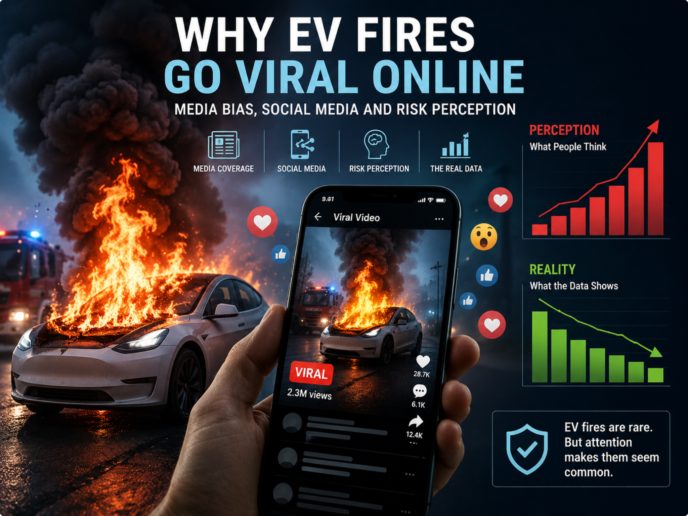
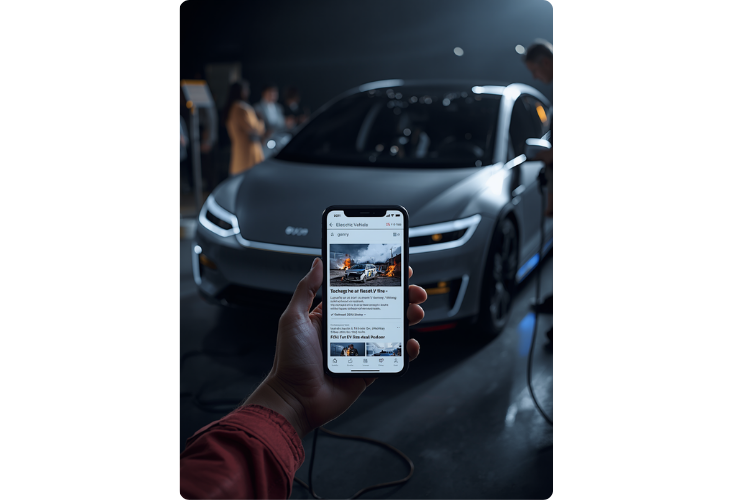
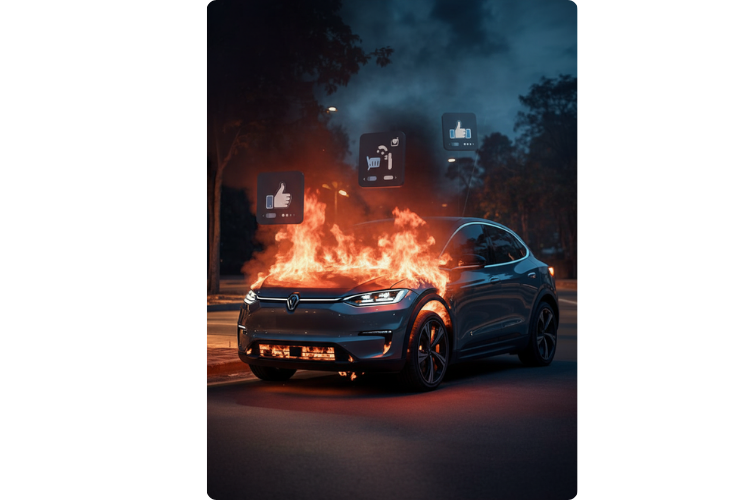
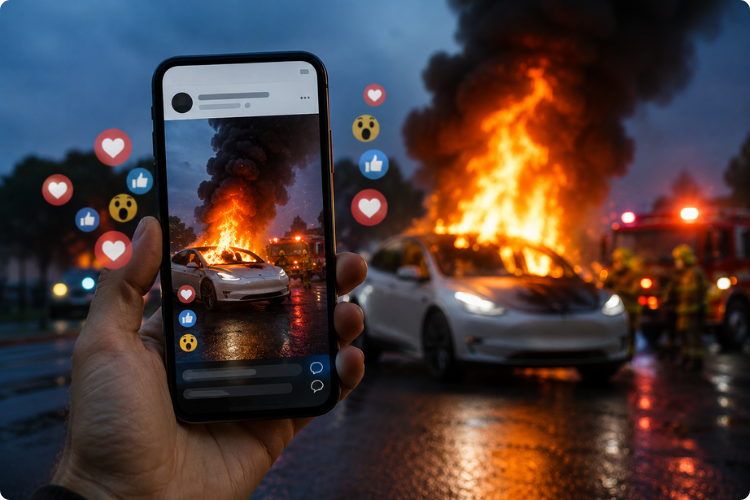
A single EV fire can dominate news headlines, trend across social media platforms, and spark thousands of online discussions within hours.
Yet despite this visibility, research continues to show that electric vehicles remain less likely to catch fire than conventional petrol and diesel vehicles.
For a detailed breakdown of the latest statistics, see our guide to EV Fire Risk vs Petrol & Diesel (2026 Update): What the Data Really Shows.
This raises an important question:
If EV fires are relatively uncommon, why do they receive so much attention?
The answer lies in a combination of media coverage, human psychology, social media algorithms, and the unique nature of battery fires themselves.
Understanding these factors helps explain why public perception of EV fire risk often differs from the available evidence.
Key Takeaways
- EV fires attract significantly more media attention than petrol vehicle fires.
- Social media algorithms amplify dramatic incidents.
- Human psychology often overestimates highly visible risks.
- Many reported lithium-ion battery fires involve e-bikes and e-scooters rather than electric cars.
- Current evidence suggests EV fires remain relatively uncommon compared with petrol and diesel vehicle fires.
The Difference Between Risk and Visibility
One of the most common mistakes people make when assessing risk is confusing frequency with visibility.
In simple terms:
- Something can happen often but receive little attention.
- Something can happen rarely but receive extensive attention.
Vehicle fires provide a perfect example.
Every year, thousands of petrol and diesel vehicle fires occur worldwide. Most receive little or no national media coverage.
An EV fire, however, often becomes headline news.
This can create the impression that EV fires occur frequently, even when the actual statistics suggest otherwise.
The issue is not necessarily the number of incidents.
It is how visible those incidents become.
The Psychology Behind Risk Perception
Psychologists have studied risk perception for decades.
One of the most important concepts is known as the availability heuristic.
This refers to the tendency for people to judge the likelihood of an event based on how easily examples come to mind.
For example:
- Shark attacks are extremely rare.
- Air crashes are extremely rare.
- EV fires are relatively rare.
However, all three receive extensive media coverage.
As a result, people often overestimate how frequently they occur.
By contrast:
- Road traffic accidents
- House fires
- Petrol vehicle fires
occur far more frequently but attract less national attention.
Because they are less memorable, people often perceive them as less significant risks.
Why EV Fires Create Powerful Visual Content
One reason EV fires attract media attention is their visual impact.
Battery fires can produce:
- Dense smoke plumes
- Intense flames
- Thermal imaging footage
- Extended emergency responses
- Road closures
- Recovery operations
These characteristics create highly shareable content.
Television broadcasters, news websites, and social media users are naturally drawn to dramatic visuals.
A conventional vehicle fire may burn for a relatively short period and receive limited coverage.
An EV fire often generates footage that remains online for days, weeks, or even years.
This dramatically increases public exposure.
The Role of Social Media Algorithms
Modern social media platforms are designed to maximise engagement.
Content that generates strong emotional reactions tends to receive more visibility.
EV fire videos often trigger:
- Surprise
- Fear
- Curiosity
- Debate
- Political discussion
- Technology-related arguments
As engagement increases, algorithms may promote the content to wider audiences.
This creates a feedback loop:
- An EV fire occurs.
- The footage is shared online.
- Users comment and react.
- Algorithms boost visibility.
- More users see the content.
- Public awareness increases further.
The result is that a single incident can reach millions of people globally.
Why New Technologies Face Greater Scrutiny
Historically, new technologies often attract disproportionate attention when problems occur.
Examples include:
- Commercial aviation
- Nuclear power
- Autonomous vehicles
- Artificial intelligence
- Electric vehicles
People tend to be more accepting of risks associated with familiar technologies.
Petrol vehicles have existed for over a century.
Vehicle fires involving petrol cars are generally viewed as unfortunate but unsurprising.
Electric vehicles are still perceived as relatively new by many consumers.
As a result, any safety incident is often viewed through a different lens.
This can increase media interest and public concern.
The Impact of Confirmation Bias
Another factor influencing public perception is confirmation bias.
Confirmation bias occurs when people pay greater attention to information that supports existing beliefs.
For example:
Someone who already believes EVs are dangerous may:
- Share stories about EV fires
- Remember reports of battery incidents
- Ignore evidence showing lower fire rates
Meanwhile, information that challenges those beliefs may receive less attention.
This effect is amplified on social media, where users often encounter content that aligns with their existing views.
Why E-Bike and E-Scooter Fires Add to the Confusion
A major source of misunderstanding involves the term electric vehicle itself.
Many media reports group together:
- Electric cars
- Electric vans
- E-bikes
- E-scooters
- Hoverboards
- Battery-powered consumer products
This can create confusion.
The battery systems used in electric cars differ significantly from the battery systems found in many smaller devices.
Modern EVs typically include:
- Automotive-grade battery cells
- Advanced thermal management
- Crash-tested battery enclosures
- Continuous electronic monitoring
By contrast, many e-bike and scooter incidents involve:
- Aftermarket batteries
- Modified charging systems
- Counterfeit chargers
- Poor storage conditions
Combining all of these incidents into a single category can exaggerate perceptions of EV fire risk.
Why Negative News Travels Faster
Research consistently shows that people pay more attention to negative news than positive news.
This phenomenon is known as negativity bias.
Stories involving danger, failure, or controversy often generate:
- More clicks
- More shares
- More comments
- More media coverage
An article titled:
“Electric Vehicle Completes One Million Safe Journeys”
is unlikely to receive the same attention as:
“Electric Vehicle Fire Shuts Major Road”
The second headline creates urgency and emotional engagement.
As a result, it spreads more easily.
What the Evidence Actually Shows
Despite the visibility of EV fire incidents, the broader evidence remains relatively consistent.
While individual studies use different methodologies, transport safety agencies, insurers, fire investigators, and industry researchers consistently identify several common findings:
- Petrol and diesel vehicles account for most vehicle fires.
- EV fires remain comparatively rare.
- Most EV fire incidents involve identifiable causes.
- We explore these causes in more detail in our guide: What Actually Causes Lithium-Ion Battery Fires?
- Battery safety systems continue to improve.
- Fire services have developed specialist EV response procedures.
The evidence suggests that visibility and actual risk are not always the same thing.
Public Perception vs Reality
| Common Perception | What Current Evidence Suggests |
|---|---|
| EV fires happen frequently | EV fire incidents remain relatively uncommon |
| EVs are more dangerous than petrol cars | Petrol and diesel vehicles account for most vehicle fires |
| Every battery fire involves an electric car | Many incidents involve e-bikes, scooters or consumer electronics |
| Charging an EV is highly dangerous | Modern charging systems include extensive safety protections |
| EV adoption is creating a major fire problem | Fire rates remain low relative to EV adoption growth |
Understanding this difference is essential when evaluating vehicle safety.
Why Visibility Does Not Equal Risk
One of the most important lessons from EV fire discussions is that public attention does not necessarily reflect real-world probability.
A highly publicised event can appear common simply because it receives extensive coverage.
When researchers compare fire incidents across entire vehicle fleets, the picture becomes much clearer.
Electric vehicle fires attract significant attention because they are unusual, visually dramatic, and often linked to emerging technology.
However, greater visibility does not automatically mean greater risk.
Continue Reading: EV Fire Safety & Electric Vehicle Research
Want to learn more about electric vehicle safety, battery technology, and vehicle fire risks? Explore our latest guides below:
- EV Fire Risk vs Petrol & Diesel (2026 Update): What the Data Really Shows – Discover how EV fire rates compare with petrol and diesel vehicles and what the latest evidence reveals.
- Are Electric Cars Safer Than Petrol Cars in 2026? – A closer look at crash safety, vehicle design, driver assistance technology, and real-world safety performance.
- EV vs Hybrid vs Petrol Fire Risk Comparison – Compare fire risks across different vehicle types and understand how modern safety systems influence outcomes.
- EV Battery Safety Improvements (2020–2026): How Modern EVs Became Safer – Explore the technological advances that have helped improve battery protection and thermal management.
- What Actually Causes Lithium-Ion Battery Fires? The Real Risks Explained – This guide explains thermal runaway, battery damage, charging failures, manufacturing defects, and the safety systems designed to reduce fire risk
- Do Electric Cars Catch Fire While Charging? – The Truth About EV Charging Safety – This guide explores how EV charging systems work, what can cause rare charging-related incidents, the safety protections built into modern electric vehicles, and why charging an EV is generally considered one of the safest aspects of EV ownership.
- Are EV Fires Harder to Extinguish Than Petrol Vehicle Fires? (2026 Guide) – This guide explains why lithium-ion battery fires behave differently from conventional vehicle fires, how thermal runaway can affect firefighting efforts, the specialist techniques used by fire services, and what the latest evidence reveals about EV fire risk and emergency response.
Whether you’re researching electric vehicle safety, battery technology, or the facts behind EV fire statistics, these guides provide evidence-based insights into one of the most discussed topics in modern motoring.
 Call our expert team on