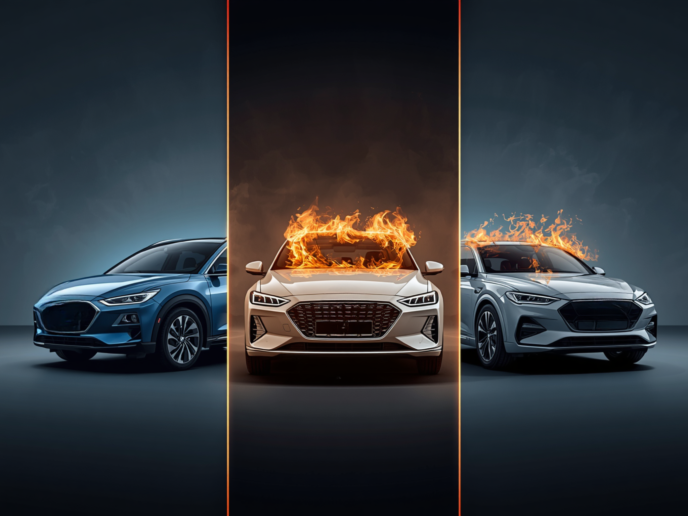
Why Comparing Vehicle Fire Risk Is More Complex Than Most People Think
Vehicle fire risk is one of the most debated topics in the automotive industry, particularly as electric vehicles (EVs) become increasingly common on UK roads.
Many drivers assume that electric vehicles present a greater fire risk because battery fires often receive extensive media coverage. However, when researchers compare fire incidents across entire vehicle fleets, a very different picture emerges.
The key question is not whether EVs, hybrids, or petrol vehicles can catch fire — all vehicle types can.
The more important question is:
Which vehicle type is most likely to experience a fire incident?
Current evidence suggests that conventional petrol and diesel vehicles account for the majority of vehicle fires worldwide, while electric vehicles remain comparatively rare.
Hybrid vehicles often sit somewhere between the two.
Understanding why requires looking at how each type of vehicle stores and uses energy.
Understanding the Different Fire Risks
Each vehicle type carries its own unique fire hazards.
Petrol and Diesel Vehicles
Internal combustion engine (ICE) vehicles rely on combustible liquid fuels.
These vehicles contain:
- Petrol or diesel fuel tanks
- Fuel lines
- Injectors
- Engine oil
- High-temperature engine components
- Extensive electrical systems
Potential ignition sources exist throughout the vehicle’s lifespan.
Common causes of petrol and diesel vehicle fires include:
- Fuel leaks
- Oil leaks
- Electrical faults
- Engine overheating
- Collision damage
- Poor maintenance
Because fuel is constantly present, these risks exist every time the vehicle is driven.
Hybrid Vehicles
Hybrid vehicles combine two systems:
- An internal combustion engine
- A high-voltage battery system
This means hybrids effectively carry the fire risks associated with both technologies.
Potential risks include:
- Fuel-related fires
- Battery-related incidents
- Electrical faults
- Thermal management failures
For this reason, several large-scale studies have found that hybrid vehicles can experience higher fire rates than either conventional petrol vehicles or fully electric vehicles.
Electric Vehicles (EVs)
Electric vehicles eliminate fuel tanks entirely and rely on lithium-ion battery packs for energy storage.
Potential fire causes include:
- Severe collision damage
- Internal battery defects
- Electrical system failures
- Thermal runaway events
- Flood-related battery damage
However, modern EVs include extensive safety systems designed specifically to minimise these risks.
These systems include:
- Battery management software
- Thermal monitoring
- Liquid cooling systems
- Cell isolation technology
- Crash-resistant battery enclosures
As a result, EV fire incidents remain relatively uncommon compared to the size of the global EV fleet.
EV vs Hybrid vs Petrol Fire Risk: What the Research Shows
Although individual studies use different methodologies, a consistent trend appears across research from Europe, North America, and Asia.
The overall findings generally show:
Petrol & Diesel Vehicles
- Account for the vast majority of vehicle fires worldwide
- Fire risk increases significantly as vehicles age
- Electrical faults become more common over time
- Fuel-related ignition hazards are always present
Hybrid Vehicles
- Often show higher fire rates than fully electric vehicles
- Contain both fuel systems and battery systems
- May experience failures associated with either technology
Electric Vehicles
- Typically, it records the lowest fire incidence rates
- Most fires occur following severe collisions
- Modern battery protection systems significantly reduce risk
- Fire rates remain low despite growing adoption
The exact figures vary by study, location, and vehicle age, but the overall trend remains remarkably consistent.
Why Vehicle Age Matters
One of the most important factors in vehicle fire risk is age.
Many reported petrol and diesel vehicle fires involve vehicles that are:
- More than 10 years old
- Poorly maintained
- Subject to wear-related electrical failures
- Experiencing fuel system deterioration
Common age-related issues include:
Wiring Degradation
Electrical insulation can deteriorate over time, increasing the risk of short circuits.
Fuel System Wear
Ageing seals, hoses, and connectors can develop leaks.
Oil Leaks
Engine oil may escape from worn gaskets and contact hot engine components.
Cooling System Failures
Overheating remains a common cause of engine-related fires.
By comparison, most EVs on the road today are relatively new and benefit from modern safety engineering.
Why EV Fires Receive More Media Attention
One reason many people overestimate EV fire risk is media exposure.
Battery fires often generate:
- Dramatic flames
- Large smoke plumes
- Road closures
- Specialist emergency responses
- Viral social media footage
A petrol vehicle fire may attract little attention beyond local news coverage.
An EV fire, however, can quickly become an international news story.
This creates a perception gap between public opinion and actual fire statistics.
Researchers describe this phenomenon as the availability heuristic, where people judge risk based on memorable examples rather than overall frequency.
Are EV Fires Harder to Extinguish?
Yes, but that is a different question from how often they occur.
Lithium-ion battery fires can present unique challenges, including:
- Thermal runaway
- Re-ignition risks
- Extended cooling requirements
- Difficult access to damaged cells
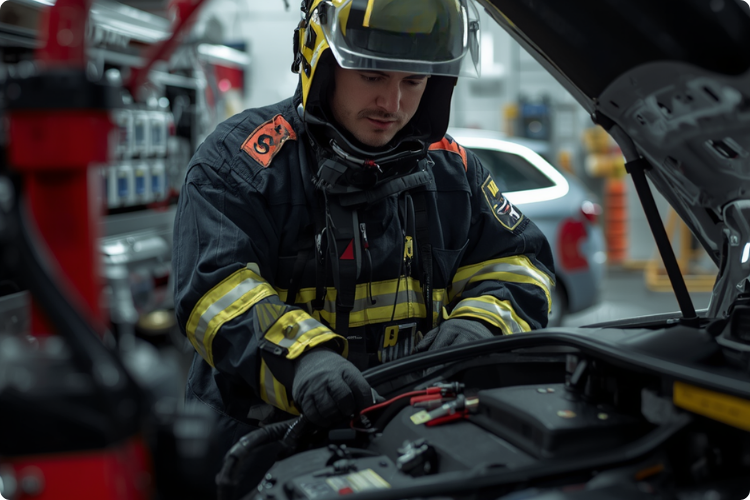
Modern fire services now use specialist equipment, including:
- Thermal imaging cameras
- Battery cooling systems
- Immersion containers
- Dedicated recovery procedures
While battery fires can require more resources to manage, they remain comparatively uncommon.
Why Hybrid Vehicles Often Surprise Researchers
Many people assume hybrid vehicles are simply a safer version of either petrol or electric vehicles.
However, hybrids contain:
- Fuel tanks
- Fuel lines
- Internal combustion engines
- High-voltage battery packs
- Complex electrical systems
Because both technologies coexist within a single vehicle, hybrids can potentially experience issues associated with either system.
This helps explain why some studies have reported higher fire rates among hybrids than either EVs or conventional petrol vehicles.
Public Perception vs Reality
When comparing fire risk, perception and evidence are often very different.
| Public Perception | What Research Suggests |
|---|---|
| EVs catch fire more often | Petrol and diesel vehicles account for most vehicle fires |
| Battery fires happen without warning | Most incidents involve identifiable causes |
| Hybrids are automatically safer | Hybrids carry risks from both fuel and battery systems |
| Charging is extremely dangerous | Modern charging systems include multiple safety layers |
| EV adoption is creating a fire crisis | EV fire rates remain relatively low |
Understanding these differences helps place vehicle fire risk into the proper context.
Expert Insight: Frequency Matters More Than Headlines
When evaluating vehicle safety, it is important to distinguish between:
- Frequency (how often fires occur)
- Severity (how difficult fires are to manage)
Battery fires may be more technically challenging when they occur, but current evidence indicates they occur less frequently than conventional vehicle fires.
This distinction is often lost in public discussions.
What the 2026 Data Really Tells Us
As electric vehicle adoption continues to increase, researchers are gathering more data than ever before.
The overall picture remains consistent.
Petrol and diesel vehicles continue to account for the majority of vehicle fire incidents globally. Hybrid vehicles often occupy the middle ground, while fully electric vehicles generally record the lowest fire rates across comparable vehicle fleets.
No vehicle is completely immune from fire risk.
However, the available evidence does not support the idea that electric vehicles are more likely to catch fire than petrol or diesel vehicles.
In fact, current research continues to suggest the opposite.
Continue Reading: EV Fire Safety & Electric Vehicle Research
Want to learn more about electric vehicle safety, battery technology, and vehicle fire risks? Explore our latest guides below:
- EV Fire Risk vs Petrol & Diesel (2026 Update): What the Data Really Shows – Discover how EV fire rates compare with petrol and diesel vehicles and what the latest evidence reveals.
- Are Electric Cars Safer Than Petrol Cars in 2026? – A closer look at crash safety, vehicle design, driver assistance technology, and real-world safety performance.
- EV Battery Safety Improvements (2020–2026): How Modern EVs Became Safer – Explore the technological advances that have helped improve battery protection and thermal management.
- Why EV Fires Go Viral Online: Media Bias, Social Media and Risk Perception – Learn why electric vehicle fires often attract disproportionate attention despite their relatively low frequency.
- What Actually Causes Lithium-Ion Battery Fires? The Real Risks Explained – This guide explains thermal runaway, battery damage, charging failures, manufacturing defects, and the safety systems designed to reduce fire risk
- Do Electric Cars Catch Fire While Charging? – The Truth About EV Charging Safety – This guide explores how EV charging systems work, what can cause rare charging-related incidents, the safety protections built into modern electric vehicles, and why charging an EV is generally considered one of the safest aspects of EV ownership.
- Are EV Fires Harder to Extinguish Than Petrol Vehicle Fires? (2026 Guide) – This guide explains why lithium-ion battery fires behave differently from conventional vehicle fires, how thermal runaway can affect firefighting efforts, the specialist techniques used by fire services, and what the latest evidence reveals about EV fire risk and emergency response.
Whether you’re researching electric vehicle safety, battery technology, or the facts behind EV fire statistics, these guides provide evidence-based insights into one of the most discussed topics in modern motoring.
 Call our expert team on