Understanding the Difference Between EV and Petrol Vehicle Fires
Electric vehicle (EV) fires have become a major topic of discussion as EV adoption continues to grow across the UK and Europe.
One of the most common questions asked by motorists, fleet operators, and businesses is:
Are EV fires harder to extinguish than petrol vehicle fires?
The short answer is yes.
However, that does not mean EV fires are more common, more dangerous, or impossible to extinguish.
The reality is that lithium-ion battery fires behave differently from conventional vehicle fires, which means firefighters often need different techniques and equipment to manage them safely.
Understanding these differences is essential when assessing the real-world risks associated with electric vehicles.
For a broader overview of fire rates, see our guide to EV Fire Risk vs Petrol & Diesel (2026 Update): What the Data Really Shows.
Key Takeaways
- EV fires can be more challenging to extinguish than petrol vehicle fires.
- Lithium-ion batteries behave differently from liquid fuel fires.
- Thermal runaway can cause batteries to reignite after the initial fire appears extinguished.
- Modern fire services now have specialist EV response procedures.
- Despite extinguishing challenges, EV fires remain relatively uncommon.
Why EV Fires Behave Differently
Traditional petrol and diesel vehicle fires are typically fuel-based fires.
When firefighters extinguish the flames and remove the ignition source, the fire usually remains under control.
Electric vehicles are different because their battery packs store large amounts of energy.
When a damaged battery cell overheats, it can trigger a process known as thermal runaway.
This occurs when:
- A battery cell becomes damaged or overheated.
- Internal temperatures increase rapidly.
- Heat spreads to neighbouring cells.
- A chain reaction develops within the battery pack.
Unlike conventional vehicle fires, the battery itself can continue generating heat internally.
This is why EV fires often require prolonged cooling and monitoring.
What Is Thermal Runaway?
Thermal runaway is the primary reason EV fires receive so much attention.
Once initiated, thermal runaway can continue even after visible flames have been extinguished.
Firefighters may successfully suppress the external fire only to discover that parts of the battery remain dangerously hot.
In some cases, this can lead to re-ignition hours later.
Although thermal runaway is relatively rare, it explains why EV fires require different response procedures compared with conventional vehicle fires.
Why Petrol Vehicle Fires Are Different
Petrol and diesel vehicle fires usually involve:
- Fuel leaks
- Engine compartment fires
- Electrical faults
- Oil ignition
- Collision-related fuel release
These fires often spread rapidly because liquid fuels are highly flammable.
However, once firefighters cool the affected area and remove the fuel source, the fire is generally easier to control.
This does not mean petrol vehicle fires are safer.
In fact, conventional vehicles account for the majority of vehicle fire incidents worldwide.
The difference lies in how the fires behave rather than how often they occur.
Why EV Fires Can Take Longer to Extinguish
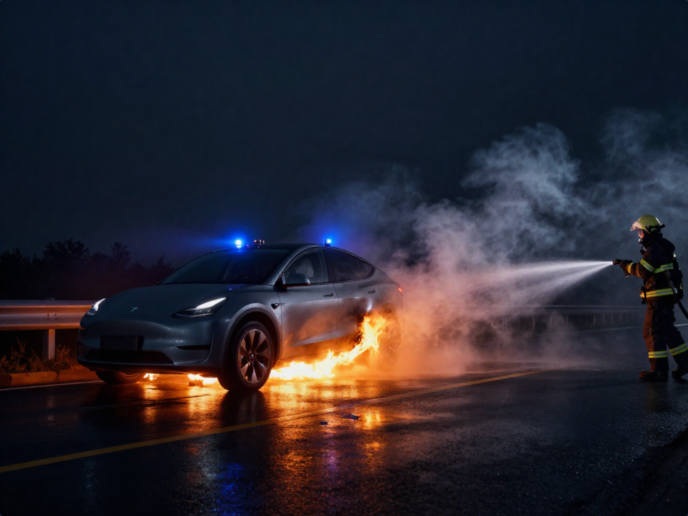
The biggest challenge facing emergency responders is cooling the battery pack.
Battery cells are typically located deep within a heavily protected structure underneath the vehicle.
This makes direct access difficult.
Challenges can include:
- Deep-seated battery heating
- Hidden hotspots
- Limited access to battery cells
- Potential re-ignition
- Extended cooling requirements
As a result, some EV incidents require significantly more water and longer monitoring periods than conventional vehicle fires.
How Fire Services Respond to EV Fires
Fire services around the world have adapted rapidly to the growth of electric vehicles.
Modern response procedures often include:
Thermal Imaging Cameras
These allow firefighters to identify hidden hotspots within battery packs.
Extended Cooling Operations
Large volumes of water may be used to reduce battery temperatures.
Battery Monitoring
Vehicles may be monitored for extended periods after the initial incident.
Specialist Recovery Procedures
Damaged EVs are often transported and stored using dedicated safety protocols.
Immersion Containers
Some jurisdictions use water-filled containers to cool severely damaged battery packs and reduce the risk of re-ignition.
These techniques have significantly improved incident management.
Have Fire Services Adapted Successfully?
Yes.
One of the biggest misconceptions is that fire services are unprepared for EV fires.
In reality, emergency services across Europe, North America, and Asia have spent years developing specialist procedures for battery-related incidents.
Training programmes now commonly cover:
- EV identification
- Battery pack locations
- Thermal runaway behaviour
- Safe recovery procedures
- Post-fire monitoring
As EV adoption increases, firefighting techniques continue to evolve alongside vehicle technology.
Does Harder to Extinguish Mean More Dangerous?
Not necessarily.
This is one of the most important distinctions in the EV fire debate.
Many people assume that because EV fires can require more complex firefighting techniques, they must be more dangerous overall.
The evidence does not support that conclusion.
When researchers examine vehicle fire incidents across entire fleets, petrol and diesel vehicles continue to account for the majority of fires.
EV fires may require longer response times when they occur, but they remain comparatively uncommon.
Frequency and extinguishing complexity are two separate issues.
How Modern EVs Reduce Fire Risk
Vehicle manufacturers have invested heavily in battery safety.
Modern EVs now incorporate:
- Advanced battery management systems
- Cell isolation barriers
- Liquid cooling systems
- Fire-resistant battery materials
- Continuous temperature monitoring
- Automatic electrical isolation following collisions
These technologies help reduce the likelihood of thermal runaway occurring in the first place.
For a deeper look at recent advances, see our article on EV Battery Safety Improvements (2020–2026): How Modern EVs Became Safer.
Public Perception vs Reality
Despite the attention EV fires receive, the available evidence paints a more balanced picture.
Common perception often focuses on dramatic footage of battery fires and extended emergency responses.
However, the broader evidence suggests:
- Petrol and diesel vehicles account for most vehicle fires.
- EV fires remain relatively uncommon.
- Fire services now have specialist EV response procedures.
- Battery safety systems continue to improve.
- Extinguishing difficulty does not automatically indicate greater overall risk.
Understanding these distinctions helps separate perception from reality.
Continue Reading: EV Fire Safety & Electric Vehicle Research
Want to learn more about electric vehicle safety, battery technology, and vehicle fire risks? Explore our latest guides below:
- EV Fire Risk vs Petrol & Diesel (2026 Update): What the Data Really Shows – Discover how EV fire rates compare with petrol and diesel vehicles and what the latest evidence reveals.
- Are Electric Cars Safer Than Petrol Cars in 2026? – A closer look at crash safety, vehicle design, driver assistance technology, and real-world safety performance.
- EV vs Hybrid vs Petrol Fire Risk Comparison – Compare fire risks across different vehicle types and understand how modern safety systems influence outcomes.
- EV Battery Safety Improvements (2020–2026): How Modern EVs Became Safer – Explore the technological advances that have helped improve battery protection and thermal management.
- Why EV Fires Go Viral Online: Media Bias, Social Media and Risk Perception – Learn why electric vehicle fires often attract disproportionate attention despite their relatively low frequency.
- What Actually Causes Lithium-Ion Battery Fires? The Real Risks Explained – This guide explains thermal runaway, battery damage, charging failures, manufacturing defects, and the safety systems designed to reduce fire risk
- Do Electric Cars Catch Fire While Charging? – The Truth About EV Charging Safety – This guide explores how EV charging systems work, what can cause rare charging-related incidents, the safety protections built into modern electric vehicles, and why charging an EV is generally considered one of the safest aspects of EV ownership.
Whether you’re researching electric vehicle safety, battery technology, or the facts behind EV fire statistics, these guides provide evidence-based insights into one of the most discussed topics in modern motoring.
 Call our expert team on