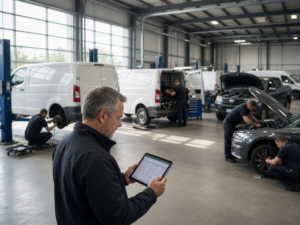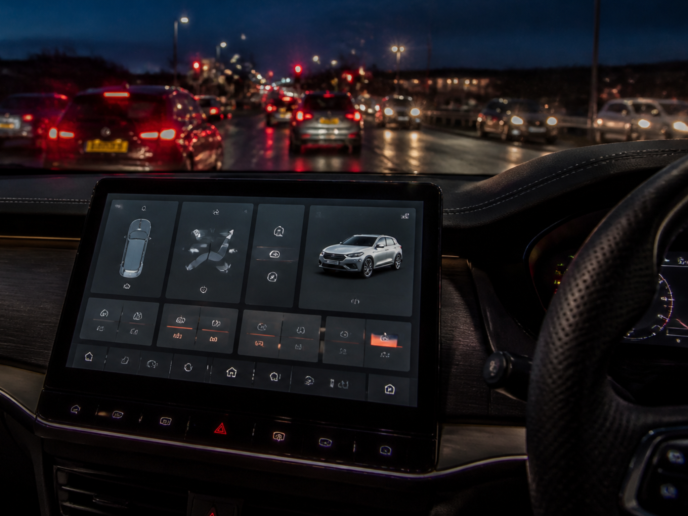
Touchscreen technology has become a standard feature in modern cars and vans, giving drivers access to navigation, entertainment, climate settings and a growing range of vehicle functions through digital displays. However, increasing reliance on these systems is raising questions about driver distraction and the potential consequences for road safety.
As manufacturers replace traditional dashboard buttons and switches with touchscreen controls, fleet safety specialists are drawing attention to the additional demands this can place on drivers. New research suggests that the design and accessibility of in-car systems could have an important role in reducing distractions behind the wheel.
Research Highlights The Risks Of Touchscreen Distraction
Research into driver behaviour is bringing the safety implications of touchscreen technology further into focus. A study by Allianz found that in-car distractions, including interaction with touchscreen systems, could be associated with as many as one in three road accidents.
The research also identified considerable differences between vehicle manufacturers when it comes to touchscreen usability. The time required to locate and operate safety-critical functions varied by as much as 25% between the best and worst-performing systems.
This suggests that the issue is not simply whether a vehicle has a touchscreen, but how effectively its functions are organised and presented to the driver.
Some systems provide relatively straightforward access to important controls, while others require drivers to navigate multiple menus and submenus. Having to search through several layers of a digital interface can increase the time a driver spends looking away from the road.
For fleet operators, this raises an important consideration when evaluating the safety features and usability of vehicles being introduced into their fleets.
Growing Calls For Physical Vehicle Controls
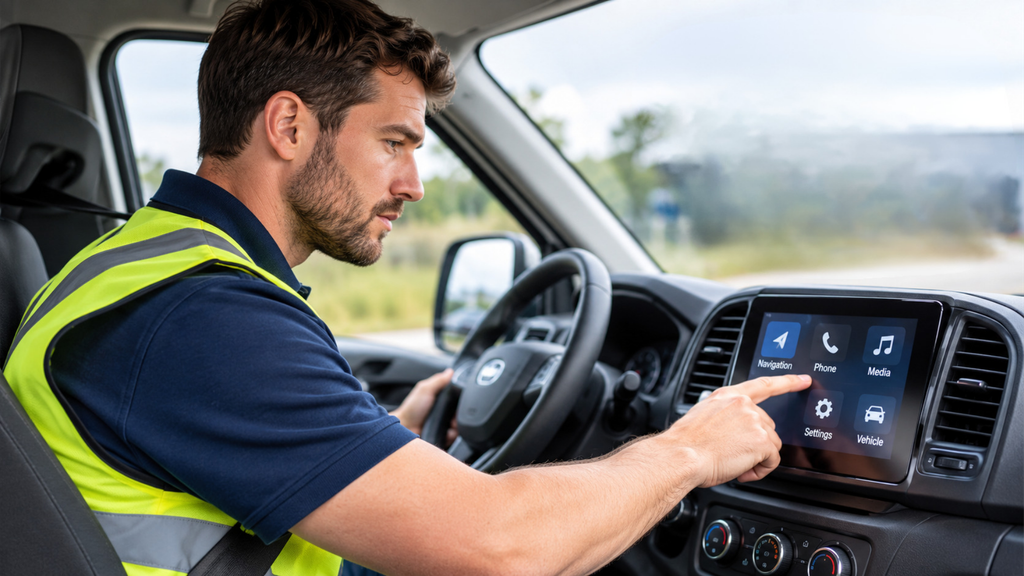
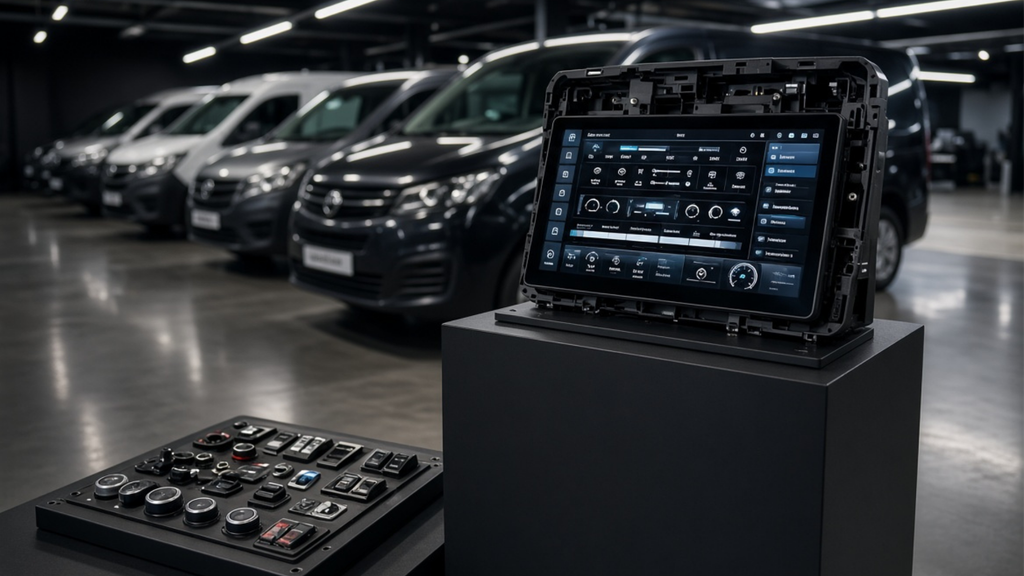
One of the main concerns surrounding modern infotainment systems is the replacement of traditional physical switches with touchscreen alternatives.
Functions such as operating windscreen wipers, adjusting headlights, activating hazard warning lights and controlling window demisting systems are fundamental to everyday driving. When these features are hidden within digital menus, drivers may need to divert their attention from the road to locate and operate them.
Touchscreen use is one of several potential sources of distraction for employees driving for work. Our article on speeding and distracted driving among fleet drivers examines other behaviours that can affect concentration and increase road safety risks.
Businesses should include potential technology-related distractions when carrying out a fleet risk assessment, considering the vehicles employees use, the journeys they undertake and any additional controls that may be necessary.
Physical buttons and switches provide a more familiar alternative, allowing drivers to identify and operate certain functions through touch rather than relying entirely on visual interaction.
The issue has also attracted regulatory attention in China, where authorities have introduced requirements for physical controls covering several important vehicle functions. These include indicators, hazard warning lights, headlights, fog lights, windscreen wipers, washers and window demisting. The issue is also reflected in vehicle safety assessments, with Euro NCAP’s focus on physical controls highlighting the importance of making essential functions easy for drivers to access.
The requirements also address the design of these controls, including their dimensions and the need to provide tactile or audible feedback.
These developments highlight a growing recognition that vehicle technology must remain practical and accessible, particularly when drivers need to operate essential functions quickly.
Although touchscreen systems offer manufacturers greater flexibility when designing vehicle interiors, there is an increasing argument for retaining physical controls where immediate access is important for safety.
What Does This Mean For Company Car And Van Fleets?
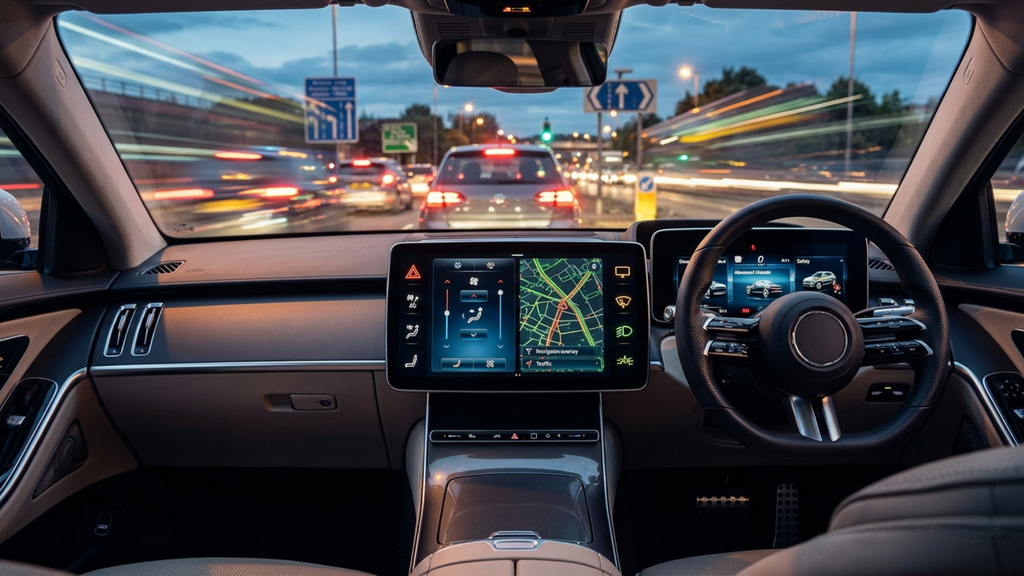
For businesses operating company cars and commercial vehicles, touchscreen usability is becoming another factor worth considering when reviewing fleet safety.
Drivers regularly move between different vehicle models, particularly when vehicles are replaced or allocated across departments. Dashboard layouts, infotainment systems and control arrangements can vary considerably between manufacturers.
A driver familiar with conventional dashboard switches may find that essential functions are accessed differently in a replacement vehicle. Even relatively straightforward tasks can become distracting if the driver is unfamiliar with the system.
Fleet managers should consider touchscreen usability when assessing vehicle suitability, alongside other safety, operational and financial requirements.
If a collision does occur, businesses should consider whether driver distraction or difficulty operating vehicle controls contributed to the incident. Our guide to investigating a company vehicle accident explains how fleet managers can examine contributing factors and identify improvements to help prevent similar incidents.
This should also form part of a wider fleet risk assessment, particularly where employees regularly drive different vehicles or use models with significantly different dashboard layouts.
Businesses should also review their company vehicle policies to ensure expectations around driver behaviour, vehicle familiarisation and avoiding distractions are clearly communicated.
Practical measures could include:
- Vehicle familiarisation: Allow drivers sufficient time to understand the dashboard layout, touchscreen menus and essential vehicle functions before using a new vehicle.
- Driver awareness: Include touchscreen-related distraction in existing driver safety training and communications.
- Journey preparation: Encourage drivers to programme navigation systems, select entertainment and adjust vehicle settings before setting off.
- Vehicle selection: Consider the accessibility of essential controls when comparing different makes and models.
- Safe driving practices: Reinforce the importance of keeping attention on the road and avoiding unnecessary interaction with dashboard screens while driving.
These steps can help businesses address potential distractions while ensuring employees understand the technology fitted to their vehicles.
Driver Awareness And Training Remain Essential
The increasing use of digital controls is unlikely to disappear, meaning drivers will need to become familiar with increasingly sophisticated vehicle interfaces.
However, understanding how these systems work before starting a journey is particularly important. Drivers moving from a vehicle with conventional switches to one where more functions are controlled through a touchscreen should take time to familiarise themselves with the layout while safely parked. Touchscreen use is one of several potential sources of distraction for employees driving for work. Our article on speeding and distracted driving among fleet drivers examines other behaviours that can affect concentration and increase road safety risks.
Employers should also make sure their company vehicle policies explain expectations around safe driving, driver responsibilities and the use of in-vehicle technology.
Employers also have a responsibility to consider the risks associated with work-related driving. The National Work-Related Road Safety Charter provides further context for businesses reviewing their approach to driver responsibilities and workplace road safety.
Touchscreen distraction should not be viewed in isolation. It forms part of a wider range of potential distractions that can affect concentration, reaction times and a driver’s ability to respond to changing road conditions.
For businesses, incorporating these considerations into their wider fleet management approach can help ensure vehicle technology, driver awareness and operational policies are considered together.
With Brake’s Road Safety Week taking place from 15–21 November 2026, under the theme Safe People on the Move, the issue provides a timely opportunity for employers to review how driver distraction is addressed within their organisations.
Driver training should form part of a wider approach to work-related road safety. The National Work-Related Road Safety Charter highlights the importance of appropriate training, clear policies and ongoing monitoring of driving behaviour.
As digital dashboards become increasingly common across company cars and vans, the way essential functions are accessed is likely to become a more significant consideration for fleet operators. Vehicle technology should make driving more convenient without compromising the attention and awareness required to use the road safely.
 Call our expert team on