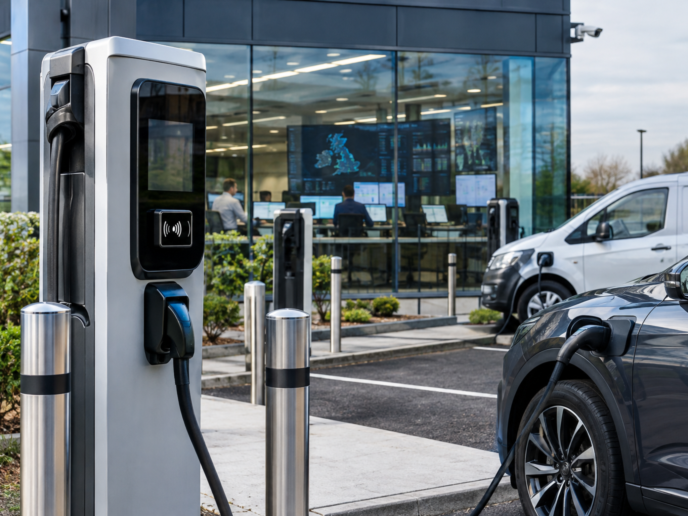
The Government is examining stronger cybersecurity protections for connected electric vehicle charging infrastructure, as the expansion of public charging networks creates new challenges for businesses relying on electric cars and vans.
Public EV chargepoints are becoming an increasingly important part of the UK’s transport infrastructure. However, the digital systems used to manage chargers, control electricity demand and communicate with connected devices also create potential security risks.
For businesses operating electric vehicles, the issue goes beyond whether a charger is available or how much a charging session costs. The reliability and security of the infrastructure supporting electric fleets could also influence journey planning, vehicle availability and day-to-day operations.
The Government’s wider work on smart energy systems and cyber resilience is intended to address these emerging risks as the electricity network becomes more connected.
Why Cybersecurity Is Becoming More Important For EV Charging
Modern electric vehicle chargepoints rely on software and communications systems to manage charging sessions, monitor equipment, process payments and allow operators to maintain infrastructure remotely.
These capabilities help charging providers manage large networks efficiently. However, they also mean that charging infrastructure needs appropriate protection against unauthorised access, software vulnerabilities and other potential cyber threats.
A security incident could affect different parts of the charging process, depending on the systems involved. Potential consequences include disruption to charging services, exposure of customer information or interference with systems used to manage electricity demand.
The wider concern is that some organisations can manage large numbers of connected devices through centralised platforms. If such a platform were compromised, the potential impact could extend beyond an individual chargepoint.
For fleet operators, the practical implications could include drivers having to find alternative charging locations, delays to planned journeys and additional pressure on vehicle schedules. Cybersecurity is only one aspect of charging resilience. Businesses also need to consider EV charger reliability when planning journeys and managing electric vehicle fleets.
The Main Cybersecurity Risks For Businesses Using Public Chargers
The following table outlines potential vulnerabilities associated with connected charging infrastructure and why they matter to businesses.
| Potential risk | Possible impact on businesses |
|---|---|
| Charging network disruption | Drivers could be unable to access affected charge points, potentially delaying journeys and deliveries. |
| Payment system vulnerabilities | Problems with connected payment services could make charging more difficult or expose transactions to fraud. |
| Unauthorised system access | Compromised accounts or management systems could allow access beyond what an attacker should be able to reach. |
| Data security breaches | Customer, driver or account information could be exposed if the systems holding it are compromised. |
| Remote control vulnerabilities | Weaknesses in network management systems could potentially allow unauthorised interference with connected equipment. |
These are potential risks rather than evidence that a particular UK charging network has been compromised. The actual consequences would depend on the vulnerability, the systems affected and the security measures in place.

What Is The Government Proposing?
The Government’s cybersecurity work forms part of its wider Smart Secure Electricity Systems (SSES) programme, which aims to establish regulatory and technical safeguards for connected energy devices and the organisations controlling them. Separate Government initiatives also support the development of charging infrastructure, including the Electric Vehicle Infrastructure Support Service, which helps public-sector organisations plan charging provision.
A key part of this work concerns organisations that remotely manage large amounts of electrical demand. This can include the coordinated control of energy smart appliances, such as electric vehicle chargepoints and other connected equipment.
In June 2026, the Department for Energy Security and Net Zero published a consultation on the proposed Cyber Assessment Framework requirements for large load controllers. The proposals were intended to help establish appropriate cybersecurity standards for organisations whose systems could affect the wider electricity network.
The consultation covered the proposed security standards, how they would be assessed and the practical implications for organisations expected to comply. It closed on 1 September 2026.
Under the proposals, organisations controlling an aggregate electrical load of 300MW or more through relevant energy smart appliances would be brought within the scope of the Network and Information Systems (NIS) regulatory framework, subject to the necessary legislation and implementation arrangements.
The Government has also set out plans to develop a broader licensing regime for load-control activities, with Ofgem involved in the regulatory process.
Further information is available in the official Government consultation on large load controllers and cybersecurity requirements.
It is important to distinguish these proposals from a blanket requirement covering every public EV charger. The focus is on the organisations and systems responsible for controlling electrical demand at scale, rather than every individual driver or chargepoint user.
The Scale Of The UK’s Public Charging Network
The need to protect connected charging infrastructure is becoming more significant as the public network expands.
Government figures published in June 2026 recorded more than 88,500 publicly available charging devices across the UK in February 2026, an increase of almost 20% compared with the previous year.
The Government has also identified potential demand for between 250,000 and 550,000 public chargepoints by 2030. Its Local Electric Vehicle Infrastructure Fund is intended to support the delivery of a further 100,000 chargepoints in England by that year.
| Public charging infrastructure | Government figure |
|---|---|
| Publicly available charging devices in February 2026 | More than 88,500 |
| Year-on-year increase | Almost 20% |
| Additional chargepoints targeted through the Local EV Infrastructure Fund in England by 2030 | 100,000 |
| Estimated public chargepoint demand by 2030 | 250,000–550,000 |
Sources: Department for Energy Security and Net Zero, Large Load Controllers: Tier 1 Cyber Assessment Framework consultation. Figures represent different measures: the existing network, a delivery target and estimated future demand.
As charging infrastructure grows, more devices and services will need to communicate with one another. This makes cybersecurity an important consideration alongside network capacity, charging speeds, reliability and geographical coverage. For further context, our guide to the UK EV charging network examines the wider infrastructure supporting electric vehicle adoption.
The Government’s Energy Sector Cyber Security Strategy, published in May 2026, sets out its wider approach to improving protection and resilience across Great Britain’s energy system.
What Could This Mean For Businesses Running Electric Cars And Vans?
Businesses increasingly rely on a combination of workplace charging, home charging and public networks to keep electric vehicles on the road. Access to public charging can be particularly important for drivers without off-street parking, as explained in our guide to EV charging without a driveway. Businesses considering the transition can also read our guide to electric van fleet transition, which explores the practical considerations involved in moving commercial vehicles to electric power.
For operators with their own depots, workplace charging can provide greater control over when vehicles are charged and how energy use is managed. Businesses whose drivers cover longer distances, work across several locations or lack access to dedicated charging facilities may depend more heavily on public infrastructure.
A disruption affecting a charging provider could therefore create different challenges for different fleets. A business with several alternative charging options may be able to adapt more easily than an operator relying on a single location or network.
Fleet managers should consider charging infrastructure as part of their wider vehicle and operational planning. This includes understanding how drivers can access alternative chargers, allowing sufficient flexibility in journey schedules and ensuring that employees know what to do if a charging service becomes unavailable.
Businesses reviewing their wider vehicle arrangements may also benefit from considering their approach to fleet management solutions and the coordination of vehicle requirements across their operations.
For organisations managing vehicles used by employees for business journeys, a structured approach to grey fleet management can also help bring vehicle use, business travel and operational responsibilities into a more consistent framework.
Practical Steps Fleet Managers Can Take
Although the Government’s proposals are primarily aimed at relevant energy and charging-sector organisations, businesses using electric vehicles can take practical steps to reduce disruption if charging services are affected.
| Area to review | Recommended consideration |
|---|---|
| Charging providers | Understand how providers communicate service interruptions and where to find live network status information. |
| Alternative charging | Identify backup public charging locations along regular routes and near business destinations. |
| Journey planning | Allow flexibility for charging stops, particularly for vehicles working to tight delivery or appointment schedules. |
| Workplace chargepoints | Ensure equipment is maintained, software updates are managed appropriately, and access is controlled. |
| Driver accounts | Encourage secure account practices, use of official charging apps and checks of payment activity. |
| Business continuity | Establish a clear procedure for drivers if a charging network, payment service or chargepoint becomes unavailable. |
Businesses can also review the latest UK EV charging network developments to understand the wider infrastructure supporting electric vehicle use.
These measures do not replace the technical cybersecurity controls required of charging providers or regulated organisations. They can, however, help businesses manage the operational consequences of service interruptions.
Businesses planning vehicle replacements should also consider how charging access, vehicle range and daily mileage affect the suitability of electric models. CVC’s one-stop fleet solutions provide a relevant starting point for reviewing wider fleet requirements.
Cybersecurity Must Develop Alongside EV Adoption
The transition to electric vehicles depends on more than the availability of suitable cars and vans. Businesses also need charging infrastructure that can support their transport requirements reliably as the number of connected devices and charging services increases. Businesses evaluating the practicalities of charging can also consult our guide to how EV charging works for businesses.
Cybersecurity is becoming an important part of that wider picture. Stronger standards could help improve the resilience of relevant charging and energy-management systems, while clearer regulatory responsibilities may help organisations understand the safeguards expected of them.
For fleet operators, the immediate priority is to understand their charging dependencies and have practical alternatives available if services are disrupted. As the regulatory framework develops, the effectiveness of the measures will depend on implementation, oversight and how well security practices keep pace with changes in technology.

 Call our expert team on