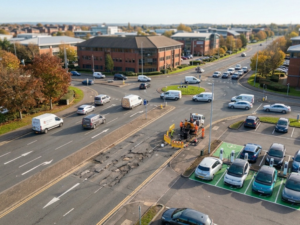
Tyre technology is becoming more complex, while pothole damage and unexpected replacement costs continue to create challenges for businesses operating cars and vans. For fleet managers, understanding how tyres are maintained, replaced and paid for can help reduce disruption and improve control over vehicle operating costs.
As vehicles become heavier, more technologically advanced and increasingly electrified, choosing the right tyres and keeping them in good condition are important parts of effective fleet management. Businesses also need to understand what their vehicle maintenance arrangements cover, particularly when considering fully maintained leasing.
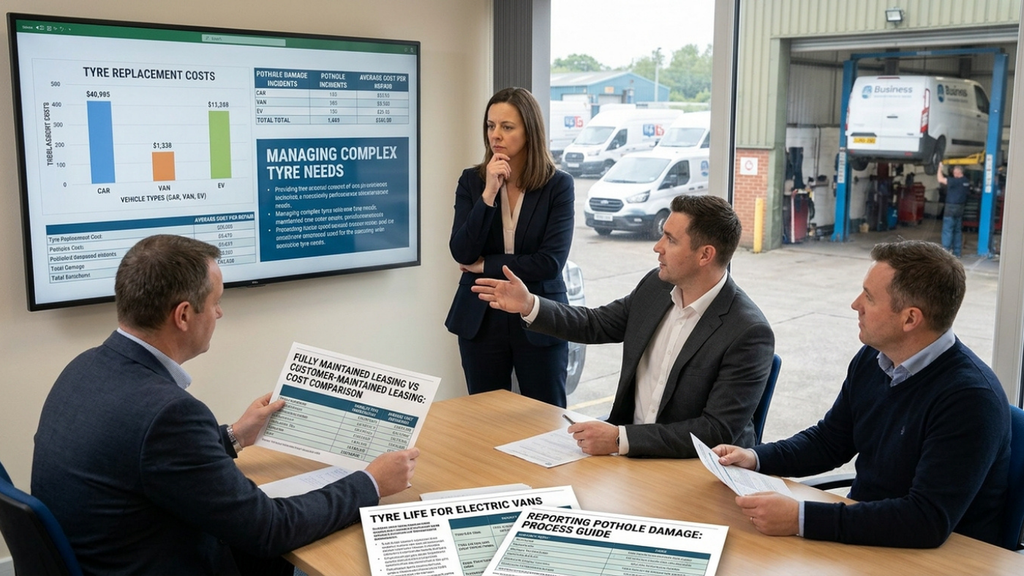
Why Tyre Requirements Are Becoming More Complex
Tyres are not simply a consumable item that can be replaced with any suitable alternative. Different vehicles have specific requirements relating to tyre size, load capacity, performance and manufacturer recommendations.
These considerations are particularly important for commercial vehicles. Vans may regularly carry heavy loads, travel across different road surfaces and cover substantial annual mileage. Selecting an unsuitable tyre can affect handling, braking performance and the vehicle’s ability to operate as intended.
Electric vehicles introduce additional considerations. Battery packs can increase vehicle weight, while the immediate delivery of torque can influence tyre wear. Some electric vehicles also use tyres designed to meet particular efficiency, noise or load requirements.
For businesses operating a mixed fleet, these differences can make tyre management more demanding. Fleet managers need to ensure replacement tyres meet the relevant vehicle specifications rather than making decisions based on price alone.
Regular inspections and prompt attention to signs of damage or uneven wear can help businesses identify potential problems before they lead to vehicle downtime.
Potholes And Road Damage: An Additional Cost For Business Fleets
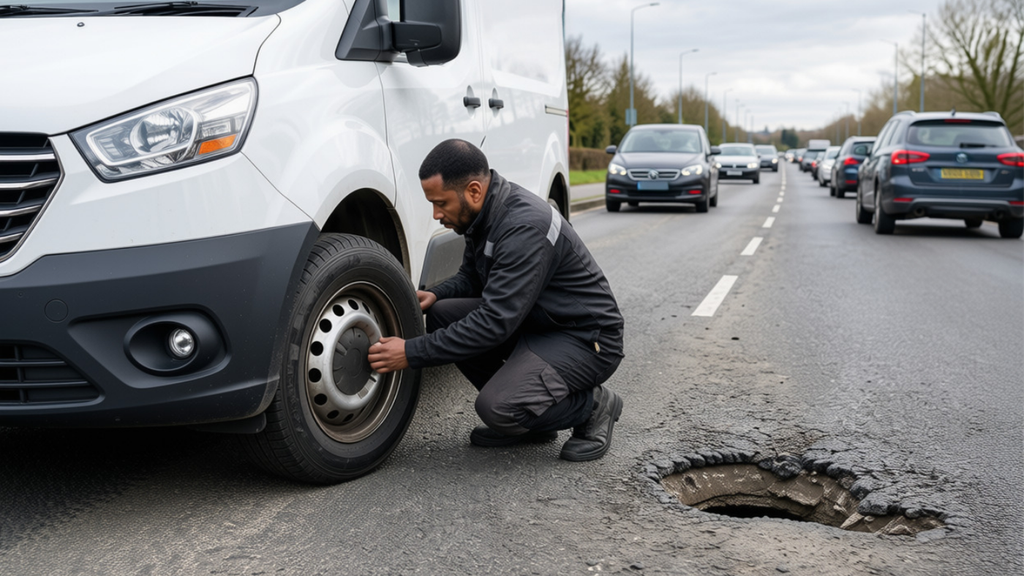
Potholes can cause damage to tyres, wheels and suspension components. Depending on the severity of the impact, a driver may experience a puncture, a tyre sidewall bulge, wheel damage or a problem that requires further inspection before the vehicle can safely return to the road.
For businesses that rely on vehicles to visit customers, deliver goods or carry equipment between sites, the consequences can extend beyond the cost of a replacement tyre.
A vehicle taken out of service may disrupt appointments, delay deliveries or require another vehicle to be arranged. Businesses may also need to reorganise work schedules while repairs are completed.
The potential impact is particularly relevant to tradespeople, delivery operators and service businesses whose employees depend on their vehicles throughout the working day. Our guide to how potholes can cause downtime for business drivers explores this operational challenge in more detail.
Although drivers cannot prevent every pothole-related incident, they can help reduce avoidable risks by reporting road hazards where appropriate, allowing sufficient distance to identify defects and checking tyres regularly for visible damage.
A tyre that appears inflated may still have sustained damage after a significant impact. Drivers should not ignore bulges, cuts, unusual vibrations or changes in handling. Where damage is suspected, the vehicle should be assessed by a suitably qualified professional before continued use.
How Can Businesses Reduce The Risk Of Tyre-Related Downtime?
Effective tyre management starts with a clear process for inspections, reporting defects and arranging repairs or replacements.
Businesses should ensure drivers understand their responsibilities and know how to report tyre damage. Checks should follow the vehicle manufacturer’s guidance and the company’s own vehicle safety procedures, with more frequent attention where mileage, operating conditions or vehicle use justify it.
Fleet managers can also review maintenance records to identify recurring problems. Repeated punctures, uneven tyre wear or frequent replacements may indicate that a vehicle needs further investigation, that its tyres are not suited to its use or that driving and loading practices need reviewing.
A structured approach to servicing and repairs can help businesses identify issues earlier and plan maintenance more effectively. CVC’s guide to vehicle maintenance explains the importance of keeping vehicles properly maintained.
Tyre management should also form part of wider fleet safety arrangements. Businesses operating vehicles for work need suitable procedures for reporting defects and ensuring vehicles remain roadworthy. Our article on fleet compliance and faulty brakes and tyres provides further guidance.
Does Fully Maintained Leasing Include Replacement Tyres?
For businesses considering vehicle leasing, one important question is whether routine maintenance and replacement tyres are included in the monthly rental.
With a fully maintained lease, eligible servicing, maintenance and repair costs may be covered by the maintenance package. However, the precise level of cover depends on the funder, the agreement and the terms selected at the outset.
Some leasing funders work with appointed tyre suppliers to manage replacement tyres for eligible customers. Lex Autolease continues to work with Kwik Fit, providing a relevant example of how a leasing provider can arrange tyre services through an established supplier. Businesses should follow their funder’s instructions on how to access the service and confirm that their particular agreement includes the relevant tyre cover.
Tyre replacement may be included in some maintenance arrangements, but businesses should not assume that every lease includes it. They should check the agreement carefully to establish which costs are covered, any exclusions that apply and the process for arranging replacement tyres.
This is particularly important for businesses with high annual mileage, vehicles operating in demanding environments or vans that regularly carry heavy loads. These factors can influence how frequently tyres need replacing and the overall cost of keeping vehicles on the road.
A maintained lease can make eligible maintenance expenses easier to plan for by bringing specified costs into an agreed monthly payment. However, it does not mean every repair, tyre replacement or instance of damage will automatically be covered.
Businesses should compare the cost and scope of maintenance options against their expected vehicle use. CVC’s guide to maintenance versus warranty explains the difference between these arrangements and why it matters when budgeting for business vehicles.
Are Pothole-Related Tyre Repairs Covered?
Businesses should distinguish between routine tyre replacement and damage caused by a specific incident.
A maintenance package may cover eligible tyre replacements under its terms, but pothole damage is not automatically covered simply because a vehicle is leased or has a maintenance agreement. The treatment of accidental damage, wheel damage and other repairs depends on the contract and any applicable exclusions.
Before choosing a lease, businesses should ask the provider or funder how tyre damage is handled, whether replacement tyres are included and what happens if a vehicle requires emergency assistance following an impact.
It is also worth checking the process for authorising repairs. Understanding where drivers should take a vehicle, who must approve the work and how costs are assessed can help avoid confusion when a problem occurs.
These details matter because a maintenance package should be assessed on the cover it actually provides, rather than the assumption that all running costs are included.
Fully Maintained Leasing Vs Customer-Maintained Leasing
The right arrangement depends on a business’s budget, vehicle use and preference for managing maintenance directly.
| Consideration | Fully maintained leasing | Customer-maintained leasing |
|---|---|---|
| Maintenance costs | Eligible costs are covered according to the agreement | The business pays for servicing and maintenance separately |
| Tyre replacement | May be included, subject to the package terms | Normally arranged and paid for by the business |
| Budgeting | Can make covered costs more predictable | Costs may vary depending on vehicle use and repairs |
| Administration | Some maintenance administration may be handled through the provider’s arrangements | The business has greater responsibility for arranging and managing work |
| Unexpected damage | Cover depends on the agreement and exclusions | The business may be responsible for the repair cost, subject to any other applicable cover |
The comparison is a general guide rather than a guarantee of the terms available under every lease. Businesses should review the specific agreement before making a decision.
For a broader view of the costs involved in operating business vehicles, read CVC’s guide to total cost of ownership for business vehicles.
Why Tyre Management Matters For Electric Vehicles
Tyre selection and maintenance are also important for businesses moving towards electric cars and vans.
Electric vehicles can have different weight distributions and torque characteristics from comparable petrol or diesel models. These differences can influence tyre requirements and wear, although the actual effect varies by vehicle, tyre specification, load and driving conditions.
Businesses should follow the manufacturer’s recommendations when selecting replacement tyres and should not assume that a tyre suitable for one model will necessarily be appropriate for another.
For fleets introducing electric vans, tyre management should sit alongside wider operational planning, including charging arrangements, vehicle suitability and expected mileage. CVC provides further information about electric van leasing for businesses.
Drivers should also know what to do if an electric vehicle suffers tyre damage or another roadside problem. Our guide to electric vehicle breakdowns involving cars and vans explains some of the considerations involved.
How Better Maintenance Planning Can Support Fleet Efficiency
Tyre costs are only one part of the wider expense of running business vehicles. Servicing, repairs, downtime, vehicle replacement and administration can all influence the overall cost of operating a fleet.
Businesses can improve visibility by reviewing vehicle mileage, maintenance history, tyre replacement frequency and the costs associated with repairs. This information can help identify patterns and support decisions about vehicle selection, maintenance arrangements and replacement cycles.
For example, a business operating high-mileage vans may have different maintenance requirements from a company using cars mainly for occasional client visits. The most suitable leasing and maintenance arrangement should reflect those differences.
Centralising vehicle information can also help fleet managers keep track of maintenance requirements and relevant records. CVC’s vehicle lease management portal provides information about managing vehicle leasing administration, while our fleet management solutions page outlines the wider support available to businesses.
The aim is not simply to minimise the cost of each tyre replacement. It is to understand the overall cost of keeping vehicles safe, available and suitable for their intended work.
What Should Businesses Check Before Choosing A Maintenance Package?
Before entering into a business vehicle lease, fleet managers should establish exactly what is included in any maintenance package.
Key questions include:
- Are replacement tyres included, and are there any limits or exclusions?
- How are pothole-related tyre and wheel damage assessed?
- Which servicing, repairs and routine maintenance costs are covered?
- How should drivers arrange authorised repairs or replacement tyres?
- Are there restrictions on where maintenance work can be carried out?
- What responsibilities remain with the business and its drivers?
- How does the monthly cost compare with the likely cost of maintaining the vehicles separately?
Businesses should also consider their expected mileage and operating conditions. Annual mileage allowances can affect leasing costs, so it is important to choose an agreement that reflects how the vehicles will actually be used. CVC’s guide to mileage allowance in vehicle leasing explains this consideration.
Clear driver guidance is equally important. Employees should understand how to report defects, arrange maintenance and look after leased vehicles. Our fair wear and tear guide can also help businesses understand the distinction between normal use and damage that may lead to charges at the end of a lease.
Choosing The Right Business Vehicle Lease
The most suitable leasing arrangement will depend on the vehicles a business needs, how they will be used and the level of maintenance support required.
A business comparing options should consider the complete agreement, including the monthly rental, maintenance provision, mileage allowance and any costs that remain its responsibility. The cheapest headline rental will not necessarily represent the best overall fit if important operating costs are excluded.
CVC offers business van leasing and support for companies reviewing their vehicle requirements. Businesses can explore available options and discuss their needs with the team before deciding which arrangement is appropriate.
By assessing tyre requirements and maintenance cover at the outset, businesses can make more informed decisions about how to manage operating costs and keep their vehicles available for work.
 Call our expert team on