
A collision involving a company car or van can create immediate safety concerns, disrupt business operations and leave managers dealing with insurance claims, vehicle recovery and employee welfare. When an incident is serious, the business may also need to coordinate with emergency services, support an employee’s family and preserve evidence for an investigation.
Having a clear accident response plan in place before an incident happens helps everyone understand their responsibilities. Drivers need to know what to do at the scene, while fleet managers need a process for assessing the situation, contacting the right people and keeping the business operating where possible.
For businesses operating multiple vehicles, an organised response can make a significant difference. This guide explains how to prepare for a collision, what drivers should do immediately afterwards and how fleet managers can use incident investigations to improve safety.
Why Every Business Needs A Vehicle Accident Response Plan
Even businesses with good driver training and well-maintained vehicles cannot eliminate every road risk. A collision may involve another road user, an unexpected hazard, poor weather, a vehicle defect or a mistake by the driver.
The important point is to establish procedures before something goes wrong. During a stressful incident, drivers and managers should not have to work out who to contact, which information to collect or who is responsible for making decisions.
A written accident response plan should identify:
- Emergency contacts: Who drivers should call, including emergency services, their line manager, the fleet contact, the insurer or the designated accident management provider.
- Reporting requirements: How quickly incidents must be reported and what information drivers must provide.
- Management responsibilities: Who handles insurance notifications, vehicle recovery, replacement transport and communication with senior management.
- Serious incident procedures: How the business responds when someone is seriously injured, hospitalised or killed.
- Employee support: Who is responsible for checking on the driver’s welfare and arranging appropriate support.
- Evidence preservation: How photographs, dashcam footage, witness details and other relevant records will be secured.
- Business continuity: How deliveries, customer appointments and other essential work will be covered if a driver or vehicle becomes unavailable.
The plan should be accessible to employees whenever they are driving for work, including outside normal office hours. Managers should also make sure drivers understand the procedure rather than simply distributing a policy and assuming everyone has read it.
Businesses can incorporate these arrangements into their existing company vehicle policy and wider fleet management procedures.
What Should A Driver Do Immediately After A Collision?
The driver’s first priority is safety. The company procedure should provide clear instructions that can be followed calmly, without encouraging anyone to put themselves or others at additional risk.
1. Stop And Assess The Situation
Drivers must stop at the scene as soon as it is safe to do so. They should switch off the engine, activate the hazard lights where appropriate and check whether they or anyone else has been injured.
If someone is seriously injured, in immediate danger or the collision creates a dangerous obstruction, emergency services should be contacted on 999.
On a motorway or other dangerous road, drivers and passengers should move to a safer location if they can do so safely. They should not stand in live traffic or attempt to deal with debris in a dangerous location.
Anyone who is injured should not be moved unless necessary to protect them from immediate danger. Drivers should follow the emergency operator’s instructions and avoid attempting first aid beyond their training.
2. Exchange Details With Other Parties
Once it is safe to do so, drivers should exchange the information required following the collision. This normally includes names, addresses and vehicle registration numbers, along with insurance details where required or requested.
They should also collect contact details from witnesses if possible. If another party refuses to provide details or leaves without exchanging them, the driver should contact the police for guidance.
Drivers should remain calm and avoid arguments about who caused the collision. They should not admit liability or agree to pay for damage at the scene.
3. Record The Incident Safely
Photographs and accurate notes can help the business and its insurer establish what happened. Where it is safe and lawful to do so, drivers should record:
- The position of the vehicles and the visible damage.
- The road layout, junctions, signs and relevant road conditions.
- The time, location and circumstances of the collision.
- The registration numbers and details of the vehicles involved.
- Witness names and contact information.
- Any relevant dashcam footage or other available evidence.
Drivers should never put themselves in danger to obtain photographs or recordings. They should also avoid interfering with a police investigation or moving vehicles where instructed not to do so.
4. Report The Collision To The Employer
The driver should contact the designated manager or fleet contact as soon as it is safe, even if the damage appears minor and the vehicle remains driveable.
The report should explain what happened, whether anyone was injured, which vehicles were involved and whether the company vehicle can be driven safely. The driver should also follow the company’s requirements for completing an incident form and notifying the insurer or accident management provider.
Prompt reporting helps the business arrange assistance, protect relevant evidence and meet any applicable insurance notification requirements.
Drivers must also comply with their legal obligations to report collisions to the police where required. Further guidance is available from Police.uk’s advice on road collisions.

How Should Fleet Managers Respond To An Accident?
Once a collision has been reported, the fleet manager or designated incident coordinator should take control of the business’s response. Their role is to establish what assistance is needed, make sure the appropriate people are informed and coordinate the next steps.
Company Vehicle Accident Response Checklist
| Stage | What The Fleet Manager Should Do |
|---|---|
| Immediately | Establish whether anyone is injured, confirm that emergency services have been contacted where necessary, and check that the driver is safe. |
| As Soon As Possible | Contact the driver, record the initial details and establish whether the vehicle is safe to drive or needs recovery. |
| Report The Incident | Follow the company’s reporting procedure and notify the relevant insurer or leasing provider in line with the applicable requirements. |
| Preserve Evidence | Secure dashcam footage, CCTV, photographs, witness details and the driver’s account before evidence is lost or overwritten. |
| Arrange Vehicle Recovery | Organise recovery and assess whether a replacement vehicle is needed to minimise disruption to the business. |
| Investigate The Accident | Establish what happened, identify contributing factors and determine whether additional training, maintenance or changes to working practices are needed. |
| Review And Follow Up | Record the outcome, support the driver and update procedures where necessary to reduce the risk of a similar incident. |
Assess The Severity Of The Incident
A simple incident classification system can help the business determine how urgently to escalate a report. For example, it could distinguish between:
- Minor incidents: Vehicle damage with no reported injuries and no immediate safety concerns.
- Injury incidents: Collisions involving injuries that require medical attention or further assessment.
- Serious incidents: Events involving serious injuries, hospitalisation, a suspected fatality or circumstances requiring an immediate senior management response.
The categories should trigger clear actions rather than simply label the incident. A serious collision may require an immediate management escalation, emergency coordination, sensitive communications and support for the employee’s family.
The manager should not wait for a complete account of the incident before escalating a potentially life-threatening situation.
Assign Responsibilities And Notify The Right People
For a serious collision, one person should coordinate the response, with clearly assigned responsibilities for other tasks. Depending on the circumstances, these may include:
- Liaising with the driver and emergency services where appropriate.
- Informing senior management and the relevant health and safety personnel.
- Contacting the insurer or accident management provider.
- Coordinating communications with the employee and, where appropriate, their family.
- Arranging vehicle recovery and replacement transport.
- Managing operational disruption and customer commitments.
- Preserving records and coordinating the subsequent investigation.
The business should establish who is authorised to make decisions and who provides cover outside normal working hours. For a serious incident, it may be useful to have a second designated contact in case the main contact is unavailable.
Communication with an injured employee’s family must be handled sensitively and with due regard for privacy. Managers should coordinate with the appropriate authorities and avoid sharing unconfirmed information.
Notify The Insurer And Arrange Vehicle Recovery
The business should follow the relevant insurance policy conditions and notify the insurer promptly. Managers should check the reporting deadlines, documentation requirements and approved repair or recovery arrangements rather than assuming the same process applies to every policy.
If the vehicle is unsafe or cannot be driven, recovery should be arranged through the appropriate provider. A damaged vehicle should not return to service until its roadworthiness has been established.
Businesses using leased vehicles should also check their contractual arrangements and any relevant funder requirements. Depending on the agreement, additional notification or repair procedures may apply.
For guidance on the distinction between cover and maintenance responsibilities, see CVC’s guides to insuring a lease van and vehicle maintenance.
Arrange Replacement Transport And Protect Business Continuity
A collision can leave a business without a vehicle at short notice. This can affect deliveries, customer appointments, site visits and the completion of scheduled work.
Fleet managers should assess the operational impact and decide whether to reallocate another vehicle, arrange suitable replacement transport or reorganise the affected work. Any replacement vehicle must be appropriate for the driver’s licence, the task and the business’s insurance arrangements.
For specialist operations, vehicle suitability matters as much as availability. A standard van may not be an appropriate substitute for a refrigerated vehicle, a tipper or a vehicle fitted with specialist equipment.
Businesses can review their options through CVC’s commercial vehicle conversions guide and one-stop fleet solutions.
Why Preserving Evidence Matters
Evidence can become unavailable surprisingly quickly. Dashcam systems may overwrite recordings, CCTV footage may be deleted automatically and witnesses may become harder to contact as time passes.
Fleet managers should therefore make evidence preservation an early priority, particularly where serious injury, disputed liability or possible legal action is involved.
Relevant material may include:
- Dashcam footage from the company vehicle and, where lawfully available, other vehicles.
- CCTV recordings from nearby businesses, premises or road infrastructure.
- Photographs of the scene and vehicle damage.
- Witness details and statements.
- Driver incident reports and relevant journey records.
- Vehicle inspection, maintenance and defect records.
- Information about weather, road conditions and the route being travelled.
Where external CCTV may be relevant, the business should identify the owner and request that footage be preserved as soon as possible. Access to recordings must be handled lawfully, with appropriate consideration for data protection and privacy.
Managers should retain relevant records securely and avoid editing or altering original evidence. Where the collision is being investigated by the police or another authority, the business should follow their instructions and seek appropriate professional advice before taking steps that could interfere with the investigation.
How Should A Business Investigate A Vehicle Collision?
An investigation should establish what happened, why it happened and whether changes could reduce the likelihood of a similar incident. It should not simply aim to identify someone to blame.
The depth of the investigation should reflect the severity of the collision, the potential consequences and any applicable reporting or legal requirements.
Establish What Happened
Start by reviewing the driver’s account, available photographs, witness information, relevant footage and the vehicle’s condition. Where necessary, obtain technical advice or arrange a professional vehicle inspection.
The investigation should consider the circumstances before the collision, including the journey purpose, route, weather, traffic, working pressures and any reported vehicle defects.
Managers should distinguish between confirmed facts and assumptions. Where the evidence does not establish a clear cause, that uncertainty should be recorded rather than replaced with speculation.
Examine The Contributing Factors
A collision may have several contributing factors rather than one simple cause. These could include distraction, fatigue, insufficient training, an unsuitable vehicle, poor visibility, road conditions or maintenance issues.
Businesses should review relevant records and procedures to determine whether their existing controls were adequate. For example, a collision involving a tyre defect may require an examination of inspection arrangements, defect reporting and maintenance records.
CVC’s guides to fleet audits and fleet vehicle servicing and maintenance provide useful context for reviewing fleet oversight and vehicle upkeep.
Employers should also consider their wider responsibilities for people who drive for work. The Health and Safety Executive’s guidance for employers explains the duties that can apply to work-related driving.
Turn Findings Into Practical Improvements
The purpose of an investigation is to produce meaningful action. Depending on the findings, this could involve additional driver training, revised routes, changes to scheduling, improved vehicle checks or clearer incident-reporting procedures.
For example, repeated collisions during tight delivery schedules may indicate a need to review journey planning and work pressures. Repeated reversing incidents may point towards a need for better manoeuvring procedures, training or vehicle equipment.
Actions should have a named owner and a realistic completion date. Managers should then check whether the changes have been implemented and whether they are working.
A fair, learning-focused approach encourages drivers to report incidents and near misses honestly. Deliberate misconduct should still be addressed appropriately, but automatically blaming the driver can prevent a business from identifying wider problems in its systems.
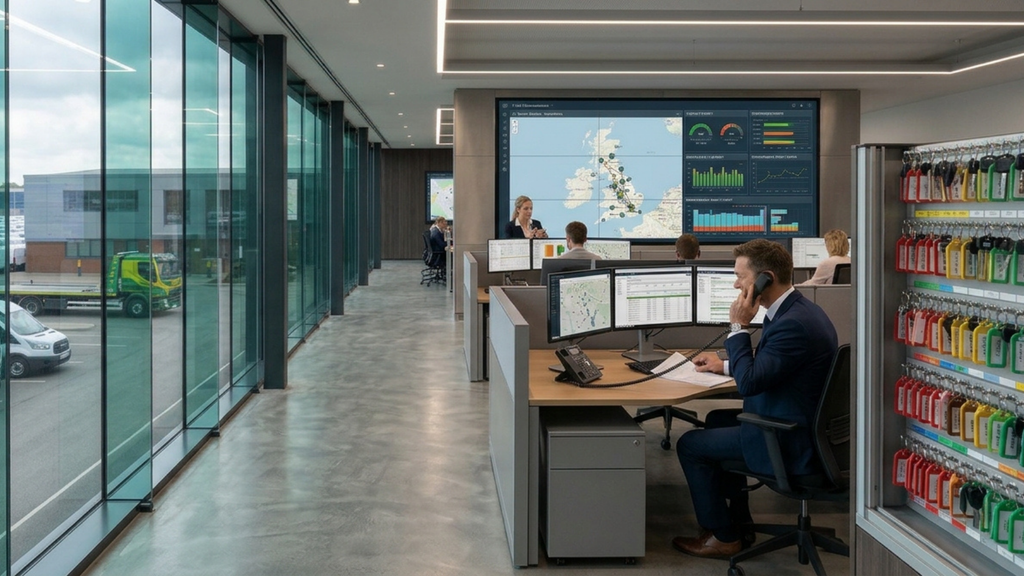
Using Collision Data To Improve Driver Safety
Individual incidents can reveal risks that are difficult to spot when looking at the fleet as a whole. Recording collisions and near misses consistently allows managers to identify recurring patterns and prioritise preventative action.
Useful information to review includes:
- The frequency and severity of incidents.
- The types of collision and vehicles involved.
- Common locations, routes and operating conditions.
- Whether incidents occur during particular tasks or working patterns.
- The role of vehicle condition, driver training and journey planning.
- Whether previous corrective actions have reduced repeat incidents.
Where possible, businesses should consider incident rates alongside measures such as distance travelled or vehicle utilisation. Raw totals alone can be misleading when comparing fleets of different sizes or workloads.
Near misses also deserve attention. Although they may not cause damage or injury, they can reveal hazards that could lead to a more serious collision in future.
Managers should use the findings to update risk assessments, communicate lessons to drivers and review the effectiveness of their safety measures. Personal information should be handled appropriately, and reports should be shared in a way that supports learning without unnecessarily exposing individual employees.
Preventing Future Collisions Across The Fleet
An effective accident response plan is only one part of managing work-related driving risks. Businesses should also take steps to prevent collisions in the first place.
Provide Appropriate Driver Training
Drivers should understand the risks associated with their vehicles, journeys and working environments. Training may cover defensive driving, reversing, loading, vehicle dimensions, safe following distances and driving in adverse weather.
Where investigations identify a specific training need, refresher sessions should address that issue rather than relying solely on generic training.
Maintain Vehicles And Address Defects
Regular maintenance and prompt defect reporting help businesses identify problems before they contribute to an incident. Drivers should know how to carry out the required checks and how to report concerns about tyres, brakes, lights, steering or other safety-critical components.
Managers should ensure reported defects are assessed and rectified appropriately, with clear rules preventing unsafe vehicles from returning to service.
Review Driver Welfare And Working Pressures
Fatigue, stress and unrealistic schedules can affect concentration and decision-making. Journey planning should allow sufficient time for travel, breaks and changing conditions, without encouraging drivers to take risks to meet deadlines.
Businesses should also provide a clear route for drivers to raise concerns about fatigue, stress or their fitness to drive. CVC’s guide to driver mental health and fleet support explores the importance of employee wellbeing in fleet operations.
Check That Vehicles Are Suitable For The Work
The right vehicle can help drivers carry out tasks safely and efficiently. Businesses should consider payload, load security, visibility, access requirements and any specialist equipment fitted to the vehicle.
For example, a trade business may need to consider secure storage and load organisation, while a delivery fleet operating in urban areas may need to account for restricted access and frequent stops.
CVC’s guide to choosing the right van explains some of the factors businesses should consider when selecting a vehicle for their operations.
Keep The Accident Response Plan Up To Date
Contact details, insurance arrangements, vehicle fleets and staff responsibilities can change. Businesses should review their accident procedures periodically and after significant incidents or operational changes.
Drivers and managers should know where to find the latest instructions. A short, accessible checklist and a clear out-of-hours contact process can be particularly useful when an incident occurs away from the main workplace.
For businesses operating electric vehicles, the plan should also cover charging-related problems and appropriate recovery arrangements. CVC’s guide to electric vehicle breakdowns explains some of the issues that electric car and van drivers may encounter.
What Should Be Included In A Fleet Accident Checklist?
A practical checklist helps managers confirm that the key actions have been considered without having to rely on memory during a stressful situation.
Before an incident:
- Establish a written accident response procedure.
- Give drivers accessible emergency and reporting contact details.
- Assign primary and backup incident coordinators.
- Explain the insurance notification and vehicle recovery process.
- Train relevant staff in their responsibilities.
When a collision is reported:
- Confirm whether anyone is injured or in immediate danger.
- Ensure emergency services have been contacted where necessary.
- Establish the driver’s location and whether assistance is required.
- Escalate serious incidents to the appropriate managers.
- Arrange insurer notification and vehicle recovery as appropriate.
- Identify any evidence that needs to be preserved urgently.
- Assess replacement transport and operational requirements.
After the immediate response:
- Complete and securely retain the incident report.
- Preserve relevant evidence and records.
- Investigate the collision proportionately.
- Support affected employees and arrange further assistance where needed.
- Record corrective actions, assign responsibilities and review completion.
- Update risk assessments, training or procedures where necessary.
Download Your Fleet Vehicle Accident Response Checklist
Make sure your business is prepared before a company car or van is involved in a collision. Our practical fleet vehicle accident response checklist helps you organise driver instructions, emergency contacts, incident reporting, insurance notifications, evidence preservation and post-incident reviews.
Use it to review your existing procedures, identify gaps and make sure the people responsible for managing an accident understand their roles.
Download the checklist and adapt it to your business’s fleet, insurance arrangements and operating requirements.
The checklist should be adapted to the business’s fleet size, operating requirements and risk profile. It should support the company’s wider procedures rather than replace emergency services’ instructions, insurance conditions or applicable legal requirements.
 Call our expert team on