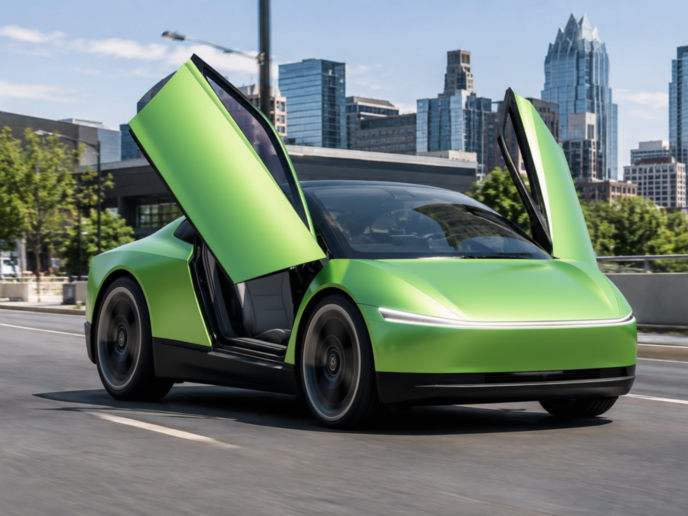
Tesla has taken another significant step towards a vehicle controlled entirely by electronics, with its new Cybercab robotaxi using an unusual braking system that does away with conventional brake fluid and hydraulic lines.
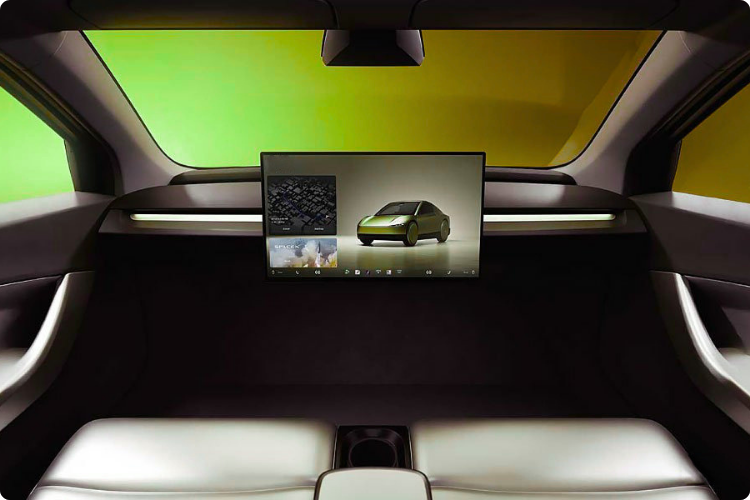
The two-seat autonomous vehicle has now started carrying passengers in Austin, Texas, but its lack of a steering wheel and pedals is not the only feature setting it apart from conventional cars.
The Cybercab is also reported to use a fully electronic brake-by-wire system, meaning braking force is generated through electronically controlled actuators rather than a traditional hydraulic system.
That removes several familiar components from the braking system, including the master cylinder, hydraulic pipes and brake fluid.
The technology represents a further move towards the software-controlled vehicle, where systems traditionally operated through mechanical or hydraulic connections are instead controlled electronically as the automotive industry continues its shift towards electric vehicles.
How Does The Cybercab’s Braking System Work?
Conventional vehicle braking systems use hydraulic pressure.
When a driver presses the brake pedal, the master cylinder pressurises brake fluid. That fluid travels through a network of brake lines to the individual wheels, where the pressure operates the brake calipers and brings the vehicle to a stop.
The Cybercab takes a different approach.
Electronic signals are used to control actuators at the individual wheels, allowing the braking system to apply force without relying on a vehicle-wide hydraulic circuit.
This means Tesla can remove the need for a conventional brake-fluid reservoir, master cylinder and the associated hydraulic plumbing.
The result is a braking system that is much more closely integrated with the vehicle’s electronic architecture.
Why Has Tesla Removed The Hydraulic System?
For Tesla, the decision appears to be about more than simply introducing new technology.
Elon Musk has previously highlighted the complexity associated with conventional hydraulic braking systems, pointing to the amount of plumbing required to connect the different parts of the vehicle.
An electronic system can potentially simplify the vehicle’s construction by reducing the number of physical connections that need to be installed during manufacturing.
That could be particularly important for a vehicle such as the Cybercab.
Tesla is designing the robotaxi to operate without a human driver, while also targeting high-volume production. The development forms part of a wider move towards autonomous vehicles, which could eventually have significant implications for fleet and leasing operations. Reducing components and simplifying assembly could therefore provide manufacturing benefits as well as freeing up space for other vehicle systems.
The move also fits with Tesla’s broader push towards electronically controlled vehicles, where steering, braking and other functions can increasingly be managed through vehicle software and electronic hardware, as demonstrated across models such as the Tesla Model 3.
The Cybercab Is Part Of A Bigger Shift In Vehicle Design
The braking system is particularly significant because it shows how autonomous vehicles could require manufacturers to rethink components that have remained largely unchanged for decades.
Removing the driver means there is no longer a need to design the vehicle around the actions of a person sitting behind the wheel.
Instead, the vehicle’s electronic systems become responsible for controlling acceleration, steering and braking.
Tesla has already moved towards steer-by-wire technology with the Cybertruck, removing the conventional mechanical connection between the steering wheel and the front wheels.
The Cybercab takes that philosophy further by combining its autonomous driving technology with electronic control of the braking system, technology that could influence the design of future Tesla models such as the Tesla Model Y Premium Long Range RWD.
This could ultimately influence how future electric vehicles are designed, particularly as manufacturers look for ways to reduce weight, simplify production and integrate more vehicle functions into central electronic architectures.
Could This Technology Reach Electric Vans?
The technology could also have implications beyond passenger cars and robotaxis.
The technology could also have implications beyond passenger cars and robotaxis, particularly as electric vans become increasingly dependent on sophisticated electronic systems.
A fully electronic braking system could potentially offer manufacturers greater flexibility when designing future electric commercial vehicles.
There could also be advantages for vehicles operating intensively in commercial fleets, particularly as electric van adoption continues to increase among UK businesses and reducing components could help simplify vehicle maintenance.
However, completely replacing hydraulic braking is not a straightforward change.
Vehicle braking safety is one of the most important considerations for any vehicle, meaning electronic systems must provide extremely high levels of reliability and continue to operate safely in the event of component or electrical failures.
For autonomous vehicles in particular, there is no driver available to intervene if the primary control system encounters a problem, an issue that becomes increasingly important as self-driving vehicles move towards real-world passenger services.
That makes redundancy, fault detection and backup systems particularly important.
Regulators Are Already Looking Closely At The Cybercab
The Cybercab’s unusual technology is arriving at a time when Tesla is also facing regulatory scrutiny over the vehicle itself.
The US National Highway Traffic Safety Administration (NHTSA) opened an Audit Query into Tesla’s self-certification of the Cybercab shortly after commercial deployment began in Austin.
The regulator is examining the process and technical information Tesla used when certifying the vehicle against applicable Federal Motor Vehicle Safety Standards. The Cybercab’s lack of conventional controls, including a steering wheel and brake pedal, is central to the regulatory questions surrounding the vehicle.
Importantly, the NHTSA action is an audit of Tesla’s certification process and does not mean the agency has found a defect with the Cybercab.
That regulatory scrutiny highlights one of the biggest challenges facing autonomous vehicle manufacturers.
Technology is developing much faster than many of the rules originally written for vehicles operated by human drivers.
A Glimpse At The Future Of Electric Vehicles?
The Cybercab’s braking system may ultimately prove to be more important than the vehicle’s unusual appearance.
Fully autonomous vehicles require manufacturers to reconsider almost every part of the traditional vehicle architecture.
Steering wheels and pedals can disappear when there is no driver. Hydraulic systems can potentially be replaced by electronic actuators. Mechanical connections can increasingly be replaced by software-controlled systems.
Tesla’s Cybercab demonstrates how far that transition could eventually go.
For electric vans and other commercial vehicles, the development will be worth watching closely.
s manufacturers continue moving towards software-defined vehicles, models such as the Tesla Model Y Standard RWD show how electric vehicles are already moving towards increasingly integrated electronic systems, while the braking, steering and other mechanical components used in today’s vans could look very different in the next generation of vehicles.
The Cybercab is therefore not just another autonomous vehicle.
It could provide an early indication of how manufacturers intend to build vehicles in which electronics and software control almost every major driving function.
 Call our expert team on