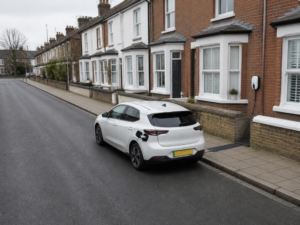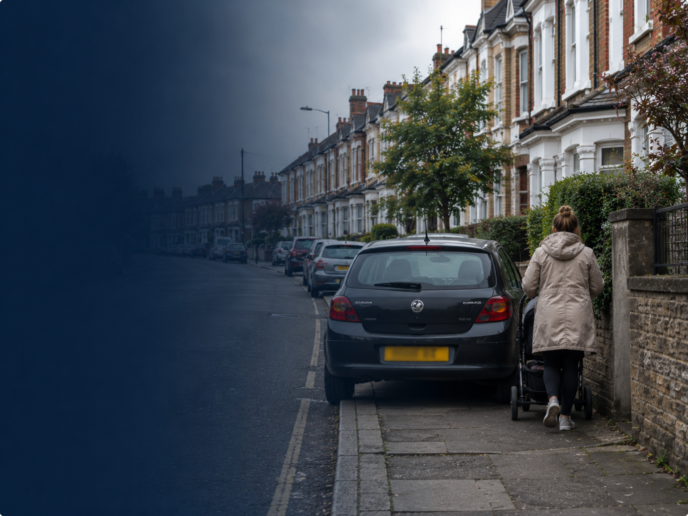
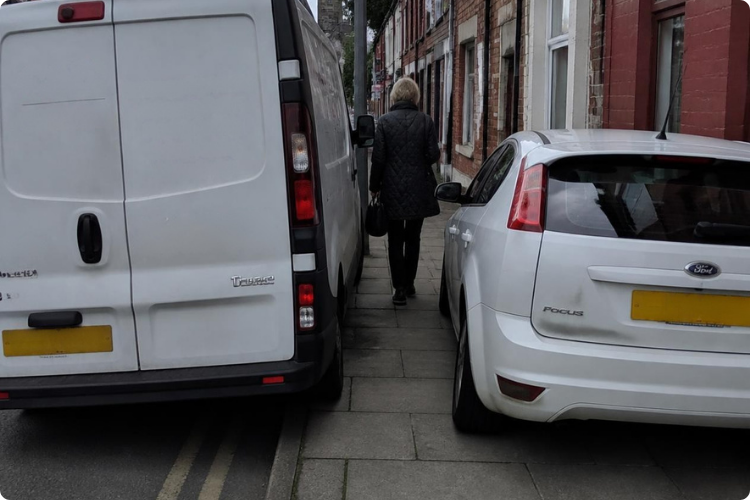
Pavement parking has been a contentious issue for many years, with campaign groups, local authorities and motorists divided over how it should be managed. While parking partly on the pavement can help keep narrow roads open to traffic, it can also create significant obstacles for pedestrians, wheelchair users and people with visual impairments.
Now, the Government is proposing changes that could make it much easier for councils across England to introduce wider pavement parking restrictions. If approved by Parliament, the reforms would give local authorities greater powers to enforce area-wide restrictions without relying on lengthy legal processes for individual streets.
For businesses operating company cars, vans and commercial fleets, the changes could have practical implications for where vehicles can be parked while carrying out deliveries, service visits and customer appointments.
Why Is Pavement Parking Being Reviewed?
Unlike many other driving offences, pavement parking is not currently governed by a single set of rules across England. Instead, the legality of parking on the pavement depends largely on where the vehicle is parked.
Outside London, many councils can only prohibit pavement parking by introducing a Traffic Regulation Order (TRO). This legal process often applies to a specific road or small area and can take considerable time and resources to implement. As a result, neighbouring streets can sometimes have completely different parking restrictions.
The Government believes the current system is overly complex and has announced plans to simplify enforcement by giving eligible local authorities wider powers to introduce restrictions across larger areas where appropriate.
The proposed legislation would not automatically introduce a nationwide pavement parking ban. Instead, it would make it easier for councils to decide where restrictions should apply while retaining flexibility to allow pavement parking where road layouts make it necessary.
Why Do Some Councils Still Allow Pavement Parking?
Although pavement parking is often criticised, many local authorities argue that it remains necessary in certain locations.
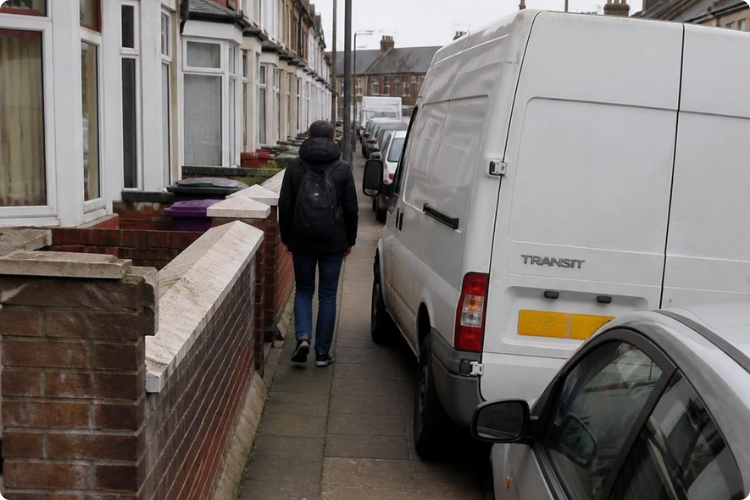
A significant proportion of Britain’s residential streets were designed decades before car ownership reached today’s levels. Many roads are simply too narrow to accommodate parked vehicles while still allowing two-way traffic or access for larger vehicles.
Where parking entirely on the road would block the carriageway, councils may designate parking bays that require vehicles to park partially or fully on the pavement. These arrangements are intended to maintain access for:
- Emergency service vehicles
- Refuse collection lorries
- Public buses
- Delivery vehicles
- Utility and maintenance vehicles
- Residents requiring vehicle access
According to a Freedom of Information investigation by the BBC, dozens of councils currently operate designated pavement parking bays, demonstrating that the practice remains an important traffic management tool in some parts of England.
The Local Government Association (LGA) has said local authorities must carefully balance the needs of motorists, businesses and pedestrians when making parking decisions. What may be appropriate on one street may not be suitable on another, particularly where pavement widths, traffic volumes and residential access differ.
Why Is Pavement Parking So Controversial?
Despite the practical benefits in some locations, pavement parking continues to attract widespread criticism from accessibility groups and road safety organisations.
When vehicles block footways, pedestrians may be forced into the road to continue their journey. This can present particular difficulties for:
- Wheelchair users
- Mobility scooter users
- Blind and partially sighted people
- Parents with pushchairs
- Older pedestrians
- Young children walking to school
The Guide Dogs charity has repeatedly called for stronger restrictions, arguing that vehicles obstructing pavements can reduce independence for people living with sight loss and increase the risk of collisions with moving traffic.
The Royal National Institute of Blind People (RNIB) has also highlighted pavement parking as one of the most significant barriers faced by blind and partially sighted people travelling independently. Research published by the charity found that 82% of respondents considered pavement parking to be a major issue, while 92% said they had been forced into the road because of obstructions.
In addition to accessibility concerns, pavement parking can also damage infrastructure. Footways are generally constructed to carry pedestrian traffic rather than the weight of vehicles, meaning repeated parking can crack paving slabs, damage underground utilities and increase maintenance costs for local authorities.
Trip hazards created by uneven paving can also increase the risk of compensation claims and further repair work.
Government Plans Aim to Simplify Enforcement
To address the inconsistencies in the current system, the Government has announced proposals that would give councils greater flexibility to introduce pavement parking restrictions over larger areas.
Rather than relying on individual Traffic Regulation Orders for every affected street, eligible local authorities would be able to implement broader restrictions where there is clear evidence that pavement parking creates accessibility or safety concerns.
Importantly, the proposed legislation recognises that not every road is suitable for a complete prohibition. Councils are expected to retain the ability to permit pavement parking in locations where road widths make it the safest or most practical solution.
This approach is intended to create greater consistency while still allowing local authorities to respond to local conditions.
The legislation must still complete the parliamentary process before any new enforcement powers become law, meaning the existing rules remain in force for the time being.
Current Pavement Parking Rules Across the UK
Although pavement parking is widely debated, the rules are not currently the same across the whole of the UK.
For drivers, this means that parking on a pavement may be permitted in one location but result in enforcement action only a short distance away. This lack of consistency has been one of the reasons behind calls for clearer national guidance.
London: A Longstanding Pavement Parking Ban
London has some of the strictest pavement parking rules in the UK.
Under the Greater London Council (General Powers) Act 1974, pavement parking is generally prohibited across the capital unless signs specifically allow vehicles to park partially or fully on the pavement.
Local authorities in London can issue Penalty Charge Notices (PCNs) to vehicles parked illegally on pavements, with the exact penalty amount depending on the borough.
Drivers should also be aware that simply leaving enough space for pedestrians does not automatically make pavement parking legal in London. Unless signs permit it, vehicles should not be parked on the footway.
Scotland: Nationwide Pavement Parking Restrictions
Scotland introduced a nationwide pavement parking ban under the Transport (Scotland) Act 2019, with enforcement introduced from December 2023.
The legislation makes it generally illegal to park:
- On pavements
- On dropped kerbs
- On double parking areas
However, exemptions can apply where pavement parking is considered necessary, such as certain emergency situations or where local authorities approve specific arrangements.
England: Local Restrictions Still Apply
In most areas of England outside London, pavement parking remains dependent on local restrictions.
There is currently no blanket ban covering the whole country. Instead, councils generally need to introduce Traffic Regulation Orders (TROs) to restrict pavement parking in specific locations.
This means a driver could legally park on a pavement in one area while receiving a penalty elsewhere.
The Government’s proposed reforms aim to make this process simpler by allowing councils to introduce wider restrictions without needing separate legal orders for every individual road.
Are There Fines for Pavement Parking?
A common misconception is that pavement parking automatically results in a fine everywhere in England.
This is not currently the case.
The penalty depends on where the vehicle is parked and whether restrictions apply.
Penalty Charge Notices (PCNs)
Where pavement parking restrictions are enforced, drivers can receive a Penalty Charge Notice.
The amount varies depending on the local authority, but in many areas:
- Higher-level parking contraventions can result in fines of up to £130.
- The charge is usually reduced by 50% if paid within the early payment period, commonly 14 days.
For example, a £130 penalty could typically be reduced to £65 if paid promptly.
The exact amount depends on the council responsible for enforcement.
Does Pavement Parking Carry Points on Your Licence?
No.
Unlike offences such as dangerous driving, speeding or using a mobile phone while driving, pavement parking does not result in penalty points being added to a driving licence.
Pavement parking enforcement is generally dealt with as a civil parking matter rather than a criminal motoring offence.
However, repeated parking penalties can still create a financial and administrative burden, particularly for businesses operating multiple vehicles.
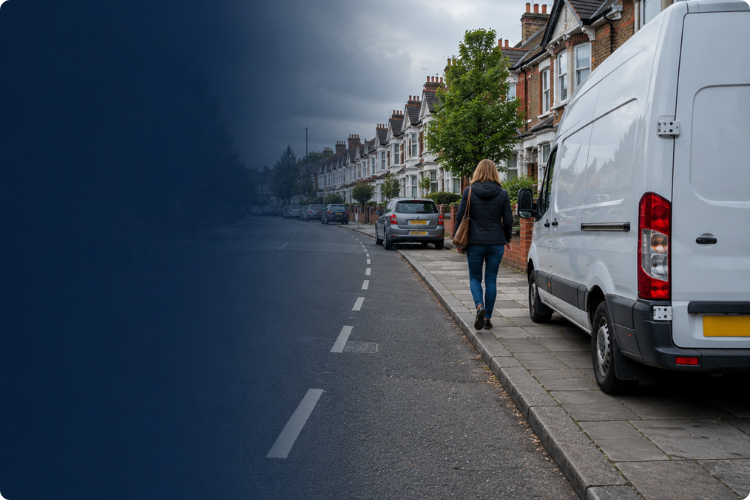
What Pavement Parking Changes Could Mean for Businesses and Fleet Operators
For private motorists, pavement parking restrictions may be an inconvenience.
For businesses operating vehicles every day, the impact could be much greater.
Commercial vehicle drivers often work in areas where parking availability is limited, including:
- Residential streets
- Town centres
- Construction sites
- Customer premises
- Industrial estates
- Delivery locations
Van operators, tradespeople and service businesses frequently need to park close to their destination to unload equipment, complete work or deliver goods.
Any expansion of pavement parking restrictions could require businesses to review how drivers manage parking during daily operations.
Impact on Van Drivers and Commercial Vehicle Operators
For many van drivers, parking is already one of the biggest challenges of the working day.
A plumber visiting a customer’s home, an electrician carrying equipment, or a delivery driver making multiple stops may traditionally have relied on parking partially on the pavement where roads are narrow.
However, if more councils introduce restrictions, drivers may need to consider alternative arrangements, including:
- Parking legally on the road where possible.
- Using nearby designated parking areas.
- Allowing additional time to find suitable parking spaces.
- Planning delivery routes around parking availability.
- Ensuring vehicles are not blocking pedestrian access.
For businesses, this could have operational consequences.
Longer parking searches may increase journey times, reduce the number of customer visits completed each day and affect productivity.
For fleet managers, the changes could mean reviewing driver guidance and ensuring employees understand local parking rules.
The Importance of Fleet Driver Training
Many businesses already provide driver training covering areas such as:
- Vehicle safety checks
- Fuel efficiency
- Accident prevention
- Secure loading
- Driving standards
As parking regulations continue to evolve, pavement parking awareness could become another important area of fleet compliance.
Drivers should understand that:
- Local parking rules can vary significantly.
- A vehicle parked legally in one council area may not be permitted elsewhere.
- Blocking pavements can create accessibility issues.
- Parking fines are the responsibility of the business if the vehicle is company-operated.
For companies operating large fleets, even a small number of parking penalties each month can quickly become an unnecessary expense.
A business operating 50 vans, for example, could face significant annual costs if drivers regularly receive PCNs due to incorrect parking decisions.
Implications for Electric Vehicle Fleets and Charging
The growth of electric vehicles introduces additional considerations.
Many businesses are transitioning to electric vans and company cars as part of wider sustainability strategies. However, access to suitable charging locations remains an important issue.
Some drivers currently rely on parking near their homes while using public charging infrastructure or workplace charging facilities.
If pavement parking restrictions increase, businesses and fleet operators may need to consider:
- Workplace charging availability.
- Driver access to suitable parking locations.
- Home charging arrangements.
- Local authority charging infrastructure.
For fleets transitioning to electric vehicles, parking strategy is becoming increasingly important alongside vehicle choice and charging planning.
How Businesses Can Prepare for Potential Pavement Parking Changes
Although the Government’s proposed legislation has not yet introduced new nationwide restrictions, businesses operating vehicles should begin considering how future changes could affect their daily operations.
For companies running fleets of vans, pickups, company cars or specialist commercial vehicles, parking compliance is an important part of managing operating costs and maintaining driver standards.
A proactive approach could include:
- Reviewing current driver parking guidance.
- Reminding employees about local parking restrictions.
- Encouraging drivers not to obstruct pavements unnecessarily.
- Monitoring parking-related penalty costs.
- Considering parking requirements when planning delivery and service routes.
For businesses, the issue is not simply about avoiding fines. Poor parking decisions can affect customer relationships, brand reputation and public perception.
A branded company van blocking a pavement or forcing pedestrians into the road can create negative impressions, particularly in residential areas where businesses regularly operate.
Impact on Tradespeople and Service Businesses
Many trades and service industries rely heavily on commercial vehicles parked close to customer locations.
Examples include:
- Electricians
- Plumbers
- Builders
- Heating engineers
- Telecom engineers
- Window installers
- Cleaning companies
- Maintenance providers
For these businesses, carrying tools, equipment and materials often makes parking directly outside a property highly desirable.
However, as restrictions potentially increase, operators may need to adapt by:
- Communicating parking requirements with customers before appointments.
- Asking customers whether suitable parking is available.
- Allowing additional time for parking searches.
- Using loading areas where available.
- Ensuring vehicles are parked without obstructing pedestrian routes.
This may become particularly important for larger commercial vehicles, including long-wheelbase vans, where finding suitable parking spaces can already be challenging.
What About Delivery Drivers and Logistics Operators?
The growth of online shopping has significantly increased the number of delivery vehicles operating on residential streets.
Courier companies, parcel operators and last-mile delivery businesses face unique parking challenges because drivers often make dozens of stops each day.
Potential changes to pavement parking enforcement could increase pressure on operators to improve:
- Route planning.
- Driver training.
- Delivery scheduling.
- Use of legal loading areas.
- Communication with customers.
For larger fleets, small improvements in driver behaviour can make a significant financial difference.
Reducing avoidable parking penalties helps control operating costs while improving relationships with local communities.
Future Pavement Parking Enforcement: What Could Change?
The Government’s proposed reforms are intended to give councils more flexibility when dealing with pavement parking problems.
If approved, the changes could mean:
- More councils introducing wider pavement parking restrictions.
- Greater consistency between neighbouring areas.
- Faster implementation of local parking controls.
- Less reliance on individual street-by-street legal processes.
However, the proposals are not expected to create an immediate nationwide ban.
Councils would still need to assess local circumstances and decide where restrictions are appropriate.
Areas with narrow roads, limited parking availability or specific access requirements may continue to receive exemptions.
The future approach is therefore expected to focus on targeted restrictions rather than preventing every instance of pavement parking.
 Call our expert team on