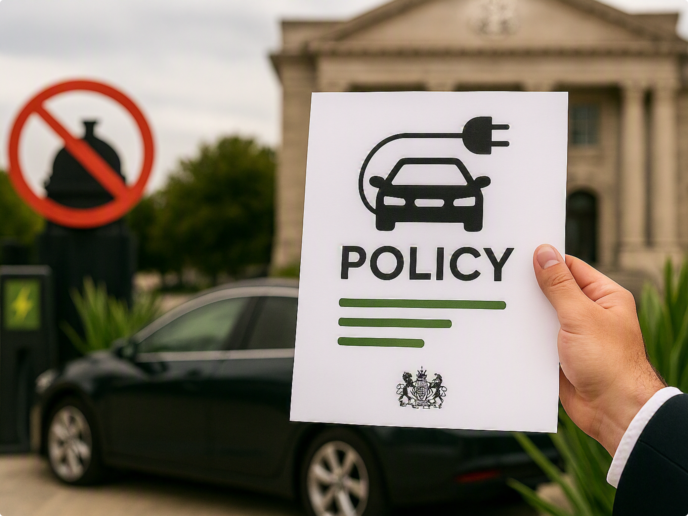
The Association of Fleet Professionals (AFP) is urging the Government to reconsider its proposed electric Vehicle Excise Duty (eVED) plans, placing the issue at the forefront of its latest policy manifesto.
The document, the fourth manifesto produced by the organisation and the first since the Labour Government took office, outlines a range of recommendations that the AFP believes will help accelerate fleet decarbonisation while reducing barriers for businesses transitioning to electric vehicles. It is intended to guide the organisation’s discussions with policymakers, regulators and industry stakeholders over the coming years.
At the centre of the manifesto is a call for ministers to review plans to introduce a pay-per-mile tax for electric vehicles from April 2028. The AFP argues that the proposal comes at a time when the UK should be encouraging greater EV adoption rather than introducing measures that could discourage investment.
The organisation believes the proposed tax could have unintended consequences across the fleet sector, including reducing confidence in both new and used electric vehicles. It warns that falling residual values could increase leasing and operating costs for businesses, making the switch to electric fleets less financially attractive and potentially slowing the UK’s progress towards its net-zero ambitions.
These concerns reflect a wider debate across the fleet and leasing sector, with several industry organisations warning that introducing additional costs too early in the UK’s electric vehicle transition could reduce business confidence and slow the pace of fleet electrification.

Dale Eynon, who earlier this year became the AFP’s first Government Affairs and Policy Lead, described eVED as one of the most significant policy developments affecting fleet operators since the organisation’s previous manifesto was published.
He said there are both financial and practical concerns surrounding the proposal that should be carefully considered before any final decisions are made.
“Implementing eVED in April 2028 may adversely affect both new and used EV values, elevating operational expenses for businesses and potentially decelerating the UK’s momentum toward electrification at a critical juncture. Fleets are rightly concerned.”
Alongside its concerns over taxation, the AFP’s manifesto sets out several other policy recommendations designed to support businesses as they continue to transition towards lower-emission transport.
Among its priorities is greater Government support for electric van adoption, with the organisation calling for further measures to help businesses overcome the higher upfront costs often associated with zero-emission commercial vehicles. The AFP also wants to see stronger support for the used electric vehicle market, arguing that a healthy second-hand sector is essential if EV ownership is to become more accessible for both businesses and private motorists.
The organisation is also encouraging policymakers to review parking policies, suggesting they should be better aligned with wider mobility initiatives, including shared transport and public transport networks. In addition, it is calling for changes to the existing “available to use” tax rule to ensure legislation better reflects the realities of modern fleet operations.
Improving the charging infrastructure remains another key priority within the manifesto.
The AFP is calling for the introduction of a national kerbside charging strategy to support motorists who do not have access to off-street parking, alongside tighter regulation of public chargepoint operators to improve reliability and consistency across the charging network.
It is also urging the Government to invest further in community charging projects and remove VAT on home charger installations, arguing that reducing installation costs would encourage more drivers to make the transition to electric vehicles.
Developing skills within the fleet sector is another area highlighted in the document. The AFP has reiterated its support for the introduction of a dedicated fleet apprenticeship programme, which it believes would help address future skills shortages while creating a more professional and better-equipped workforce.
Despite raising concerns in several areas, the organisation welcomed recent Government action where it believes progress has been made. This includes the publication of the new Road Safety Strategy, which has now been incorporated into the manifesto as an area where further collaboration between Government and industry can continue.
Speaking about the wider objectives of the document, Eynon said the manifesto provides a practical roadmap for supporting fleet operators through a period of significant technological and regulatory change.
He said the recommendations are intended to accelerate fleet decarbonisation, simplify taxation and regulation, improve the UK’s vehicle charging infrastructure, strengthen road safety, enhance mobility and ensure the sector has access to the skilled workforce it will require in the years ahead.
“We are advocating for coordinated government action to support fleets through a complex and rapidly evolving technological landscape,” he said. “This document serves as a foundational ‘to do’ list for our lobbying strategy covering engagement with government departments, regulators and industry partners.”
AFP Chair Paul Hollick said the manifesto reflects the organisation’s vision for how Government policy should evolve to better support businesses operating vehicle fleets.
He explained that the recommendations range from relatively minor policy adjustments to more significant strategic reforms, all with the aim of helping organisations transition more efficiently to cleaner transport while reducing unnecessary complexity.
“The manifesto represents our thinking on where we believe the Government should be heading on a wide range of issues,” Hollick said.
“It is designed to focus on practical points – ranging from small detail alterations to major strategic shifts – which will enable fleets to move forward with their plans faster and more effectively.”
Hollick also pointed to previous lobbying successes as evidence that constructive engagement with the Government can deliver meaningful improvements for the industry. He highlighted changes to regulations surrounding 4.25-tonne electric vans, as well as the introduction of long-term Benefit-in-Kind tax tables that have provided businesses with greater certainty when planning future fleet investments.
“Much has been achieved,” he said, “showing that our lobbying activity is producing positive real-world effects for fleets.”
With electric vehicle adoption continuing to accelerate across the fleet sector, the AFP believes maintaining supportive and predictable Government policy will be crucial if businesses are to remain confident investing in zero-emission vehicles. Through its latest manifesto, the organisation is calling for a collaborative approach that balances environmental ambition with the practical and financial realities facing fleet operators across the UK.

 Call our expert team on