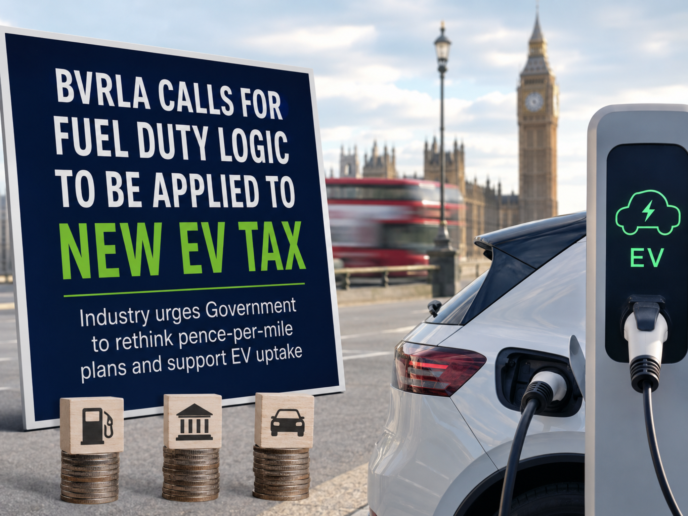
The British Vehicle Rental and Leasing Association (BVRLA) is calling on the Government to rethink its proposed electric vehicle road pricing scheme, warning that the move could undermine the UK’s transition to zero-emission transport.
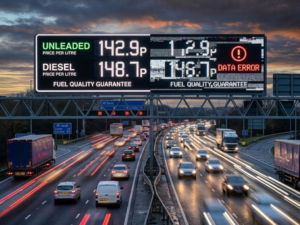
The appeal follows the Government’s recent decision to delay a planned 5p-per-litre rise in fuel duty, a measure introduced to help drivers and businesses cope with rising fuel prices linked to escalating tensions in the Middle East.
Industry leaders say the same principle should now be applied to electric vehicles, arguing that additional taxes on EV drivers could damage consumer confidence at a critical stage in the market’s development.
Fuel Duty Freeze Welcomed by Industry
The Chancellor’s decision to extend the temporary fuel duty cut was widely welcomed across the automotive and logistics sectors, with businesses warning that increased operating costs are already placing pressure on fleets and households.
BVRLA chief executive Toby Poston described the extension as a “practical and necessary” decision during a period of economic uncertainty.
According to Poston, maintaining lower fuel duty levels offers short-term financial relief for both private motorists and commercial fleet operators already dealing with inflation, supply chain pressures and rising business costs.
However, he warned that the Government risks sending mixed messages by simultaneously preparing to introduce a new charging model for electric vehicles.
Concerns Over the Proposed eVED Scheme
The proposed eVED system is expected to introduce a form of road pricing for electric vehicles from 2028 onwards. While full details have yet to be finalised, the scheme is intended to replace some of the tax revenue currently generated through fuel duty as more drivers switch to electric cars.
With EV adoption continuing to rise, the Treasury faces growing pressure to find alternative ways to fund road maintenance and infrastructure investment.
But industry groups fear the timing of the proposal could slow momentum in the EV market.
The BVRLA argues that introducing additional costs for electric vehicle ownership at this stage could discourage drivers from making the switch from petrol and diesel vehicles.
Fleet operators are particularly concerned because company cars and business fleets account for a significant proportion of new EV registrations in the UK. Any increase in operational costs could affect purchasing decisions and slow large-scale electrification plans.
Open Letter Backed by the Automotive Sector
In response to the proposals, the BVRLA has coordinated an open letter to Treasury minister Dan Tomlinson MP, signed by organisations representing the rental, leasing, fleet management, finance, logistics and mobility sectors.
The Association of Fleet Professionals (AFP) is among the groups supporting the campaign.
The signatories argue that the proposed charging system could create major administrative and compliance burdens for businesses already investing heavily in electric vehicle infrastructure and fleet transition programmes.
Industry leaders also believe the policy risks arriving at the worst possible time.
Pressure from the ZEV Mandate
The proposed eVED rollout coincides with stricter Zero Emission Vehicle (ZEV) mandate targets due to come into effect later this decade.
Under the mandate, manufacturers are required to ensure a growing percentage of their vehicle sales are fully electric each year. Companies that fail to meet those targets could face significant financial penalties.
Business groups warn that weakening consumer demand through additional taxation could make it harder for manufacturers and fleets to meet those targets.
Critics argue that the Government should instead focus on improving charging infrastructure, reducing upfront vehicle costs and encouraging wider EV adoption before introducing new forms of taxation.
Calls for Delay Until 2032
The BVRLA and its industry partners are urging ministers to postpone the proposed scheme until at least 2032.
They are also calling for a full review of the policy’s structure, warning that the current proposals could add hundreds of millions of pounds in extra costs across the sector.
Supporters of the delay stress that they are not opposed to EV drivers contributing fairly towards road use in the long term. However, they believe the transition period remains too fragile for new taxation measures that could discourage adoption.
Balancing Revenue and Electrification
The debate highlights the growing challenge facing policymakers as the UK moves towards widespread electrification.
Fuel duty has traditionally generated billions of pounds annually for the Treasury, but that revenue will inevitably decline as petrol and diesel vehicles disappear from UK roads.
While many experts accept that some form of road pricing may eventually become necessary, the automotive industry argues that timing will be critical.
For now, business groups say the Government must prioritise accelerating EV uptake rather than risking a slowdown through additional financial pressures on drivers and fleets.
 Call our expert team on