A new political push to scrap the UK’s Zero Emission Vehicle (ZEV) Mandate has added further uncertainty to the future of electric vehicle policy, as the Government continues its own review of the rules.
Conservative MP Richard Holden has introduced a Private Member’s Bill calling for the legislation underpinning the ZEV Mandate to be revoked.
The Vehicle Emissions Trading Schemes Order 2023 (Revocation) Bill seeks to remove the legal framework behind the current ZEV Mandate, which requires vehicle manufacturers to increase the proportion of new cars and vans they sell that are zero-emission each year.
The move comes just weeks after the Government launched a ZEV Mandate review, meaning the future direction of the UK’s electric vehicle transition is currently under significant scrutiny.
What Is The ZEV Mandate?
The ZEV Mandate sets annual targets for manufacturers covering the proportion of new vehicle registrations that must be zero-emission.
Manufacturers can use a range of flexibilities within the system to help meet their targets, but those failing to comply can face financial penalties.
For 2026, the target for cars is 33%, while manufacturers must achieve a 24% zero-emission share for new vans.
The van target is scheduled to increase to 34% in 2027, 46% in 2028, 58% in 2029 and 70% in 2030.
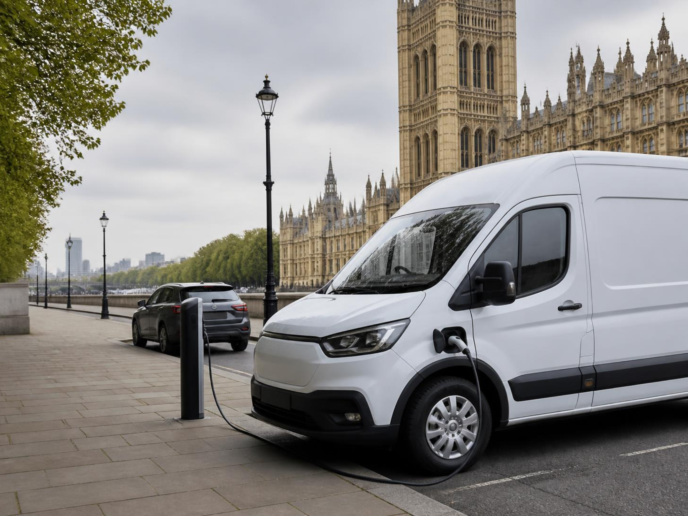
This makes the policy particularly important for the commercial vehicle sector, where businesses are increasingly being offered a wider choice of electric vans.
Political Pressure Builds
Richard Holden’s Bill represents growing political opposition to the current approach to vehicle electrification.
The Conservative MP has argued that manufacturers and consumers should have greater freedom over the types of vehicles they choose, rather than being influenced by legally binding sales targets.
However, the Bill is not the same as the ZEV Mandate being scrapped.
As a Private Member’s Bill introduced as a Presentation Bill, it would still need to progress through Parliament before it could become law. There is currently no indication that the Government intends to abandon the ZEV Mandate.
Instead, the development highlights the increasing political debate surrounding how quickly the UK should move towards zero-emission vehicles.
Government Already Reviewing The Rules
The Government launched its own ZEV Mandate review in August 2026.
The consultation is examining how the current system is operating, including the annual targets, compliance flexibilities and potential alternative approaches to achieving the UK’s longer-term zero-emission vehicle ambitions.
The Government has said the review will help ensure the policy continues to support consumers, industry and the UK’s wider decarbonisation objectives.
The consultation is also considering how the UK’s commitment to ending the sale of new petrol and diesel cars in 2030 should be delivered, alongside the longer-term objective of all new cars and vans being zero-emission by 2035.
Responses to the consultation are due by 23 October 2026, with the findings expected to help shape potential changes to the existing rules.
Electric Van Targets Remain A Key Issue
For the van market, the ZEV Mandate is particularly significant.
The current framework requires zero-emission electric vans to account for almost a quarter of a manufacturer’s new van registrations in 2026.
That figure is scheduled to increase considerably over the remainder of the decade.
| Year | ZEV Target For New Vans |
|---|---|
| 2026 | 24% |
| 2027 | 34% |
| 2028 | 46% |
| 2029 | 58% |
| 2030 | 70% |
For manufacturers, this creates significant pressure to increase the number of electric vans available to customers.
For businesses, meanwhile, the changing mix of vehicles could affect the choice, availability and pricing of new vans over the coming years.
Industry Concerns About The Pace Of Change
The political debate comes alongside concerns from parts of the automotive industry about how quickly the transition to electric vehicles is taking place.
The Institute of the Motor Industry (IMI) has said the proposed Bill highlights the level of interest and concern surrounding the transition, particularly the pace of change.
The organisation has also raised concerns about whether the automotive workforce is sufficiently prepared for the increasing number of electric vehicles on UK roads.
This is an important consideration because the transition to electric vehicles is not simply about manufacturers producing more EVs.
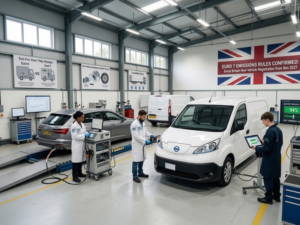
Technicians, mechanics and other automotive professionals also need appropriate training and qualifications to safely work on high-voltage electric vehicles.
The IMI has previously highlighted concerns among its members about the availability of EV-related training and the readiness of the wider workforce.
What Could Changes Mean For Businesses?
For businesses operating cars and vans, changes to the ZEV Mandate could have a knock-on effect on future vehicle choices.
A more flexible approach could give manufacturers additional time to adapt their ranges and potentially provide businesses with greater choice between electric, hybrid and conventionally powered vehicles.
However, the Government’s wider commitment to reducing vehicle emissions means businesses should not assume that electrification is going to disappear from the fleet market.
Instead, the debate is increasingly about how the transition should happen and how quickly businesses, manufacturers and consumers should be expected to adapt.
For fleet operators, the most important considerations will continue to include:
- Vehicle range and suitability for individual journeys
- Access to workplace or public charging
- Payload and carrying requirements
- Running and energy costs
- Vehicle availability
- Total cost of ownership
- The suitability of electric vans for individual business operations
For some businesses, electric van leasing can already make sense. For others, particularly those operating vehicles intensively or without convenient charging access, the decision can be more complicated.
 Call our expert team on