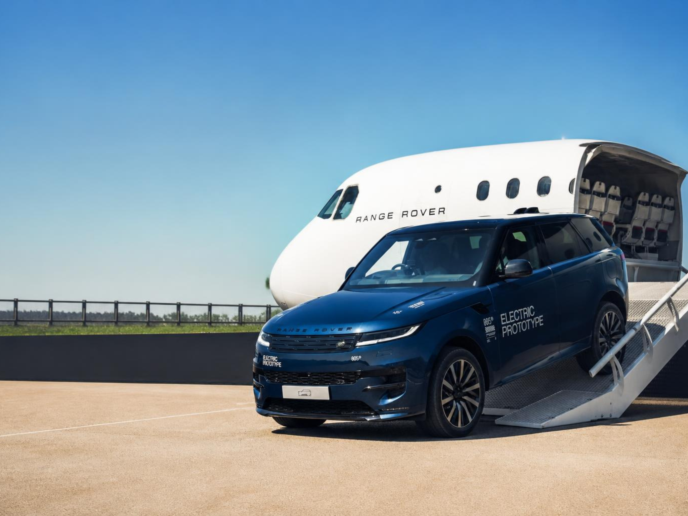
The Range Rover Sport Electric is now available to order in the UK, giving the luxury SUV its first fully electric powertrain. The new Range Rover Sport Electric produces up to 550PS, offers a claimed range of up to 378 miles and qualifies for the 4% Benefit-in-Kind (BIK) rate for the 2026/27 tax year.
The new Range Rover Sport Electric starts at £109,810, making it considerably less expensive than the recently launched Range Rover Electric. It will sit within the existing Sport line-up alongside plug-in hybrid, petrol and diesel models, giving buyers a choice of powertrains depending on their requirements.
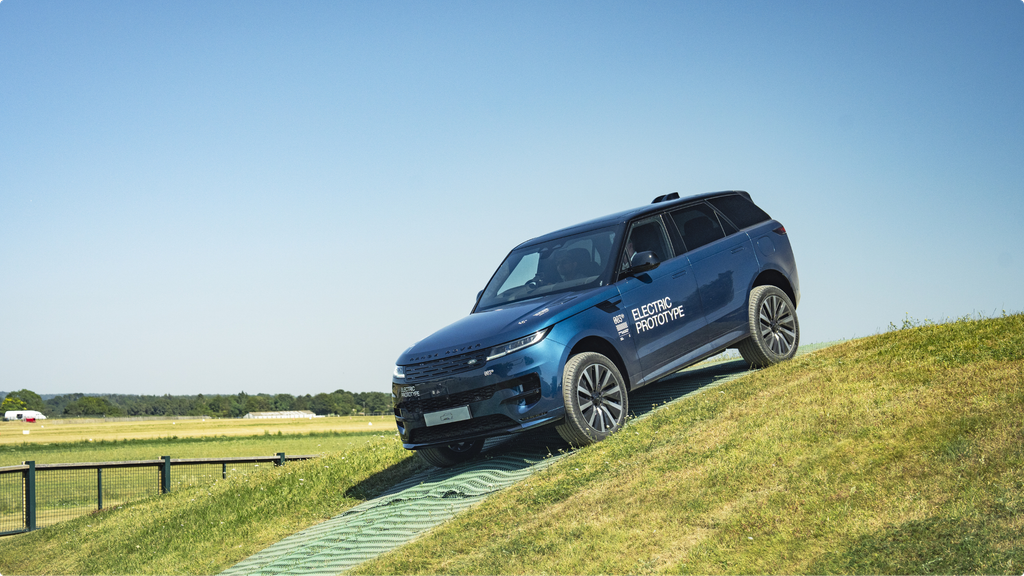
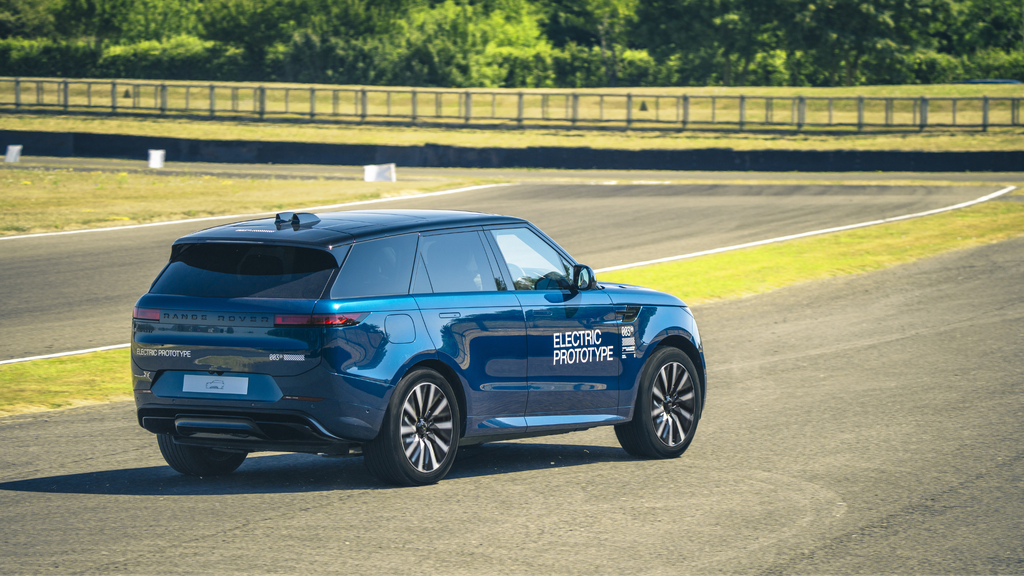
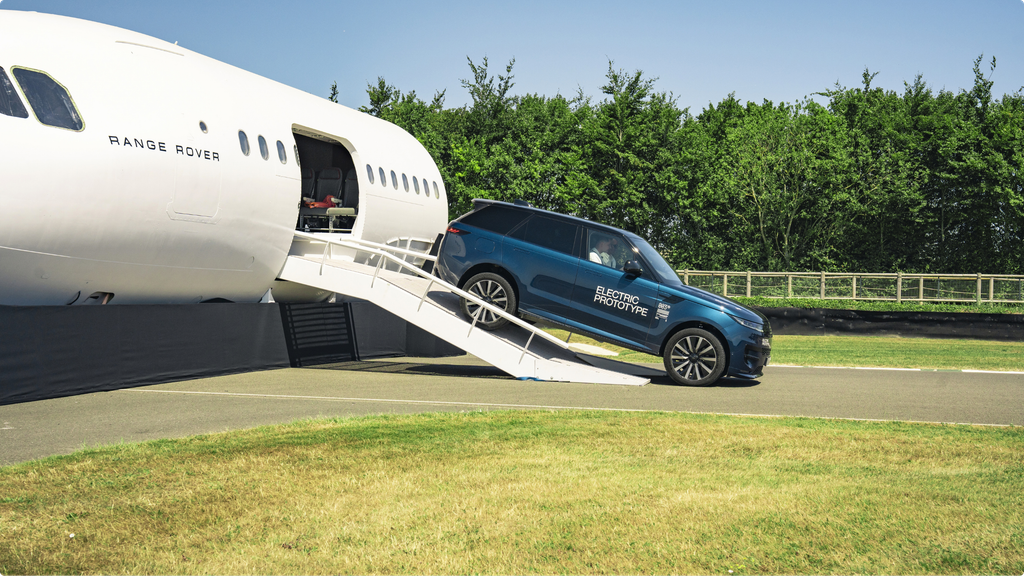
The Range Rover Sport Electric was first previewed publicly at the Goodwood Festival of Speed in July 2026, where Range Rover used the event to demonstrate the electric SUV’s performance capabilities. The vehicle tackled a series of driving challenges at the Goodwood Motor Circuit, providing an early indication that Range Rover intended the electric Sport to retain the performance-focused character of the existing model.
For businesses and company car drivers, the move to electric power also has an important tax implication.
The Range Rover Sport Electric qualifies for the 4% BIK rate during the 2026/27 tax year, compared with 7% for the current plug-in hybrid version.
Our guide to PHEVs and BIK in 2026/27: The “Middle Ground” That’s Getting Squeezed looks at how the tax treatment of plug-in hybrids compares with fully electric vehicles.
This follows the introduction of the Range Rover Electric Offers Major BIK Saving Over PHEV model, highlighting the growing tax difference between fully electric and plug-in hybrid Range Rover models. Petrol and diesel versions can attract significantly higher company car tax because of their CO2 emissions
The lower BIK rate can also have implications for employers, as a lower taxable benefit means a reduced Class 1A National Insurance liability on company cars.
For businesses considering the wider tax implications of electrification, our guide to Benefit-in-Kind (BIK) Tax explains how company car taxation works and why electric vehicles continue to have a significant advantage over higher-emission alternatives.
550PS Electric Power And 850Nm Of Torque
The Sport Electric has been developed with a strong emphasis on performance, continuing the character of the existing Range Rover Sport while introducing a fully electric powertrain. Two electric motors produce up to 550PS and 850Nm of torque, making it the highest-torque Range Rover Sport yet.
That makes it the highest-torque Range Rover Sport yet.
The instant response of electric motors also gives the Sport Electric strong acceleration, with Range Rover quoting 0- 60mph in just 4.3 seconds.
The manufacturer says torque can build 50% faster than in the larger Range Rover Electric, helping to give the Sport a sharper and more responsive character.
That performance is backed by a 118.5kWh battery, with a claimed WLTP range of up to 378 miles.
As with any electric vehicle, the official range figure should be treated as a benchmark rather than a guarantee of the distance that will be achieved in everyday driving. Speed, temperature, weather, road conditions, payload and use of heating or air conditioning can all affect an EV’s actual range.
Rapid Charging In Just 22 Minutes
The Range Rover Sport Electric uses an 800-volt electrical architecture, allowing it to take advantage of high-power DC rapid charging.
Range Rover says the battery can be charged from 10% to 80% in around 22 minutes when using a suitable rapid charger.
The company also claims that a 10-minute charging stop can add up to 136 miles of range, although achieving the maximum figure depends on the charging equipment and conditions.
For drivers using an electric vehicle regularly, charging speed can be just as important as battery capacity. Our guide to Electric Vehicle Charging Explained: Home, Workplace & Employee Solutions for UK Businesses looks at the different charging options available to businesses and employees.
A Lower Centre Of Gravity
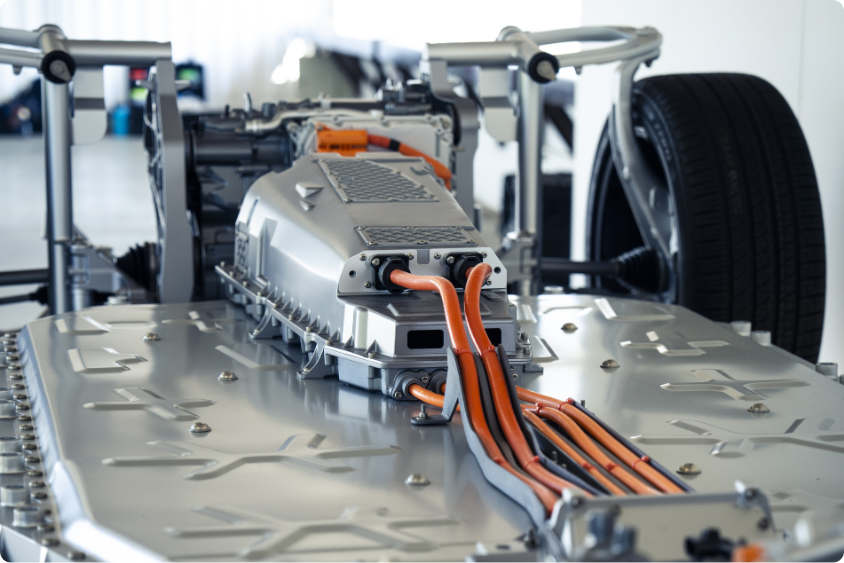
The battery’s position within the vehicle has also allowed Range Rover to alter the Sport Electric’s driving characteristics.
The manufacturer says the electric version has the stiffest body structure of any Range Rover Sport, with body stiffness increased by 61%. Its centre of gravity is also 73mm lower than other Sport models.
The lower centre of gravity should help keep the vehicle more stable through corners, while the increased structural rigidity provides a stronger platform for the suspension and drivetrain.
The chassis combines Dynamic Air Suspension, Adaptive Dynamics, Twin Valve Dampers and electronic Active Roll Control.
Active Roll Control can apply up to 1,400Nm of force across each axle to help manage body movement, while the Adaptive Dynamics system continuously monitors driving conditions and adjusts the suspension accordingly.
Range Rover says the system monitors 100 different parameters up to 500 times every second.
Four-wheel steering is also included, helping the large SUV feel more manoeuvrable at lower speeds while providing additional stability when travelling faster.
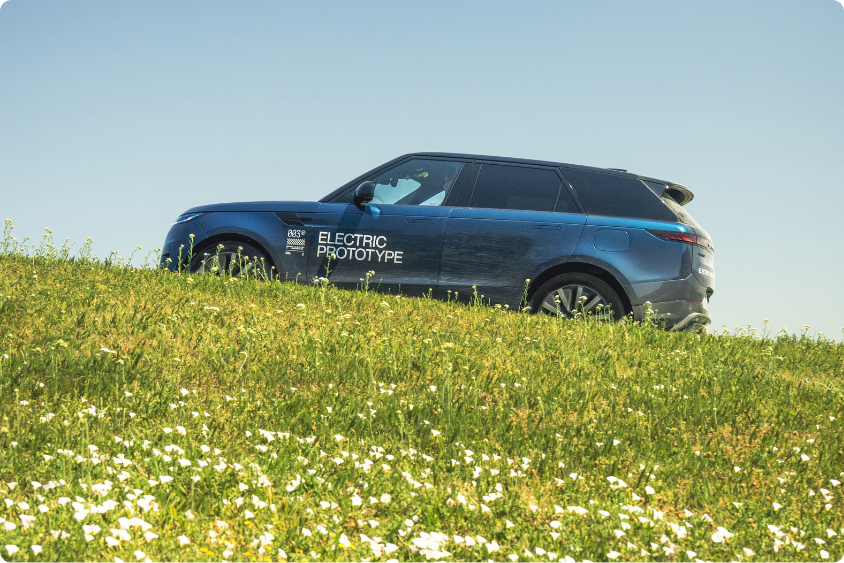
Electric Power Without Losing Range Rover’s Off-Road Ability
While much of the focus surrounding the Sport Electric is on performance, Range Rover has retained the off-road characteristics expected from the name.
The electric all-wheel-drive system can distribute torque between the axles to help maintain traction when conditions become more challenging.
The vehicle can also wade through up to 900mm of water and tackle gradients of up to 45 degrees.
That gives the Sport Electric a different proposition from many performance-focused luxury EVs. It is not simply designed to be fast on the road; Range Rover has attempted to retain the versatility associated with its SUVs.
New Sound For The Electric Sport
The absence of a traditional combustion engine has also allowed Range Rover to rethink how the Sport Electric sounds.
Rather than leaving the cabin completely silent under acceleration, the company has created a bespoke acoustic profile for the vehicle.
The sound is designed to provide additional driver feedback and work alongside the SUV’s various driving modes, giving the electric Sport a character of its own.
Three Range Rover Sport Electric Models
Three versions of the Range Rover Sport Electric are initially available in the UK.
The entry-level EV550 Dynamic SE costs £109,810, while the EV550 Autobiography is priced from £122,780.
At the top of the initial range is the EV550 First Edition, which starts at £126,290.
The Sport Electric is manufactured at JLR’s Solihull plant, alongside the petrol, diesel and plug-in hybrid versions of the Range Rover Sport.
UK orders are now open, with the new electric SUV entering a market that is becoming increasingly competitive at the premium end.
Among its rivals are the upcoming BMW iX5 and Porsche Cayenne Electric, alongside a growing number of high-performance electric SUVs from established and emerging manufacturers.
 Call our expert team on